









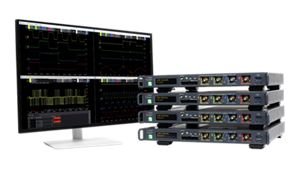


- Overview
- All Models
- Support
Automatic, self-balancing power measurements
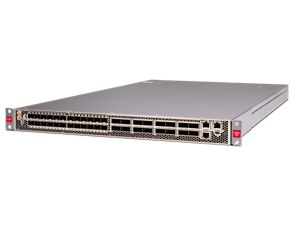
Keysight PM3-class thermistor power meter includes the N432A thermistor which is an automatic, self-balancing instrument designed for use with temperature-compensated thermistor mount sensors. It measures signal power by detecting the heat generated from RF energy absorption, ideal for low-power measurements requiring precision calibration and high accuracy in metrology and calibration labs. Enhanced troubleshooting features include self-balancing to adjust for temperature variations, RF-to-DC conversion, and multiple remote connectivity options. A compatible thermistor sensor is required to operate. Request a quote or order the Keysight thermistor power meter today. Need help selecting? Check out the resources below.
Self-balancing
Automatic adjustment to compensate for temperature variations, sensor drift, and environmental factors, ensuring accurate measurements.
Temperature compensation
Dual bridge operation compensates for
environmental temperature drift, ensuring
accurate readings in changing conditions like
lab environments, self-heating, and long-duration measurements.
RF-to-DC conversion
Convert RF power to DC measurements like voltage or resistance, enabling highly accurate, traceable measurements, ideal for calibration and precision testing.
Remote connectivity options
GPIB, USB, and LAN interfaces enable remote monitoring and control and integration into automated test systems, ideal for high throughput testing or production environments.
-
Number of channels
1
-
Frequency range
100 kHz to 18 GHz
-
Dynamic range
-30 to +10 dBm
Typical configuration
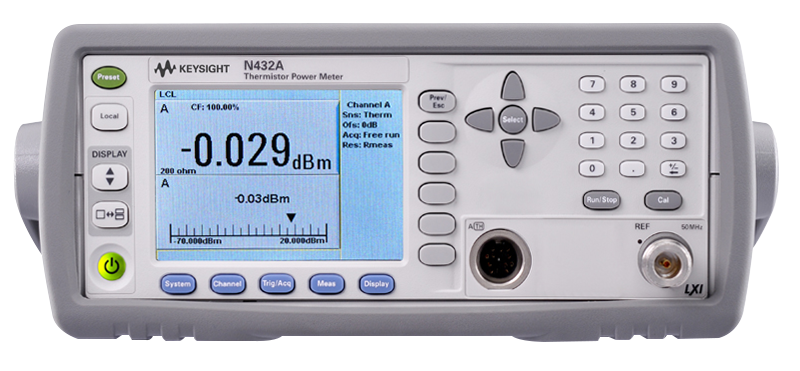
PM3-class Power Meter, thermistor
Services and support
Innovate at speed with curated support plans and prioritized response and turn-around times.
Get predictable, lease-based subscriptions and full lifecycle management solutions—so you reach your business goals faster.
Experience elevated service as a KeysightCare subscriber to get committed technical response and more.
Ensure your test system performs to specification and meets local and global standards.
Make measurements quickly with in-house, instructor-led training, and eLearning.
Download Keysight software or update your software to the newest version.
Frequently asked questions
A thermistor power meter is a device used to measure RF power with high accuracy and stability. It operates using a thermistor, a resistor whose resistance changes significantly with temperature, to convert RF power into DC measurements such as voltage and resistance.
Advantages:
- High accuracy and linearity over a limited power range.
- Modulation-agnostic: Ideal for signals with high crest factors or unknown waveform shapes.
- Often used as calibration standards in metrology labs due to their stability and traceability.
Limitations:
- Slow measurement speed due to thermal response.
- Narrow dynamic range compared to diode-based sensors.
- Requires nulling and zeroing procedures to eliminate thermal offsets.
- More sensitive to ambient temperature changes, requiring controlled conditions for high-precision work.
Thermistor power meters operate on the principle of a DC self-balancing Wheatstone bridge. When RF power is applied to the thermistor, it heats up, causing its resistance to change. The power meter adjusts the bias current to maintain a balanced bridge, and the change in bias power is used to calculate the RF power.
How it works:
- The RF signal is absorbed by a termination load containing a thermistor.
- As RF power is applied, it heats the thermistor, changing its resistance.
- A DC bias is applied in a bridge circuit (typically a Wheatstone bridge), and the change in resistance due to RF heating causes an imbalance in the bridge.
- The resulting voltage is proportional to the true average power of the RF signal.
Because this process is based on thermal conversion, thermistor power meters inherently provide a true average power measurement, independent of waveform shape, frequency, or modulation.
Thermistor power meters maintain measurement accuracy under changing ambient temperatures by using a self-balancing power substitution technique. The system continuously adjusts the applied DC bias power to keep the thermistor at a constant resistance (temperature), regardless of environmental drift. Only changes caused by RF heating affect the DC power needed to maintain balance, effectively canceling out ambient temperature effects.
Some designs further improve stability by using matched reference thermistors that track environmental shifts, allowing the meter to subtract out common-mode temperature variations. In high-precision setups, temperature-controlled enclosures are also used to minimize external thermal influence.