Device Security Testing in the Semiconductor Industry
Webinars
Semiconductors form the foundation of modern electronic devices, from smartphones and payment systems to automotive electronics and connected infrastructure. As these devices become increasingly important to everyday life, their security depends on the integrity and resilience of the chips powering them. However, evolving threats, increasingly sophisticated hardware attacks, and growing regulatory requirements present significant challenges for semiconductor manufacturers seeking to deliver secure and trusted products.
In this webinar, Marc Witteman, Senior Director at Keysight Device Security, examines the role of semiconductor security testing, the threats facing modern chip implementations, and the approaches manufacturers can take to establish confidence in their products. The session covers fundamental cryptographic principles, physical attack techniques, security countermeasures, risk-based testing, and certification strategies, with practical guidance for organizations developing in-house testing capabilities or working with independent evaluation laboratories.
The presentation begins by examining how device security depends on the security of its underlying semiconductor components. Modern chips integrate processors, memory, cryptographic functions, and communication interfaces, each presenting potential targets for attackers. Differences between microcontrollers, systems-on-chip (SoCs), and microprocessor-based architectures also influence the security risks manufacturers must consider. External memory, communication interfaces, and debugging functionality, such as JTAG, may expose sensitive information or provide opportunities to manipulate device behavior if not adequately protected.
Marc explains that device security relies on multiple interconnected layers, including cryptography, software, and hardware. A weakness in any layer can compromise the overall security of the device. While strong cryptographic algorithms provide essential confidentiality and integrity protections, their effectiveness ultimately depends on how securely they are implemented.
To illustrate this challenge, the webinar introduces the cryptographic principles of diffusion and confusion using the Advanced Encryption Standard (AES). These principles help ensure that attackers cannot easily derive secret keys from encrypted information. Although modern cryptographic algorithms are designed to withstand conventional attacks such as brute-force key searches, their physical implementations may unintentionally expose information about intermediate operations. This creates opportunities for attackers to recover cryptographic secrets without breaking the underlying mathematical algorithm.
The webinar then explores two important categories of physical hardware attacks: Side-Channel Analysis (SCA) and Fault Injection (FI).
Side-Channel Analysis exploits unintended information leakage generated during normal chip operation. By measuring power consumption, electromagnetic emissions, execution timing, or other physical characteristics, attackers can potentially infer sensitive information, including cryptographic keys. Fault Injection takes a different approach by actively disrupting a chip's operation. Techniques such as voltage glitching, clock manipulation, electromagnetic pulses, and laser stimulation can introduce errors that alter program execution, bypass security checks, or expose protected information.
Marc explains how these techniques have evolved over the past 25 years and why semiconductor manufacturers must account for them when designing secure products. The presentation also introduces common countermeasures, including constant-time execution, masking, randomized delays, redundant calculations, anomaly detection, and fault-response mechanisms.
A practical example involving PIN verification demonstrates how seemingly simple software implementations can introduce vulnerabilities. An implementation that stops checking a PIN after the first incorrect digit may leak information through execution timing. By modifying the code to use constant-time execution and additional verification checks, developers can reduce exposure to side-channel and fault injection attacks.
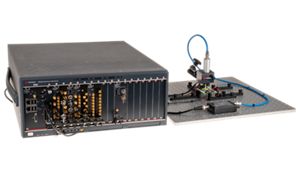
However, the session emphasizes that security countermeasures introduce trade-offs. Additional protections can increase code complexity, silicon area, memory requirements, power consumption, and development costs. Rather than implementing every available countermeasure, manufacturers should select protections based on the specific threats, risks, and security requirements of their applications. Dedicated security testing equipment is then needed to verify that these protections work as intended.
The discussion moves to security assurance and risk-based testing, highlighting the differences between functional verification and security evaluation. While functional testing aims to confirm that a product behaves according to its specifications, security testing must address an evolving threat landscape. New vulnerabilities and attack techniques continually emerge, making it impractical to achieve complete security coverage within the limited time available before product release.
Risk-based testing provides a practical approach by prioritizing the most relevant threats and attack scenarios. Marc emphasizes the importance of independent evaluation and specialized expertise in identifying vulnerabilities that development teams may overlook. He also introduces attack rating methodologies, which assess the difficulty of identifying and exploiting vulnerabilities based on factors such as attacker expertise, equipment, access to the target, and required effort. These ratings help determine whether a product provides sufficient resistance for its intended application.
The webinar introduces several security evaluation and certification programs relevant to semiconductor manufacturers, including SESIP, PSA Certified, GSMA, FIPS, EMVCo, Common Criteria, OCP S.A.F.E., and the EU Cyber Resilience Act (CRA). Different markets and technologies require different forms of assurance, and manufacturers may need to demonstrate compliance with multiple programs.
Marc discusses how combining evaluations across multiple schemes can reduce duplicated testing efforts, costs, and certification timelines. He also explains composite evaluation, where hardware, operating systems, and applications are assessed as interconnected layers, potentially allowing manufacturers to reuse evaluation results across different certification activities.
The final part of the webinar focuses on practical strategies for achieving security assurance without delaying product launches. Manufacturers are encouraged to establish in-house testing capabilities, begin security evaluations early in development, and engage with independent laboratories before finalizing chip designs. Pre-silicon evaluations can help identify significant design weaknesses before prototypes are manufactured, potentially avoiding expensive redesigns.
Marc also highlights the value of continuous communication between manufacturers and evaluation laboratories. Early reporting of potential vulnerabilities can provide time to implement mitigations, including software-based protections where appropriate, while longer-term recommendations can help manufacturers prepare for emerging security requirements.
The webinar concludes by emphasizing that security, compliance, and certification should be treated as complementary goals rather than separate obligations. A well-planned evaluation strategy can help semiconductor manufacturers identify vulnerabilities earlier, reduce costly rework, meet regulatory and market requirements, and build greater customer confidence.
Ultimately, semiconductor security is an ongoing process. By combining risk-based testing, appropriate countermeasures, in-house capabilities, and independent evaluation, manufacturers can strengthen product security while supporting efficient development and certification throughout the product lifecycle.

尋找感興趣的產品?