Optical Design Engineering for AR/VR and Near-Eye Display Systems
Integrated optical engineering solutions for waveguides, display engines, imaging optics, and sensing subsystems.



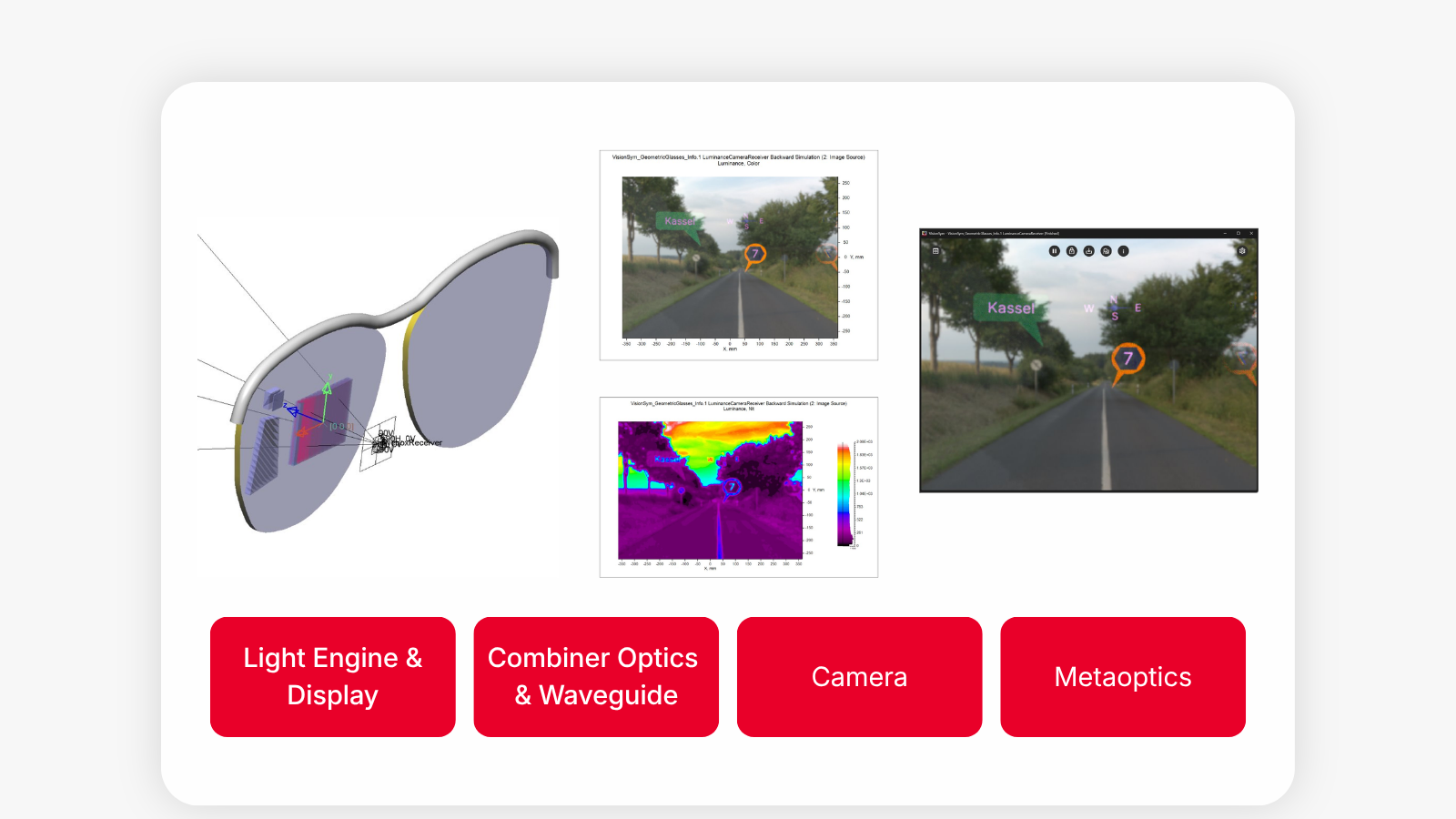
Near-Eye Display Development Workflow
Near-eye display systems combine display technologies, optics, waveguides, and sensing subsystems that must work together to deliver an immersive visual experience. Engineers often need to evaluate image quality, light propagation, optical efficiency, tracking performance, and manufacturability as part of a single development process.
Display Engine → Combiner Optics → Eye Tracking → System Validation
Solve Complex Near-Eye Display Design Challenges Faster
Developing near-eye display systems requires expertise across display optics, waveguides, eye tracking, illumination, image quality, and system integration. Keysight's Optical Engineering Services team supports organizations facing complex design challenges, aggressive schedules, or limited internal resources.
From waveguide optimization and stray light analysis to eye-tracking systems and optical validation, our engineers help teams evaluate and improve AR/VR optical system performance throughout development.


Design Next-Generation AR/VR Optics
Engineers developing the next generation of spatial computing devices are increasingly exploring metalenses and metasurfaces as alternatives to conventional optical components. These technologies can enable new optical functions while helping reduce system size, weight, and complexity.
MetaOptic Designer streamlines the development of metalenses through automated inverse-design workflows that generate optimized layouts based on performance objectives. Engineers can rapidly evaluate concepts, create fabrication-ready designs, and explore advanced optical architectures without manually building every metasurface structure from the ground up.
Discover AR/VR Resources


Webinar: Current Workflows in Extended Reality Display Designs with Keysight Optical Design Solutions
Join Keysight for an exploration of integrated simulation workflows and how they can accelerate innovation from the initial design concept to system validation using our optical design solutions. Learn how today's leading development teams are leveraging our optical modeling, virtual prototyping, and digital engineering technologies to reduce design risk, shorten development cycles, and bring next-generation XR experiences to market faster.
Blogs
More Resources
White Papers
Choosing the Right Photonic Device Design Software

Brochures
CODE V Optical Design Software
Brochures
LightTools Illumination Design Software
Flyers
What's New in RSoft Photonic Device Tools
Have Questions? We've Got Answers
Near-eye display systems combine display engines, waveguides, imaging optics, and sensing technologies to create virtual images that are comfortable, bright, and easy to see. Engineers must balance image quality, field of view, optical efficiency, eye box size, and overall system performance throughout the design process.
Waveguide systems often require engineers to address optical efficiency, image uniformity, stray light, chromatic artifacts, eye box limitations, and manufacturability. These challenges become increasingly important as display performance and form-factor requirements continue to evolve.
Simulation helps engineers evaluate optical architectures, analyze light propagation, optimize display performance, and identify potential issues before physical prototypes are built. This enables faster design iterations and more informed engineering decisions.
Near-eye display systems may incorporate microLED display engines, waveguides, holographic optical elements (HOEs), diffractive optical elements (DOEs), metalenses, and eye-tracking sensors depending on the device architecture and application.
Stray light can originate from unwanted propagation paths, diffraction effects, reflections, and waveguide geometry. Advanced analysis techniques help engineers identify the sources of stray light and optimize designs to improve visual quality.