Können wir Ihnen behilflich sein?
Real-Time Spectrum Analyzers (RTSA)
See, capture, and understand the most elusive signals – known or unknown
Highlights
See More. Capture More. Understand More.
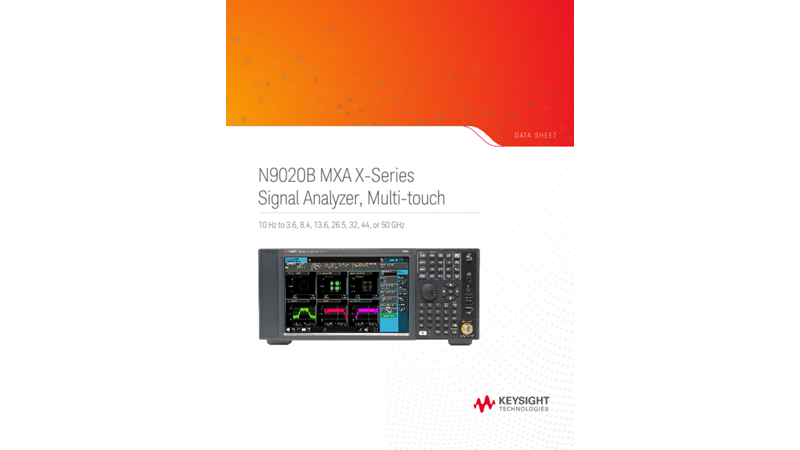
Add real-time signal analysis capabilities to your existing signal analyzer with our real-time spectrum analyzer (RTSA) options. A real-time UXA, PXA, or MXA X-Series signal analyzer provides continuous acquisition of RF signals, including low-level signals occurring close to larger ones. Its conditional triggering capabilities can watch for transient or intermittent events and initiate signal capture, measurement, and display. The ultimate result — you can see more, capture more, and understand more with Keysight real-time spectrum analyzers (RTSA).
- Detect signals as short as 227 ns with 100% probability of intercept (POI)
- Scan with up to 2 GHz of real-time bandwidth
- Perform real-time signal analysis up to THz frequencies with external mixing
- See small signals in the presence of large ones with up to 78 dB spurious-free dynamic range
- Identify and record culprit signals with frequency-mask and time-qualified triggers
- Monitor a wide span of spectrum up to the full frequency range of the analyzer with stepped density display
- Gain more confidence in your system or signal environment knowing you can capture intermittent or transient signals as short as 418 ps
- Accelerate communication system development by quickly switching to must-have traditional measurements like phase noise, noise figure, and more
Find Signals of Interest with Real-Time Spectrum analyzer (RTSA)
When testing radar, electronic warfare, or signal intelligence systems, it is important that you find and measure signals of interest in complex and dynamic environments. Using the real-time spectrum analyzer (RTSA), you can trigger on signals with a mask and even view signals in the time domain. Quickly link cause and effect with the X-Series signal analyzers equipped with the RTSA option.
Key Specifications
Frequency Options
From 3.6 to 110 GHz
Maximum Analysis Bandwidth
Up to 4 GHz
Maximum Real-Time Bandwidth
Up to 2 GHz
Real-Time Spectrum Analyzer (RTSA) Related use cases


How to Measure EVM of an 802.11 WLAN Devices

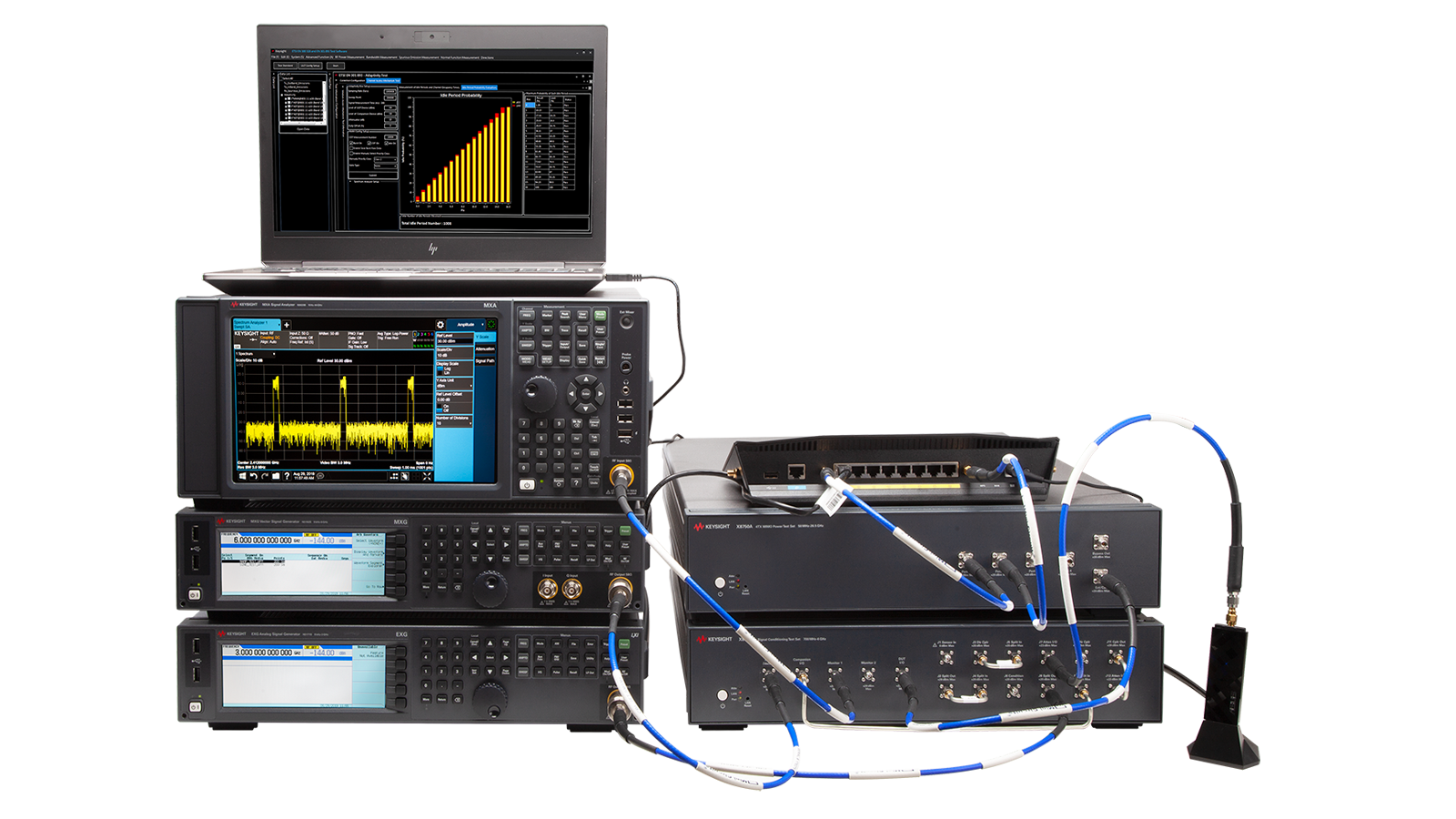
How to Validate Wireless IoT Device Adaptivity

How to Optimize SNR

How to Measure RF Phase Noise
_Testing.png)
_Testing.png)
How to Conduct Electromagnetic Interference (EMI) Testing
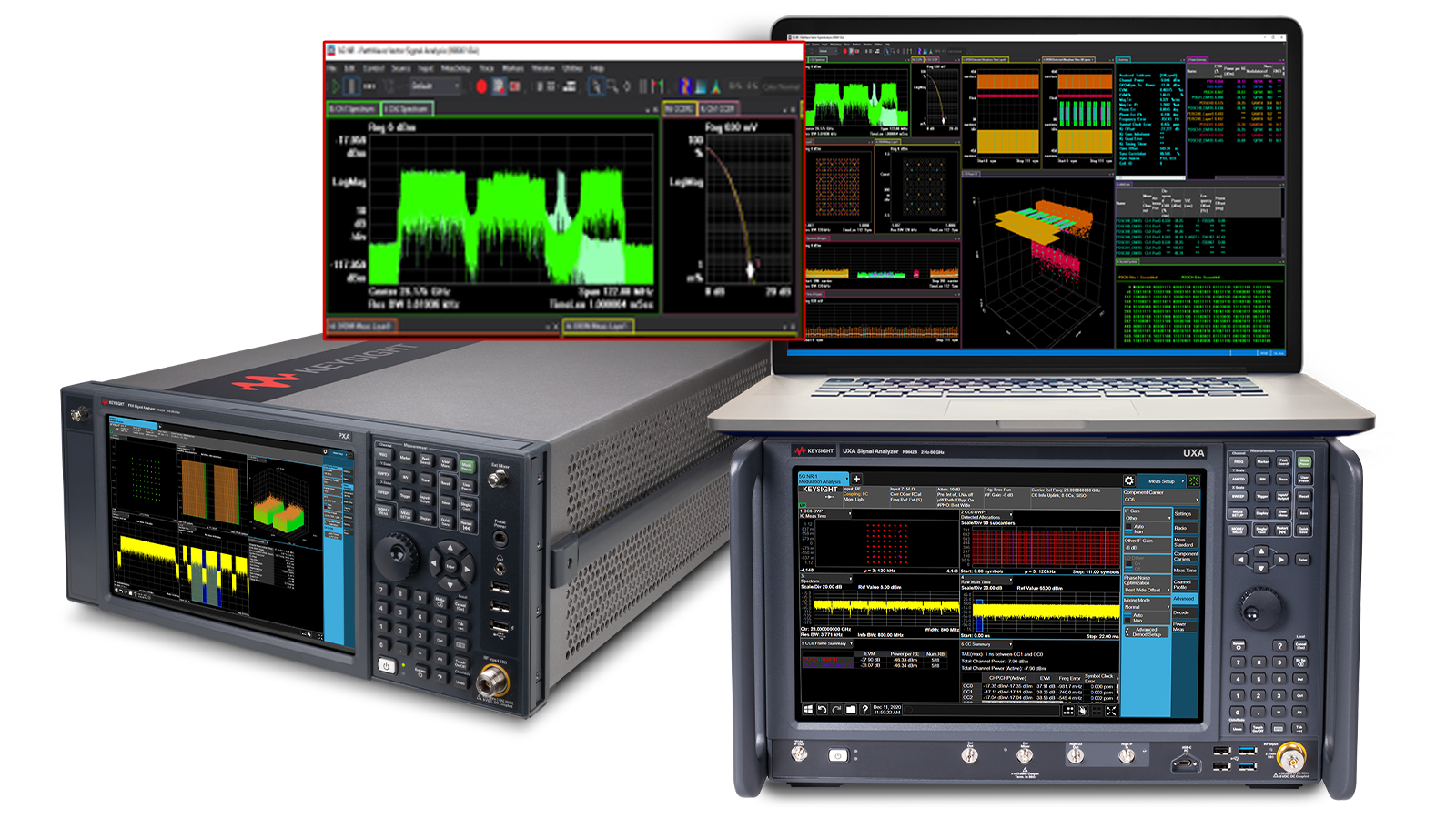
How to Analyze 5G Release 16 Base Station Signals


Simplify Complex Tasks and Deliver Repeatable Results with X-Series Applications
Understand the performance of your cellular, wireless, and aerospace/defense devices and designs with downloadable X-Series measurement applications.
- Gain more insight into device performance from parametric measurements to the latest standards-compliant wireless measurements like 5G, IoT, LTE and WLAN with integrated applications that put consistent measurements at your fingertips
- Share same measurement science and expertise across multiple hardware platforms across design, development, and production
- Choose the best license type and terms according your need and budget
Real-Time Spectrum Analyzer (RTSA) Data Sheets


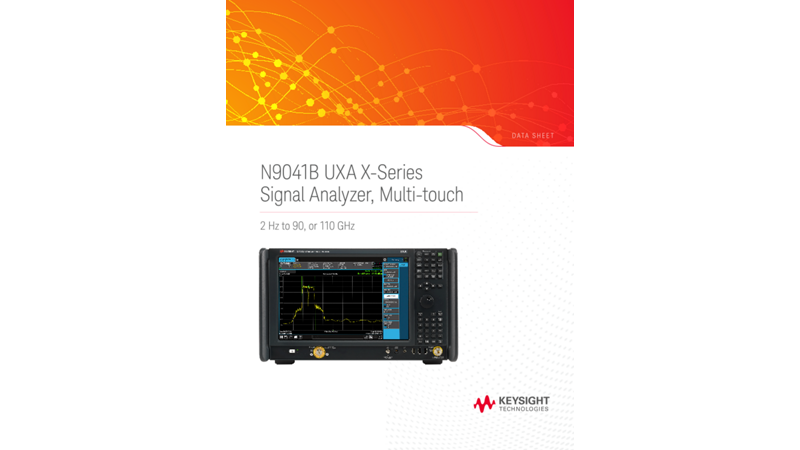

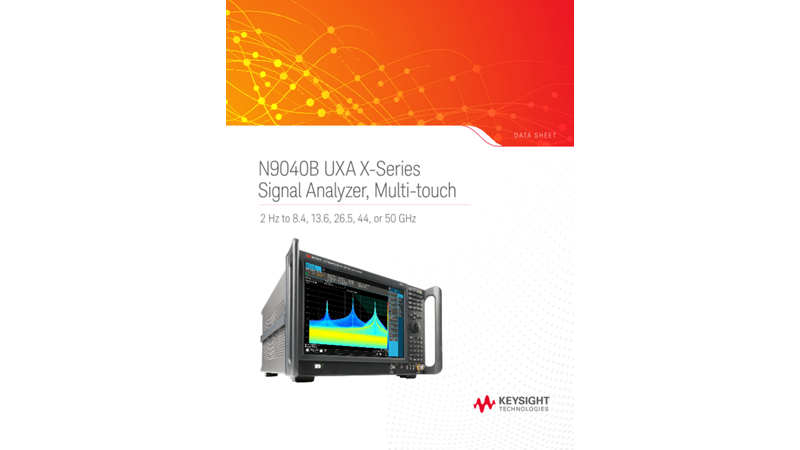

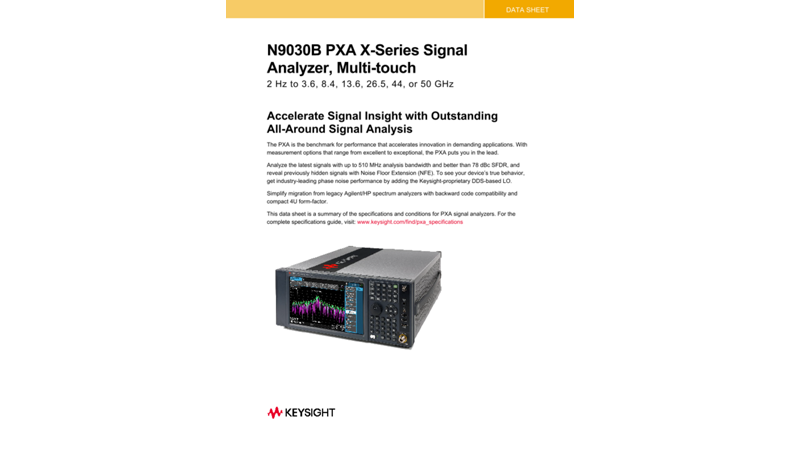


Extend the Real-Time Spectrum Analyzer (RTSA) Capabilities
Real-Time Spectrum Analyzers (RTSA) Featured Resources



Real-Time Spectrum Analyzer (RTSA) FAQs
A Real-Time Spectrum Analyzer (RTSA) is a device that continuously processes all signal samples within a given bandwidth without gaps. It uses Fast Fourier Transform (FFT) to convert time-domain data into frequency-domain insights, enabling the detection of transient or elusive signals. RTSA ensures gap-free analysis, which is crucial for observing dynamic signal behavior in real-time.
Traditional spectrum analyzers use swept or block-based FFT methods, which can miss short-duration signals due to gaps in data capture. RTSA, on the other hand, provides continuous, gap-free analysis, ensuring that no signal behavior is missed. This makes RTSA particularly effective for detecting transient and agile signals.
- Provides a more accurate picture of the signal environment. RTSAs do not rely on taking samples of the signal at discrete points in time. Instead, they analyze the signal continuously, providing a "true" representation of the signal's behavior.
- Faster measurement setups and easier identification of signal anomalies.
- Easily configured to display only the information that is important to you. They offer great flexibility and insight into your signal environment.
Probability of Intercept (POI) refers to the likelihood that an analyzer will detect a signal of a given duration and amplitude. In RTSA, POI is often expressed as the minimum signal duration that can be detected with 100% certainty. POI is influenced by factors such as sampling rate, FFT size, windowing function, and noise floor.
Six key factors influence POI in RTSA: sampling rate, time-record length (FFT size), windowing function, window size, FFT overlap, and noise floor. These parameters determine the minimum signal duration that can be reliably detected and measured with full amplitude accuracy.
A frequency-mask trigger activates when a signal crosses predefined frequency and amplitude thresholds. This allows RTSA to isolate specific signals in dynamic environments and initiate measurements or data capture based on signal behavior.
RTSA uses overlap processing and optimized window functions to ensure accurate amplitude measurements for short-duration signals. Overlap processing allows successive FFTs to share samples, improving the likelihood of capturing transient events with full amplitude accuracy.
Combining RTSA with VSA enables detailed post-processing, including demodulation and time-domain analysis. Captured signals can be replayed, zoomed, and analyzed using real-time analyzer software like Keysight’s 89600 VSA, providing a comprehensive view of signal behavior.
RTSA is used for detecting interference, characterizing bursty or agile signals, validating wireless system performance, troubleshooting transient issues, and ensuring compliance with spectral masks. Its gap-free analysis and triggering capabilities make it ideal for dynamic and complex signal environments.
Want help or have questions?