Medical Device Testing: Fundamentals for Connected Devices


Learn the Essentials of Medical Device Testing
- Comprehensive testing is critical: Medical device testing must address hardware components, software functionality, wireless connectivity, and cybersecurity to ensure patient safety.
- Regulatory landscape is complex: Multiple international standards and regulations govern medical device testing, requiring meticulous compliance strategies.
- Wireless concerns are growing: Modern connected medical devices face unprecedented challenges in RF performance, coexistence, and electromagnetic compatibility.
- End-to-end testing is essential: From component-level testing to system integration and real-world use simulations, no stage can be overlooked.
The High Stakes of Medical Device Testing
The U.S. Food and Drug Administration (FDA) issued a Class I recall of certain FreeStyle Libre 3 and FreeStyle Libre 3 Plus sensors following reports of inaccurate low glucose readings. Such inaccuracies may lead to inappropriate treatment decisions and pose a risk of serious injury or death if not identified.
These aren't hypothetical scenarios -- they're real events that have led to patient harm. Medical devices touch millions of lives daily, from simple thermometers to complex diagnostic imaging systems. What stands between a helpful medical innovation and a potentially harmful product? Thorough, meticulous medical device testing.
In this comprehensive guide, we'll explore the critical world of medical device testing -- what it encompasses, why it matters, and how manufacturers can implement effective testing strategies to ensure their products are safe, reliable, and compliant with global regulations.
Healthcare Insights


How Technology Is Advancing the Future of Healthcare
Learn more about the future of healthcare and the technologies that are driving medical innovation.


Meeting Challenges in Connected Medical Devices
Learn about the challenges facing connected medical device designers and manufacturers.


Improve Connected Medical Device Safety
Discover 10 insights for achieving critical safety, efficacy, and time-to-market of connected medical devices.


Powering Battery Operated Medical Devices
Learn why characterizing battery life is critical for developers of portable battery-powered medical devices.
What is Medical Device Testing?
Defining Medical Devices
The World Health Organization (WHO) defines a medical device as "any instrument, apparatus, implement, machine, appliance, implant, reagent for in vitro use, software, material, or other similar or related article, intended by the manufacturer to be used, alone or in combination, for a medical purpose."
Regulatory and standards organizations like the FDA and the American Society for Testing and Materials (ASTM) also use similarly broad definitions. What they have in common is they emphasize that medical devices are not just the end-user device as a whole, but also includes their parts, accessories, software, materials, and substances.


Figure 1. Examples of medical devices
Types of Medical Devices Requiring Testing
Medical devices span an enormous range of complexity, from simple bandages to sophisticated AI-powered diagnostic equipment. Each category presents unique testing challenges.
Devices worn on the body, including:
- Hearing aids
- Insulin pumps
- Continuous glucose monitors
- Smart orthopedic supports
- Robotic prostheses
Key Testing Challenges: Battery life optimization, biocompatibility, wireless performance, water resistance, comfort during extended use
Devices surgically placed within the body:
- Cardiac pacemakers
- Neurostimulators
- Orthopedic implants
- Drug-delivery implants
- Contraceptive devices
Key Testing Challenges: Long-term biocompatibility, extended battery life, MRI compatibility, wireless reliability through tissue, failsafe mechanisms
Devices used to diagnose medical conditions:
- Magnetic Resonance Imaging (MRI) machines
- Computed Tomography (CT) scanners
- Ultrasound equipment
- In-vitro diagnostic devices
- Point-of-care testing equipment
Key Testing Challenges: Accuracy, precision, electromagnetic compatibility, software reliability, integration with medical records systems
Internet of Medical Things devices that transmit data:
- Remote patient monitors
- Smart inhalers
- Connected infusion pumps
- Wireless vital sign monitors
- Telemedicine equipment
Key Testing Challenges: Data security, wireless coexistence, network reliability, patient privacy, power management
Software that performs medical functions without being part of hardware:
- Mobile medical applications
- AI diagnostic systems
- Clinical decision support software
- Remote monitoring platforms
- Therapeutic mobile applications
Key Testing Challenges: Algorithm validation, cybersecurity, usability across platforms, update management, integration testing


Tap Keysight's Medical Device Testing Insights
Why Medical Device Testing Matters
The importance of medical device testing cannot be overstated. Consider these real-world implications:




Medical Device Testing Landscape
Effective medical device testing requires a comprehensive approach that addresses multiple dimensions.


Performance Testing
Battery Life and Power Management Testing
For battery-powered devices, particularly implantables and wearables, power testing is critical. Their power consumption must be rigorously tested and optimized. This is why their current profiles span a wide dynamic range from nanoamps in sleep modes to some milliamps in active modes.
- Current profiling: Measuring power consumption across operating modes from nanoamps (sleep) to milliamps (active)
- Battery run-down tests: Simulating real-world use patterns to verify expected battery life
- Charging system validation: Testing charging efficiency, safety, and battery protection circuits
- Extreme condition testing: Verifying performance across temperature ranges and usage scenarios
Power Integrity Testing
Medical device circuits must receive clean, stable power delivery despite the low voltage levels, high-speed switching, and complex board layouts. This requires comprehensive testing of noise, ripple, transients, inrush currents, and impedance in their power distribution networks.
- Power distribution network analysis: Testing for impedance, resonance, and stability
- Transient response testing: Verifying behavior during load changes
- Ripple and noise measurements: Ensuring power quality meets device requirements
- Inrush current testing: Validating behavior during power-up sequences
Mechanical and Environmental Testing
Physical and environmental factors can significantly impact device performance:
- Vibration and shock testing: Simulating transportation and handling conditions
- Temperature and humidity testing: Verifying operation across environmental extremes
- Altitude testing: Ensuring proper operation at varying air pressures
- Ingress protection: Testing resistance to water, dust, and other contaminants
- Durability testing: Simulating wear and tear through accelerated life testing


Connectivity Testing
RF Component Testing
Modern connected medical devices rely on radio frequency subsystems that require rigorous testing:
- Impedance matching: Measuring S-parameters to minimize reflection and insertion losses
- Radiation patterns: Characterizing antenna performance and efficiency
- Transmitter testing: Verifying output power, bandwidth, error vector magnitude, and spectral emissions
- Receiver testing: Evaluating sensitivity, packet error rates, and adjacent channel selectivity
Electromagnetic Compatibility and Interference
EM compatibility (EMC) tests verify that a device can operate properly in the presence of electromagnetic fields of certain fixed levels. EM interference (EMI) tests check if a device emits electromagnetic energy above regulatory limits.
Pre-compliance EMC and EMI tests must be conducted throughout the device development process using simulators and signal analyzers. Toward the end of product development, official compliance tests are conducted at certified testing labs using standardized anechoic chambers and EMI receivers.
- Emissions testing: Ensuring the device doesn't produce electromagnetic interference above regulatory limits
- Immunity testing: Verifying the device functions correctly when exposed to electromagnetic fields
- Radiated and conducted emissions: Measuring both wireless and wired electromagnetic outputs
- Electrostatic discharge testing: Confirming protection against static electricity damage
RF Coexistence Testing
Perhaps the most challenging aspect of connectivity testing involves ensuring devices work in crowded RF environments. RF coexistence testing examines the ability of a medical device to operate correctly and maintain its functional wireless performance in dense RF environments full of signals on nearby frequencies with similar or dissimilar protocols.
RF coexistence is a real-world necessity with so many mobile phones, Wi-Fi networks, Bluetooth connections, and security scanners around.
- Adjacency testing: Verifying performance when operating near other wireless devices
- Protocol interaction testing: Ensuring different wireless standards (Bluetooth, Wi-Fi, cellular) don't interfere
- Realistic environment simulation: Creating test environments that replicate hospitals, homes, and other use settings
- Performance degradation measurement: Quantifying impacts on latency, throughput, and error rates


RF coexistence examines the ability of medical devices to operate correctly and maintain its functional wireless performance in dense RF environments with signals or nearby frequencies with similar or dissimilar protocols.

Software and Firmware Testing
Software Validation and Verification
Medical device software must undergo rigorous testing according to IEC 62304:
- Unit testing: Verifying individual software components function correctly
- Integration testing: Ensuring components work together as expected
- System testing: Validating the complete software system meets requirements
- Edge case testing: Verifying behavior under unusual or extreme conditions
User Interface Testing
The device interface must be intuitive and prevent user errors:
- Usability testing: Observing representative users interacting with the device
- Human factors analysis: Identifying potential use errors and their consequences
- Accessibility testing: Ensuring the device can be used by people with disabilities
- Internationalization testing: Verifying proper function across languages and regions
Connected Application Testing
Many modern medical devices have associated mobile or desktop applications:
- Cross-platform compatibility: Testing on various operating systems and device types
- API testing: Validating communication between device and application
- Performance testing: Measuring response times and resource usage
- Integration testing: Ensuring proper function with electronic medical records and other systems


Cybersecurity Testing
Medical Device Security Testing
An unfortunate side effect of moving functionality to firmware and software is the increased attack surface. Malicious attacks or malware on medical devices can be fatal to individuals and shut down critical facilities like hospitals and labs.
Robust software traceability is essential. Plus, since medical devices have long product lifecycles of five or more years, every device must have a strategy to identify and protect against future hardware, network, and software vulnerabilities.
- Vulnerability assessment: Identifying potential security weaknesses
- Penetration testing: Actively trying to exploit vulnerabilities
- Firmware analysis: Examining for backdoors or security flaws
- Authentication testing: Verifying access control mechanisms
Data Security Testing
Protecting patient data in transit and at rest:
- Encryption validation: Ensuring proper implementation of encryption standards
- Data integrity testing: Verifying data hasn't been tampered with
- Privacy controls testing: Validating HIPAA and other privacy requirements
- Data lifecycle testing: Ensuring proper data creation, storage, and destruction
Network Security Testing
The backend networks used by devices like remote patient monitors to transmit vital data must also be protected from cyber-attacks. The corporate networks of medical device manufacturers must be hardened to prevent any injection of malicious malware during manufacturing.
Securing the broader ecosystem in which the device operates:
- Network vulnerability assessment: Identifying weaknesses in connected networks
- Security monitoring testing: Verifying breach detection capabilities
- Update mechanism testing: Ensuring secure and reliable software updates
- Threat modeling: Identifying and addressing potential attack vectors


Safety and Compliance Testing
Standards Compliance Testing
Medical device standards provide frameworks for ensuring safety and efficacy. Key standards include:
- ISO 13485: Quality management systems for medical devices
- ISO 10993: Biological evaluation and biocompatibility testing
- IEC 60601-1: Safety and performance standards for medical electrical equipment
Compliance testing involves systematic verification that a device meets every applicable requirement in these standards, often through documented test cases, protocols, and reports.
Regulatory Compliance Testing
Beyond standards, regulatory bodies enforce additional requirements:
- FDA requirements: Quality System Regulation (QSR) and Current Good Manufacturing Practices (CGMP)
- European Union Medical Device Regulation (MDR): CE marking requirements
- Other international regulations: PMDA (Japan), NMPA (China), etc.
Regulatory testing often includes validation of manufacturing processes, risk management procedures, and post-market surveillance systems.
IEC 60601 series is the family of device safety and performance standards for medical electrical equipment, covering a broad set of electrical and electronic concerns including wireless coexistence, EM compatibility, and device usability.
ISO 10993 guides the biological safety assessment, hazard identification, biocompatability testing, and mechanical testing of medical devices as part of a risk management process.
IEC 62304 covers the entire software development life cycle from initial design to end of support. It applies to both software that is embedded into medical devices and standalone software, which is often known as Software as a Medical Device (SaMD).



Accelerate Healthcare Innovation


Compliance Testing and Validation
Medical Standards Compliance
Keysight facilitates ISO 13485's vision with accurate and reliable test and measurement equipment for medical device safety testing.
Proper instrument calibration with certification and traceability are essential for ISO 13485 quality assurance. Keysight's calibration services ensure that your medical device testing exceeds compliance requirements.
ISO 10993 involves the use of biological testing equipment that is verified and calibrated using Keysight instruments.
Compliance with IEC 60601-1's performance testing and product testing are enabled by the solutions listed in the sections below.
Regulatory Compliance Solutions
Keysight's IOT0047A regulatory test solution enables compliance with global regulations for wireless devices. It easily supports the complexity, large data volumes, and speed requirements of modern regulatory tests.
EMC and EMI Compliance
For EMC testing and EMI measurements, Keysight offers:
- EMPro for 3D EM simulation of radiated emissions from circuits and components
- X-Series signal analyzers with the N6141EM0E application for EMI measurements
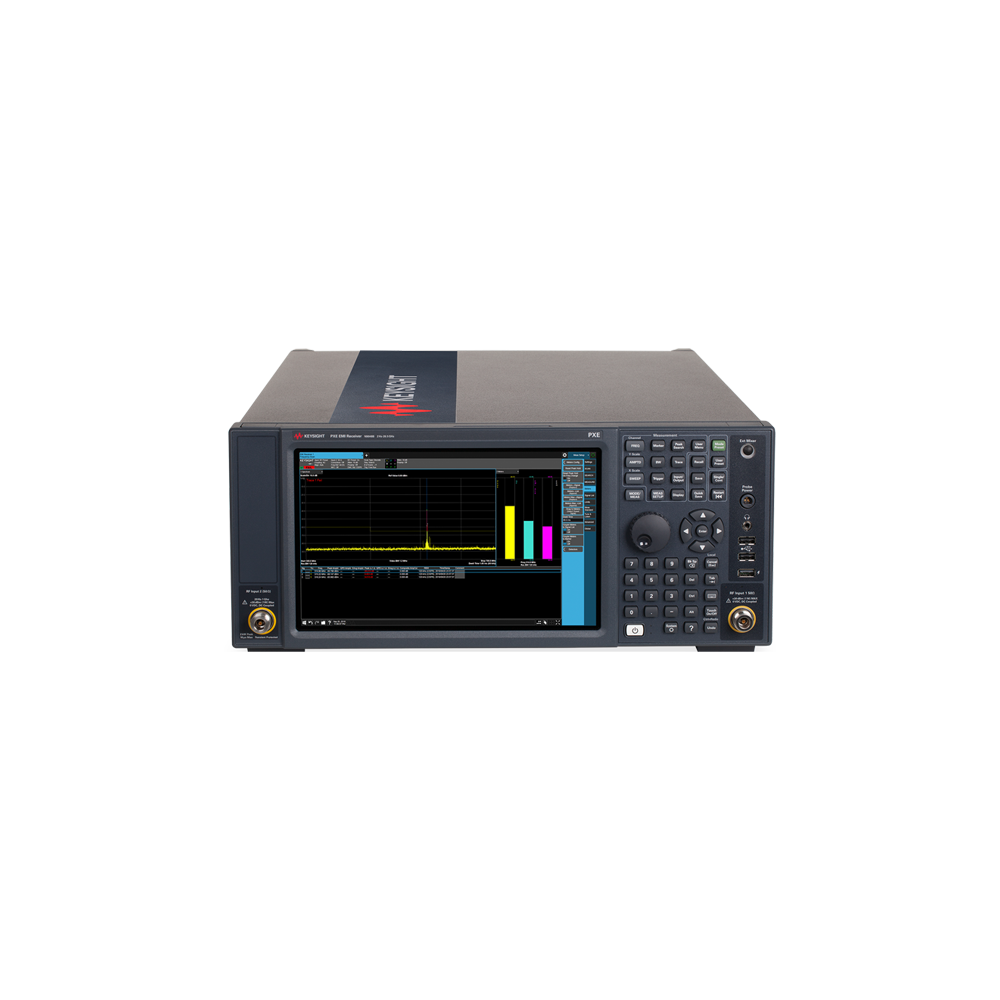
- EMI receivers like the N9038B MXE and N9048B PXE for compliance with multiple medical device industry, military, and regulatory EMI standards


Medical Device Battery Life and Power Solutions
Battery Performance
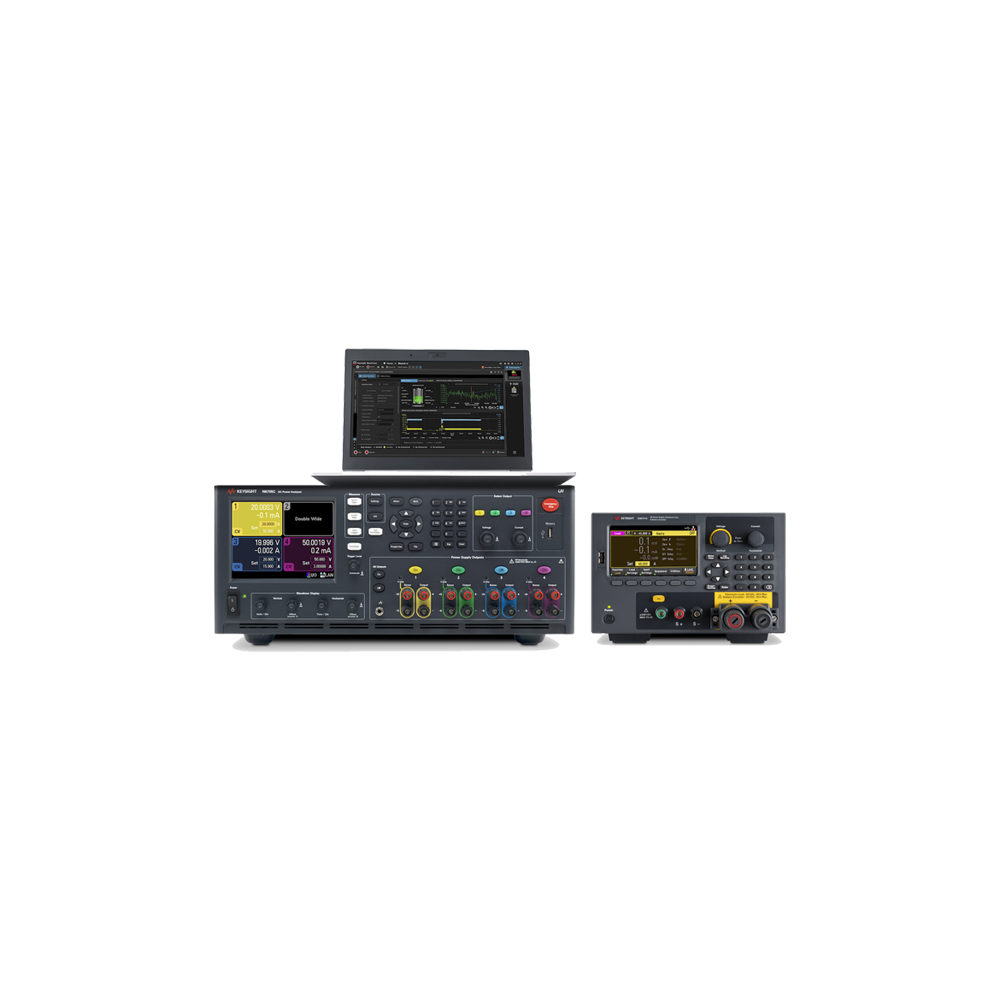
For optimizing battery life, battery drain analysis from nano-amps to amps, run-down tests, power waveform captures, and long-term data logging are essential. Keysight instruments for these include the:
- N6705C power analyzer
- N6785A source measure unit (SMU) for power up to 80 watts
- N6781A SMU for power up to 20 watts
The CX3300 device current waveform analyzer captures current waveforms with high resolution for low-power IoT device characterization, measuring currents as low as 100 picoamps. Its automatic current profiler accelerates.
Power Integrity Analysis
The Infiniium S-Series oscilloscope with the N7020A power rail probe enables accurate power integrity analysis, measuring noise, ripple, transients, and load response on DC power rails.


RF Coexistence Solutions
Closed-Loop RF Coexistence Testing Solutions
Keysight's solutions for closed-loop RF coexistence testing include the:
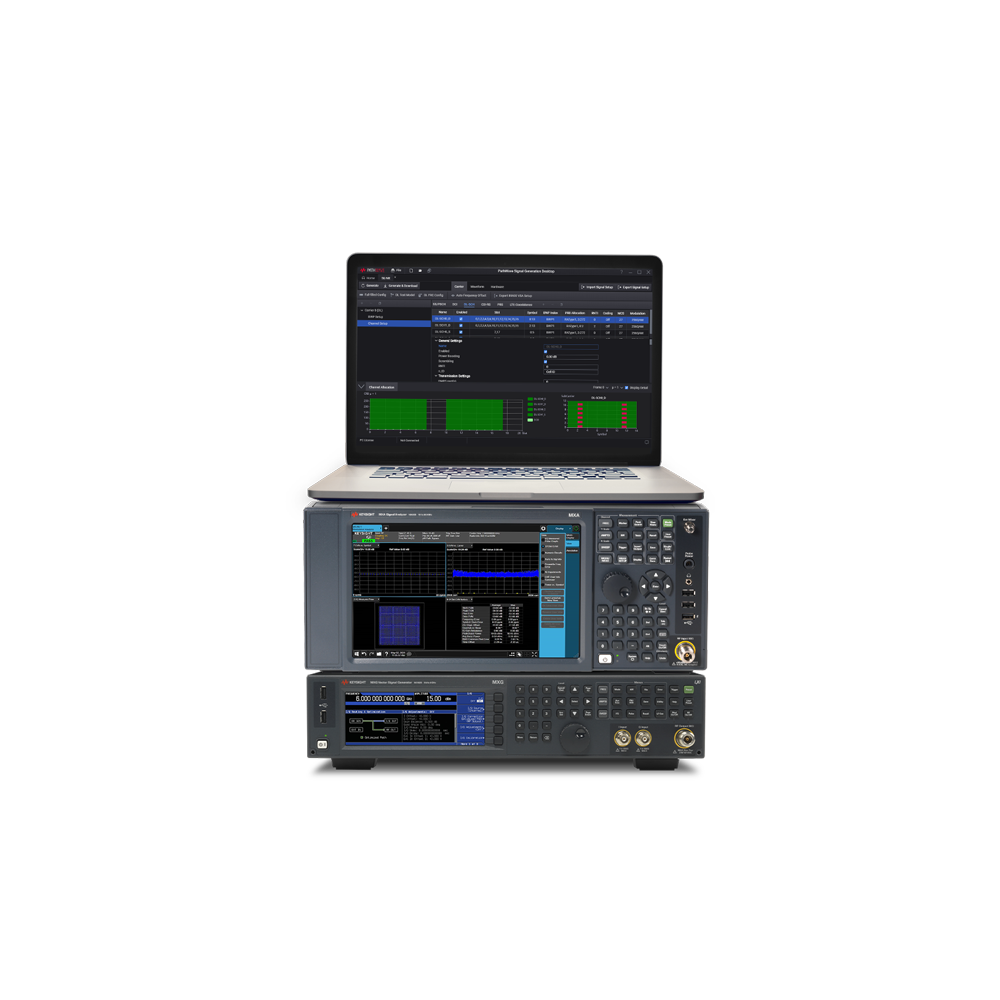
- N5182B MXG X-Series signal generator to create RF signals
- N9020B MXA signal analyzer to capture RF signals
- 89601200C software for vector signal analysis
Wireless network emulators create dense Wi-Fi and cellular environments for medical devices under test.
These lab-based solutions are complemented by coexistence field testing using FieldFox handheld spectrum analyzers to identify wireless signals in health care facilities using spectrum and interference analysis tools.


Medical Device Cybersecurity
Solutions for Medical Device Cybersecurity
Keysight’s IoT Security Assessment platform enables vulnerability assessment, protocol fuzzing, and firmware analysis. It can extract the software bill of materials to uncover associated vulnerabilities, detect hard-coded credentials, pinpoint configuration flaws, identify weak or expired cryptographic keys and certificates, and identify vulnerable scripts and binary code.
It also supports automated testing and validation against various cybersecurity standards and labeling requirements relevant to IoT, such as the Cyber Trust Mark and more.
Software for Network Security
Keysight's state-of-the-art network security products and testing services include:
- Threat Simulator for automated adversary simulation, breach and attack simulation, validation of regulatory requirements regarding data exfiltration, and daily threat intelligence updates
- BreakingPoint to validate your network security posture with real applications and a full range of threat vectors
- IxVeriWave for testing Wi-Fi network and device performance, roaming, co-existence, and security authentication schemas in realistic environments replicating hospitals

Get in Touch with One of Our Experts
Need help finding the right solution for you?