Wie man die Anstiegsgeschwindigkeit eines Verstärkers misst

Trennen Sie die Reizgrenzen von der Verstärkerantwort.
Wird ein Verstärker mit einem schnellen, großen Spannungssprung angesteuert, folgt sein Ausgang der Eingangsflanke möglicherweise nicht unmittelbar. Stattdessen kann der Übergang am Ausgang mit einer nahezu konstanten maximalen Steigung erfolgen, die durch die Anstiegsgeschwindigkeitsgrenze des Verstärkers bestimmt wird. Die messtechnische Herausforderung besteht darin, dieses Verhalten großer Signale von Begrenzungen der Anstiegsgeschwindigkeit, Belastungseffekten, Messeffekten oder einer unzureichenden Bandbreite des Oszilloskops im Messaufbau zu unterscheiden.
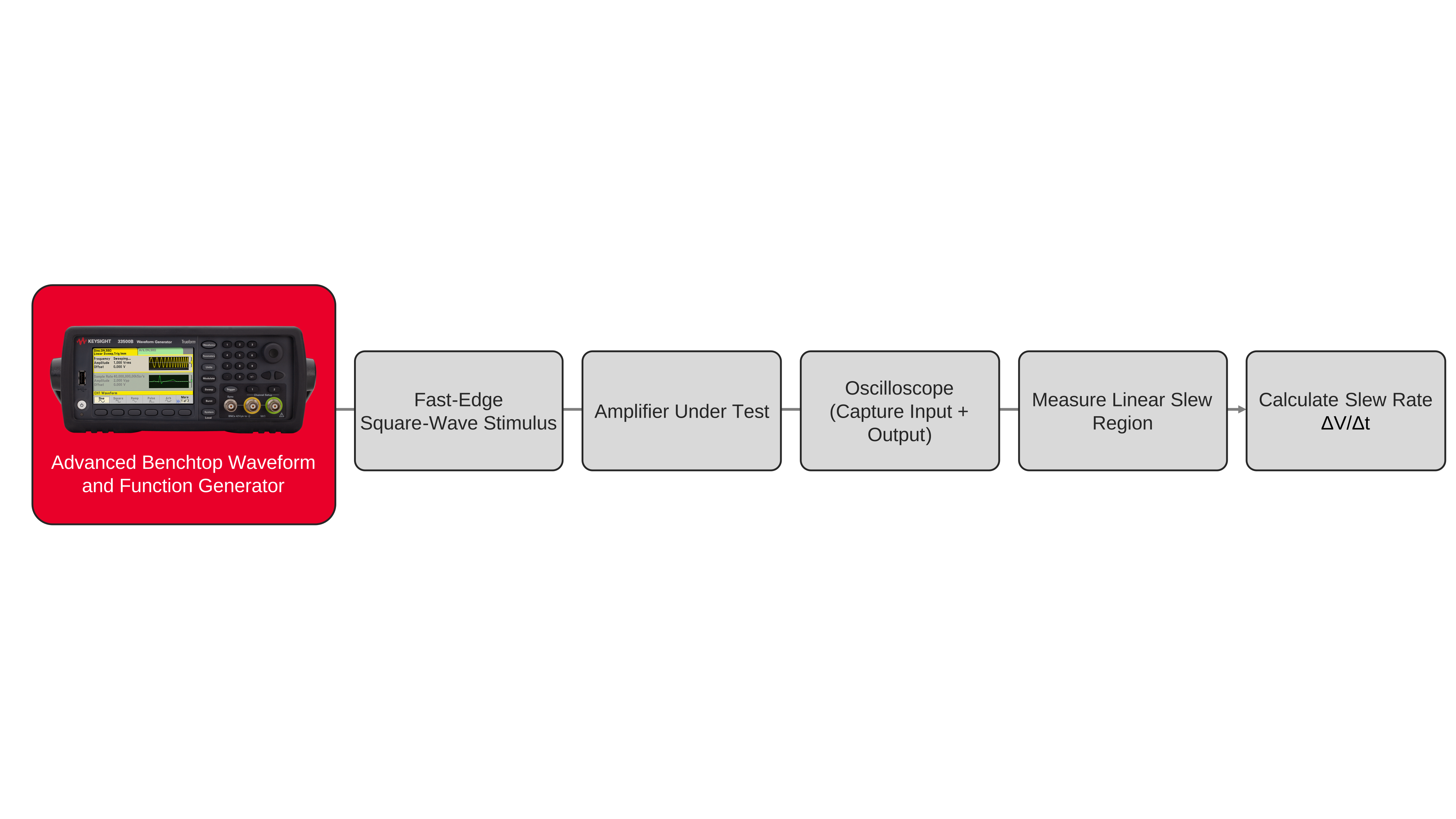
Für den Test werden eine Rechteckwellenquelle mit einer Anstiegszeit, die kürzer als die erwartete Verstärkerantwort ist, ein ausreichend schnelles Oszilloskop sowie Messspitzen mit geringer Kapazität am Ein- und Ausgang benötigt. Eine niedrige Wiederholrate ermöglicht es, dass sich jeder Übergang vor der nächsten Flanke stabilisiert. Die Anstiegsgeschwindigkeit wird aus dem linearen Bereich jedes Ausgangsübergangs als Spannungsänderung dividiert durch Zeitänderung berechnet, wobei steigende und fallende Flanken separat ausgewertet werden.

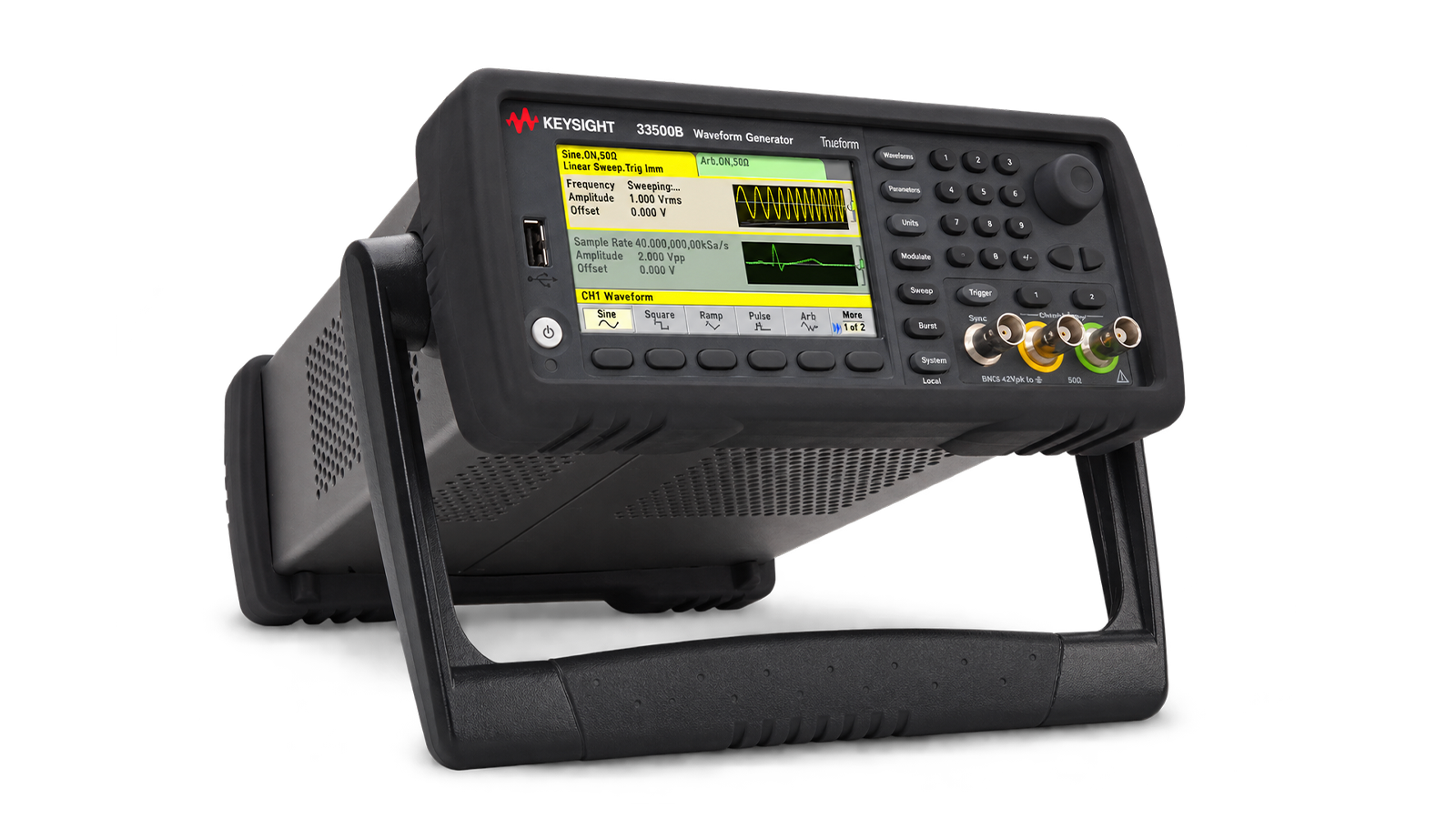
Lösung zur Messung der Anstiegsgeschwindigkeit eines Verstärkers
Siehe Blockdiagramm der Lösung zur Messung der Anstiegsgeschwindigkeit eines Verstärkers

Entdecken Sie Produkte für unsere Lösung zur Messung der Verstärkeranstiegsgeschwindigkeit.
-

![]()
33522B Funktionsgenerator, 30 MHz, 2-Kanal mit Arbiträrfunktion


Entdecken Sie Ressourcen und Einblicke
Zusätzliche Ressourcen zur Wellenformerzeugung
Verwandte Anwendungsfälle

-
![]()
Mehr erfahren
Wie man komplexe Betriebszyklen für Testzwecke nachbildet
Reproduzierbare Betriebszyklen mit definierten Signalzuständen, Übergängen und Verweilzeiten werden nachgebildet, um das Verhalten des Prüflings während Funktionstests zu bewerten.
Mehr erfahren

-
![]()
Mehr erfahren
Wie man modulierte und Burst-Signale validiert
Erzeugen Sie saubere Modulations-, Sweep- und Burst-Signale mit Advanced Tisch-Wellenform- und Funktionsgeneratoren zur Validierung des Verhaltens des Prüflings (DUT) mit hochpräzisen Stimuli und wiederholbarer Zeitmessung.
Mehr erfahren
-
![]()
Mehr erfahren
Wie man Prüflinge mit beliebigen Wellenformen anregt
Erstellen Sie realistische DUT-Stimuli mit Advanced Tischgeräte zur Erzeugung von Wellenformen und Funktionen, um beliebige Wellenformen effizient zu modifizieren, wiederzugeben und zu automatisieren.
Mehr erfahren

Kontaktieren Sie einen unserer Experten
Benötigen Sie Hilfe bei der Suche nach der richtigen Lösung für Sie?