









- Overview
- All Models
- Support
Reliable Wireless Device Evaluation in Space-Constrained Environments
Keysight rack-mountable test chambers deliver flexible conducted and radiated testing in a compact, rack-ready form factor. Designed for wireless device developers as well as service and repair providers working with cellular technologies, these chambers combine high-performance shielding with portability and ease of integration. The entire system fits seamlessly within a standard 19-inch rack footprint, enabling efficient use of lab and production floor space. Its modular configuration provides the flexibility to scale and adapt as test requirements evolve. Built for speed, reliability, and streamlined rack integration, these chambers help accelerate both cellular research and development and device repair workflows. Need help selecting? Check out the resources below.
Compact Footprint
Maximize lab efficiency with a space-saving design that integrates seamlessly into standard 19-inch racks without compromising performance.
Shielding Performance
Ensure accurate and repeatable measurements with high shielding effectiveness that minimizes external interference across frequency ranges.
Test Flexibility
Support both conducted and over-the-air testing across sub-6 GHz, FR1, and mmWave FR2 bands within a single, versatile platform.
Modular Scalability
Adapt to evolving test needs with configurable chamber designs, flexible mounting options, and support for a wide range of wireless devices.


-
Maximum angles of arrival
1
-
Frequency range
22 GHz to 50 GHz, 23 GHz to 50 GHz
-
Measurement type
Direct far field (DFF)
-
Maximum DUT weight
5 kg
-
Range length
0.37 m to 0.78 m
-
Use cases
Protocol Verification, Protocol Acceptance, Functional, Performance
Available Products

Mini Rack-Mountable Test Chamber
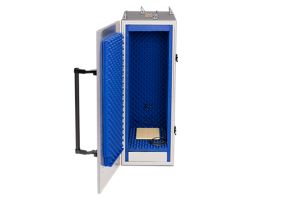
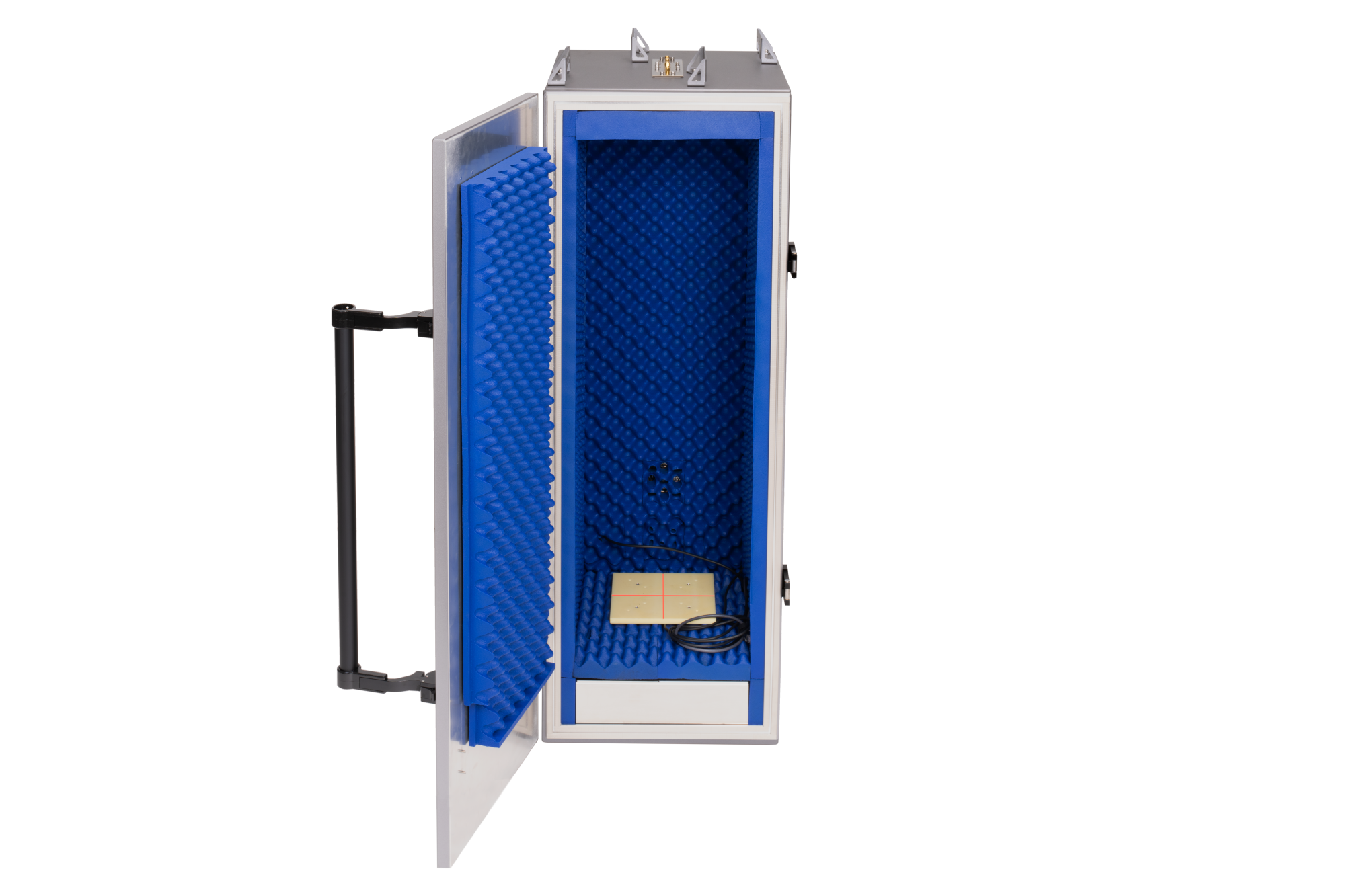
Rack-Mountable Test Chamber
Services and support
Innovate at speed with curated support plans and prioritized response and turn-around times.
Get predictable, lease-based subscriptions and full lifecycle management solutions—so you reach your business goals faster.
Experience elevated service as a KeysightCare subscriber to get committed technical response and more.
Ensure your test system performs to specification and meets local and global standards.
Make measurements quickly with in-house, instructor-led training, and eLearning.
Download Keysight software or update your software to the newest version.
Frequently Asked Questions
A rack-mountable over-the-air (OTA) chamber offers a compact, integrated solution for testing wireless devices without the space and cost requirements of a traditional lab benchtop system. Because it is designed to fit into a standard equipment rack, it can be installed directly alongside network emulator, common interface unit, remote radio heads, and other instruments in a lab bench or rack environment. This saves floor space and enables streamlined workflows where multiple systems can be used in parallel.
These chambers are particularly valuable for protocol and functional testing of small wireless devices, such as smartphones, IoT sensors, wearables, and modules. They provide the required shielding and absorber-lined interior in a much more manageable form factor. By keeping the test environment close to the instruments, rack-mountable OTA chambers reduce cable lengths, minimize loss, and simplify integration into automated test setups. Compared to larger chambers, they also tend to have faster setup times and lower operational overhead, making them well-suited for R&D verification and Repair labs.
Shielding is critical in any OTA chamber, whether it is full-size or rack-mountable. The goal is to ensure that external signals, such as cellular, Wi-Fi, or Bluetooth traffic in the building, do not leak into the chamber and interfere with the measurements. At the same time, shielding prevents test signals generated inside the chamber from radiating outward and causing unintended interference with other equipment.
The level of shielding required depends on the frequency range and sensitivity of the device under test, but in general, shielding effectiveness of 70 decibels or more is desirable for wireless device testing. Rack-mountable chambers are designed with high-performance shielding materials, absorbers, and RF-tight door seals to achieve this level of isolation. When properly specified and installed, they can deliver good shielding performance, ensuring that measurements reflect only the controlled test conditions.