










- Overview
- All Models
- Support
Emergency Safety Validated for Real-World Performance
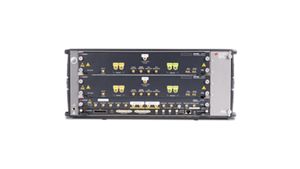
Keysight Emergency Call Test Solutions provide comprehensive validation coverage for evolving automotive emergency communication systems, including eCall, NG-eCall, Hybrid eCall, ERA-GLONASS, and China eCall (AECS). As global regulations and network migrations drive the evolution of emergency calling from circuit-switched architectures to all-IP emergency communications, automotive manufacturers face increasing challenges in validation, certification, and standards compliance. Built on the industry-leading UXM wireless test platform, the solution helps OEMs, Tier 1 suppliers, module vendors, and test laboratories accelerate development, simplify certification programs, and reduce validation complexity through a scalable and repeatable test environment.
Global standards coverage
Support validation of eCall, NG-eCall, Hybrid eCall, ERA-GLONASS, and China eCall (AECS) standards across global markets.
End-to-end validation
Validate complete emergency call workflows from In-Vehicle System (IVS) activation and Minimum Set of Data (MSD) transmission to Public Safety Answering Point (PSAP) connectivity and voice communication.
High-fidelity GNSS simulation
PNT Xe delivers high-fidelity Global Navigation Satellite System (GNSS) simulation with realistic GPS, Galileo, GLONASS, and BeiDou scenarios to ensure accurate and repeatable emergency call positioning validation.
Future-ready platform
A single UXM platform supports eCall, NG-eCall, Hybrid eCall, and AECS validation across 2G to 5G networks, with a future-ready path to NTN-enabled communications.
-
Type
Conformance Test Solution
-
Network generation emulation
2G, 3G, 4G, 5G
-
Test automation standard
ETSI TS 103412, ETSI TS 103683, CEN TS 17240, GOST R 55530, CEN 18052
Typical Configuration
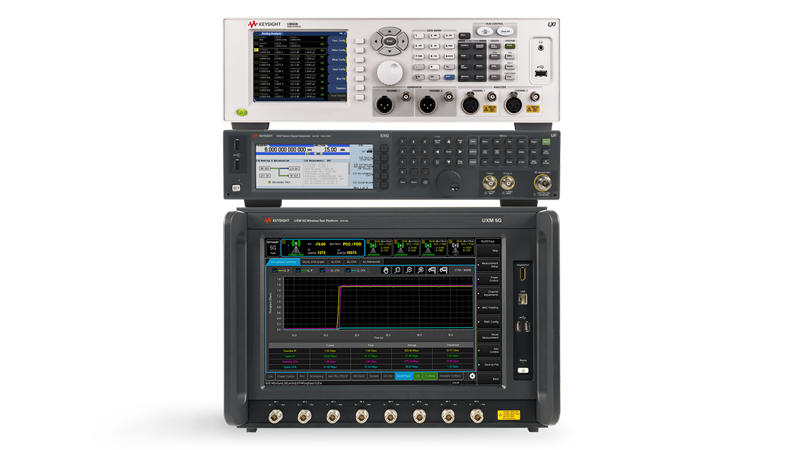
eCall / ERA-GLONASS / NG eCall Conformance Test Solution
Services and support
Innovate at speed with curated support plans and prioritized response and turn-around times.
Get predictable, lease-based subscriptions and full lifecycle management solutions—so you reach your business goals faster.
Experience elevated service as a KeysightCare subscriber to get committed technical response and more.
Ensure your test system performs to specification and meets local and global standards.
Make measurements quickly with in-house, instructor-led training, and eLearning.
Download Keysight software or update your software to the newest version.
Frequently Asked Questions
eCall, short for emergency call, is a European Union initiative designed to automatically alert emergency services in the event of a serious road accident. Its primary goal is to significantly reduce emergency response times, thereby saving lives and mitigating the severity of injuries. The eCall system is now mandatory in all light-duty vehicles since April 2018 and operates through a combination of in-vehicle technology and established emergency communication networks. Once activated, the eCall system establishes a connection to the nearest Public Safety Answering Point (PSAP), which is the emergency services call center. It transmits a minimum set of data (MSD), which includes crucial information about the incident.
Both eCall and NG-eCall (Next Generation eCall) enable a vehicle to establish an emergency call with a Public Safety Answering Point (PSAP) following a serious road accident. The emergency call can be triggered automatically after a severe collision or manually by the vehicle occupants. In both cases, a Minimum Set of Data (MSD) is transmitted to help emergency responders quickly identify the vehicle and its location.
The primary difference lies in the communication technology used to establish the emergency call.
- eCall uses legacy circuit-switched (CS) cellular networks and transmits the MSD using an in-band modem.
- NG-eCall uses IMS/SIP signaling over LTE and 5G IP networks, eliminating the dependency on legacy circuit-switched infrastructure.
- Both systems share the same objective—providing fast and reliable emergency assistance—while NG-eCall is designed to support the industry's transition toward all-IP mobile networks.
The transition to NG-eCall is primarily driven by the global retirement of 2G and 3G networks and the widespread deployment of LTE and 5G. As legacy cellular infrastructure disappears, automotive manufacturers must ensure that emergency calling services continue to operate reliably throughout the vehicle's lifetime.
Moving to NG-eCall also enables manufacturers to:
- Maintain regulatory compliance as communication standards evolve.
- Support future IP-based emergency service infrastructures.
- Reduce long-term dependency on legacy network technologies.
- Build a scalable platform for future connected vehicle services.
During the migration from legacy eCall to NG-eCall, vehicles may operate in regions where both legacy and IP-based emergency networks coexist. Hybrid eCall ensures that emergency calls can still be completed regardless of the available network.
Validation typically includes verifying:
- Emergency call establishment across multiple network generations.
- MSD transmission and voice communication.
- Fallback and network transition behavior.
- End-to-end interoperability under different deployment scenarios.
Keysight offers a unified network emulation platform, UXM, that supports 2G, 3G, LTE, and 5G, simplifies validation, and reduces testing complexity.
Both China AECS and European NG-eCall are designed to automatically or manually connect vehicles to emergency services following a serious accident. While they share the same objective, they are defined by different regulations, communication architectures, and implementation requirements.
Key differences include:
- National standards and certification requirements.
- Emergency call procedures and service workflows.
- Communication protocols and data transport methods.
- Minimum Set of Data (MSD) definitions and message formats.
For manufacturers developing global vehicle platforms, validating both implementations helps ensure compliance across multiple markets while reducing development risk.
Non-Terrestrial Networks (NTN) are expected to extend emergency communication beyond traditional terrestrial cellular coverage by integrating satellite connectivity into future mobile networks. This will help improve emergency service availability in remote, rural, and coverage-limited areas, where terrestrial networks may be unavailable. Potential benefits include:
- Extended emergency communication coverage beyond terrestrial networks.
- Greater resilience through seamless terrestrial (TN) and non-terrestrial (NTN) connectivity.
- Improved support for connected and software-defined vehicles.
- Alignment with the ongoing evolution of 3GPP NTN technologies.
Keysight is actively supporting the evolution of emergency communications through industry collaborations. At the 5GAA Paris 2025 demonstrations, Keysight showcased emergency call validation using NTN connectivity.
eCall is specifically designed to transmit only the Minimum Set of Data (MSD) necessary for emergency services to respond effectively to an accident. The data transmitted is strictly limited to prioritize privacy while ensuring life-saving information is conveyed. The MSD includes vehicle location, time of incident, direction of travel, vehicle identification number (VIN), type of activation, and vehicle propulsion or fuel type. Crucially, the MSD does NOT include personal data like your name, address, or phone number. It focuses solely on immediate accident-related information.
It is important to distinguish between the mandatory public eCall system and other commercial telematics services that some car manufacturers offer. While the eCall system is strictly regulated for privacy, other in-vehicle systems may collect and transmit a much wider range of data for various purposes, and drivers should be aware of the privacy policies associated with those services.
The eCall system offers a range of significant benefits for road safety, accident response, and ultimately, saving lives. Here are some of the advantages:
- Rapid emergency response: eCall significantly reduces the time it takes for emergency services to arrive at the scene of an accident.
- Saving lives and reducing injuries: By speeding up response times, eCall is projected to save thousands of lives annually across the EU.
- Accurate location data: The system automatically transmits the precise GPS/Galileo coordinates of the accident, along with the direction of travel, in case the occupant is injured or unconscious.
- Automatic alerting: eCall activates automatically upon detecting a severe impact. This ensures that help is summoned even if the vehicle's occupants are unable to make a call themselves.
- Improved accident management: By providing vehicle data to emergency services, eCall can help dispatchers send the appropriate resources to better prepare for the emergency situation.
In summary, eCall is a powerful safety feature that transforms post-crash response, significantly improving the chances of survival and recovery for those involved in road accidents.