Digital Healthcare

- Medical Device
- Medical Systems
- Hospital Workflow
- Cybersecurity
- Embedded Solutions
Engineered reliability across wearable, implantable, and connected medical devices.
OTA Wireless Test
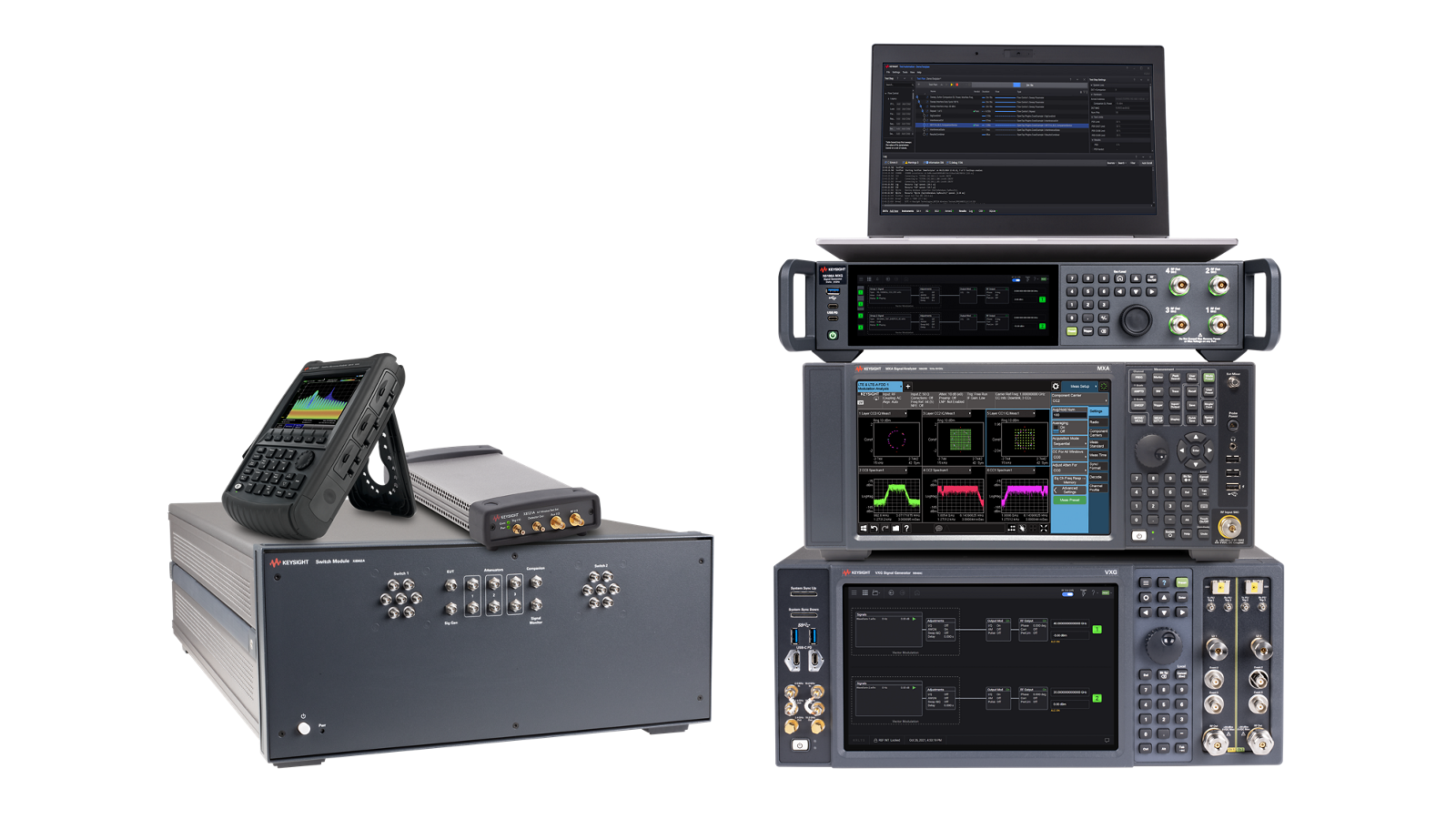
Conduct over-the-air signaling tests to evaluate antenna and RF performance under realistic IoMT real-world usage and clinical environment conditions.

Wireless Coexistence Compliance
Pre-verify wireless resilience using multi-interferer testing to ensure reliable device operation in dense IoMT settings.
IoMT Battery Life Optimization
Measure dynamic current consumption, correlate RF/DC events (BLE, Wi-Fi, cellular) and model real-world usage to accurately predict runtime and battery performance.

Wireless Regulatory Compliance
Validate devices against major global wireless regulatory standards (FCC, ETSI, and others) to streamline certification and market entry.
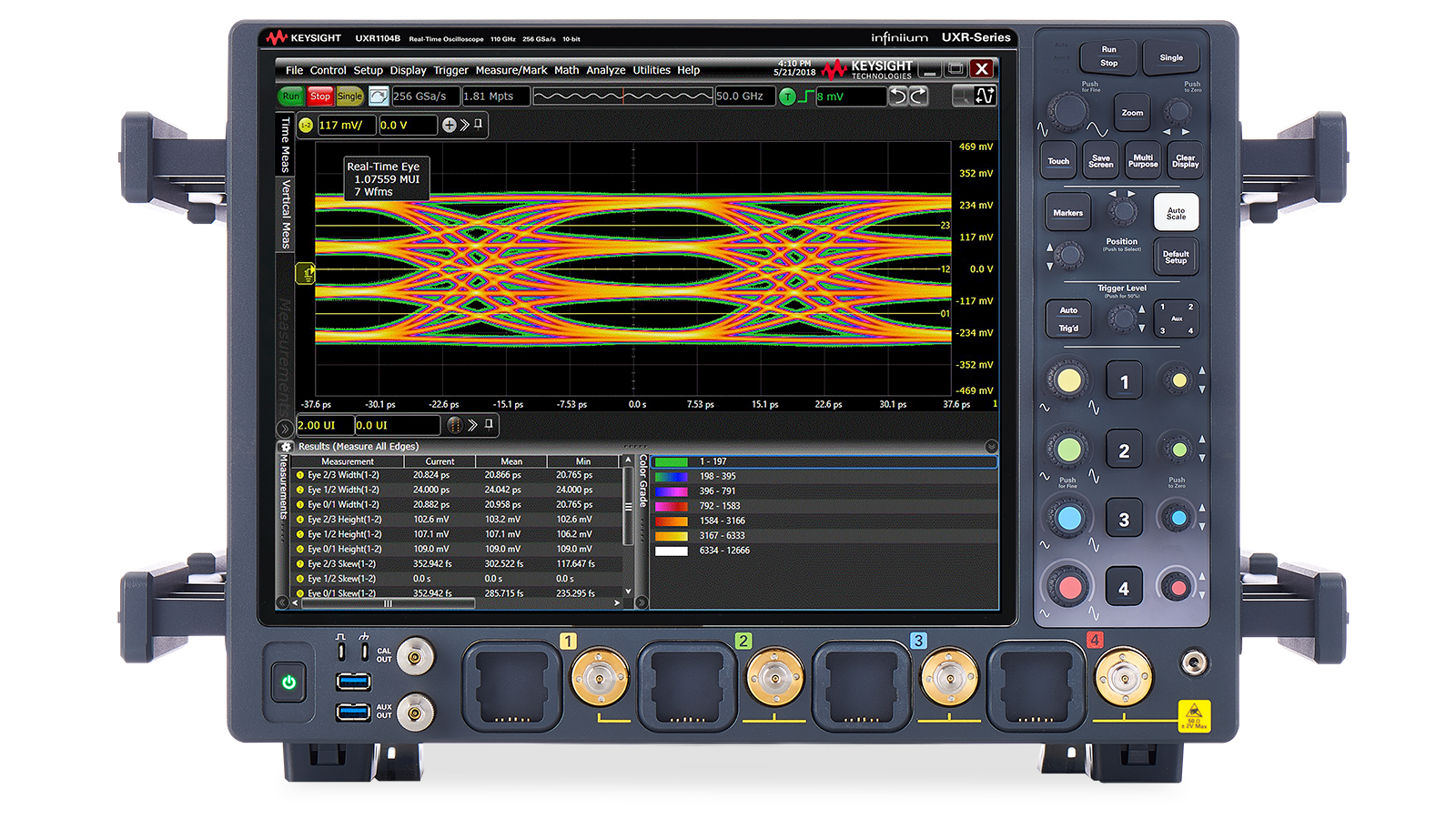
Validate high-speed data transfer, advanced RF performance, and the transition from AI research to production-ready medical imaging systems.
MRI RF Coil Test
Conduct multi-channel RF impedance matching and tuning for MRI coils, supporting systems up to 10.5T through simulation.

MRI Optical Transceiver Test
Ensure optical transceiver performance in an MRI system with a J-BERT and an oscilloscope.
Expand test coverage, ensure interoperability, and protect patient data with scalable, non-invasive solutions built for complex, evolving electronic medical records (EMR) applications.
Automated EMR Testing
Ensure your EMR system functions correctly across all browsers, operating systems, and devices.

Harden medical devices and IT infrastructure to reduce risk and support compliance — without disrupting care delivery.
IoT Security Assessment
Find security flaws in connected medical devices before deployment using the latest protocol fuzzing and attack techniques.

Vulnerability Analysis
Embedded security for Side Channel Analysis (SCA) and Fault Injection (FI) testing for medical chips. Supports data acquisition and advanced cryptanalysis.
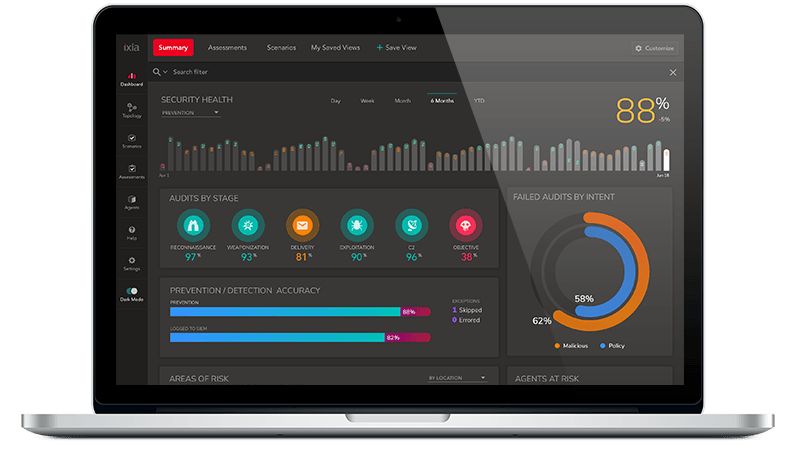
Breach and Attack Simulation
Maintain patient and service security through continuous evaluation of network security controls.
Network Visibility
Capture network packets across healthcare networks and distribute them to monitoring tools for analysis.

Bring safer, faster, and more portable medical diagnostic tools to market with microwave sensing technology.
Microwave Sensing
Apply microwave sensing technology for non-invasive medical applications.

Test with Precision, Build with Confidence
From medical IoT to life-saving devices and technologies, Keysight’s design, test and emulation solutions help accelerate product design and support compliance efforts—advancing safer healthcare innovations.
Explore Digital Healthcare Use Cases

Healthcare
Wireless Coexistence Testing
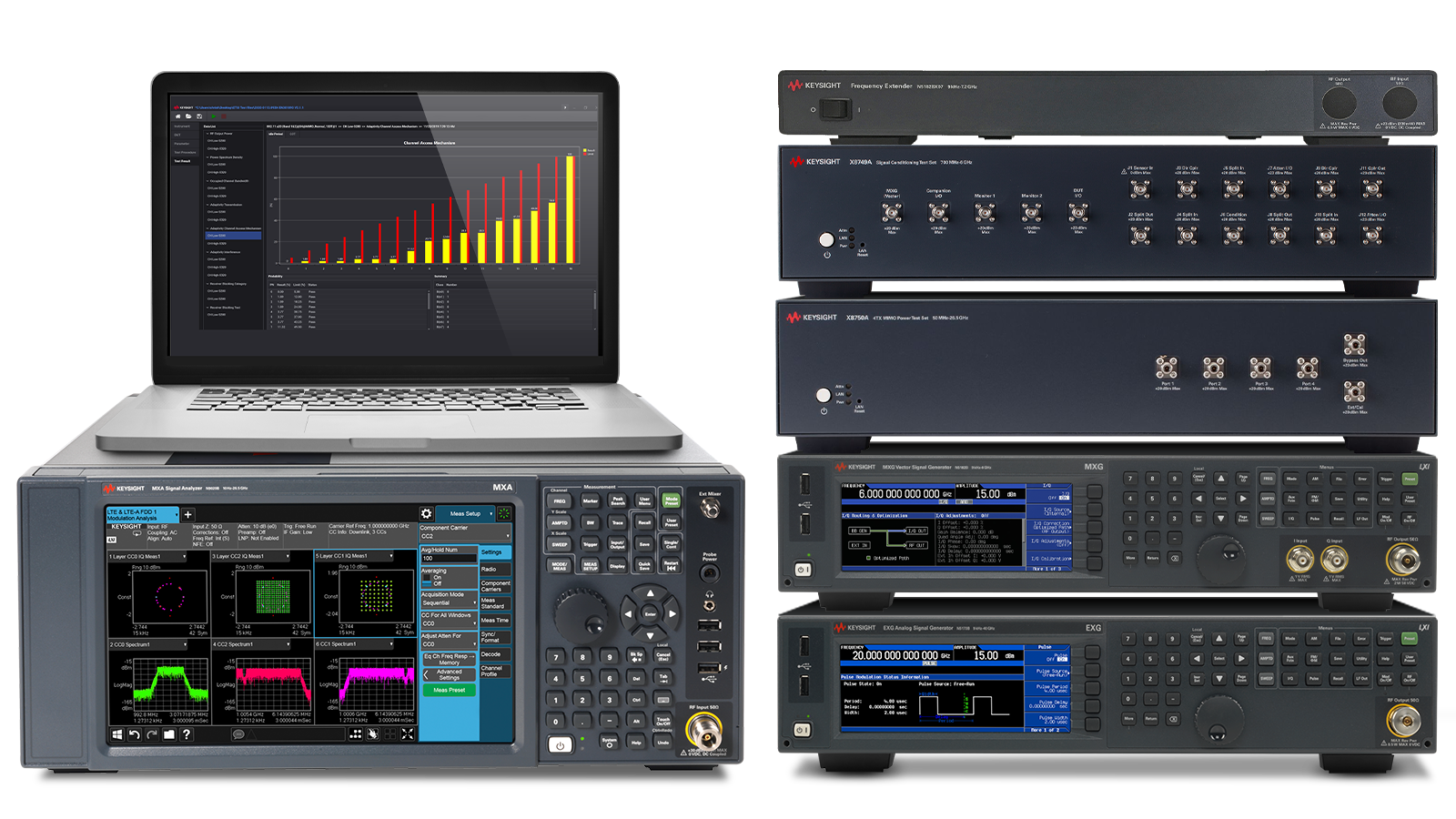
Ensure wireless medical devices meet performance and coexistence standards with automated testing. Capture reproducible metrics for ANSI C63.27 pre-compliance, signal integrity, throughput, and error rates.
Healthcare
Detect and quantify signal jitter early with precision oscilloscopes to ensure reliable imaging system performance.
Healthcare
Test complex, HIPAA-compliant healthcare systems with scalable, non-invasive EMR analysis without accessing source code.
Healthcare
Validate Wi‑Fi device performance at scale, covering RF signals and protocol behavior with automated compliance.
Healthcare
Ensure regulatory compliance for wireless healthcare devices using a scalable system that streamlines testing.
Discover Digital Healthcare Resources
Learning Hub
Discover how engineers address performance, safety, and regulatory challenges in connected medical device design.


Brochure
Ensure safe, compliant connected medical devices with Keysight precision testing and actionable engineering insights.
Application Note
Comprehensive Testing of Coin Battery for Medical Products
Validate coin battery performance and reliability for medical devices through standardized testing and measurable performance benchmarks.
Case Study
Reduce validation cycles by 70% to accelerate device testing, as demonstrated by a leading medtech firm.
Solution Brief
Analyze optical imaging signals to validate systems for precision diagnostics and biomedical innovation.
Digital Healthcare FAQs
Regulatory expectations for medical devices emphasize risk‑based design control from the earliest development stages. This is especially relevant for medical devices that incorporate wireless technologies. Industry guidelines reference ANSI C63.27, an American National Standard that defines methods for evaluating wireless coexistence—the ability of a device to maintain its functional wireless performance in the presence of other signals within its intended operating environment. This standard highlights the importance of identifying device risks based on real‑world use scenarios, such as in‑hospital or at‑home environments, and evaluating performance under representative interference conditions.
To support this design‑for‑compliance approach, medical devices should be tested at each design stage using certified, accurate, and reliable instruments to ensure device efficacy is maintained as the design evolves. Keysight provides a portfolio of solutions that span early‑stage design through pre‑compliance testing, enabling manufacturers to identify risks early and reduce costly rework. Tools such as PathWave Advanced Design System (ADS) help accelerate prototyping and simulation, while Keysight’s pre‑compliance solutions support regulatory readiness testing, including wireless coexistence and electromagnetic performance evaluations aligned with standards such as ANSI C63.27. This structured, standards‑aligned workflow helps manufacturers progress toward regulatory compliance with greater confidence and efficiency.
The Food and Drug Administration (FDA) requires medical device manufacturers to address cybersecurity as part of device safety and effectiveness across the total product lifecycle. Since regulatory changes that took effect in March 2023, manufacturers are expected to demonstrate that cybersecurity risks are identified, assessed, and controlled starting from the design stage and continuing through post-market operation. As part of premarket submissions, manufacturers need to provide a Software Bill of Materials (SBOM) that documents all software components, including third-party, open-source, and off-the-shelf software.
Keysight's IoT Security Assessment scans connected medical devices against a growing list of known threats and vulnerabilities, helping uncover security weaknesses before deployment. In addition, Keysight's SBOM Manager transforms compiled binaries and firmware into accurate SBOMs, enabling manufacturers to document software composition and continuously monitor exposure to newly discovered vulnerabilities. Together, these capabilities help to speed up premarket readiness and enable continuous cybersecurity assessment, supporting a lower-risk path from development through post-market use.
Medical device testing is evolving rapidly in response to wireless connectivity, digitization, and increasing data speeds. Modern medical devices now rely on wireless communication, embedded software, and high-speed data transfer to enable remote monitoring, interoperability, and digital healthcare workflows. As a result, testing has expanded beyond traditional electrical safety and functional checks to include wireless performance, signal integrity, system-level validation, and real-world operating conditions. This shift requires more advanced measurement technologies that can accurately characterize complex signals, higher data rates, and increasingly integrated medical systems.
At the same time, there is growing pressure to shorten development timelines, as new medical devices can take years to progress from design through clinical trials to final market launch. One of the most effective opportunities to acceleaate this process is at the design stage, where early insight can prevent costly rework later. Many manufacturers address this by partnering with key technology leaders such as Keysight, leveraging expertise in wireless design and test to validate performance earlier in development. Keysight's solutions - including wireless design and test tools, state-of-the-art vector network analyzers, and high-performance digitizers - can be integrated into medical systems to support rapid prototyping and validation. This early, design-focused testing approach helps manufacturers keep pace with fast-moving innovation demans while maintaining confidence in device performance and reliability.
Healthcare systems are inherently complex, often consisting of tightly integrated platforms such as Electronic Medical Records (EMR/EHR), Pharmacy Management Systems, CRM systems, billing platforms, and other clinical and operational applications. When these systems work together, even a small change—such as a software update, configuration change, or system upgrade—can introduce unintended issues that disrupt workflows. Any system failure or downtime in a hospital or clinical environment can directly impact patient safety, care continuity, and operational efficiency, making system reliability critical.
Regression testing helps ensure that recent upgrades or changes have not introduced new defects into existing functionality. The goal is not to test every new feature in isolation, but to verify that what worked yesterday still works the same way today, even after changes have been made. This is especially important for healthcare systems, where stability and availability are essential and downtime is not acceptable. Eggplant Test supports this need by enabling automated, end to‑end regression testing across complex healthcare workflows. By validating critical user journeys across integrated systems, Eggplant Test helps healthcare organizations ensure seamless operation after updates, reduce the risk of unexpected failures, and maintain confidence that essential systems continue to perform reliably without interruption.
Keysight supports digital healthcare innovation by enabling end-to-end validation of connected medical devices, data, and healthcare systems across the full development lifecycle. Rather than focusing only on individual test instruments, Keysight addresses the broader digital healthcare workflow, including design, simulation, validation, and real-world performance testing. This approach helps medical device manufacturers and healthcare technology providers evaluate critical aspects such as signal and power integrity, battery performance, wireless reliability, interoperability, and system-level behavior across devices, networks, and IT infrastructure, reducing development risk and supporting more predictable time-to‑market.
A key aspect of Keysight's approach is its focus on real-world operating conditions and system interactions within healthcare environments. Many digital healthcare challenges arise not from device hardware alone, but from network behavior, interoperability limitations, or cybersecurity risks in complex, data-intensive settings. By combining precise measurement hardware with software, automation, network test, and cybersecurity solutions, Keysight enables testing under realistic conditions, including interference-dense and high-traffic environments. This system-level, measurement‑driven approach helps organizations validate performance, reliability, and security as digital healthcare technologies scale from development into clinical and operational use.
Let's Solve What's Next.
Talk to an expert who knows what it takes