What are you looking for?
DDR, GDDR, and LPDDR Memory
Next-generation AI presents various challenges for memory technology. Training AI models requires extremely high-bandwidth memory; low memory latency is needed for inference applications. Large and scalable memory capacity is a must to address growing model sizes.
Keysight has you covered with high-precision and ultra-fast solutions for every stage of your next Double Data Rate 6 (DDR6), Low-Power Double Data Rate 6 (LPDDR6), and Graphics Double Data Rate 7 (GDDR7) design — for data centers, consumer electronics, automobiles, and other memory systems.
DDR Design-to-Test Solutions
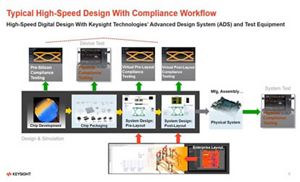
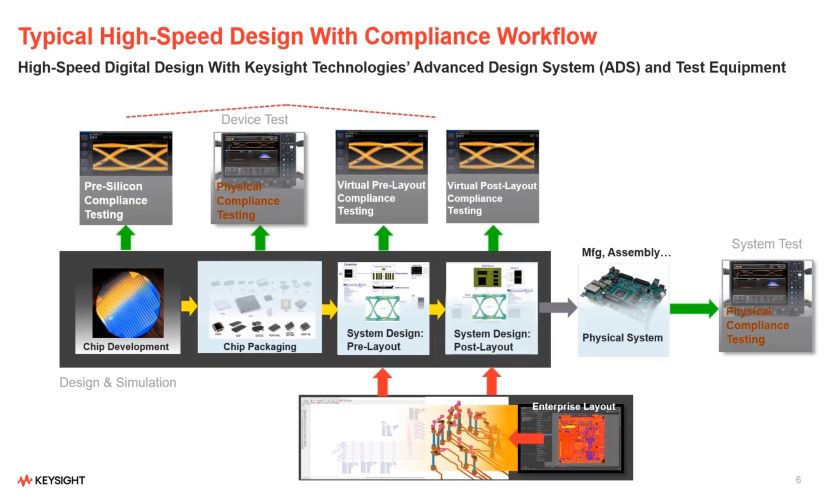
With DDR6 approaching, you face new design and validation challenges. Simulating DDR memory systems help you discover issues before silicon tape-out and ensure signal integrity.
Keysight design and simulation software enables you to optimize your transmitter, receiver, and channel designs for the best performance and reliability at the desired speeed. We can help you from the beginning to reolve signal integrity issues, ensure power efficiency, and stay within tight error margins before prototyping.
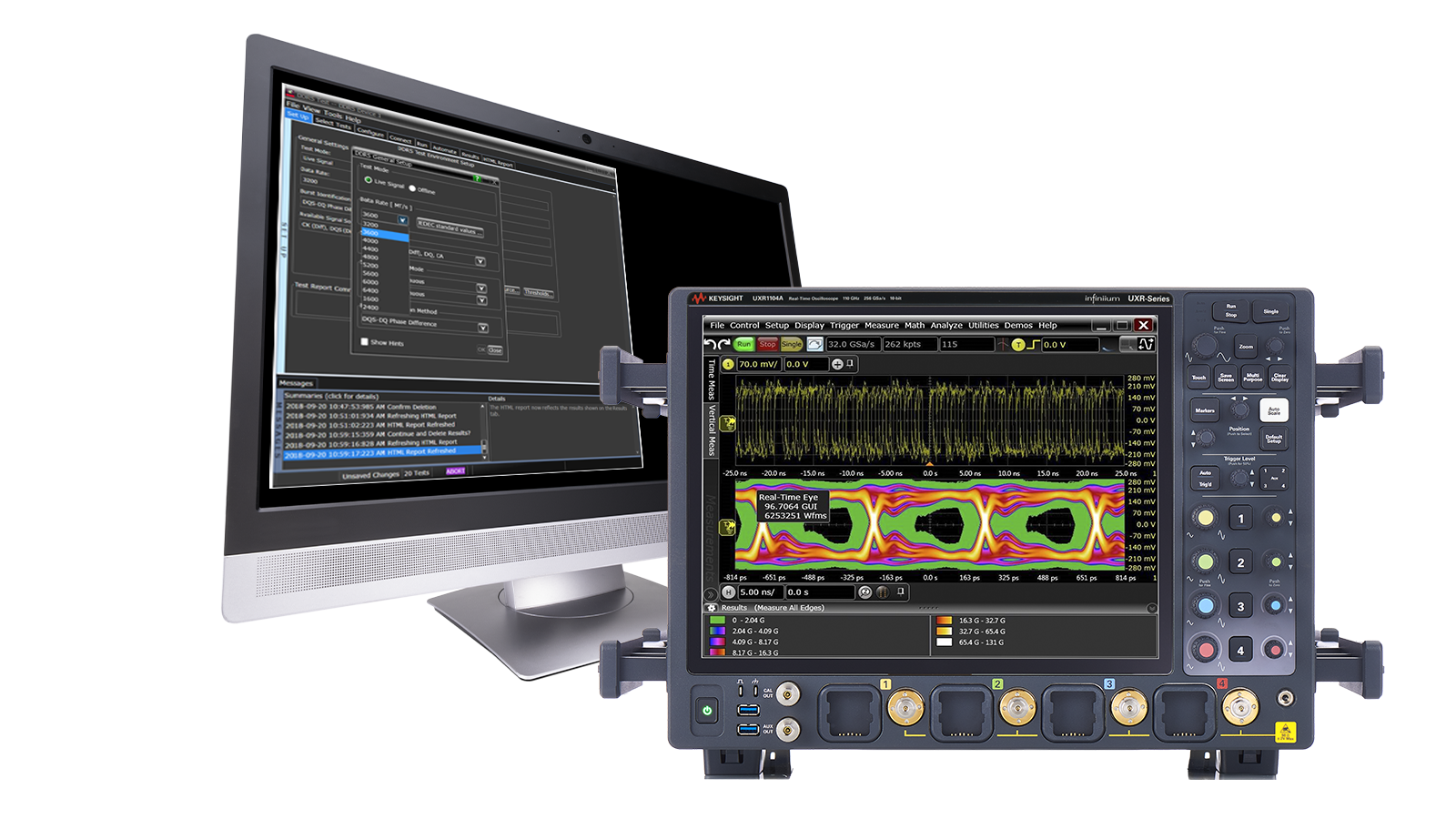
Ensuring DDR interoperability requires validation against JEDEC compliance standards. Keysight delivers end-to-end DDR transmitter test solutions, combining high-bandwidth oscilloscopes, low-loading probes, interposer technologies, and automated software to simplify test setup, execution, analysis, and reporting. We provide early access to automated DDR6 transmitter characterization and validation, helping you address increasingly challenging jitter, timing, voltage margin, and signal integrity requirements before the DDR6 standard is finalized. Integrated eye-diagram, jitter, equalization, and margin analysis enable faster debug, earlier pathfinding, and greater confidence in DDR6 transmitter performance.
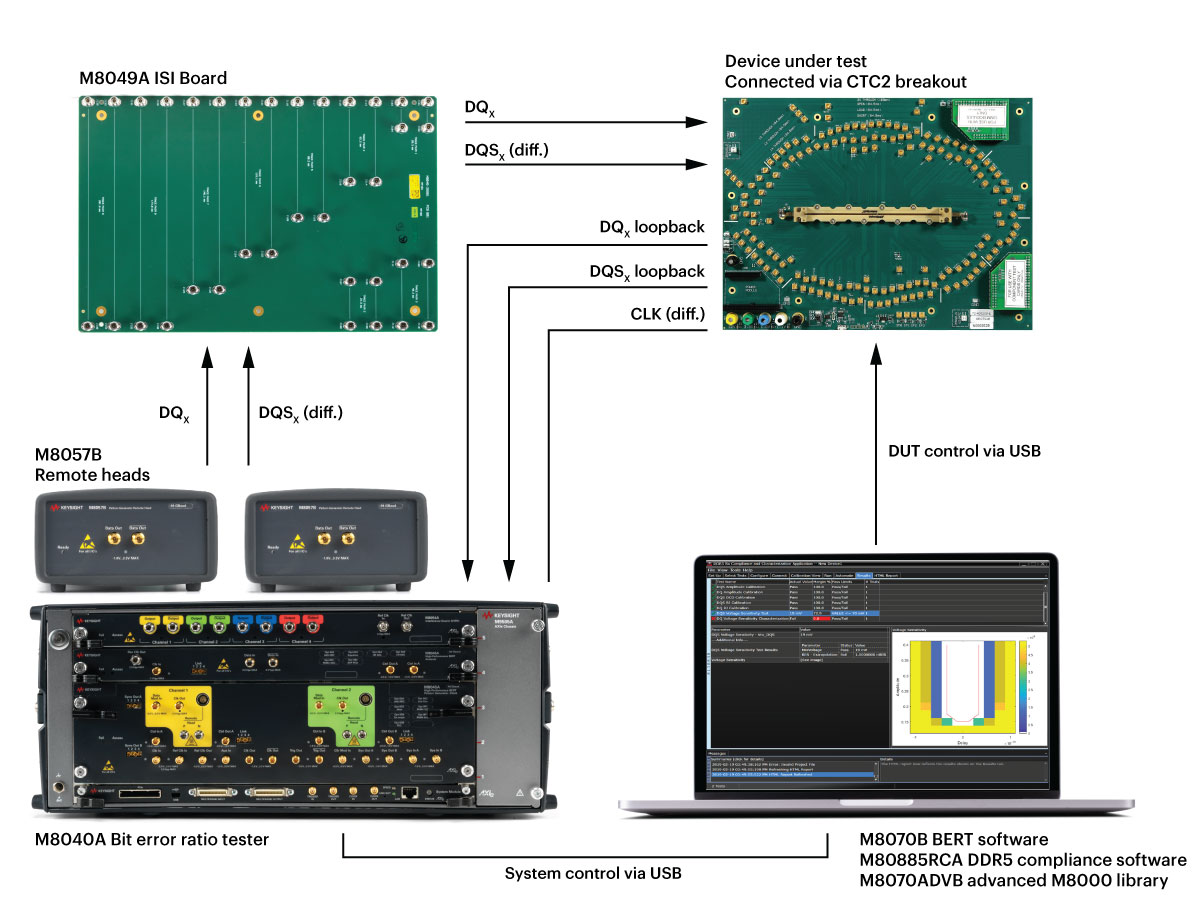
Meeting DDR5 receiver requirements demands precise characterization under increasingly challenging signal conditions. Receiver testing following the JEDEC standards, evaluates how reliably the device under test can recover data in the presence of voltage, timing and signal impairments. The test process combines a high-bandwidth oscilloscope for accurate calibration of the stressed input signal with a bit error ratio tester to generate controlled signal conditions and evaluate receiver performance. By measuring voltage and jitter sensitivity and validating operation with stressed-eye testing with Keysight automated solutions, you can efficiently characterize receiver margins, identify vulnerabilities, and gain confidence in DDR5 interoperability and compliance of your design.
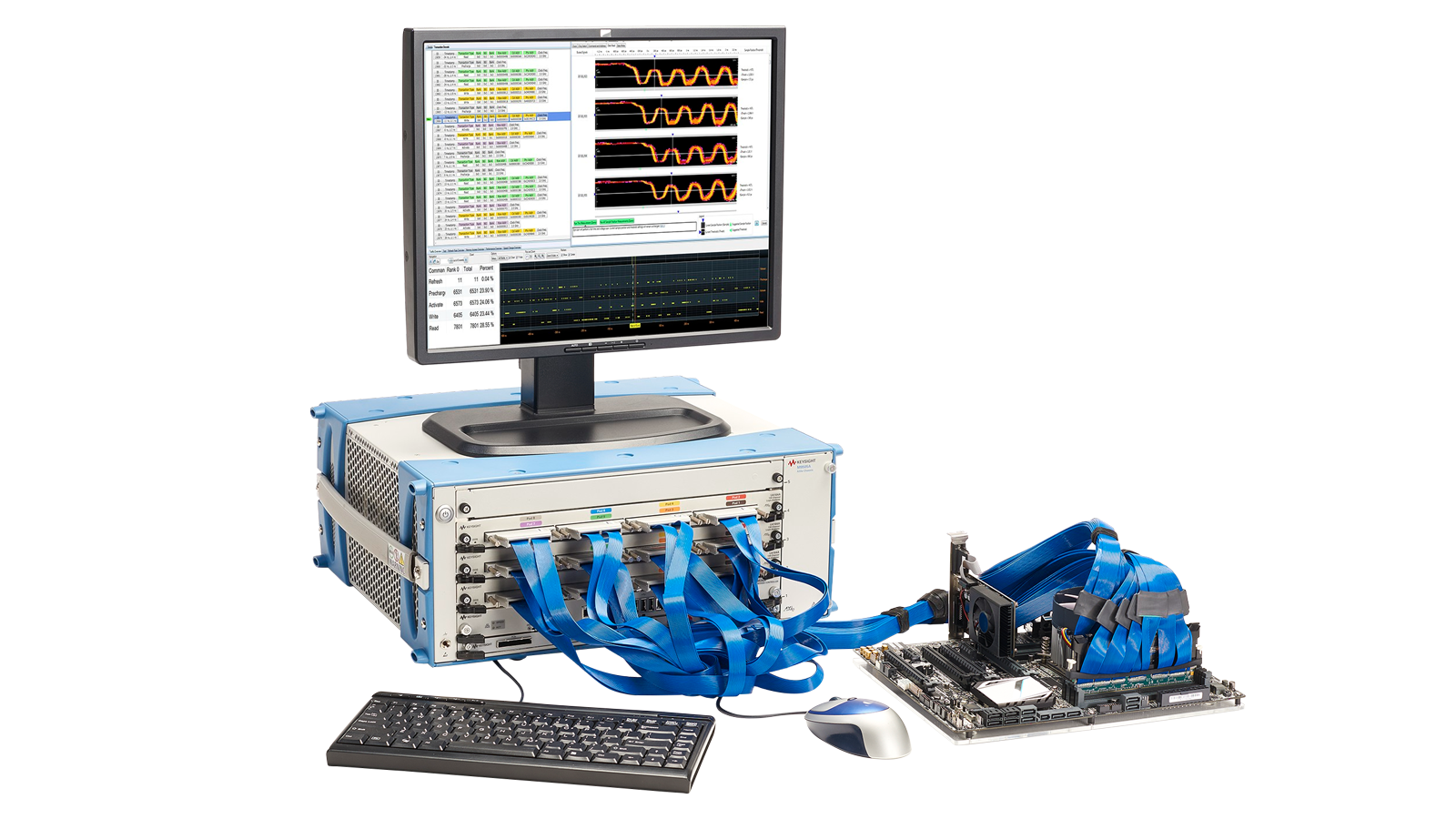
Data corruption is a common symptom encountered during the validation of DDR5 designs. The root cause of data corruption can be difficult to determine. Usually, there are either signal integrity or functional issues with your designs.
When DDR5 memory systems do not behave as expected, you need functional debug, analysis, and protocol compliance validation solutions that provide trace capture and analysis capabilities. We can offer you the necessary insight to understand your system’s behavior and quickly find the root cause of any issues.
GDDR Design-to-Test Solutions

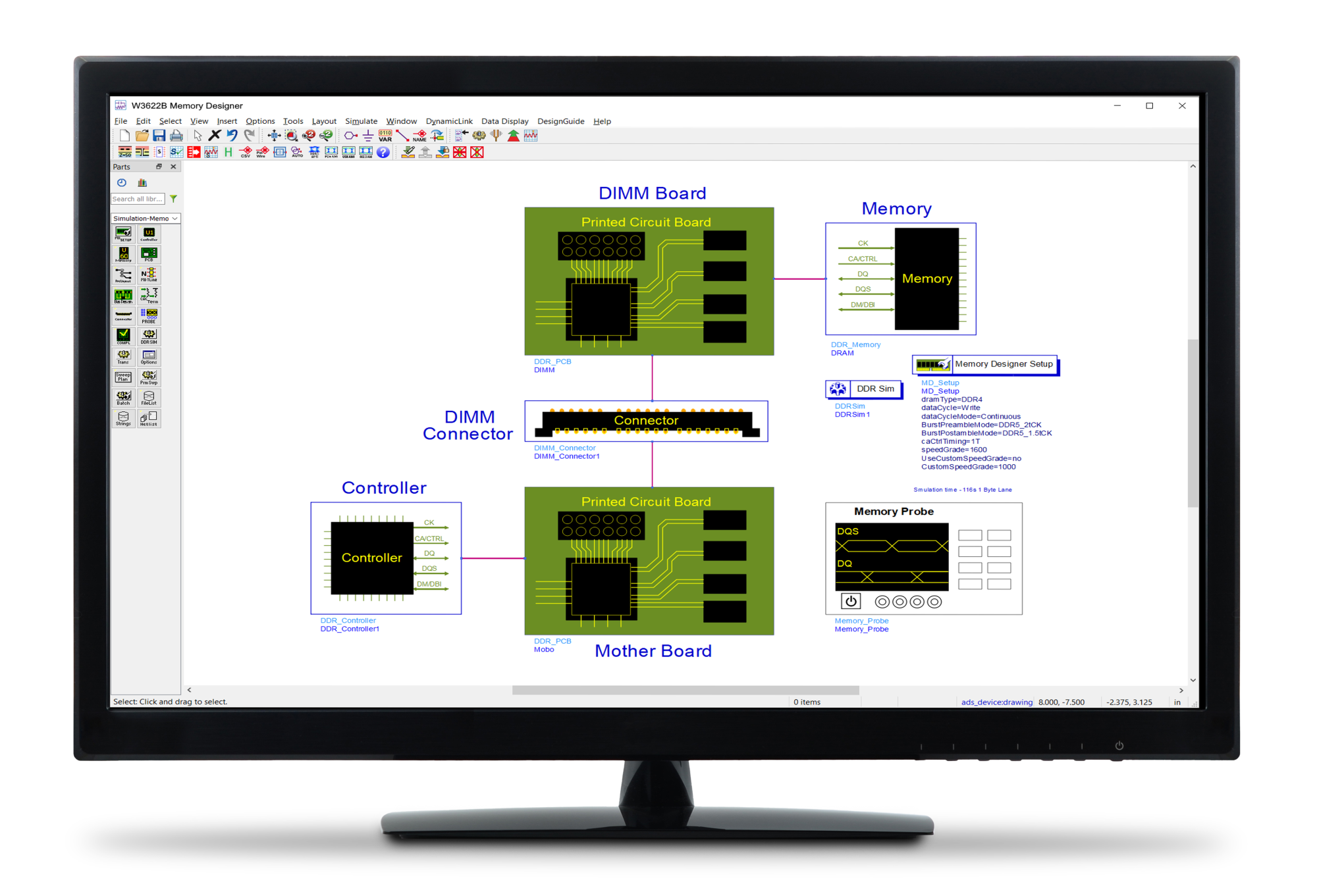
GDDR7 data rates of 32 Gbs per pin and PAM3 modulation introduce new signal integrity, power integrity, and channel design challenges that must be addressed early in the design cycle.
Keysight GDDR design and simulation solutions up to GDDR7 help you identify and resolve issues before the silicon tape-out, reducing costly design iterations and accelerating time to market.
With comprehensive simulation capabilities, you can optimize transmitter, receiver, package, PCB, and channel performance to meet the demanding GDDR7 specifications.

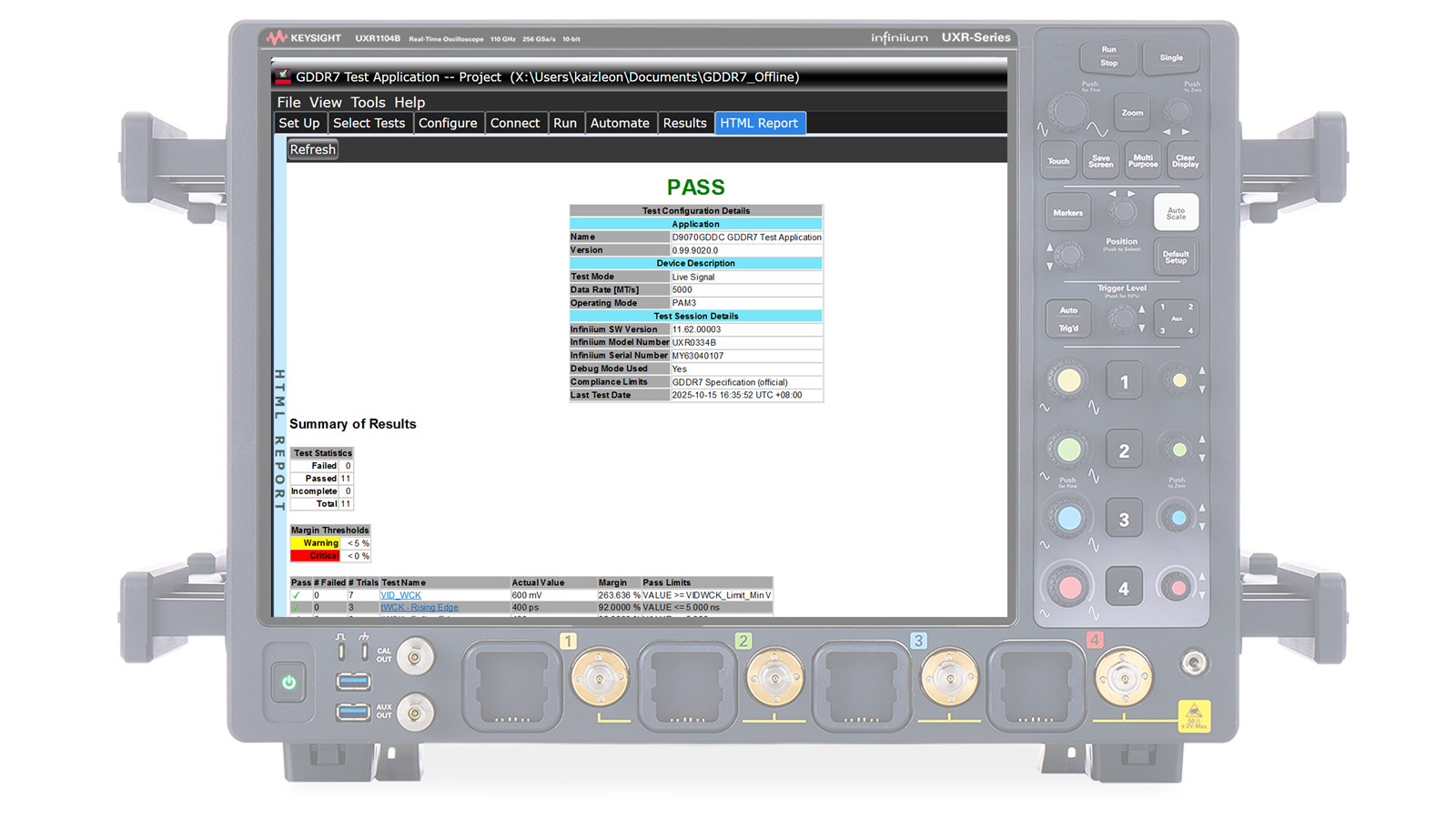
As GDDR7 introduces PAM3 signaling at doubled data rates, ensuring transmitter interoperability demands comprehensive validation of signal integrity, including electrical, timing, eye diagram, jitter, equalization, and SNDR performance against JEDEC specifications.
Keysight supports you with high-bandwidth oscolliscopes, precision probing solutions, and advanced analysis techniques such as de-embedding and equaliztion emulation that allow you to accurately characterize device behavior and accelerate design validation from development through compliance testing.
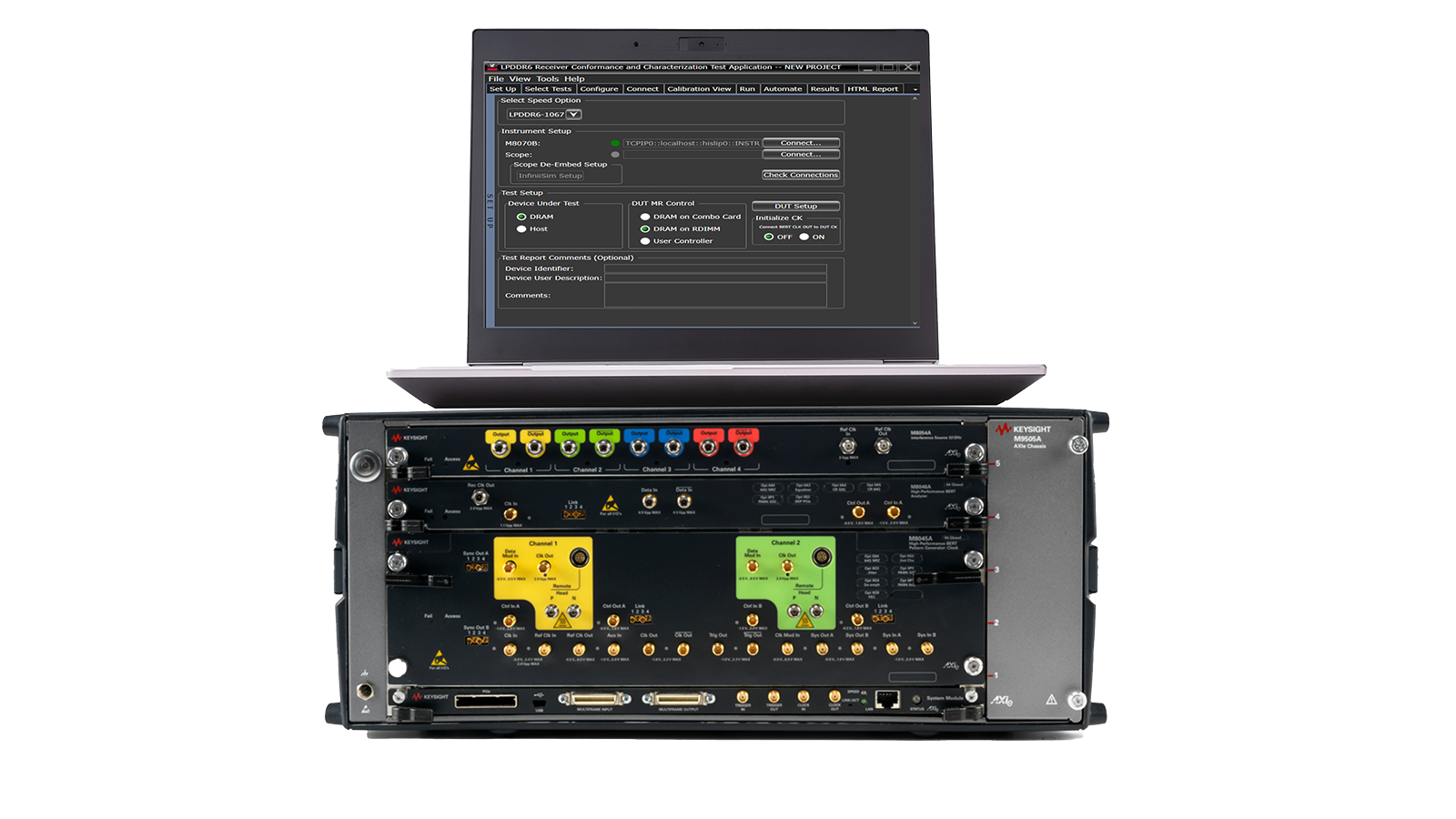
As GDDR7 memory systems push bandwidth to unprecedented levels, receiver validation becomes critical to ensure reliable PAM3 signal recovery under real-world channel conditions.
Comprehensive receiver ananlysis evaluates equalization effectiveness, eye quality, jitter tolerance, and signal integrity in the presensce of channel loss, crosstalk, and noise. By combining advanced receiver characterization techniques with high-performance bit error ratio testers, we enable you to optimize receiver settings, accurately assess system margins, and accelerate validdation and compliance test.
Interoperability testing is also mandatory on the protocol level while data GDDR data speeds are rising. To ensure data integrity, you must focus on timing and event monitoring to capture and analyze signals accurately. Additionally, evaluating performance improvement from training and refresh management ensures the system operates reliably and efficiently. Keysight offers solutions tailored for fast and reliable GDDR protocol analysis for your design.
LPDDR Design-to-Test Solutions
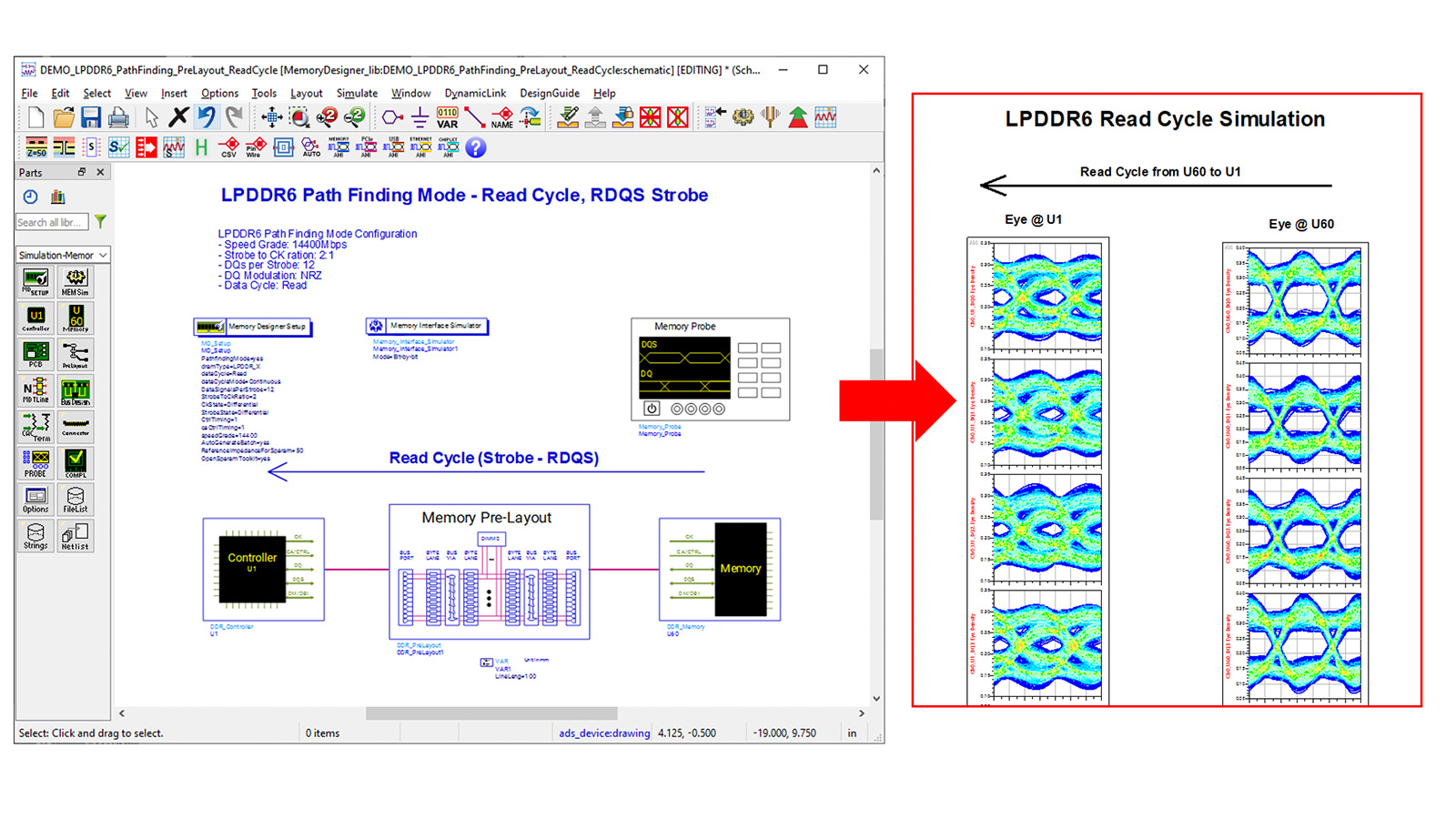
Given the low power consumption requirements for mobile devices, LPDDR designs require higher power efficiency. With simulation, you can detect problems in your lower-voltage LPDDR designs before prototyping. Design with Keysight PathWave software and gain insights into voltage management and signal integrity, ensuring precise timing and minimal crosstalk at higher speeds. Advanced IBIS-AMI models account for the complexity of LPDDR configurations to ensure robust performance and reliability of your design.
LPDDR6 technology enables higher bandwidth for data transfer with lower power. An oscilloscope with sufficient bandwidth and the highest signal integrity is mandatory for transmitter testing. To guarantee compliance with the JEDEC standard and minimize test time, Keysight offers the most comprehensive test automation applications that work hand in hand with Keysight's highest-speed test instruments.
Testing LPDDR6 receivers poses significant challenges due to the high-speed data transfer rates, which narrow the margins and make the design work and testing more intricate. Automated test tools like bit error rate testers (BERTs), oscilloscopes, and compliance software are essential to address these challenges at the physical layer, ensuring minimum test time, accurate measurements, and compliance with the JEDEC specifications.
Interoperability testing is also mandatory on the protocol level while data LPDDR data speeds are rising. To ensure data integrity, you must focus on timing and event monitoring to capture and analyze signals accurately. Additionally, evaluating performance improvement from training and refresh management ensures the system operates reliably and efficiently. Keysight offers solutions tailored for fast and reliable LPDDR protocol analysis for your design.
Resources






Want help or have questions?