Quantum Solutions

- Quantum Design
- Quantum Control
- Post-Quantum Cryptography
Streamline workflows, accelerate the development of quantum chips, and fine-tune quantum circuits.
Flip-Chip Transmon Resonator Design
Accelerate quantum device development and enable accurate simulation, automated design optimization, and reduced reliance on costly physical prototyping.
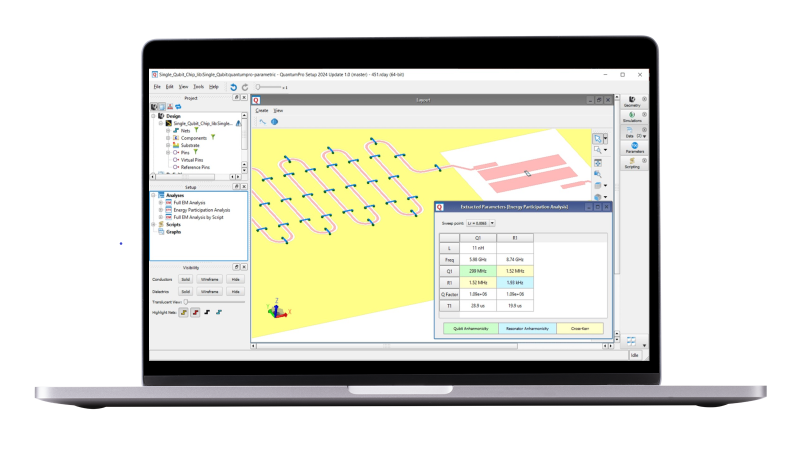
Quantum Parameter Extraction from Layouts
Accelerate development cycles with a comprehensive design environment that combines circuit analysis, layout, electromagnetic simulation, and quantum extraction in one workflow.
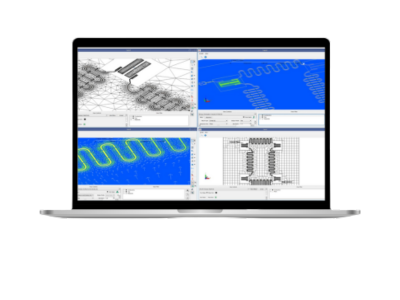
Superconducting Qubit Design
Streamline the design, analysis, and optimization of superconducting qubits efficiently and accelerate development cycles.

Superconducting Kinetic Inductance Modeling
Enhance quantum workflows by simulating the time dynamics of quantum chips and accelerate the development of quantum systems.

Engineer and scale quantum systems with control and measurement solutions designed for quantum from the ground up.
NV Center Ensemble Control
Accelerate quantum algorithm development and system calibration with fast, precise, and scalable qubit control with low-latency feedback.
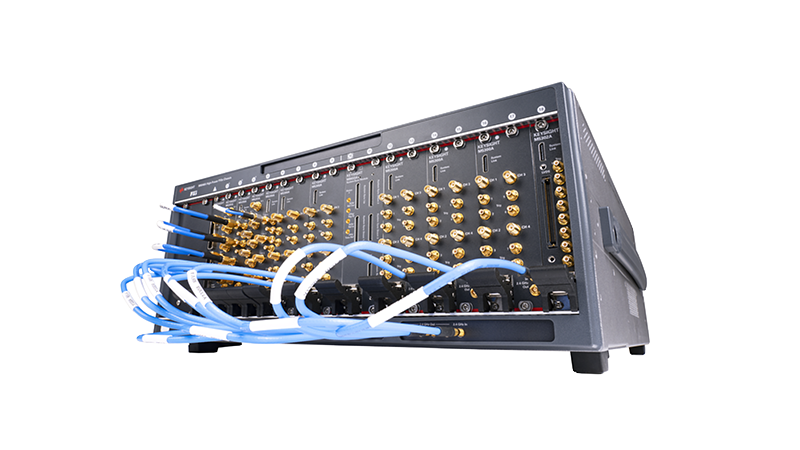
Multi-Qubit Bias Control
Streamline quantum experiments and accelerate results with specialized software focused on instrument control and lab automation for quantum applications.
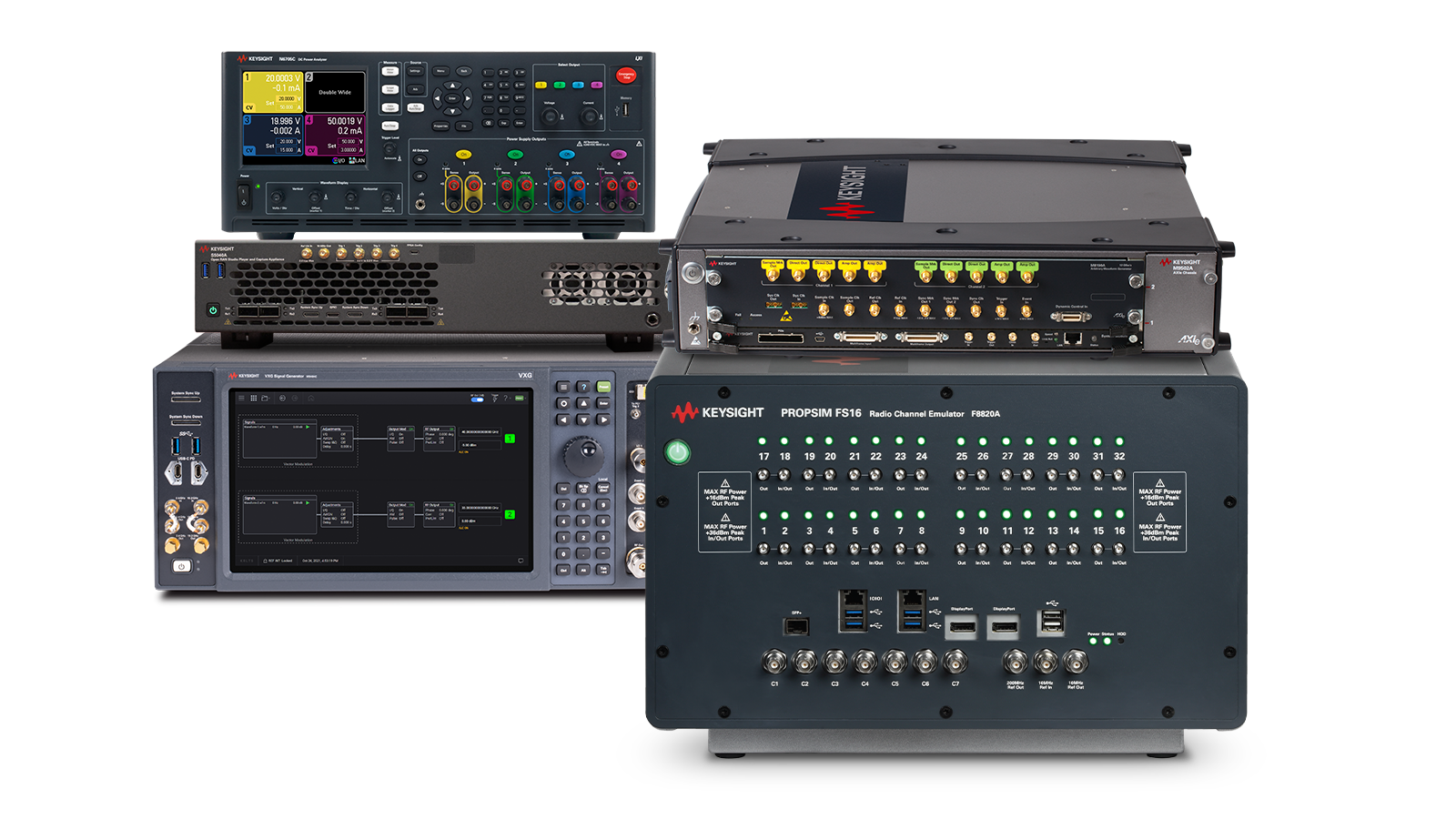
Automated Quantum Measurements
Optimize your quantum computing platform through comprehensive error diagnostics, error suppression, and mitigation techniques.

Address vulnerabilities and verify secure implementation of post-quantum cryptography (PQC) algorithms at each stage of product development.
Side-Channel Leakage Mitigation
Identify and fix hardware vulnerabilities in the design cycle and verify that products are secure against threats posed by post-quantum cryptography (PQC).

PQC Implementation Security
Ensure secure PQC implementations with guidance, support, and advice on mitigation strategies from Keysight PQC security experts.

Scale Quantum Systems & Accelerate Innovation
Keysight has recently delivered the world’s largest quantum control system that pushes the limits of quantum computing in terms of both scale and performance.
Explore Quantum Use Cases & Applications
Discover Quantum Resources

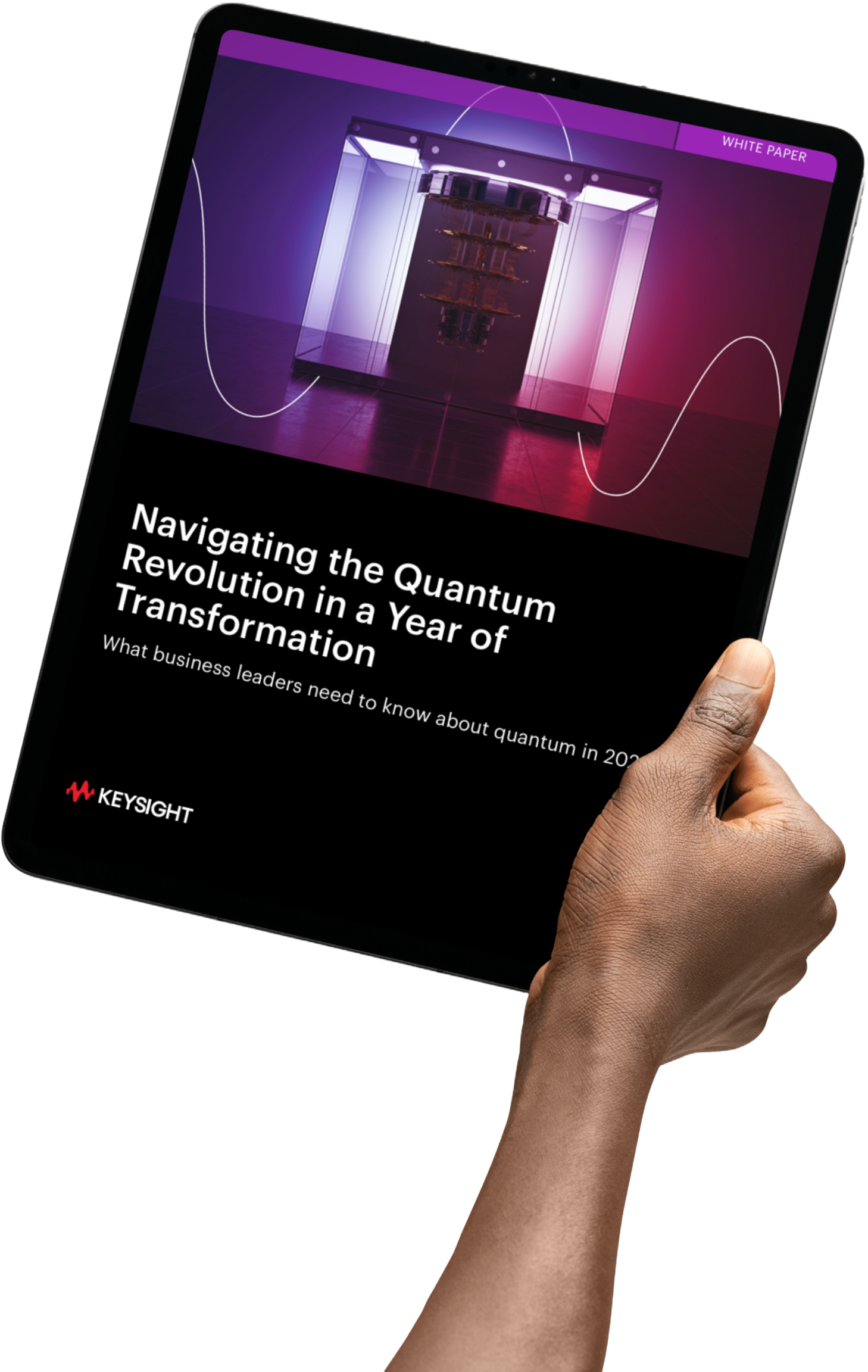
White Paper
Navigating the Quantum Revolution
Successful quantum strategies employ problem identification and finding specific business challenges where quantum approaches offer clear advantages.
Learning Hub
Curated collection of resources from Keysight engineers to deepen your understanding of quantum.
White Paper
Post-quantum cryptography in embedded systems, with a focus on key encapsulation mechanisms.
Flyer
Direct digital conversion for microwave signals eliminates common sources of drift and prevents frequent recalibration.
Bootcamp
Design, deploy, and characterize superconducting qubits with expert guidance.
Quantum FAQs
Unlike classical computers, which process information using bits represented by the on/off states of transistors, quantum computers use quantum bits (or qubits) to store and manipulate information. Qubits are governed by the laws of quantum mechanics rather than classical physics, allowing quantum processors to operate in fundamentally different ways. In a quantum computer, information is encoded in the quantum states of qubits, which can exist in combinations of states through the principle of superposition. Qubits also can be correlated with one another through entanglement.
These quantum properties enable quantum computers to tackle certain problems that are impractical or impossible for classical machines to solve efficiently. A qubit is essentially a quantum two-level system with unique and powerful characteristics that form the foundation of quantum information processing. Qubits can be physically implemented using a variety of quantum platforms, including superconducting circuits, trapped ions, neutral atoms, integrated photonics, and silicon-based spin systems, each offering different advantages for building scalable quantum processors.
In classical computers, information is stored and processed in binary, meaning that single bits can only represent two values: either “0” or “1.” As opposed to the classical bit, where information is represented by the “on” or “off” states of a transistor, a qubit is not limited to only being in the states “0” or “1.” It can actually be in both at the same time. This phenomenon is a fundamental concept in quantum physics, known as superposition. Mathematically, we can represent the qubit state (independent of a particular physical implementation) as a point on a unit sphere, known as the Bloch sphere, where the ground state 0 is found on the “north pole” and the excited state 1 on the “south pole.” This superposition state can also extend across a whole register of qubits in a phenomenon known as entanglement, which is the element needed to give the quantum processor unit (QPU) its computational advantage over classical counterparts. The number of quantum states that a QPU can represent scales as 2N.
The improved performance of quantum versus classical computers translates into applications across multiple industries including: cryptography and cybersecurity, drug discovery and material science and design, supply chain optimization, artificial intelligence and machine learning, climate modeling and energy, computational chemistry and physics, and financial services.
For many practical use cases, quantum processing units (QPUs) can be viewed as specialized simulation accelerators. Rather than replacing classical computers, they are likely to be integrated into existing workflows to execute specific steps that are classically intractable, such as simulating complex quantum systems or exploring vast solution spaces. This hybrid approach allows quantum and classical systems to work together, maximizing the strengths of each.
Conventional computing errors typically occur because one or more bits unexpectedly flip. Error correction strategies have been developed to correct these bit flips and return the system to the expected state. Today, classical computing error correction is usually unnecessary and is used when a failure would be catastrophic and/or when the computer will be in an environment that is more likely to introduce errors, such as for space missions.
The loss of quantum coherence, known as decoherence, results from quantum superpositions collapsing into classical states when they are measured. This happens regardless if it is an intentional measurement by an observer or caused by noise from the environment. The quantum system cannot tell the difference. Due to the presence of decoherence, quantum engineers building a quantum computer need to address the following:
- The qubit register needs to be both electromagnetically and thermally isolated from its environment, avoiding spurious exchange of energy.
- The qubit operations (i.e., single and two-qubit gates) need to be fast compared with the decoherence time.
- Qubit measurements (readout) need to be fast and should not alter the quantum state (non-demolition).
Measuring the qubit coherence time is therefore one of the cornerstones in any quantum lab. It provides important information about the quality of the qubit itself and its shielding, how it is operated using quantum gates, as well as the characteristics of the qubit readout.
The unique properties of superposition and entanglement enable previously unimagined performance in quantum applications like computing, communication, and sensing. Superposition arises from the probabilistic nature of quantum mechanics and persists as long as the system is not observed or measured. Once a measurement occurs, the quantum state collapses into a single, definite outcome. This behavior can be visualized using the Bloch sphere, where a qubit’s state corresponds to a point on the surface of a unit sphere. For superconducting qubits, measurements are typically performed along the z-axis connecting the north and south poles. A state at either pole yields a definite outcome (0 or 1), while a state on the equator results in equal probabilities of measuring either value.
Entanglement further amplifies these capabilities by establishing strong correlations among qubits, such that the state of each qubit cannot be described independently of the others. This interconnectedness allows quantum operations to act on many qubits simultaneously in a highly coordinated manner, producing interference effects that enhance correct outcomes while suppressing incorrect ones. The computational power of a quantum processing unit (QPU) emerges from this collective behavior: a register of N entangled qubits is described by 2ᴺ coefficients, enabling the system to represent and manipulate an exponentially large space of possibilities at once. Consequently, quantum algorithms can explore many potential solutions in parallel, offering dramatic efficiency gains over classical approaches for certain classes of problems.
Several major technology firms have now demonstrated quantum advantage: the ability of quantum computers to solve problems that would be practically impossible for classical supercomputers. Quantum algorithms drastically reduce the processing time required to run complex Monte Carlo simulations and enable highly sophisticated risk assessments that can factor for previously unmanageable variables.
While general-purpose quantum computing remains on the horizon, specialized quantum processors are already tackling optimization problems for commercially relevant applications that directly impact business operations. It is predicted to take at least five years to establish quantum advantage as a sustainable competitive differentiator through proprietary approaches.
Quantum communication is a method of transmitting information using quantum mechanics principles, which allows for the secure transmission of information. Quantum communication can be achieved through various methods including quantum key distribution (QKD), quantum teleportation, and quantum entanglement. Any attempt to intercept or eavesdrop on the transmission would cause the quantum state to collapse, alerting both the sender and receiver to the breach in security.
Let's Solve What's Next.
Book a meeting or demo with one of our experts