How to Reduce Lithium-Ion Self-Discharge Test Time

Accelerate Self-Discharge Current Measurements
Reducing lithium-ion self-discharge test time requires measuring the rate of charge loss directly rather than waiting for that loss to produce a sufficiently large change in cell voltage. The traditional delta open-circuit voltage (OCV) method monitors the decrease in a cell’s OCV while the cell remains disconnected from a load. Because lithium-ion cells have relatively low self-discharge and their voltage changes very little across much of the state-of-charge (SOC) range, the resulting voltage decrease is small. A potentiostatic self-discharge current measurement instead uses a low-noise, stable direct current source adjusted to match the cell’s OCV. The source is connected to the cell through a microammeter and maintains the cell at essentially constant voltage and SOC. As the cell continues to self-discharge, the external source progressively supplies the current needed to replace the internally lost charge. When the source and cell reach equilibrium, the externally supplied current corresponds directly to the self-discharge current. This potentiostatic measurement changes the test observable from a slowly accumulating voltage difference to current representing charge loss per unit time. Achieving shorter battery self-discharge testing times also requires minimizing electrical and cell-related settling mechanisms.
The applied direct current source must closely match the cell’s OCV before connection because any voltage mismatch changes the charge on the cell and increases the time required to return to equilibrium. The source must then remain stable at the microvolt level so voltage drift does not generate additional current fluctuations. Cell preparation is equally important. Charging or discharging creates a charge gradient within the cell, and subsequent charge redistribution produces current that decays while the internal charge distribution returns toward equilibrium. Thermoelectric voltages at connections between dissimilar metals can introduce additional errors if the two cell terminals experience different temperatures. State of charge should also be considered because self-discharge decreases considerably at low SOC and becomes more difficult to measure, while the temperature coefficient of voltage generally increases. A reasonably high SOC supports more practical measurement conditions. Series resistance provides another means of adjusting measurement response because it can be programmed to optimize settling time and sensitivity to external influences. Combining close OCV matching, stable potentiostatic voltage, appropriate cell rest, temperature control, suitable SOC, and monitored settling behavior enables self-discharge current measurement to reach an interpretable result without relying on the extended voltage-decay intervals associated with delta-OCV testing.


Accelerated Self-Discharge Measurement Solution
See Block Diagram of Accelerated Self-Discharge Measurement Solution

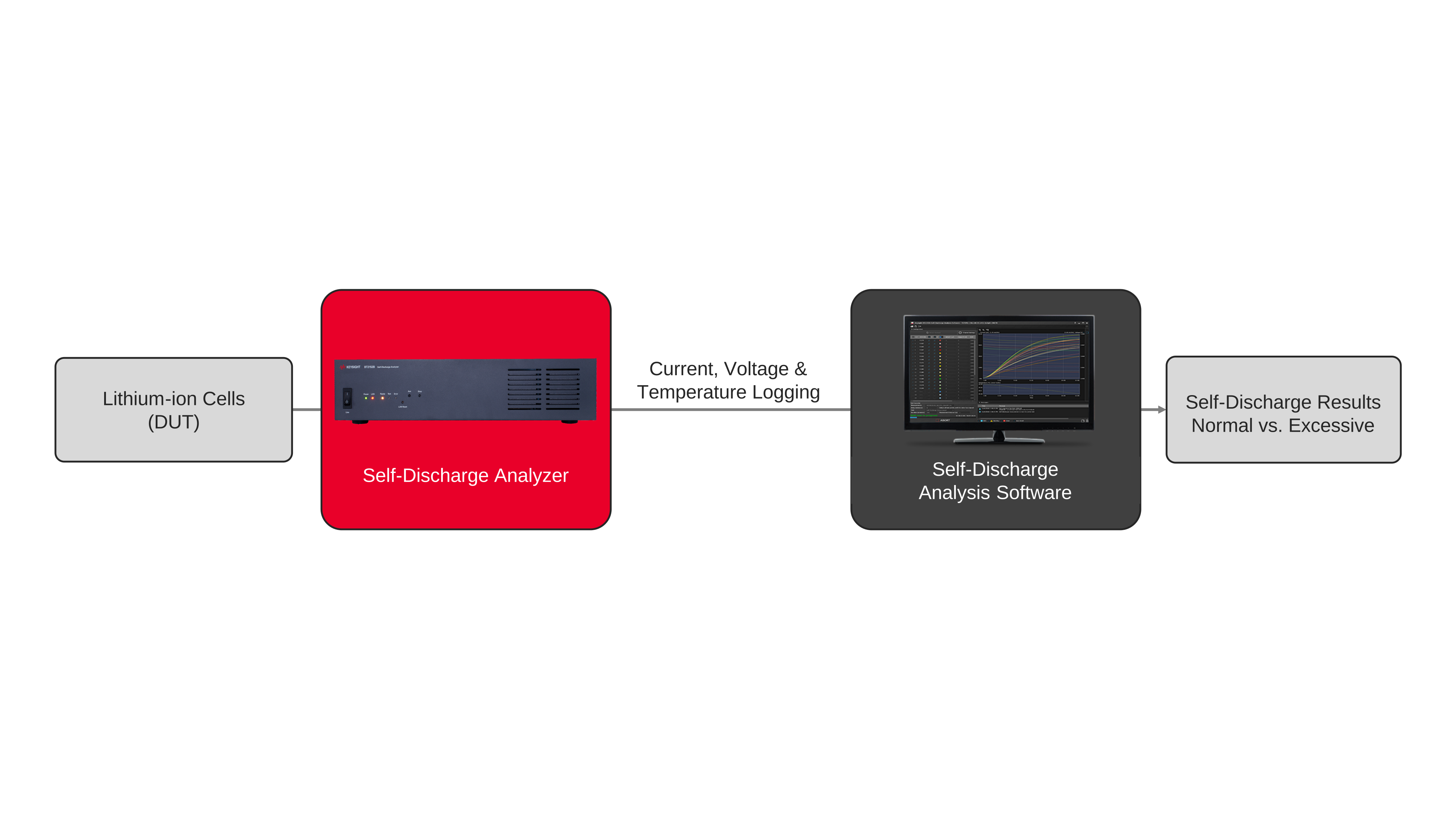
Explore Products in Our Accelerated Self-Discharge Measurement Solution
-

![]()
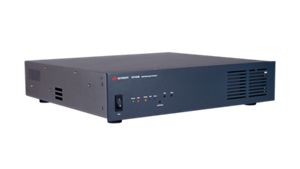
BT2152B Self-Discharge Analyzer
-

![]()
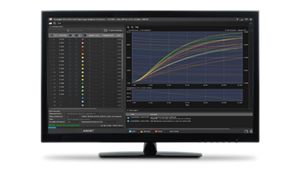
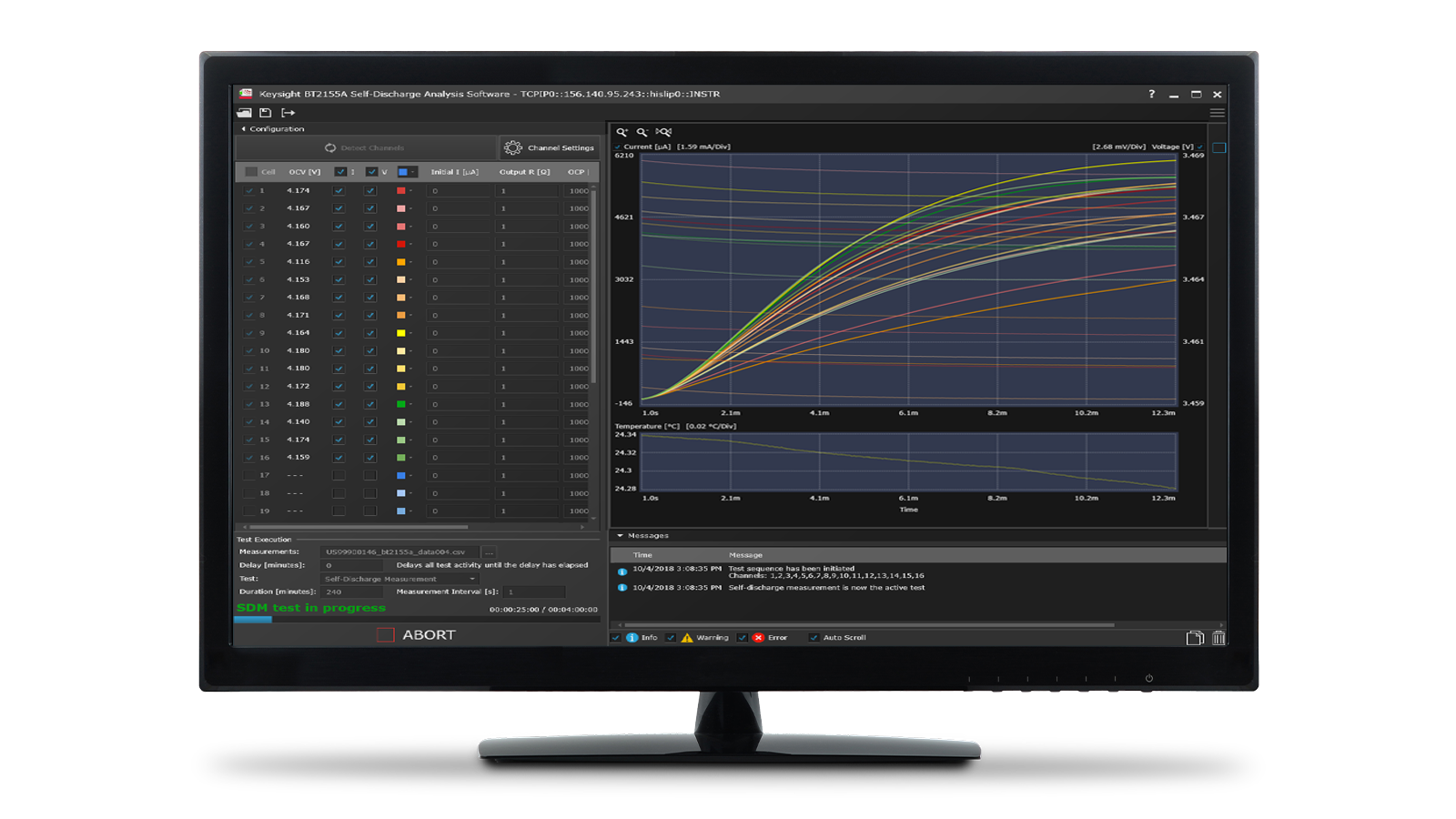
BT2155A Self-Discharge Analysis Software


Discover Resources and Insights
Additional Resources for Accelerated Self-Discharge Measurement
Related Use Cases


-
![]()
Learn More
How to Streamline DC-to-DC Converter Testing
Performing DC-to-DC converter tests require multiple test instruments. Learn how to use an integrated DC power analyzer, an oscilloscope, and automation software to characterize DC-to-DC converters accurately and efficiently.
Learn More

-
![]()
Learn More
How to Measure Lithium-Ion Cell Self-Discharge Current
Measure lithium-ion cell self-discharge current directly using a potentiostatic measurement method. Learn how stable voltage matching, low-current measurement, temperature monitoring, cell preparation, and current-versus-time analysis support faster lithium-ion battery self-discharge testing than traditional delta open-circuit voltage measurements.
Learn More
-
![]()
Learn More
How to Characterize Lithium-Ion Self-Discharge Versus Temperature
Characterize temperature effects on lithium-ion cell self-discharge measurements by monitoring current, voltage, and cell temperature over time. Control cell temperature, terminal temperature differences, state of charge, and settling conditions to distinguish self-discharge current from thermally induced measurement variations.
Learn More

Get in Touch with One of Our Experts
Need help finding the right solution for you?