PCI Express® and Compute Express Link

- Design & Simulation
- Transmitter Test
- Receiver Test
- Interconnect Test
- Protocol Test
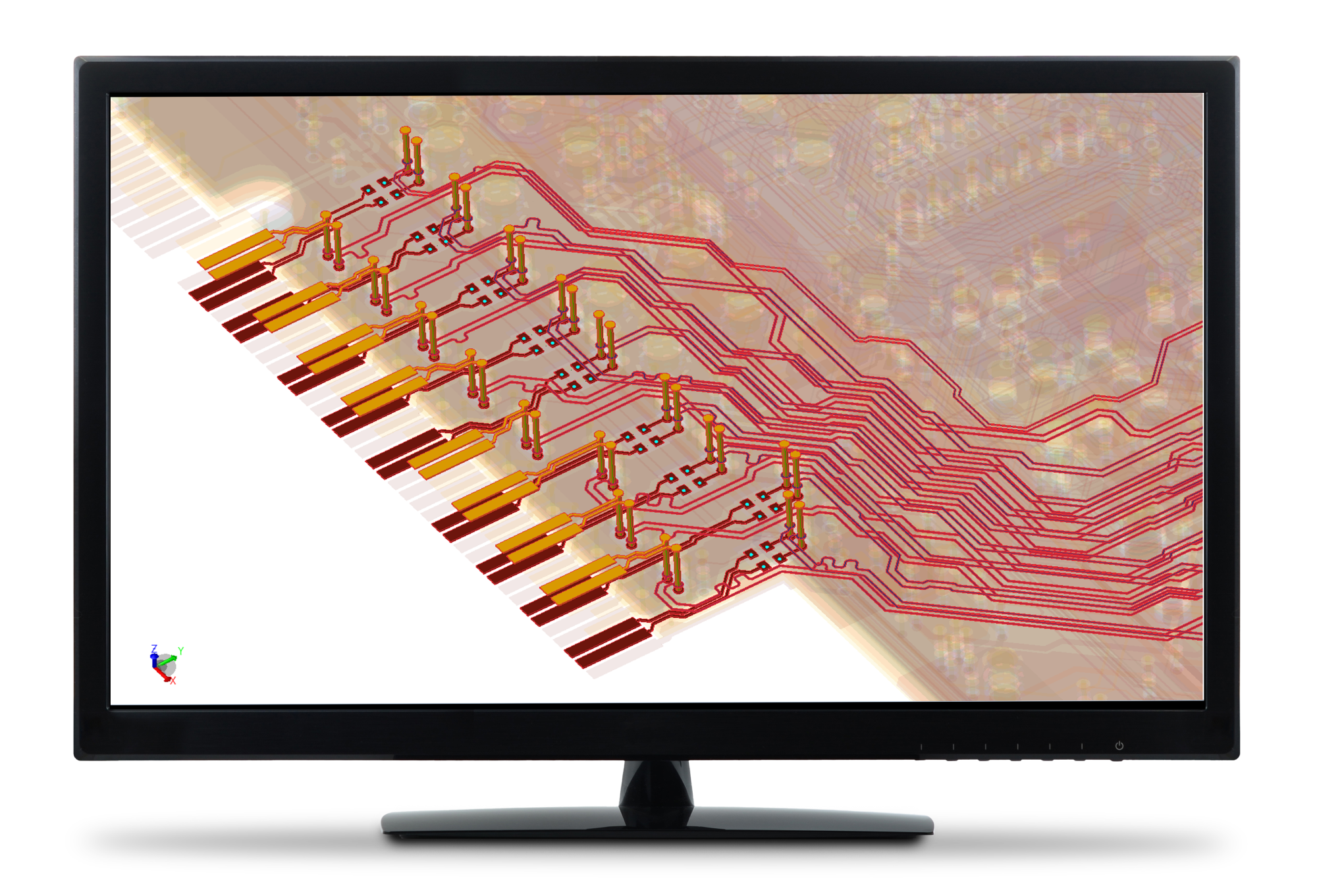
Shorten time to market while minimizing the risk of redesign. Manage rising design complexity and control high prototyping costs with efficient high-performance simulation tools.
Power- and Signal-Integrity Anaysis
Set up complex signals with the speed, bandwidth, precision, and flexibility to meet the challenges of next-generation AI data center deployments.

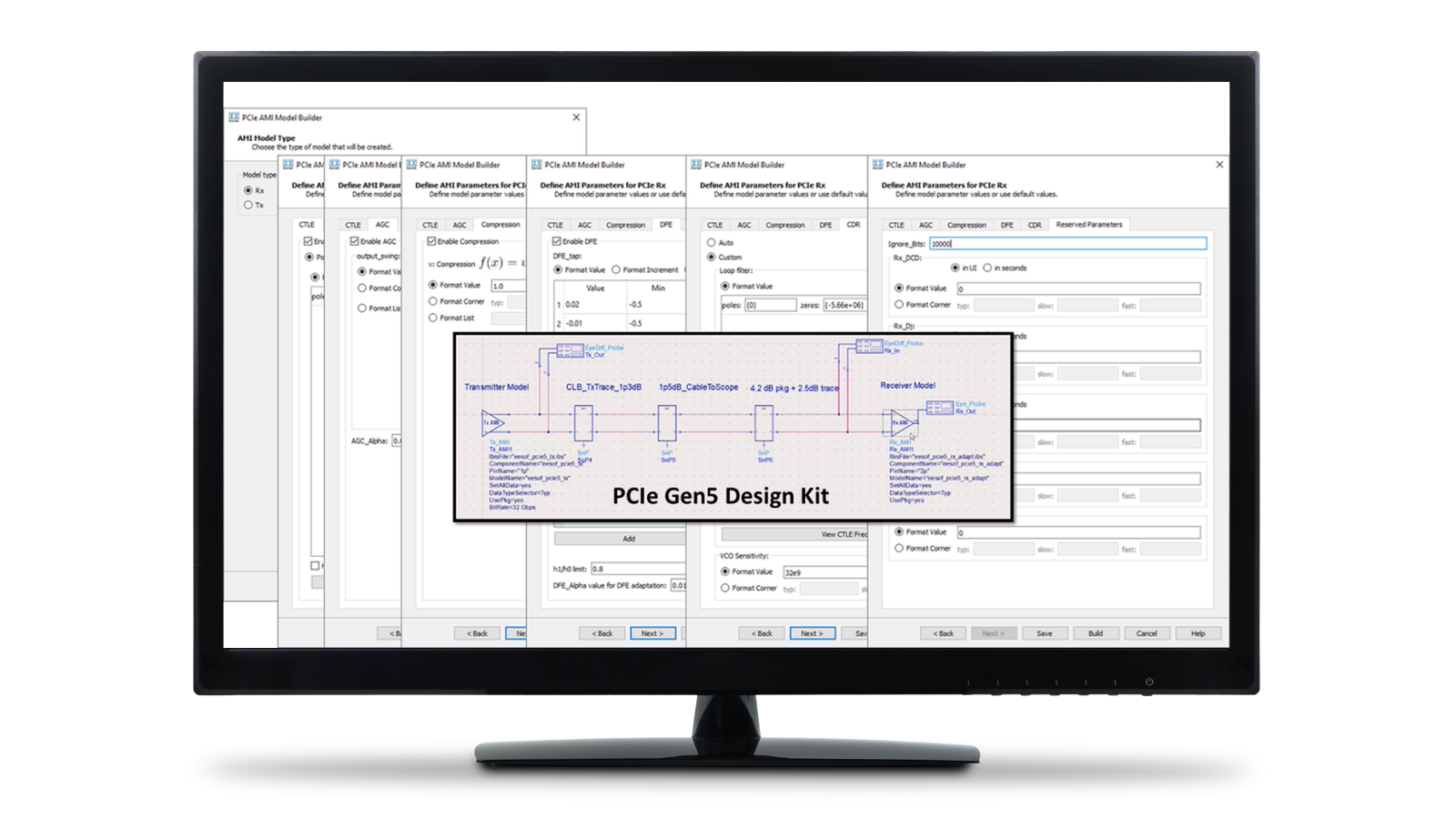
AMI Model Creation
Accelerate generation of PCIe algorithmic modeling interfaces for transmitters and receivers.
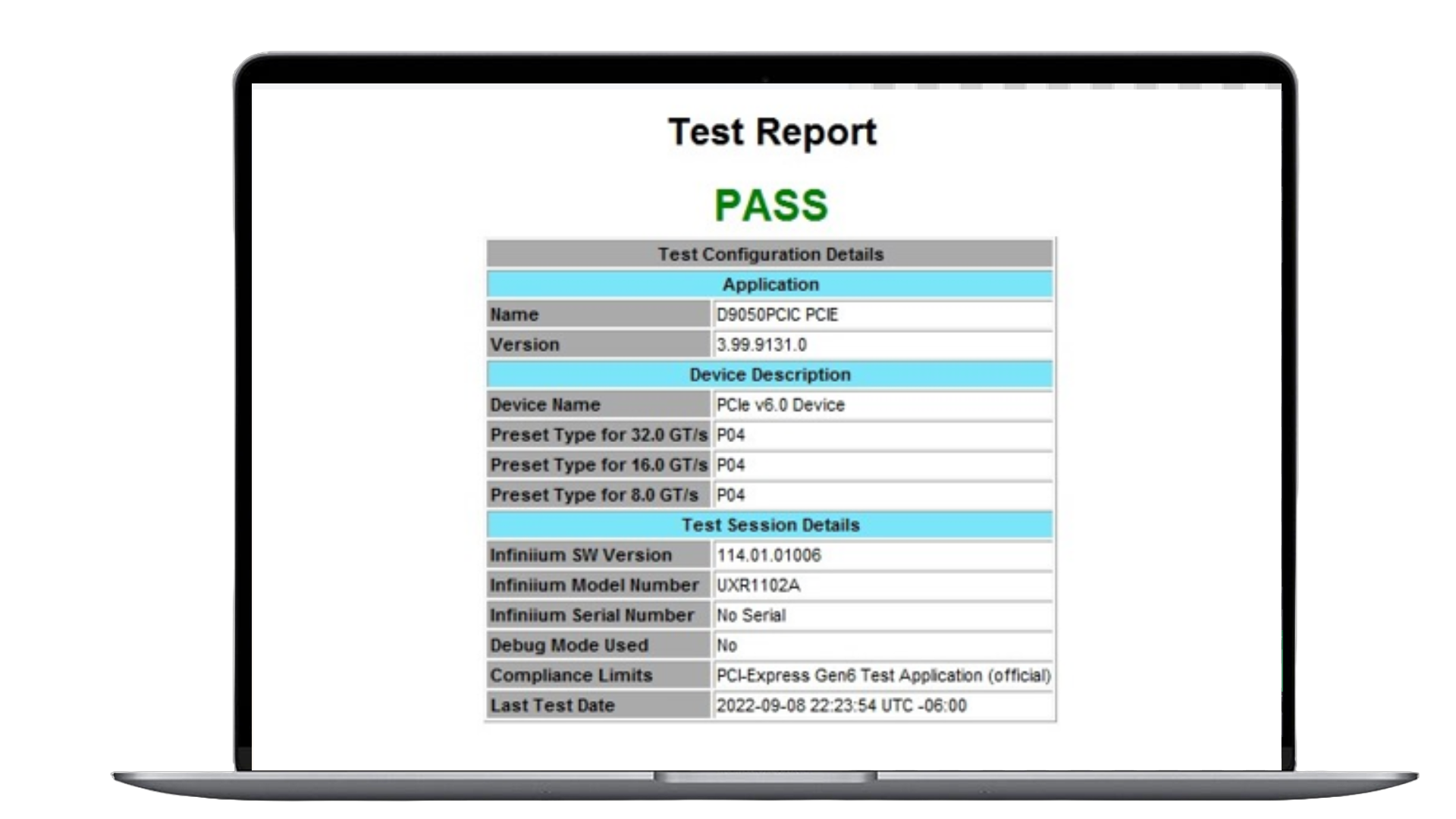
Accelerate time-to-market with automated transmitter compliance testing and in-depth design validation, ensuring your hardware fully conforms to PCI-SIG standards.
Debug and automate transmitter compliance test up to PCIe® 7.

Accelerate the detection of impedance discontinuities.
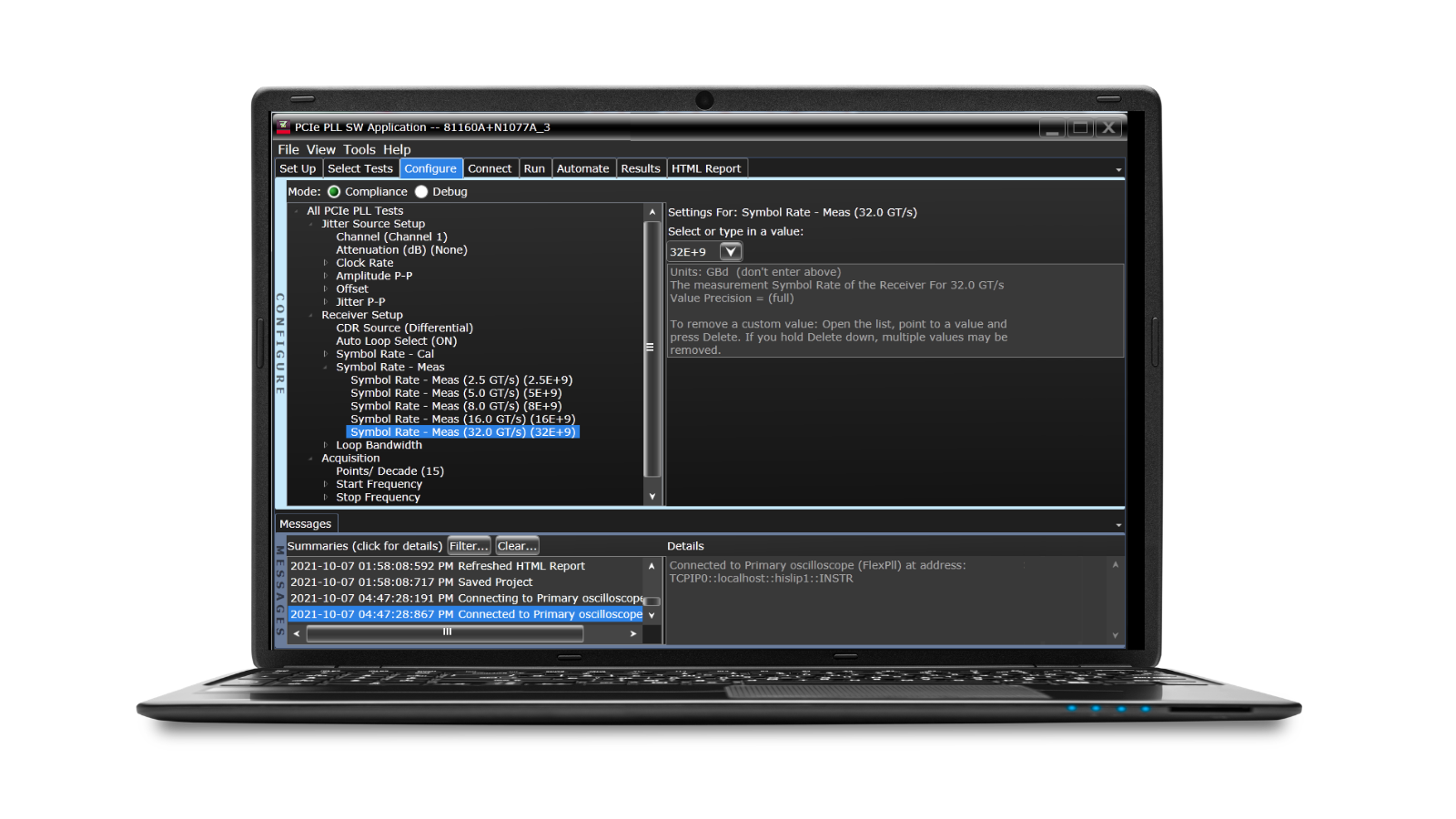
Debug and characterize the phase-locked loop bandwidth and peaking of your PCIe® 5.0 and 6.0 design.

Debug and automate PCIe® 5.0 transmitter compliance test.


Debug and automate PCIe® 5.0 transmitter compliance test.

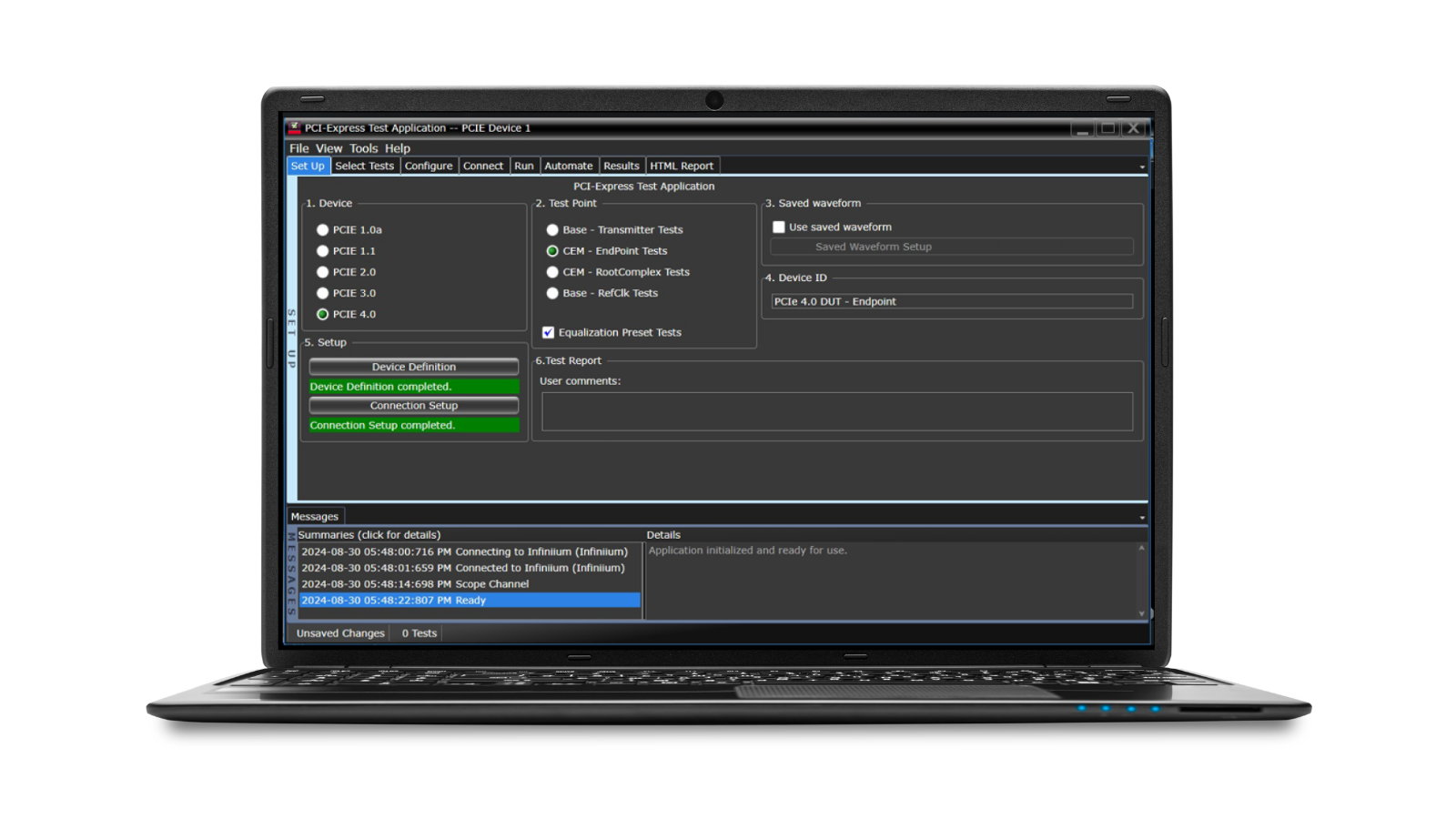
Accelerate time-to-market with automated receiver compliance testing and in-depth design validation, ensuring your hardware fully conforms to PCI-SIG standards.
Automate stress signal calibration and compliance test of PCIe® 7.0 ASICs.

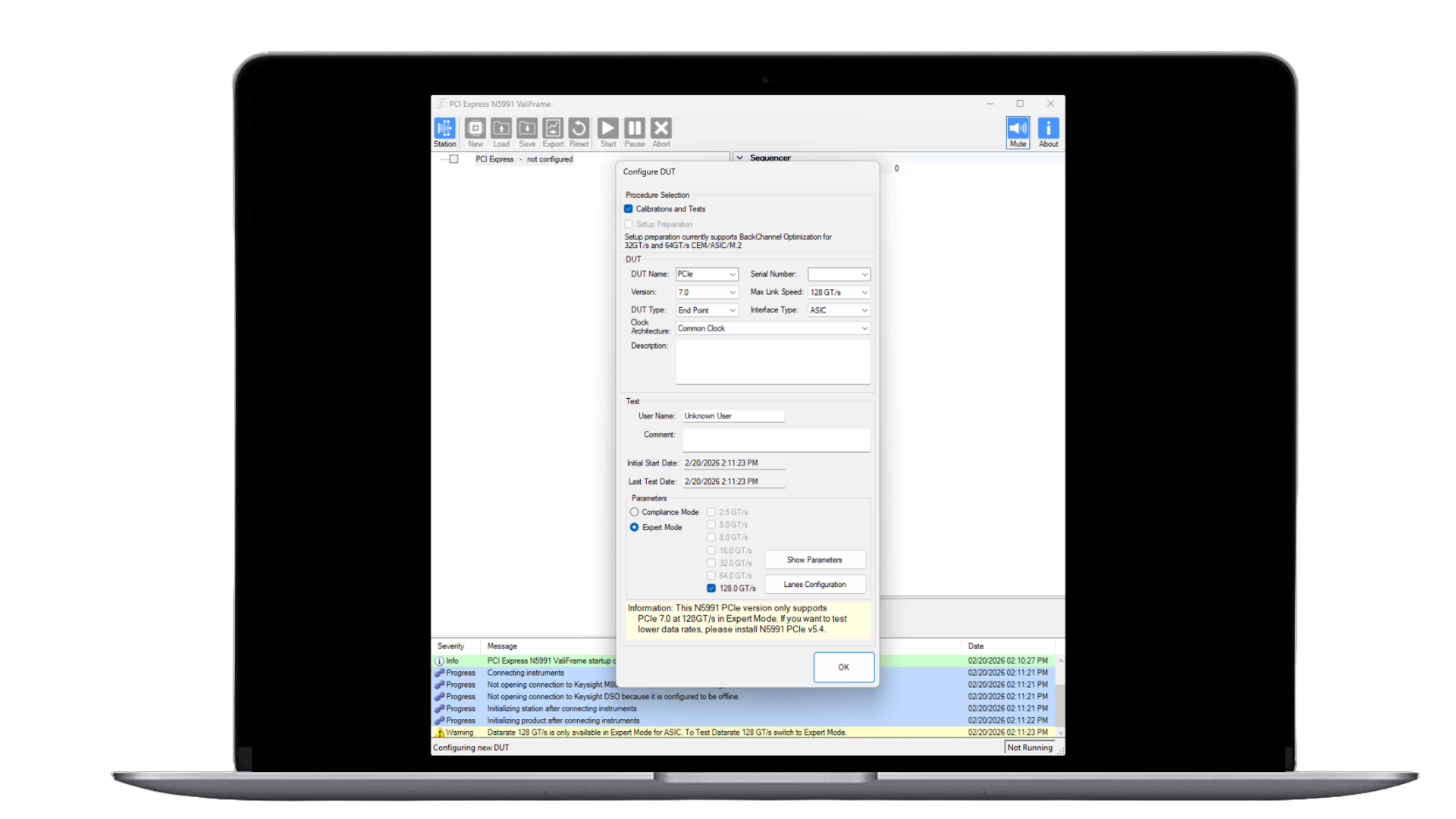
Automate stress signal calibration and compliance test of PCIe® 6.0 ASICs.


Debug and automate compliance test of PCIe® 6.0 CEM add-in cards and systems.


PCIe® 5.0 Base Receiver Test
Automate stress signal calibration and compliance test of PCIe® 5.0 ASICs.
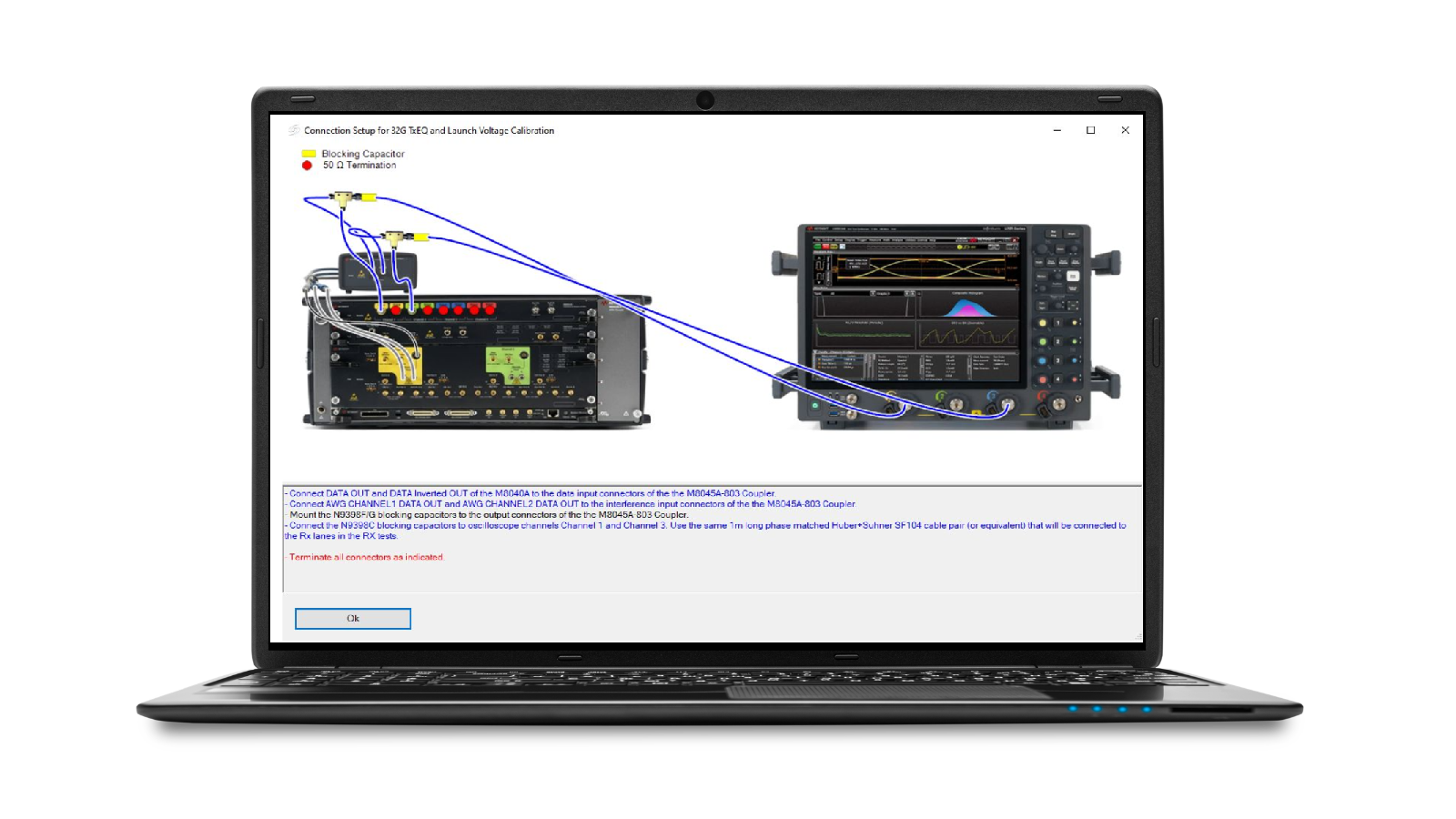
Debug and automate compliance test of PCIe® 5.0 CEM add-in cards and systems.
Debug and automate compliance test of PCIe® 5.0 M.2 devices and hosts.


PCIe® 4.0 Base Receiver Test
Automate stress signal calibration and compliance test of PCIe® 4.0 ASICs.

Debug and automate compliance test of PCIe® 4.0 CEM add-in cards and systems.
Signal Integrity Measurement
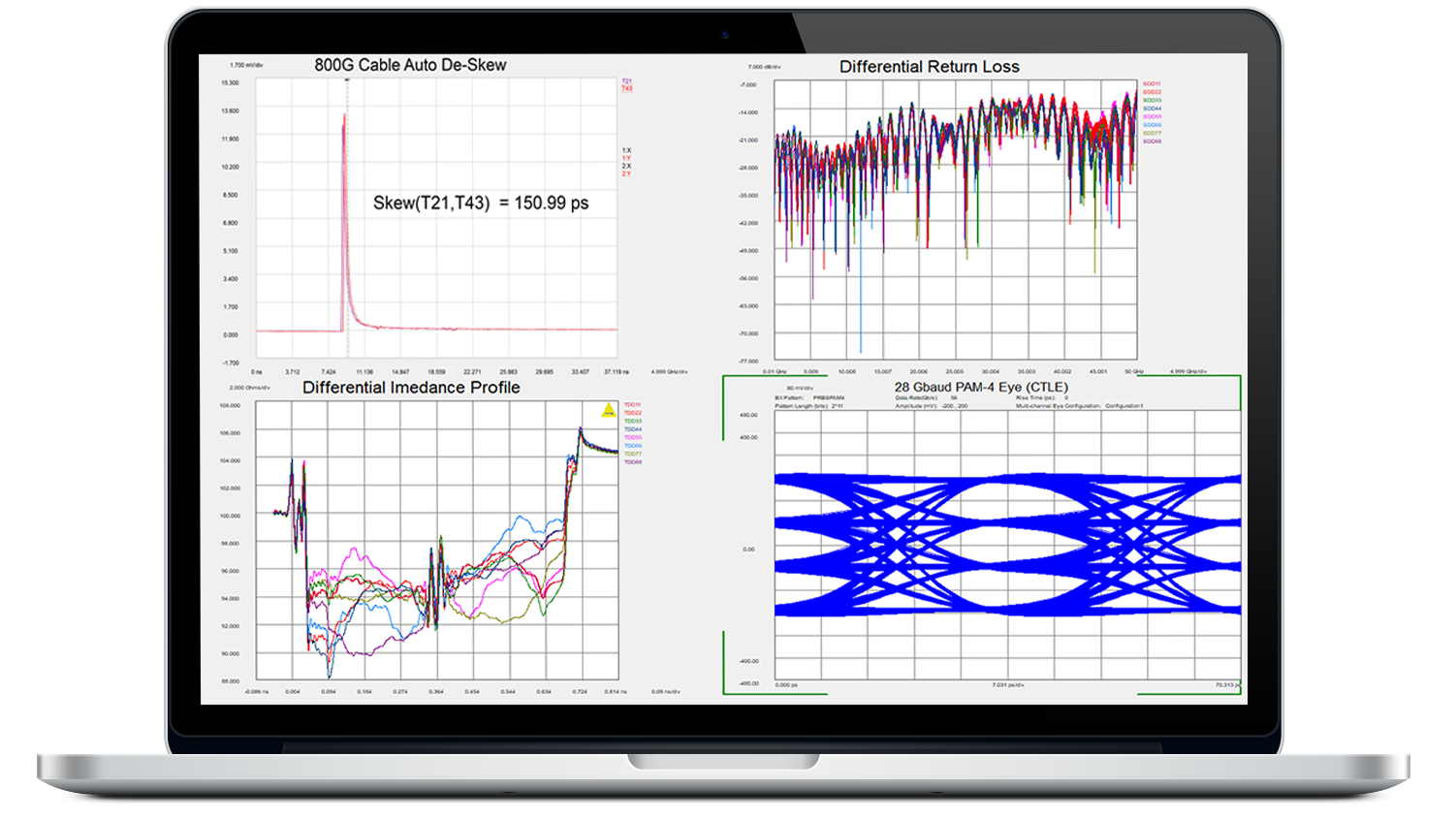
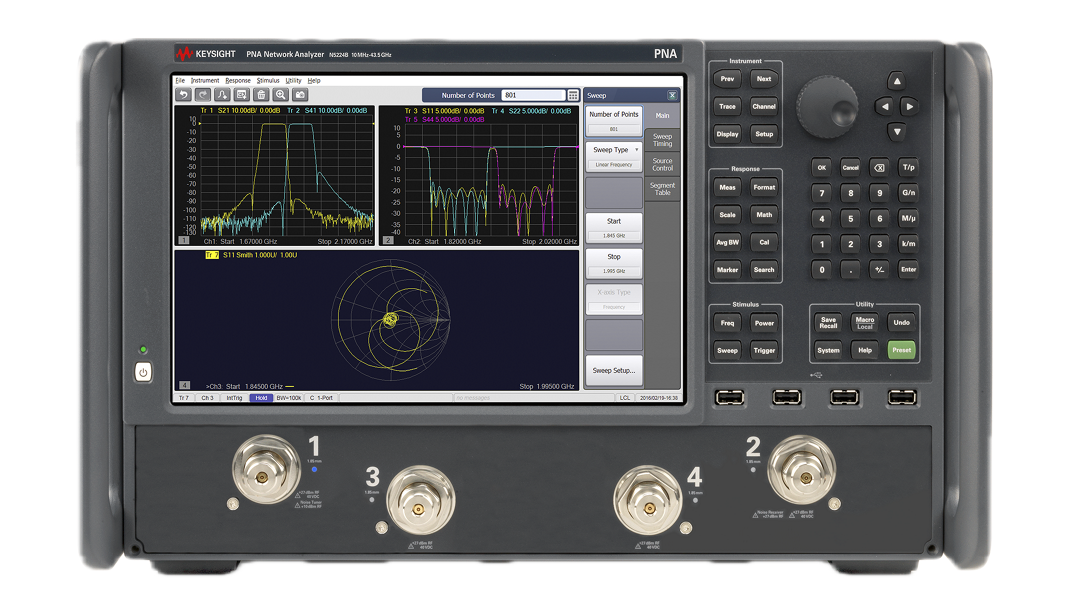
Vector Network Analysis up to 4 Ports
Perform fast real-time analysis up to 53 GHz.
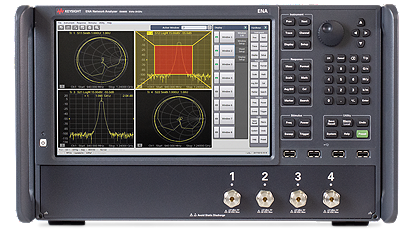
Enhanced Time Domain Analysis with TDR
Perform complete device characterization of passive components.
Multiport Vector Network Analysis

Accelerate PCIe and CXL design validation and debug up to PCIe 7.0 and CXL 2.1 with deep protocol insight, faster root-cause analysis, and confidence across every stage of development.
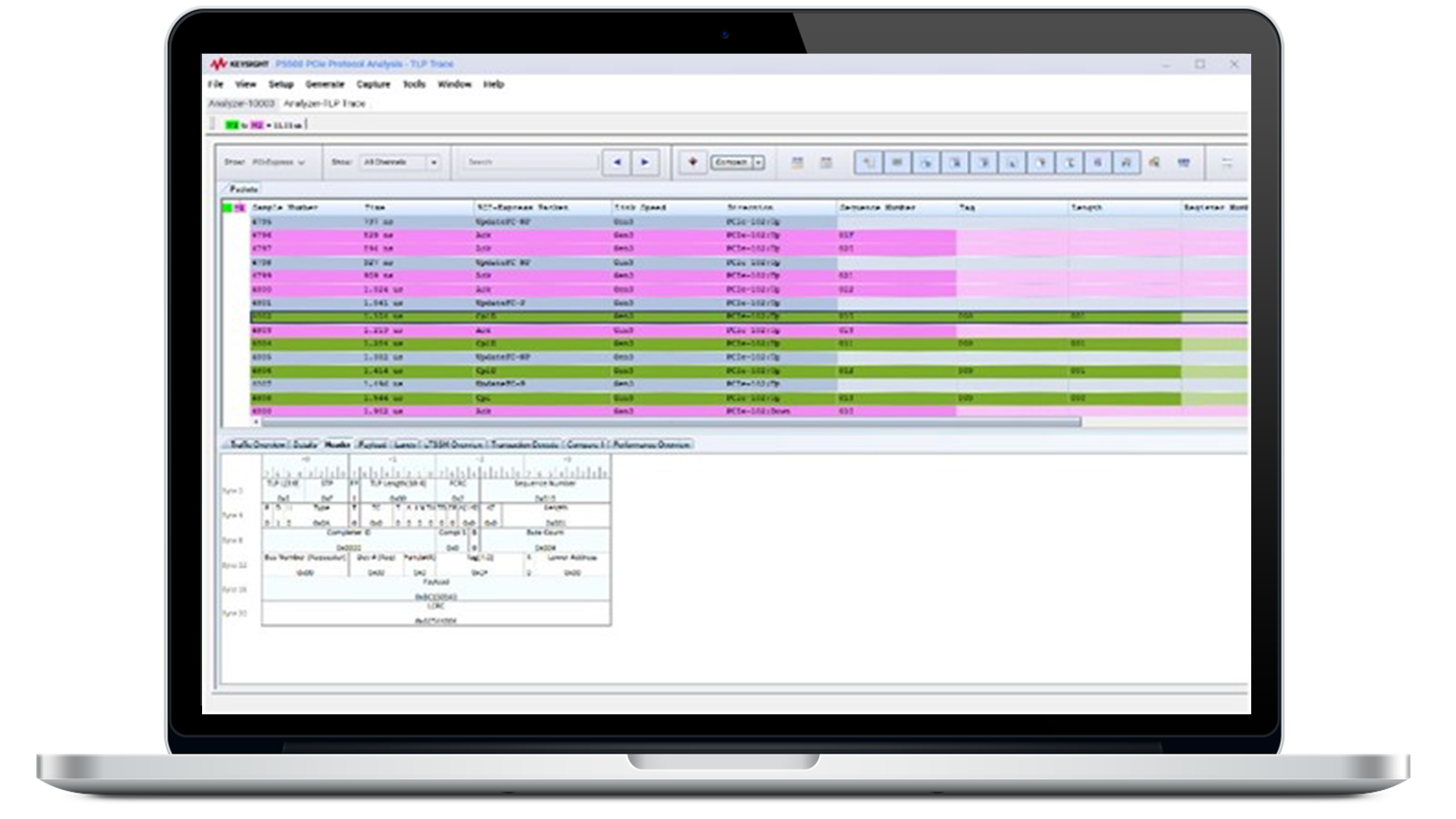
PCIe® and CXL Protocol Analyzers
Debug your designs faster with deep protocol insights and unparalleled signal integrity up to 128 GT/s.
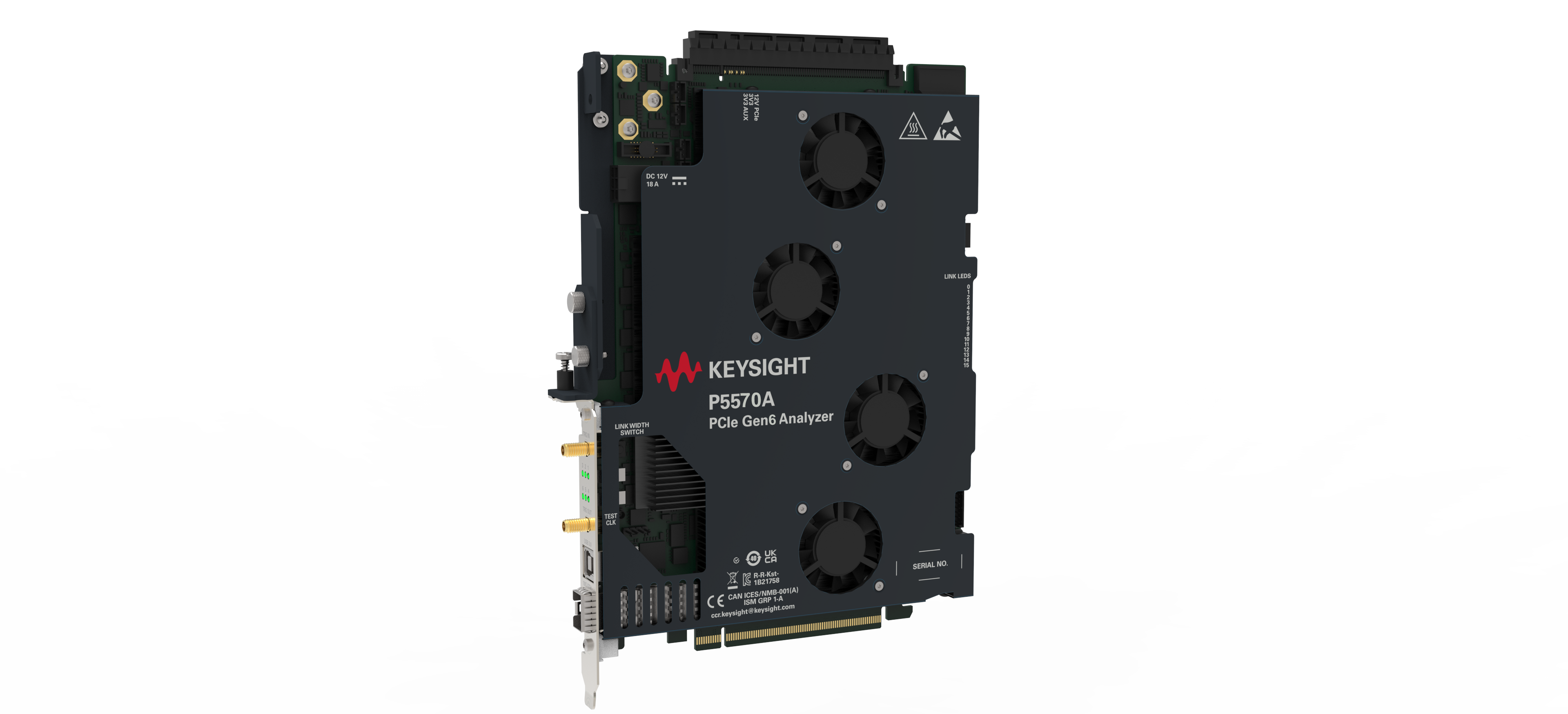
Automate PCIe® & CXL traffic analysis and compliance test.
PCIe® and CXL Protocol Exercisers
Generate realistic traffic up to 128 GT/s and emulate as a host system.
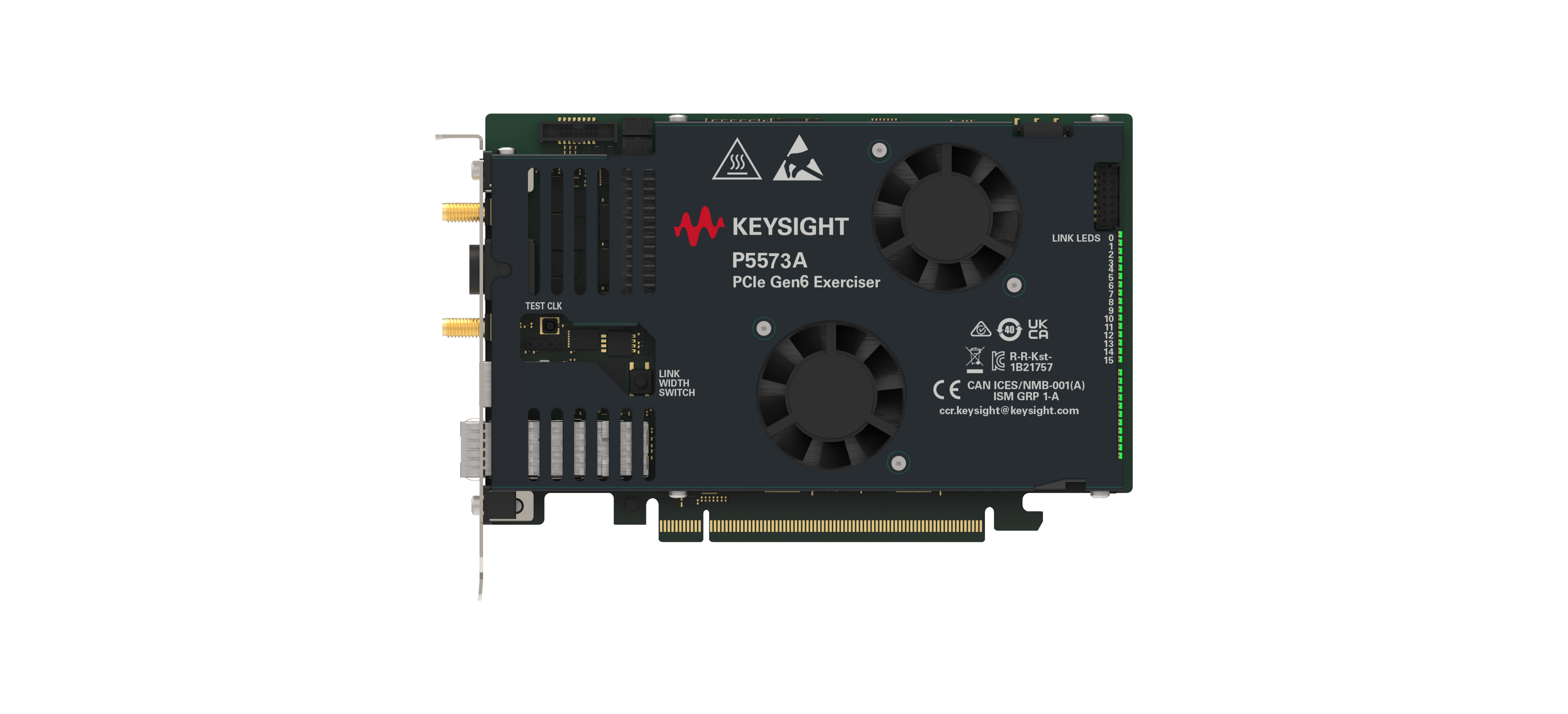
Automate PCIe® & CXL traffic analysis and compliance test.

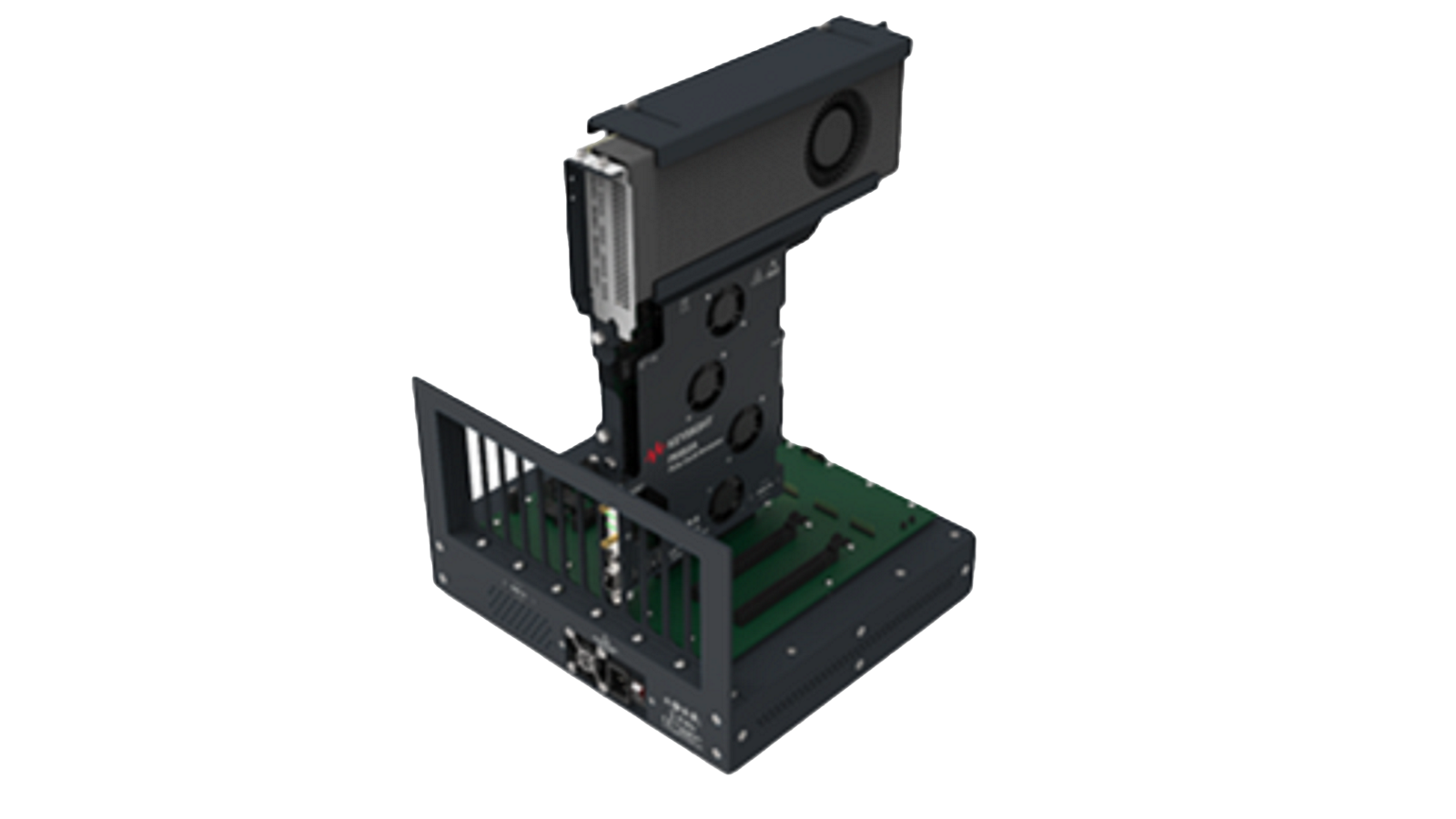
PCIe® and CXL Protocol Test Backplanes
Test with a stable cable-free backplane for unparalleled signal intergity.
PCIe® and CXL Use Cases
Learn More About PCIe® and CXL Solutions
PCIe® and CXL Solutions FAQs
PCIe 6.0 introduced PAM4 signaling and FLIT-based (Flow Control Unit) encoding, creating new challenges for transmitter analysis, receiver calibration, equalization, and protocol debug.
PCIe 7.0 doubles throughput again to 128 GT/s, supporting next-generation AI accelerators, data center infrastructure, and high-performance computing systems. Validation helps ensure interoperability and system reliability at these extreme speeds
By using a complete test workflow spanning simulation, characterization, protocol analysis, compliance testing, and receiver validation from a single vendor environment.
CXL is an open interconnect technology built on the PCIe physical layer that enables coherent communication between CPUs, accelerators, memory devices, GPUs, and other system components.
CXL uses the same physical connector and electrical interface as PCIe. During link initialization, devices can negotiate whether to operate in PCIe mode or CXL mode.
Although CXL shares the PCIe physical layer, it introduces new protocols, coherency mechanisms, memory semantics, and fabric architectures that require specialized validation and debug capabilities.
Key challenges include:
- Memory coherency validation
- Fabric management testing
- Memory pooling verification
- Interoperability between vendors
- Prtotocol compliance across complex system architectures
Memory pooling allows multiple hosts or accelerators to share memory resources dynamically, improving utilization and scalability in AI and cloud data center environments.
CXL enables memory expansion, memory sharing, and disaggregated architectures that help address growing memory and bandwidth demands for AI training and inference workloads.
Look for:
- Support for current CXL specifications
- Analyzer and exerciser capability
- Traffic generation and error injection
- Coherency validation
- Memory protocol analysis integration with PCIe protocol debug workflows
Yes. Keysight provides integrated protocol analyzers, exercisers, software, and physical-layer test solutions that help engineers validate PCIe and CXL designs throughout the development lifecycle.
Let's Solve What's Next.
Book a meeting or demo with one of our experts