Protected devices can take many forms, and the barrier to evidence may be different for every target. Keysight provides forensic laboratories with specialized equipment, software, and expertise to investigate both familiar and unfamiliar devices.
Using device characterization, side-channel analysis, and fault injection, forensic teams can identify where access is being restricted, understand the hardware and security mechanisms involved, and investigate potential paths towards protected information.
- Smartphones and Tablets
Investigate hardware-backed protections, secure boot, authentication, encryption, and secure elements, that may restrict access to device data. Physical measurements and fault injection can help pinpoint sensitive operations and whether hardware-level access is possible.


- Laptops and Desktop Systems
Examine hardware involved in boot, authentication, encryption, and key management when conventional forensic acquisition methods cannot reach the required information.

- Hardware Cryptocurrency Wallets
Investigate how the components and cryptographic operations control access to wallets and protected key material, helping teams determine whether physical analysis could support an authorized recovery or investigation.

- Smart Cards and Secure Elements
Analyze components designed to protect credentials, keys, and other sensitive information when those components present a barrier to the evidence required for an investigation

- Secure USB and Storage Devices
Investigate encryption, authentication, and key-management mechanisms that precent conventional access to stored information, and determine whether side channel or fault injection techniques may provide a viable next step.

- Routers and Network Equipment
Examine embedded hardware, boot processes, authentication mechanisms, and protected storage to support investigations where relevant information cannot be acquired through standard interfaces.

- Drones and Security Cameras
Investigate embedded processors, storage, authentication, and encryption mechanisms that may control access to captured media, configuration data, logs, or other information relevant to an investigation.

- Automotive and Navigation Systems
Examine embedded controllers and related hardware to understand how access to stored or processed information is controlled, including data associated with navigation, system activity, authentication, or other device functions.

- Wearables and IoT Devices
Characterize compact or unfamiliar devices to identify processors, memory, interfaces, and security controls, then determine which hardware-level techniques may help reach information that is otherwise inaccessible

- Custom and Legacy Electronic Devices
Start with device characterization when documentation, vendor support, or prior knowledge is limited. Identify the relevant processors, memory, interfaces, and protection mechanisms before determining the most appropriate route for further forensic examination.






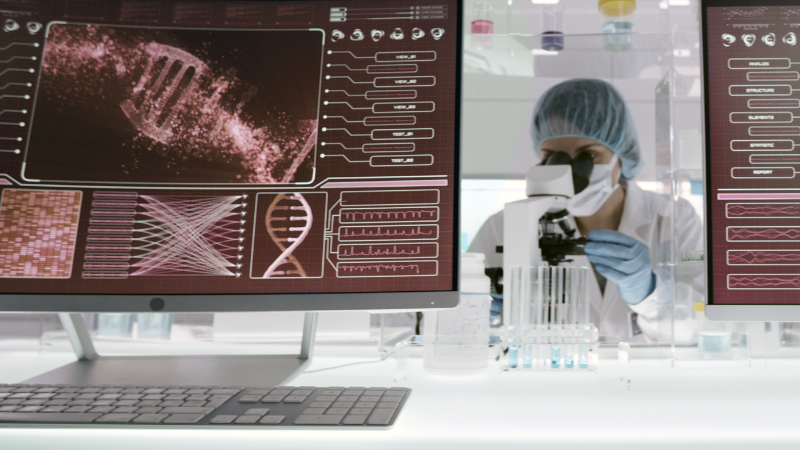
Build Your Digital Forensics Lab
Build a repeatable hardware investigation capability that reduces investigation time, improves consistency, and scales across future devices, turning hardware-level analysis from a specialized one-off project into a capability your team owns.
Keysight helps forensic organizations build controlled laboratory environments for Side-Channel Analysis, Fault Injection, and device characterization, together with the expertise and workflows needed to operate independently.

Build the Right Test Environment
Establish a controlled hardware security testing environment based on the devices, techniques, and investigative requirements relevant to your organization.


Develop Repeatable Workflows
Create structured processes for test execution, measurement, analysis, and documentation so experiments can be reproduced, and methods can be reused across future targets.


Develop Your Team's Expertise
Build hands-on skills in side-channel analysis and fault injection, through training that ranges from foundational techniques to advanced programs tailored to your lab, workflows, and device types.
Build Your Black-Box Device Investigation Lab
A forensic device security lab brings together the equipment, software, and expertise needed to investigate electronic devices in a controlled, repeatable environment. Keysight Device Security combines specialized hardware and software for precise measurement, triggering, side-channel analysis, fault injection, and automation, helping forensic teams investigate both known and unfamiliar devices.
Discover what you need to build your black-box investigation lab.
- Evidence
- Hardware
- Inspector Software
- Training
Device Under Investigation
The investigation starts with the device itself. It may be seized, encrypted, legacy, or otherwise unfamiliar, from a smartphone or hardware cryptocurrency wallet to embedded, network, or automotive electronics.
Teams can characterize the device, identify the hardware mechanisms protecting access, and apply the appropriate physical analysis techniques, with the goal of uncovering information that may otherwise remain inaccessible, from accessing protected device data to investigating cryptographic assets or overcoming authentication barriers when credentials such as a PIN or password are unavailable.


At the core is the DS1050A Embedded Security Testbench, providing a synchronized PXI-based foundation for side-channel analysis (SCA) and fault injection (FI). Its modular architecture allows additional capabilities to be connected and combined depending on the device and investigation requirements.
For this black-box forensic configuration, the hardware supports three key areas:
- Core for control, triggering, and synchronization: Interact with the device, identify relevant activity, and precisely coordinate measurements and fault injection.
- Power and clock-based testing: Measure power consumption and apply controlled power or timing manipulations to investigate device behavior and security mechanisms.
- Electromagnetic (EM) testing: Observe localized EM emissions for side-channel analysis and apply targeted EM fault injection to investigate security-relevant areas of the device. The DS1203B supports high-precision EM measurements, while the DS1121B provides localized EM fault injection.
DS1050A Embedded Security Testbench | Keysight
The Next Generation Embedded Security Testbench integrates modular, high-performance hardware for precise Side Channel Analysis and Fault Injection testing.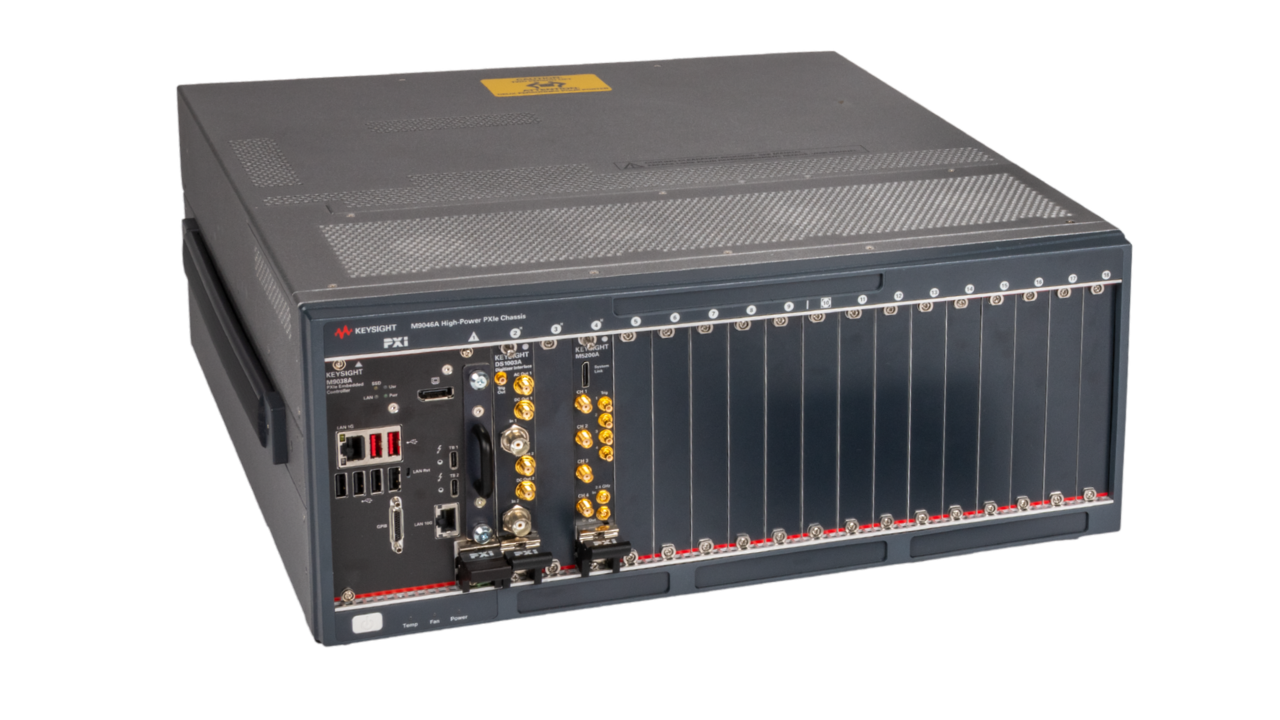
DS1202A Active Current Probe | Keysight
The DS1202A Active Current Probe is a highly sensitive probe that detects electrical currents, measuring a target device’s power consumption.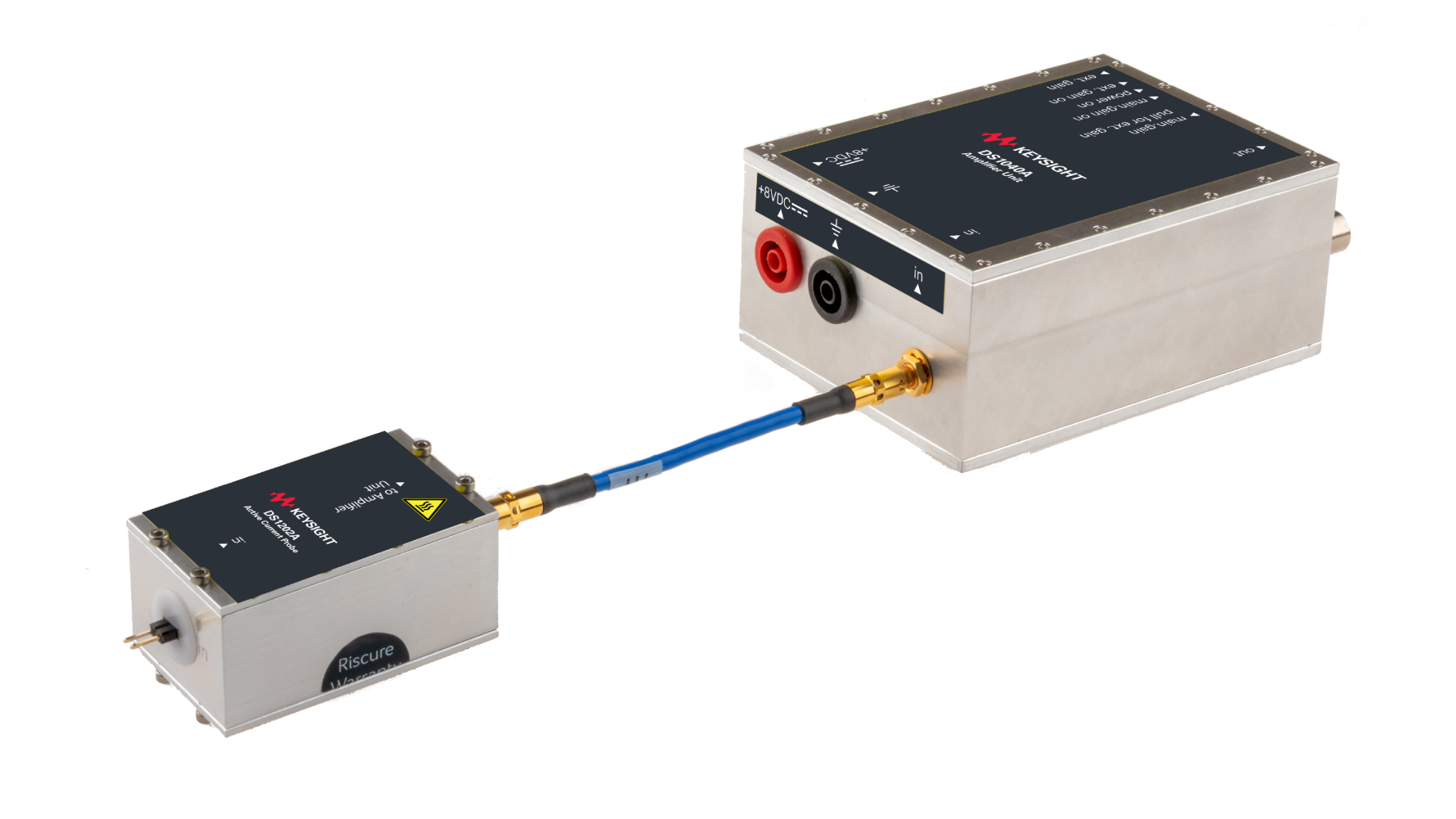
DS1142A 30 A Glitch Amplifier | Keysight
High-precision Glitch Amplifier for power Fault Injection (FI). Features 3 glitch modes— crowbar, voltage follower, and normal.
DS1203B High Precision Electromagnetic Probe
The DS1203B High Precision Electromagnetic Probe, a highly precise probe used in side channel analysis, picks up electromagnetic emissions from semiconductor circuits.
DS1121B Bidirectional Fault Injection Probe | Keysight
The DS1121B Bidirectional Fault Injection Probe delivers high power electromagnetic (EM) pulses to precise, user-defined locations on a target device. Its rapid pulse generation is designed to meet the stringent requirements of both commercial and certified testing environments.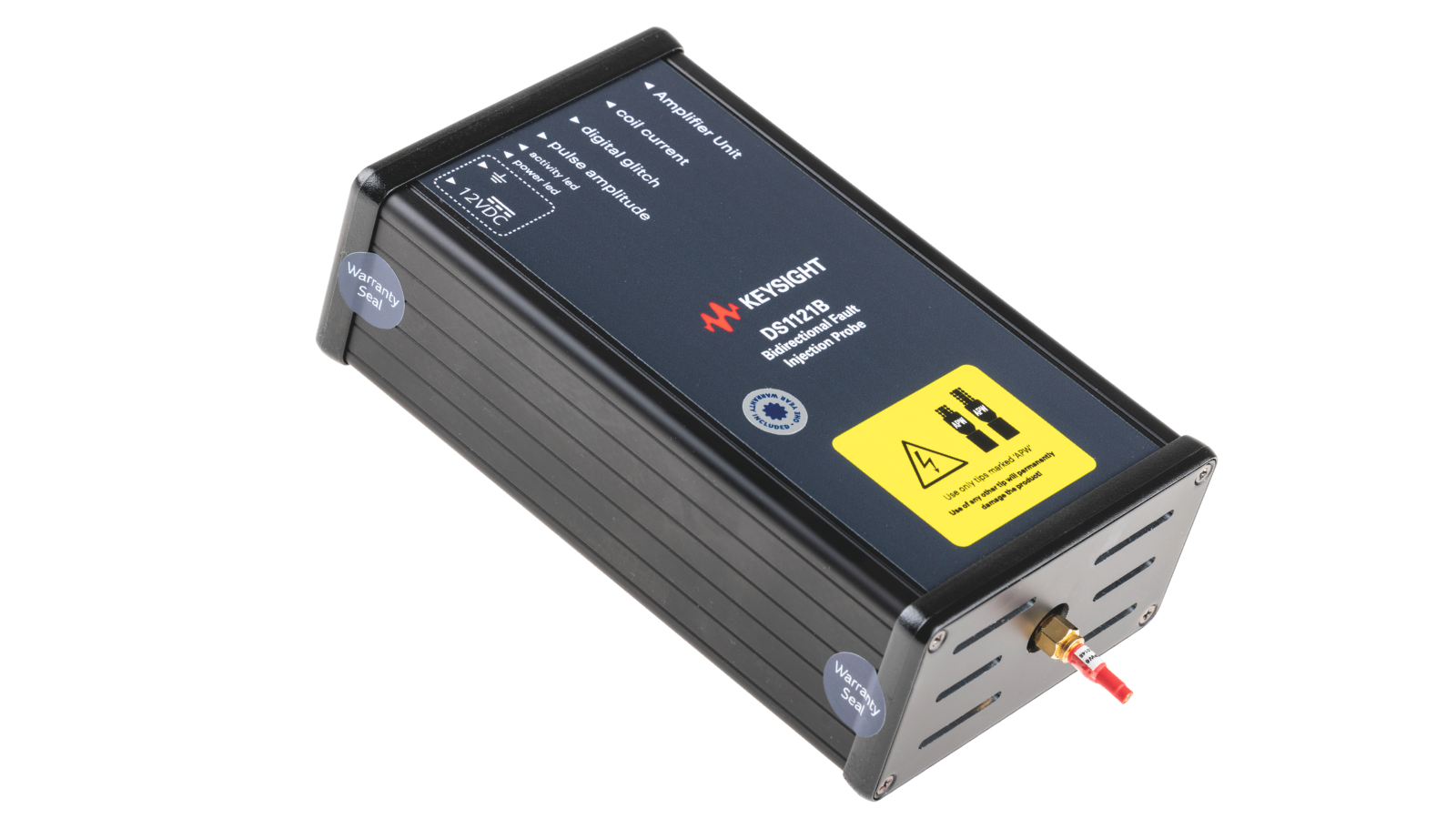
DS1010A Precision XYZ Stage | Keysight
The DS1010A Precision XYZ Stage is the default XYZ stage for various Keysight hardware components which need accurate positioning above the device under test.

Keysight Inspector Software connects the investigation equipment with the analysis workflow, helping forensic teams move from captured measurements and device responses to actionable insights.
For this black-box forensic configuration, Inspector supports three key areas:
- Acquisition & Signal Processing: Capture, prepare, and manage power and electromagnetic measurements, creating consistent, analysis-ready data for further investigation.
- Side-Channel Analysis: Analyze captured measurements using statistical, spectral, leakage, signal-processing, and cryptographic techniques to investigate information leakage and security-relevant device behavior.
- Fault Injection: Control the test hardware, automate fault injection campaigns, explore fault parameters, and analyze how the device responds under controlled fault conditions.
Inspector Software
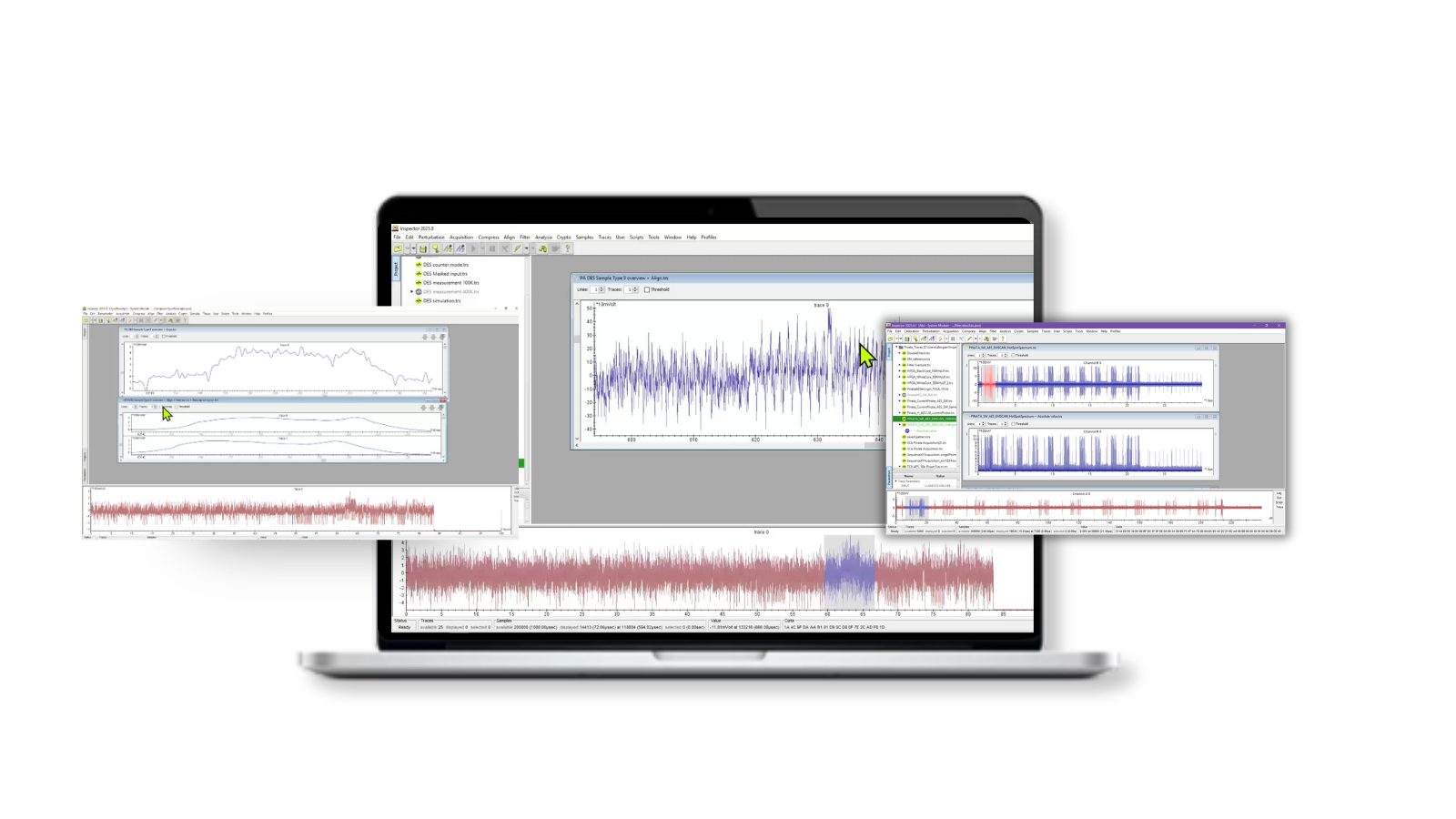
Acquisition and Signal Processing
Acquire, prepare, and manage power and electromagnetic measurements from the device, creating reliable, analysis-ready traces for investigating security-relevant operations and information leakage.
Inspector Software
Analysis Professional
Analyze captured traces using statistical, spectral, leakage, and cryptographic analysis techniques to uncover information leakage and gain deeper insight into security-relevant device behavior.
Inspector Software
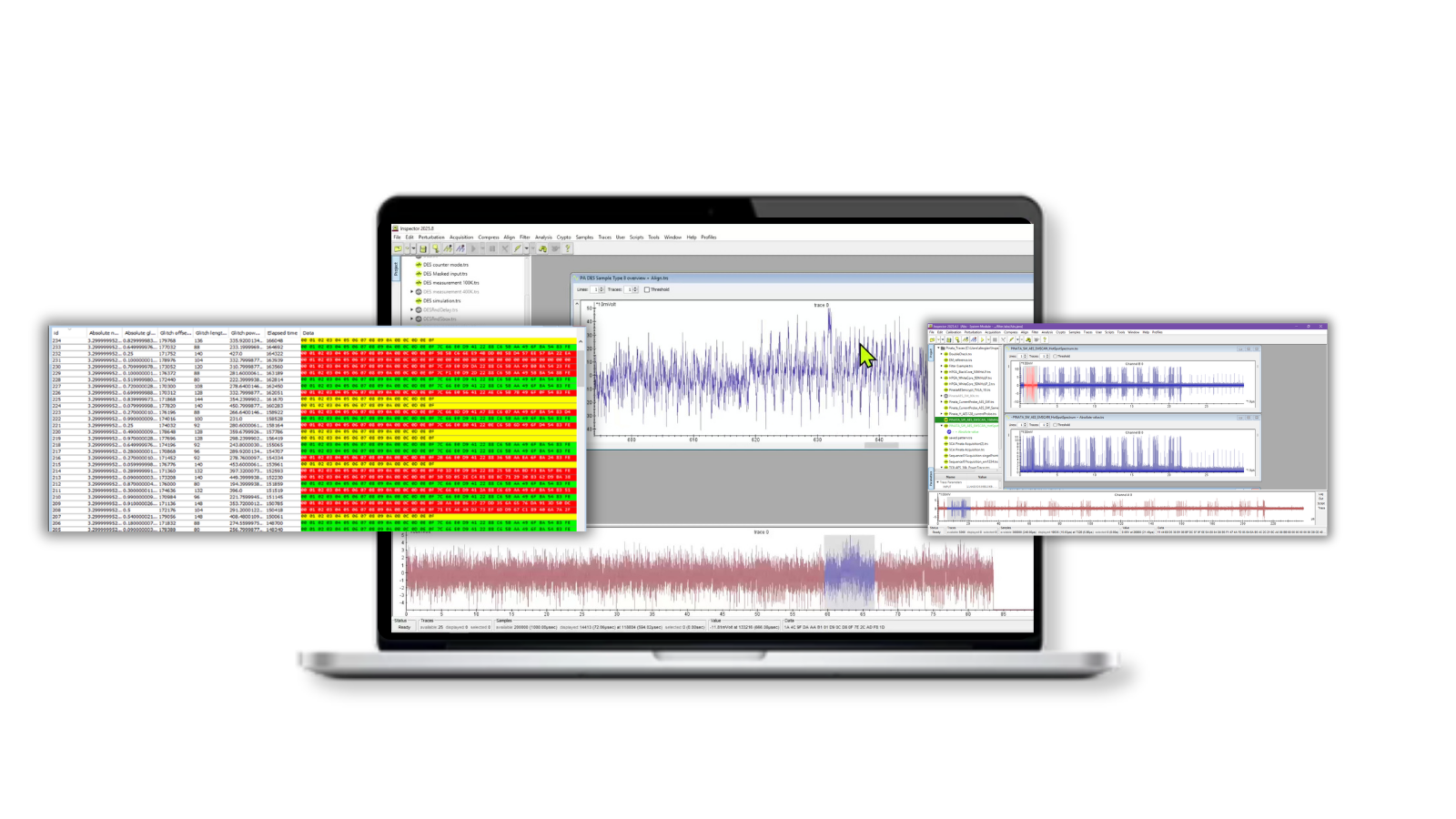
Fault Injection
Control test hardware and automate fault injection campaigns to investigate how a device responds to precisely controlled faults, helping identify conditions that may affect security mechanisms or protected operations.

Building the lab is only the beginning. Effective black-box investigation also depends on knowing how to characterize unfamiliar devices, acquire reliable measurements, operate the equipment, and select the appropriate side-channel analysis (SCA) and fault injection (FI) techniques.
Keysight training helps forensic teams develop those capabilities internally, from Essential SCA and FI Training that builds a strong foundation in physical security testing to Advanced SCA and FI Training focused on complex attack techniques, practical workflows, and real-world investigation scenarios.
Whether your team is new to hardware security evaluation or looking to expand existing expertise, Keysight training helps investigators become increasingly independent in configuring experiments, operating the platform, and applying the appropriate techniques to new devices and challenges.
Side Channel Analysis
Essential Training

Side Channel Analysis
Advanced Training
Fault Injection
Essential Training

Fault Injection
Advanced Training

Frequently Asked Questions
Hardware security testing should be considered when conventional forensic tools cannot access, extract, or interpret the required data. This may occur when a device uses secure boot, encrypted storage, locked debug interfaces, secure elements, Trusted Execution Environments, anti-tamper controls, or hardware-backed key management.
An initial hardware assessment can help determine which protections are present, where sensitive operations occur, and whether techniques such as Side-Channel Analysis or Fault Injection may provide a viable path forward.
Keysight can help evaluate protected, encrypted, legacy, custom, and unfamiliar electronic devices, including:
- Smartphones and tablets
- Laptops and embedded computers
- Hardware cryptocurrency wallets
- Smart cards and secure elements
- Secure USB and storage devices
- Routers and network equipment
- Drones, cameras, and surveillance systems
- Wearable and IoT devices
- Automotive and vehicle-related electronics
- Custom circuit boards and embedded systems
Support depends on the device architecture, security implementation, available documentation, physical condition, and investigative objectives.
Keysight begins by assessing the target device and the specific objective of the investigation. The assessment may consider:
- The device, processor, memory, and security architecture
- The type of data or functionality being investigated
- Available software, firmware, documentation, and known credentials
- Accessible interfaces, test points, and communication channels
- Encryption, secure boot, anti-tamper, and key-management controls
- Whether destructive or non-destructive testing is permitted
- Evidence-handling, repeatability, and documentation requirements
The objective is to determine which testing methods are technically relevant, what laboratory equipment and expertise may be required, and whether the proposed examination is feasible.
Side-Channel Analysis measures physical signals produced while a device performs security-sensitive operations. These signals may include power consumption or electromagnetic emissions.
- Under controlled laboratory conditions, SCA can help investigators:
- Identify when cryptographic or authentication operations occur
- Compare device behavior across different inputs or operating states
- Locate security-sensitive activity within a device
- Assess whether physical measurements could reveal information about protected operations
- Collect technical evidence to guide further testing
SCA does not automatically provide access to protected data. Its effectiveness depends on the target, implementation, measurement quality, available device control, and investigative objective.
Fault Injection intentionally introduces a controlled disturbance while a device is operating. Depending on the target, this may involve voltage, clock, electromagnetic, or laser-based techniques.
The purpose is to evaluate whether a temporary device error can alter a security decision or interrupt a protected process, such as:
- Secure-boot verification
- Authentication or PIN validation
- Access-control checks
- Debug-interface restrictions
- Firmware verification
- Protected memory operations
Fault Injection requires precise timing, repeatable experiments, and detailed analysis. Results vary by architecture and implementation, so an initial feasibility assessment is important before developing a full test campaign.
No. Hardware security testing is target-specific, and not every device or protection mechanism will present a practical attack path.
Keysight can help assess the device, identify relevant testing methods, develop and execute controlled experiments, and document the results. The outcome may confirm a viable path, identify additional research requirements, or determine that the proposed approach is not technically feasible under the available constraints.
Yes. Keysight can support both individual device-security projects and longer-term capability development.
For a specific device challenge, support may include target assessment, test-plan development, laboratory testing, data analysis, and technical reporting.
For organizations building an internal hardware security capability, support may include:
- Side-Channel Analysis and Fault Injection equipment
- Laboratory design and equipment configuration
- Tool installation and workflow development
- Hands-on training using representative targets
- Test-method development
- Documentation and repeatability practices
- Expert consulting for advanced or unfamiliar devices
The scope can be tailored to whether the organization needs immediate technical assistance, knowledge transfer, or a sustainable internal laboratory.
This offering is intended for authorized organizations that investigate, evaluate, or research protected electronic devices, including:
- Digital forensic laboratories
- Law-enforcement technical units
- District attorney and investigative agencies
- Cryptocurrency investigation teams
- Government research organizations
- Incident-response and forensic service providers
- Hardware security and vulnerability research laboratories
Organizations are responsible for ensuring that they have the appropriate legal authority, evidence-handling procedures, and internal approvals for the devices being evaluated.
No. The approach can be similar, but the process is not the same. Devices differ in architecture, packaging, operating environment, security controls, available interfaces, and physical accessibility. A method that works on one target may not apply to another device, even when the devices serve a similar purpose.
Keysight therefore uses a target-specific approach. The initial assessment is used to identify relevant techniques, laboratory requirements, technical risks, and clear decision points before more extensive testing begins.