











- Overview
- All Models
- Support
Fast, Accurate OTA Measurements Across Your Workflow
Keysight’s Compact Antenna Test Ranges (CATR) deliver highly repeatable over-the-air measurements from sub-6 GHz to mmWave frequencies in compact, integrated enclosures. Designed for 5G, 6G, and satellite communication device testing, as well as antenna measurements and phased array calibration, these turnkey chambers combine precision reflector technology, wide angular coverage, and low-reflection environments to enable consistent, standards-compliant results without the footprint of a full anechoic chamber. Whether you're performing R&D, conformance, or production testing, Keysight CATR chambers support high dynamic range, fast switching, and automated test control to accelerate your device evaluation with confidence. For applications requiring larger test volumes, Keysight also offers custom solutions with quiet zones of up to 2.4 meters, enabling accurate testing of heavier and larger devices such as base stations, satellites, and radar systems. Please contact Keysight to discuss your specific requirements. Need help selecting? Check out the resources below.
Reduce Test Time
Accelerate measurements with high-speed switching, automation support, and efficient OTA workflows to reduce overall test time.
Spatial Accuracy
Achieve precise far-field conditions using precision reflectors and absorbers that create uniform quiet zones with minimal reflections.
Frequency Coverage
Validate devices across sub-6 GHz, FR1, and mmWave FR2 bands using wideband feeds and optimized chamber designs for reliable performance.
Measurement Repeatability
Ensure consistent results with low-reflection environments and stable mechanical configurations that minimize test variability.


-
Maximum angles of arrival
1 to 2
-
Frequency range
24 GHz to 42 GHz, 24 GHz to 55 GHz, 60 GHz to 90 GHz
-
Measurement type
Indirect far field (IFF)
-
Maximum DUT weight
10 kg
-
Use cases
RF / demodulation / RRM 1AoA verification and acceptance, Antenna measurement, Automotive Radar Manufacturing
Available Products
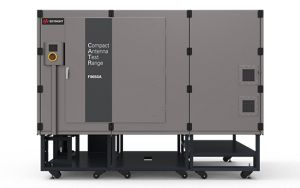
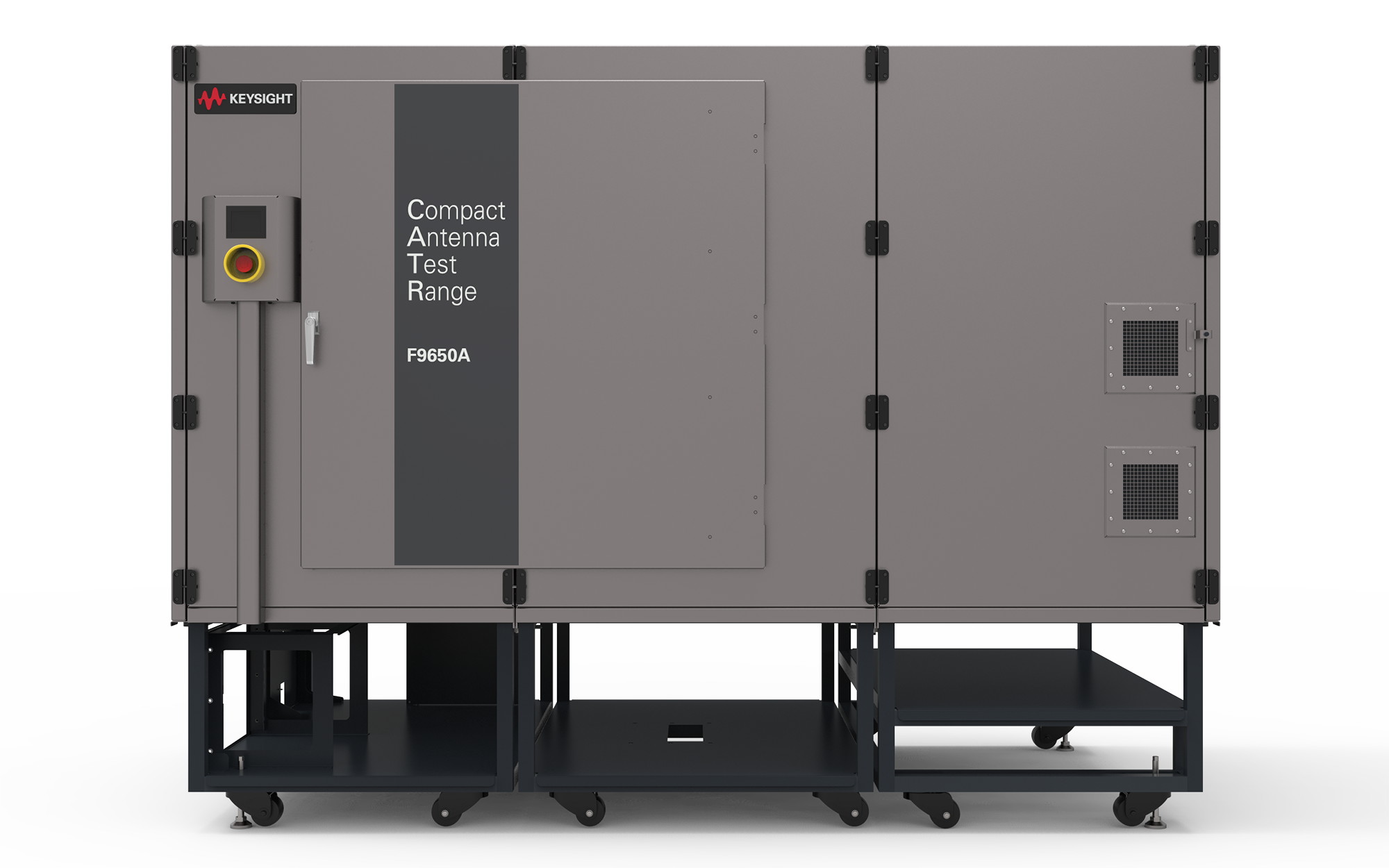
Compact Antenna Test Range (CATR)

Multi-Probe Compact Antenna Test Range (CATR)
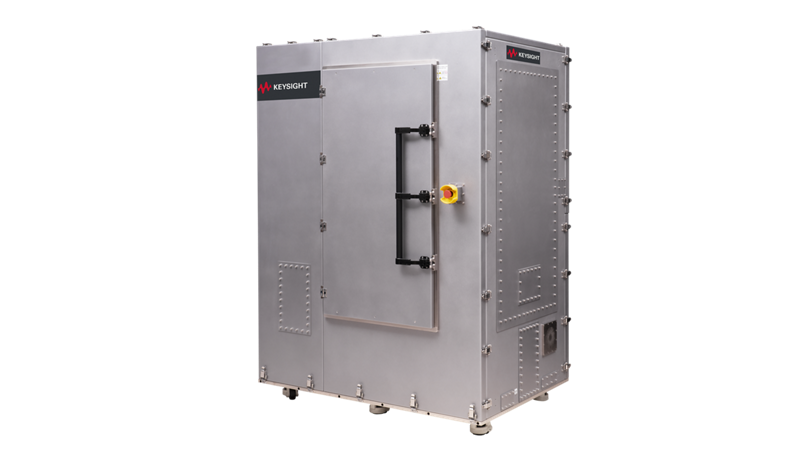
Vertical Compact Antenna Test Range
Services and support
Innovate at speed with curated support plans and prioritized response and turn-around times.
Get predictable, lease-based subscriptions and full lifecycle management solutions—so you reach your business goals faster.
Experience elevated service as a KeysightCare subscriber to get committed technical response and more.
Ensure your test system performs to specification and meets local and global standards.
Make measurements quickly with in-house, instructor-led training, and eLearning.
Download Keysight software or update your software to the newest version.
Frequently Asked Questions
A Compact Antenna Test Range, often shortened to CATR, is a specialized type of anechoic chamber designed to create a plane-wave test environment in a compact space. In free space, a device under test should ideally be evaluated at distances where the spherical wavefront emitted by the antenna has flattened into a plane wave. However, reaching that distance in a traditional far-field setup requires very large chambers, which can be impractical for high-frequency testing.
A CATR chamber solves this problem by using a large precision reflector that reshapes the spherical waves from a feed antenna into a uniform plane wave within a defined quiet zone. Inside this zone, the device under test experiences the same conditions as it would in the far field, but within a much smaller physical footprint. This approach reduces facility size, cost, and complexity while still allowing accurate characterization of antennas and wireless devices across a wide range of frequencies.
Millimeter-wave (mmWave) frequencies used in fifth-generation (5G) and emerging sixth-generation (6G) systems bring new challenges for testing. Antennas become smaller, but their arrays are more complex, often using beamforming and beam steering techniques to achieve high data rates and directional coverage. Because these systems rely on accurate spatial performance, testing must be conducted over the air (OTA) in controlled environments.
CATR chambers are particularly well-suited for this. The compact quiet zone they generate provides a stable and repeatable environment for evaluating mmWave devices without requiring the extremely long distances of direct far-field chambers. This makes it possible to measure radiation patterns, beam accuracy, and throughput under realistic propagation conditions while maintaining manageable chamber dimensions.
For 6G research, where frequencies are expected to extend beyond 100 gigahertz, the precise plane-wave field created in a CATR becomes even more critical. Researchers can validate new antenna designs, phased arrays, and integrated transceiver modules in a way that mirrors the conditions they will encounter in deployment, but within the controlled and repeatable environment of the chamber.