How to Test Electric Vehicle (EV) Batteries

Electric Vehicle Battery Testing and Modeling
EV battery testing requires a bidirectional power connection that can charge and discharge the pack while measuring voltage and current at the battery terminals. Use a four-wire configuration to compensate for cable voltage drop, then record open-circuit voltage before applying a controlled current profile. Battery capacity validation measures charge delivered during discharge or stored during charging until the selected cut-off condition is reached. For internal resistance measurement, apply short current pulses separated by rest intervals and calculate resistance from the corresponding voltage and current changes. A programmable current profile can reproduce steady or changing load demand during the discharge sequence. These measurements establish the electrical data needed to characterize a high-voltage battery pack across defined operating conditions and State of Charge (SoC) points.
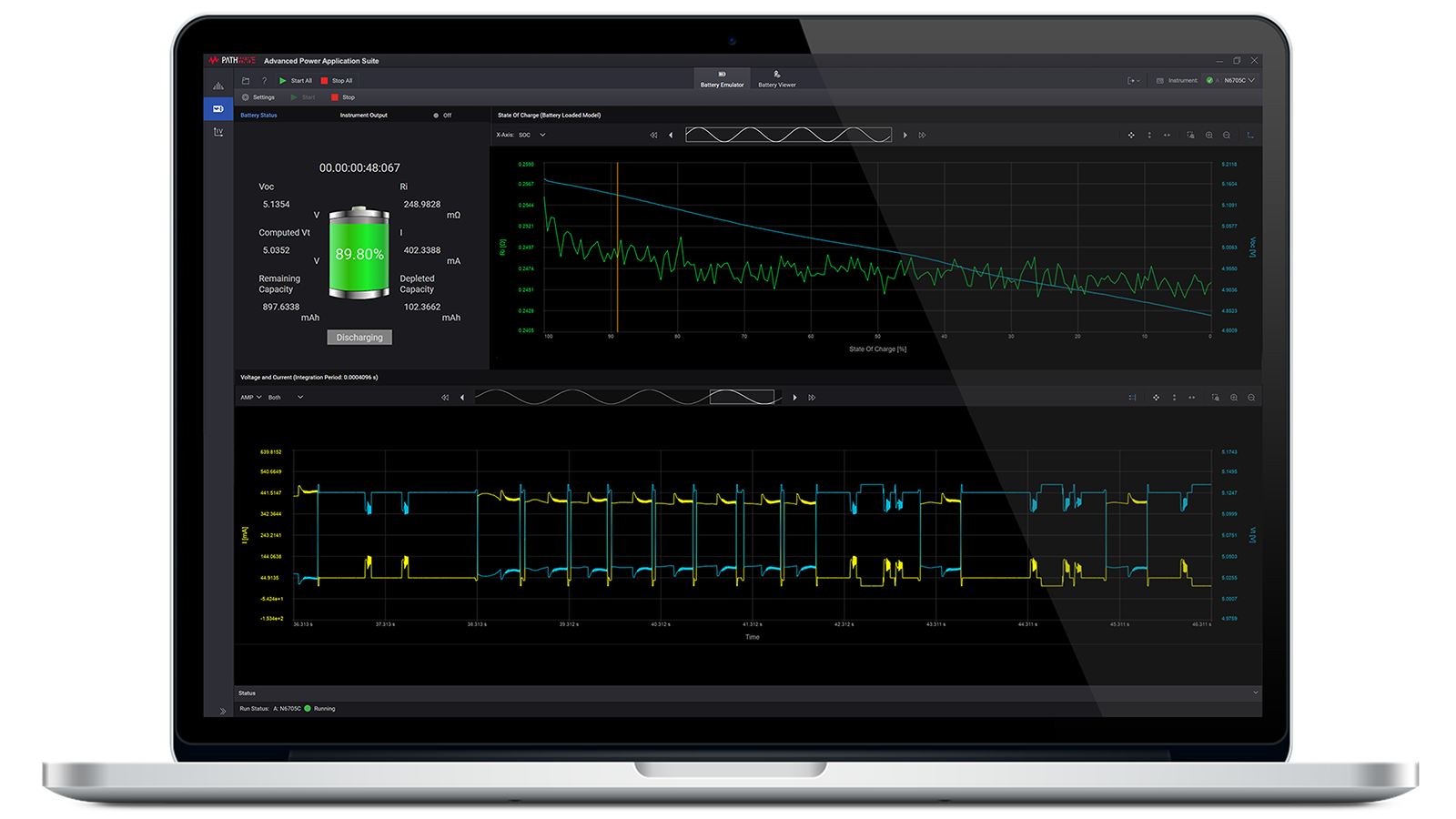
Battery modeling extends the test across SoC by periodically measuring open-circuit voltage and series internal resistance as the pack is discharged. Apply constant or dynamic current profiles to represent the intended load, and use battery cycling to sequence charge, rest, discharge, and rest steps while logging voltage, current, capacity, and timing. The test can stop on open-circuit voltage, load voltage, or consumed capacity, and temperature monitoring can be integrated when required by the test environment. The resulting battery model associates open-circuit voltage and internal resistance with SoC and can be exported for analysis or reused for battery emulation. This workflow combines electric vehicle battery testing, battery capacity validation, internal resistance measurement, battery modeling, and battery cycling in one measurement process.

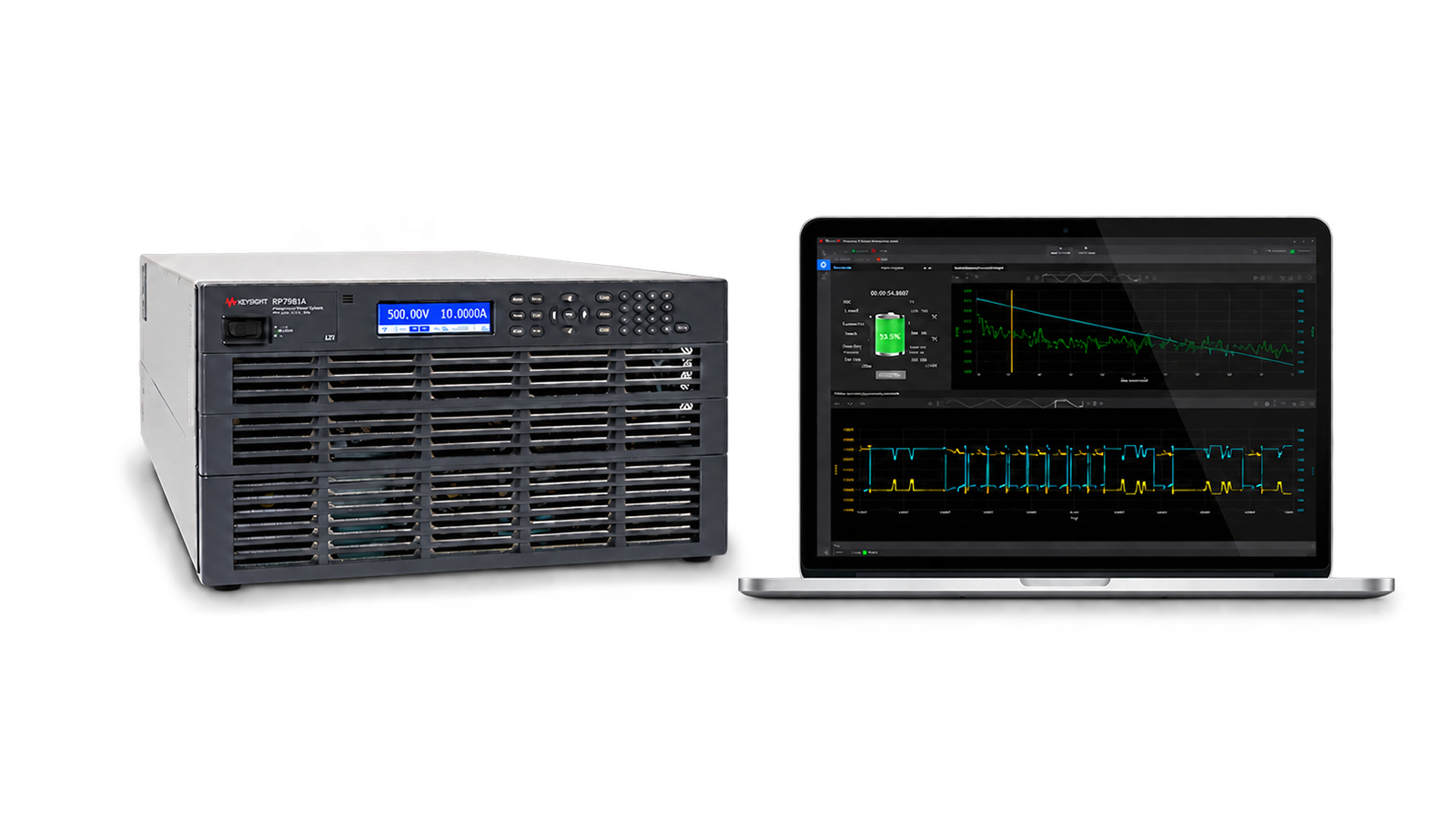
Electric Vehicle Battery Test Solution
See Block Diagram of Electric Vehicle Battery Test Solution


Explore Products in Our Electric Vehicle Battery Test Solution
-

![]()
PW9253A PathWave Advanced Battery Test and Emulation
-


![]()
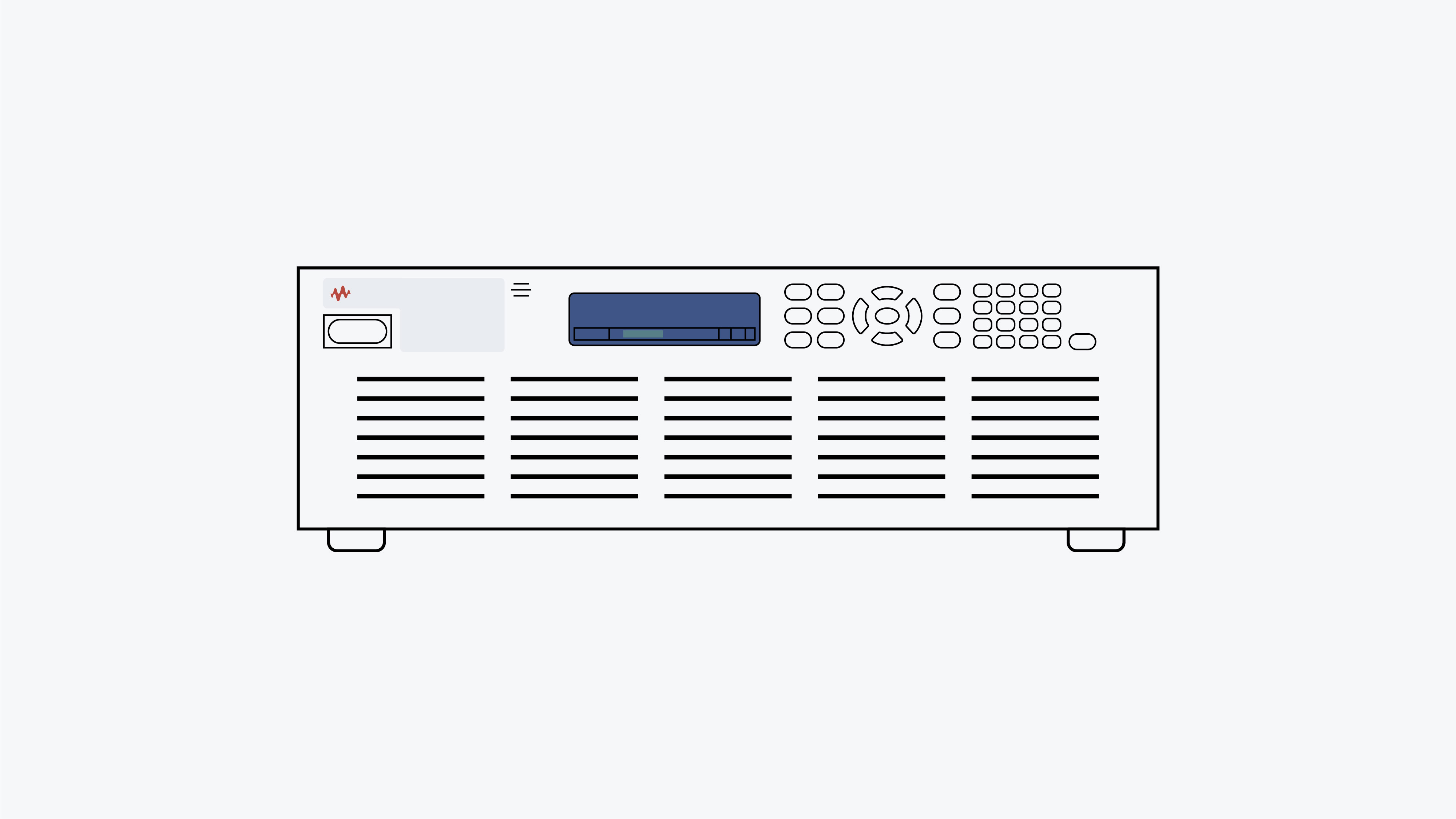
RP7981A Regenerative Power System, 500 V, ±180 A, 30 kW, 400 / 480 VAC


Discover Resources and Insights
Additional Resources for Electric Vehicle Battery Test
Related Use Cases

-
![]()
Learn More
How to Test EV Onboard Chargers
Testing electric vehicle (EV) onboard chargers (OBCs) requires emulating and sequencing various AC power input conditions and power line disturbances. Learn how to set up a test to emulate AC input voltage and frequency parameters, including power line disturbances, to ensure interoperability between EVs and charging stations.
Learn More

-
![]()
Learn More
How to Test Battery Performance in E-Mobility Vehicles
Testing the battery performance of a low-power e-mobility vehicle requires emulating the power source in various operating conditions. Learn how to test the battery performance with a system power supply and software to gain insights into the device under test (DUT) performance.
Learn More
-
![]()
Learn More
How to Validate EV Power Converter Design
EV power converter tests require bidirectional DC power sourcing / sinking in the 3kW to 30 kW range. Learn how to use off-the-shelf test system resources to apply sourcing power and electrical loads to bidirectional and unidirectional converters.
Learn More

Get in Touch with One of Our Experts
Need help finding the right solution for you?