What are you looking for?
AI Power
Maximize AI data center power efficiency to improve AI workload scaling.
Optimize AI Data Center Power Integrity and Efficiency
In AI data centers, energy management is just as important as performance. However, while high-end servers and rack switches utilize best-of-breed chips and interconnects, crosstalk and electromagnetic interference can cause power management issues that can ultimately impede an AI data center's ability to scale. Without versatile design automation and measurement tools, it's exceedingly difficult to simulate power delivery networks, identify the root causes of power issues, and ultimately ensure power efficiency.
Featured Resources: AI Data Center Power

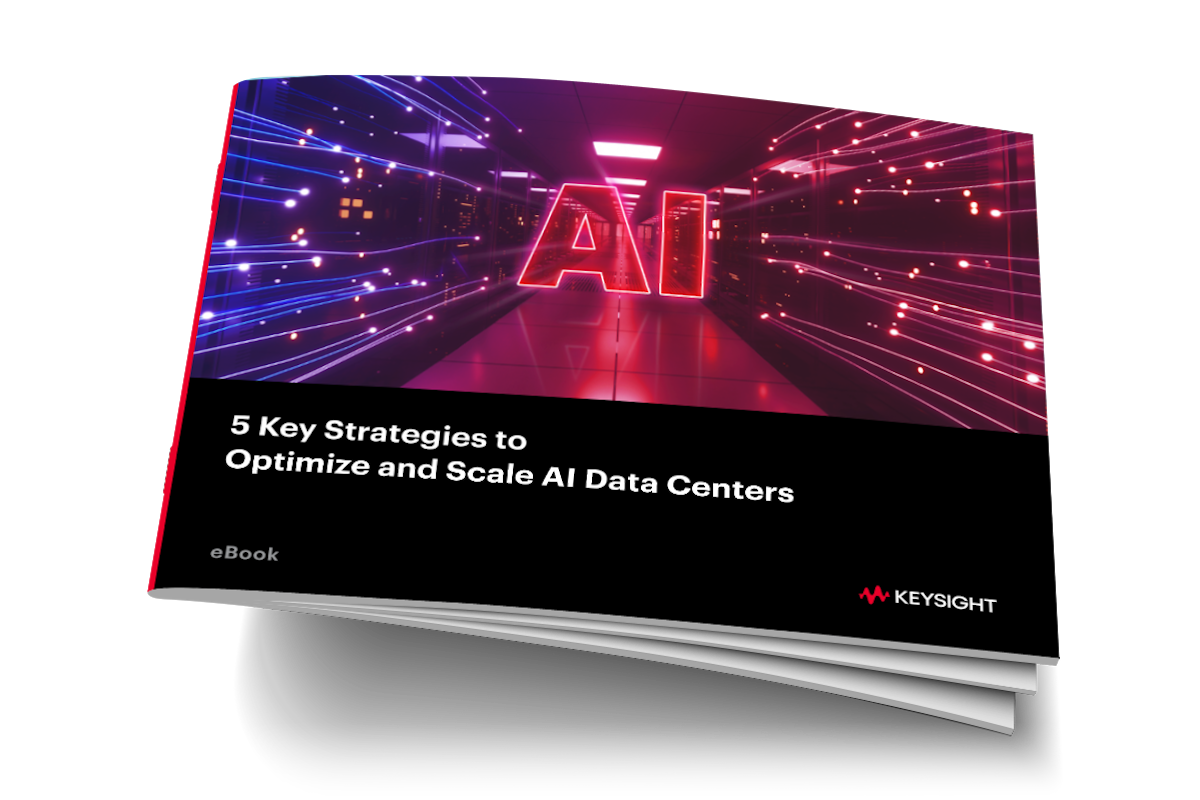
5 Strategies to Optimize and Scale AI Data Centers
AI is transforming industries and driving innovation. However, unique traffic patterns, dynamic workloads, and relentless performance pressures can escalate even the smallest issues into critical problems.
Read this eBook to discover five practical solutions to optimize AI data center performance for modern applications.


Four Considerations for High-Speed Digital Design Success
Discover how to keep pace with evolving standards in high-speed digital design. Learn how to adapt to new signaling features, faster data transfer rates, and smaller design margins with new tools and design methodologies.


Power Integrity: The Foundation for Reliable Electronics Performance
Electronic systems play a pivotal role in shaping how AI data centers operate. However, performance and reliability depend heavily on power integrity. In this eBook, learn the key considerations to achieve reliable power from DC to GHz in your high-speed digital designs.
Prevent power integrity issues from jeopardizing AI data centers
Simplify analysis for power delivery networks, predict reliability, and optimize thermal performance early in designs — streamlining power integrity workflows.
Analyze noise, ripple, and crosstalk with unmatched accuracy
Identify and eliminate the root causes of your toughest power integrity issues with versatile, compact, and high-performance test and measurement tools.
Scale AI workload capacity by reducing power consumption
Optimize AI data center power efficiency by improving power integrity, management, and delivery across network equipment and infrastructure.
Explore the Portfolio: AI Data Center Power Solutions

Eliminate power integrity issues with MXR oscilloscopes
Optimize power efficiency and integrity for AI data center networking equipment with Keysight MXR-series oscilloscopes, power integrity analysis software, and power rail probes. Ensure designs are free of power-wasting issues by evaluating crosstalk, EMI, and other power rail and high-speed data signal issues in a single, compact instrument.
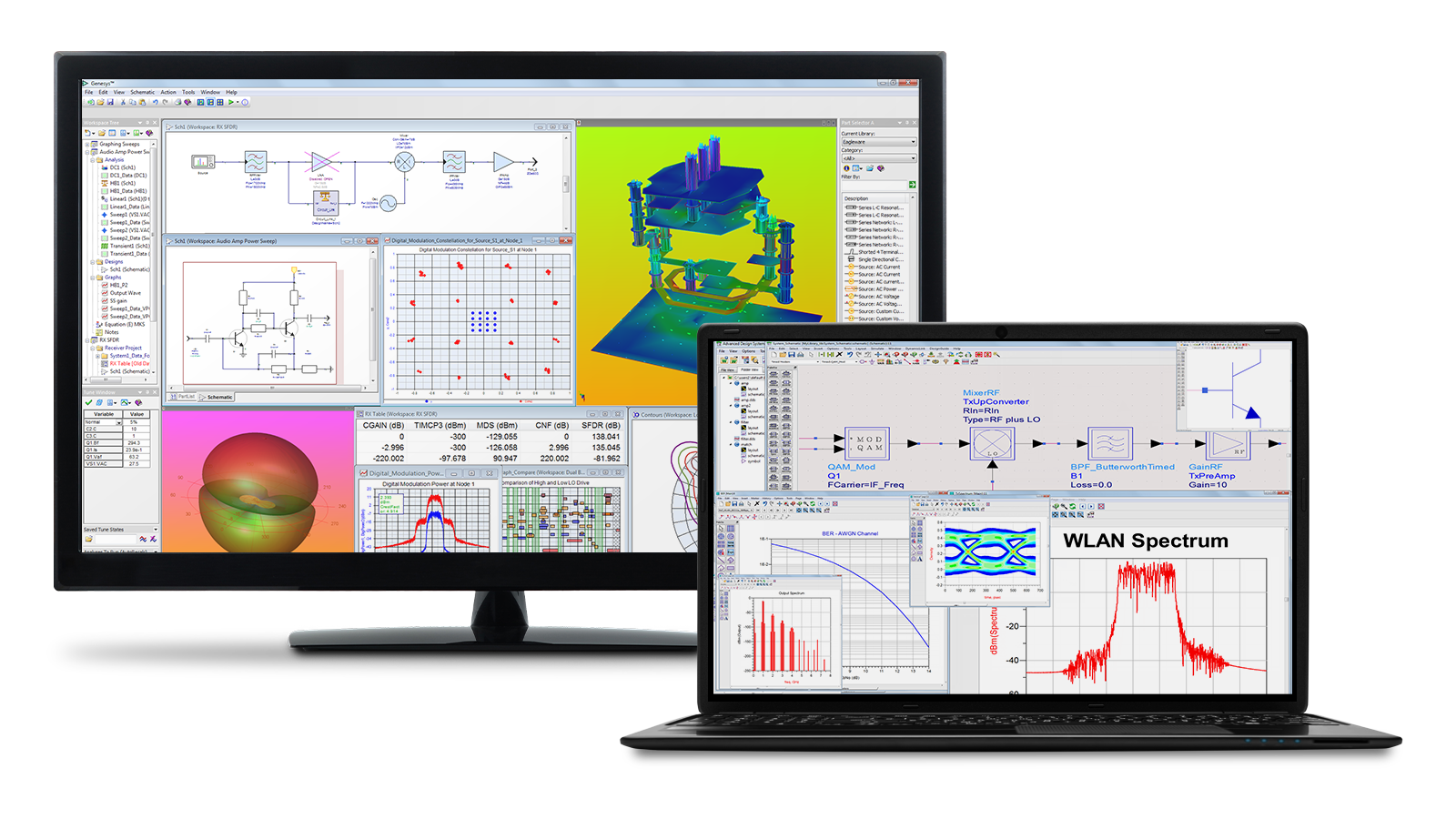
Optimize power reliability and thermal performance with EDA
From DC to GHz, Keysight electronic design automation (EDA) tools provide comprehensive multi-domain analysis with high fidelity without using multi-vendor tools, helping engineers achieve faster design confidence. An end-to-end, digital twin-based solution simplifies complex power delivery analysis tasks — making it easier to focus on predicting and optimizing signal quality, power reliability, and thermal performance early in the design process.
Webinar: Validate Power Integrity with Oscilloscopes
Discover basic workflows for power integrity measurement while learning about the evolution of semiconductors and switched-mode power supplies. Find out the kinds of measurement probes and oscilloscope software you need to debug high-current, low-voltage power rail noise problems.


Test Setups for AI Data Center Power Optimization
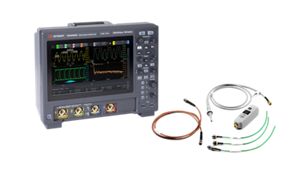

Analyze Power Integrity
Measure power distribution network (PDN) impedance, power rail integrity, and control loop response using a real-time oscilloscope.
Test USB Type-C Power Delivery
Measure important design parameters for power delivery (PD), including voltage level, device charging, and cable functionality.
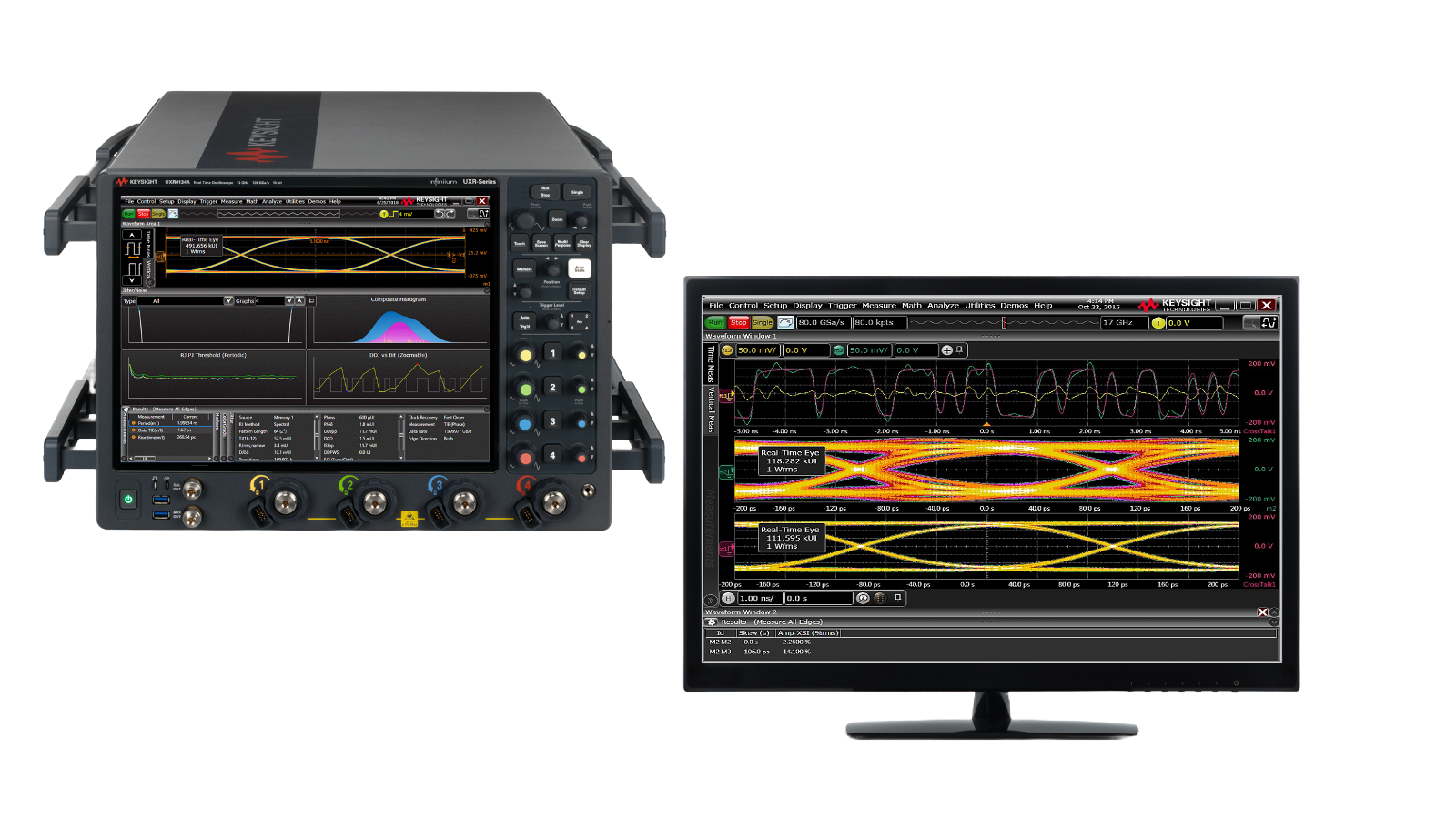
Analyze PCB Signal Integrity
Reduce signal integrity risks in a high-speed digital PCB through the detection and diagnosis of cross talk, jitter, vertical noise, and phase noise.
Learn More About AI Data Center Power Optimization








Frequently Asked Questions: AI Data Center Power
AI data centers are experiencing exponential growth in power demand. According to Wells Fargo, AI power usage may reach 652 terawatt-hours (TWh) by 2030, representing an 8,050% increase from 2024 levels. This surge is driven by compute-intensive workloads — such as model training and inference — which run on dense racks of GPUs and TPUs. Unlike traditional data centers, AI workloads require continuous power delivery at high current densities, often pushing the limits of power integrity and thermal design.
The primary consumers of power include:
- Accelerators like GPUs and TPUs (for training and inference)
- Memory subsystems (e.g., HBM / DDR modules)
- Networking gear for high-bandwidth data movement
- Cooling systems to dissipate heat generated by dense AI workloads
Every watt delivered must be stable and ripple-free, which is why tools like real-time compliance oscilloscopes with power rail probes and 3-phase software are used to validate power integrity at every level — from board-level voltage regulators to rack-scale distribution.
AI workloads are not just compute-heavy — they are bursty, parallel, and thermally intense. Training large models often results in peak loads that stress both delivery and cooling systems. This necessitates real-time monitoring and analysis of voltage margins, current spikes, and ripple. Keysight’s power analysis software, conducted EMI tools, and SIPro help engineers detect power anomalies and refine board layouts to ensure stable power under stress. These efforts are critical to optimizing operations, preventing hardware failures, and reducing inefficient energy use during AI training or real-time inference cycles.
Leading data centers deploy both hardware-level and software-level strategies, including:
- Power integrity validation using real-time compliance oscilloscopes and EMI probes
- Phase balancing and harmonics detection with tools like 3-phase software
- Simulation and modeling with EDA tools to pre-validate board designs and power delivery paths
- Workload tuning and scheduling to flatten power spikes across inference or training cycles
Additionally, Keysight Design Data and IP Data Management platforms enable teams to analyze, version, and optimize power data across chip and system teams. These insights support design iteration and compliance with energy efficiency goals.
Major challenges for scaling AI power infrastructure include:
- Thermal loading from high-density compute racks
- Power integrity degradation due to faster switching components and thinner margins
- Unpredictable demand spikes from AI models with dynamic resource allocation
- Grid constraints as demand outpaces traditional infrastructure
Addressing these challenges requires both validation (e.g., ripple and conducted EMI analysis) and architectural innovation, such as disaggregated power delivery, AI-aware thermal control, and real-time power telemetry integration into operational dashboards.
Want help or have questions?