How to Validate Absolute Power Accuracy of Signal Sources

Validate Source Power Accuracy
Validating the absolute power accuracy of radio frequency signal sources is essential to ensure the integrity of downstream measurements and system-level performance. Signal generators are expected to deliver precise output levels; however, factors such as internal calibration errors, frequency-dependent losses, and temperature-induced drift can introduce deviations from specified values. Accurate validation requires comparing the source output against a traceable reference using high-accuracy measurement techniques.
Engineers must account for mismatch uncertainty between the source and sensor, typically quantified using reflection coefficients, as well as connector repeatability and cable losses. Measurements are often performed across a range of power levels and frequencies to fully characterize source behavior. The resulting data enables identification of systematic offsets and nonlinearities, ensuring that the signal source meets performance requirements for calibration, validation, and high-precision test applications.

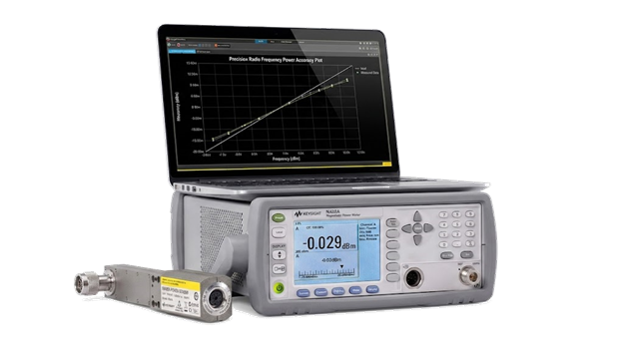
Absolute Power Accuracy Validation Solution
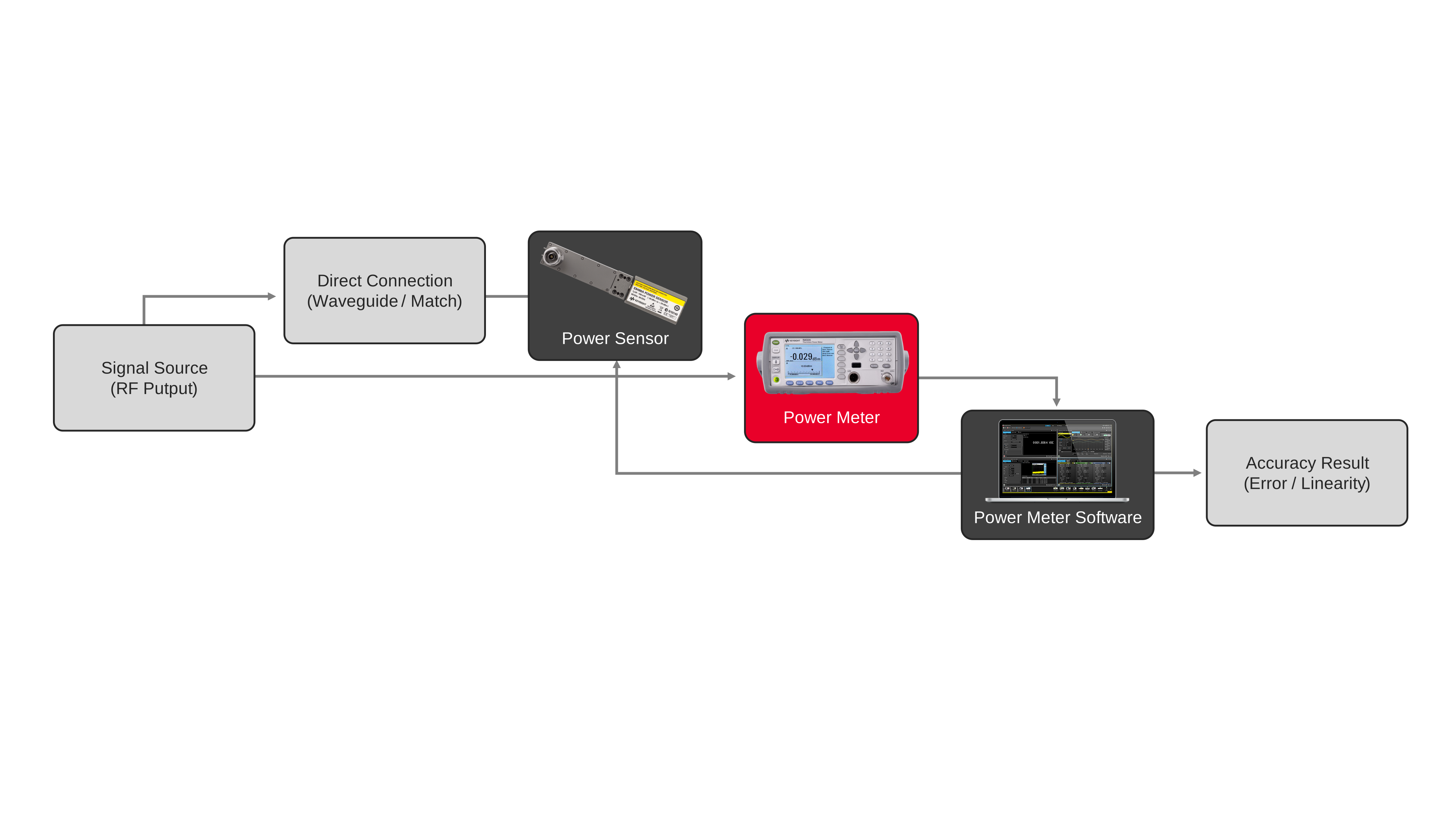
See Block Diagram of Absolute Power Accuracy Validation Solution

Explore Products for Our Absolute Power Accuracy Validation Solution
-

![]()
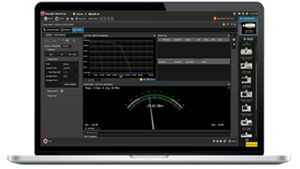
BV0007B PathWave BenchVue Power Meters/Sensors App
-

![]()
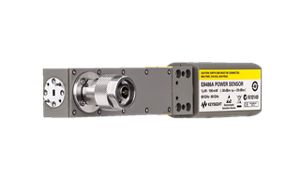
E8486A Waveguide Power Sensor
-
![]()
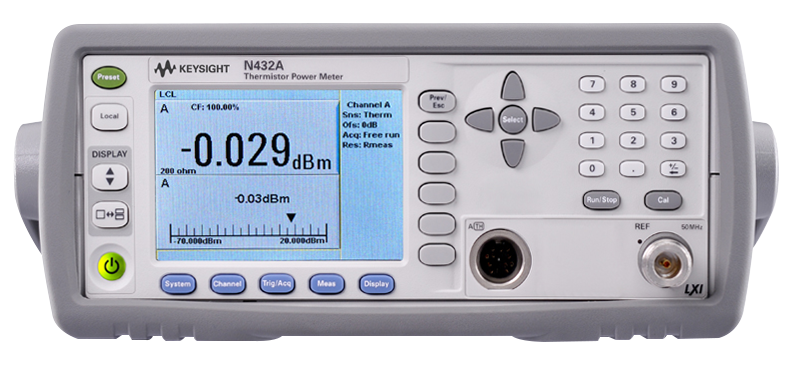
N432A Thermistor Power Meter



Discover Resources and Insights
Additional Resources for Absolute Power Accuracy Validation
Related Use Cases

-
![]()
Learn More
How to Automate RF Power Logging for Environmental Testing
Automate RF power logging during environmental testing using a power meter, continuous measurement, data acquisition, and software-controlled workflows.
Learn More

-
![]()
Learn More
How to Characterize RF Power Sensor Drift Behavior
Characterize RF power sensor zeroing and drift behavior using a power meter, controlled measurements, data logging, and long-duration analysis techniques.
Learn More
-
![]()
Learn More
How to Verify RF Power Measurement Repeatability
Verify RF power measurement repeatability using a power meter, controlled test conditions, repeated acquisition, and statistical analysis techniques.
Learn More

Get in Touch with One of Our Experts
Need help finding the right solution for you?