How to Measure Thermal Drift in Radio Frequency Power Sensors

Measure Sensor Drift Over Time
Thermal drift in radio frequency power sensors represents a time-dependent deviation in measured power caused by temperature-induced changes in sensor characteristics and internal reference stability. This effect is particularly significant in high-accuracy thermistor-based sensors, where small variations in thermal equilibrium can translate into measurable power offsets. Drift mechanisms include changes in thermistor resistance, heat transfer efficiency, and ambient temperature fluctuations affecting both the sensing element and associated circuitry.
Accurate characterization of thermal drift requires maintaining a constant input power level while continuously monitoring sensor output over extended durations, often ranging from hours to days. Engineers must distinguish between short-term noise, which can be mitigated through averaging, and long-term drift, which requires statistical analysis such as moving averages or Allan deviation techniques. Proper drift characterization enables the identification of stabilization time constants and supports the development of correction models for high-precision measurement systems.


Thermal Drift Measurement Solution
See Block Diagram of Thermal Drift Measurement Solution


Explore Products for Our Thermal Drift Measurement Solution
-

![]()
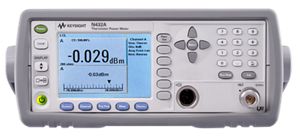
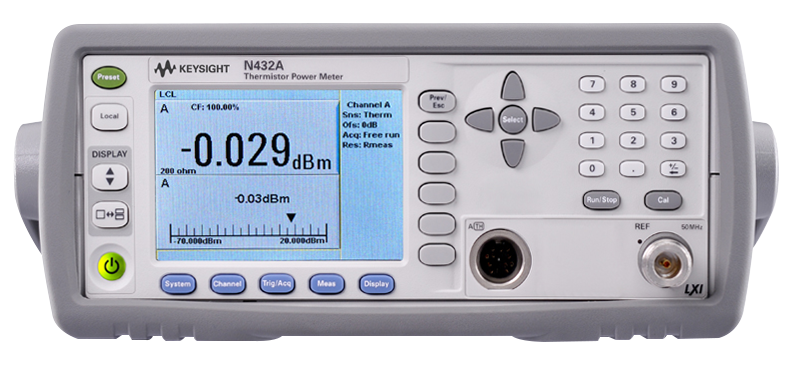
N432A Thermistor Power Meter
-
![]()
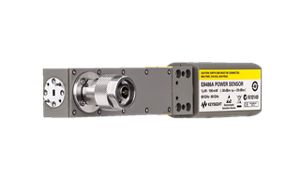
E8486A Waveguide Power Sensor
-

![]()
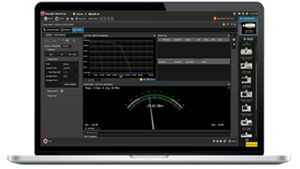
BV0007B PathWave BenchVue Power Meters/Sensors App


Discover Resources and Insights
Additional Resources for Thermal Drift Measurement
Related Use Cases


-
![]()
Learn More
How to Compare Thermistor and Diode Sensor Measurement Accuracy
Compare thermistor and diode sensor accuracy across power levels to improve measurement confidence using power sensors, power meters, and automated measurement control and data logging software.
Learn More

-
![]()
Learn More
How to Ensure Measurement Traceability in Radio Frequency Calibration Chains
Ensure traceable radio frequency power measurements across calibration chains with controlled uncertainty using power sensors, power meters, and automated measurement control and data logging software.
Learn More
-
![]()
Learn More
How to Automate RF Power Logging for Environmental Testing
Automate RF power logging during environmental testing using a power meter, continuous measurement, data acquisition, and software-controlled workflows.
Learn More

Get in Touch with One of Our Experts
Need help finding the right solution for you?