How to Achieve Traceable Radio Frequency Power Calibration

Achieve Traceable Power Calibration
Traceable radio frequency power calibration requires establishing a metrological chain that links measured power levels to primary standards with a rigorously defined uncertainty budget. This process involves the use of transfer standards, such as thermistor-based sensors, which provide true average power measurement through thermal conversion rather than rectification. Engineers must account for multiple sources of uncertainty, including mismatch loss between source and sensor, effective efficiency variations, connector repeatability, and environmental influences such as temperature gradients.
Calibration procedures typically incorporate substitution methods, where a known reference power is compared against the device under test under identical conditions. Additionally, maintaining traceability requires periodic recalibration against higher-order standards and careful documentation of correction factors. Achieving high confidence in absolute power measurements depends on minimizing systematic errors while quantifying residual uncertainty contributions across the entire frequency and power range of interest.

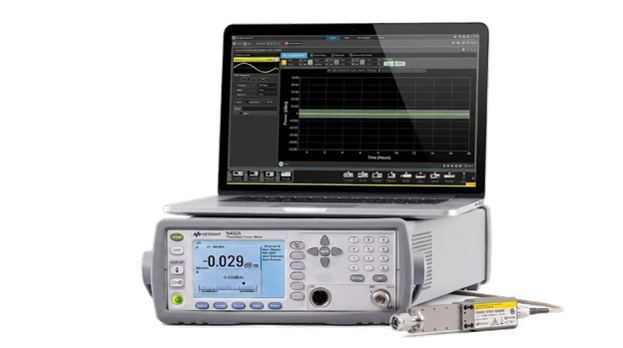
Traceable Power Calibration Solution
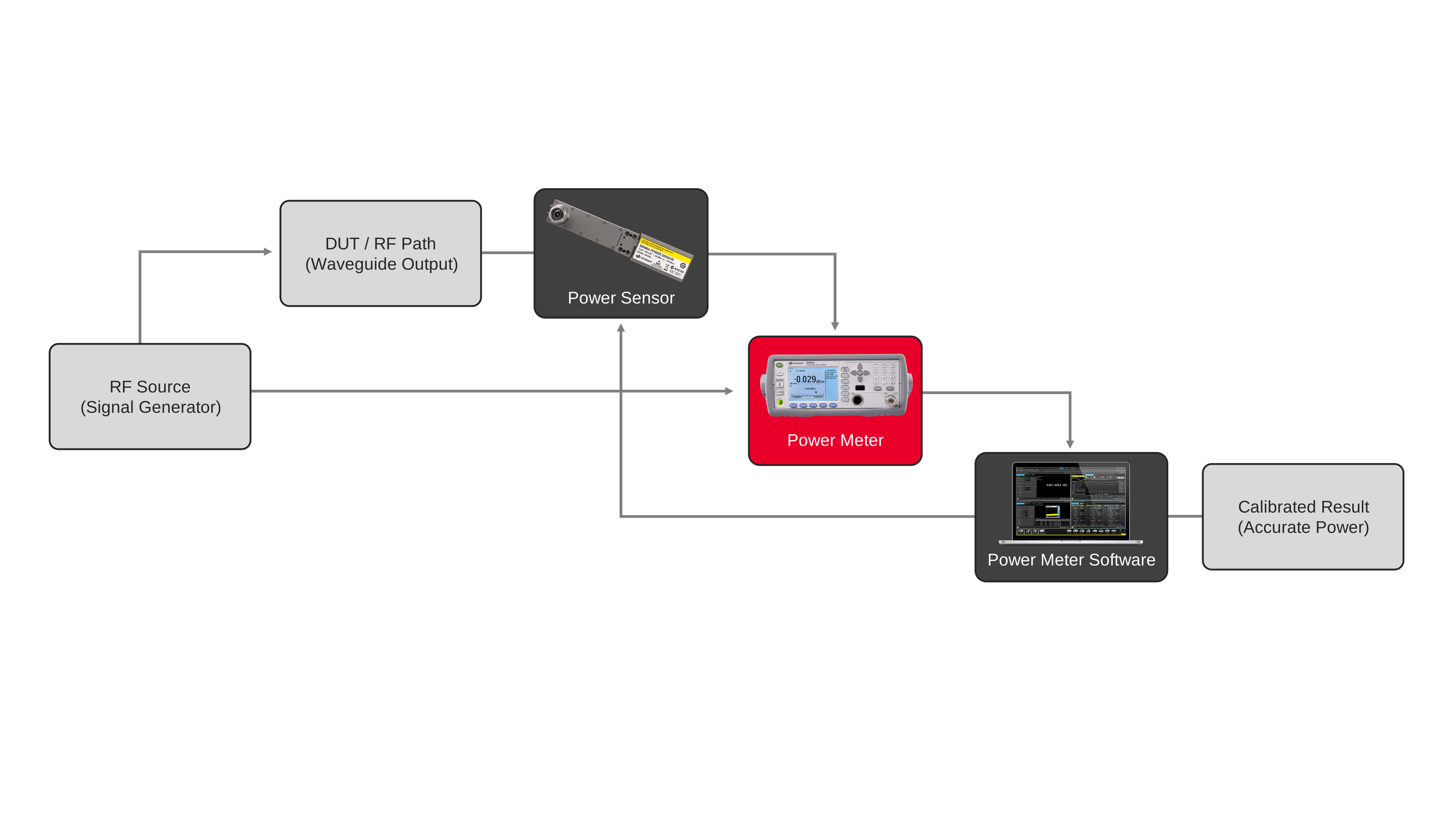
See Block Diagram of Traceable Power Calibration Solution

Explore Products for Our Traceable Power Calibration Solution
-

![]()
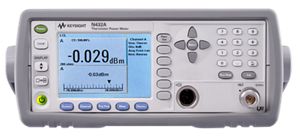
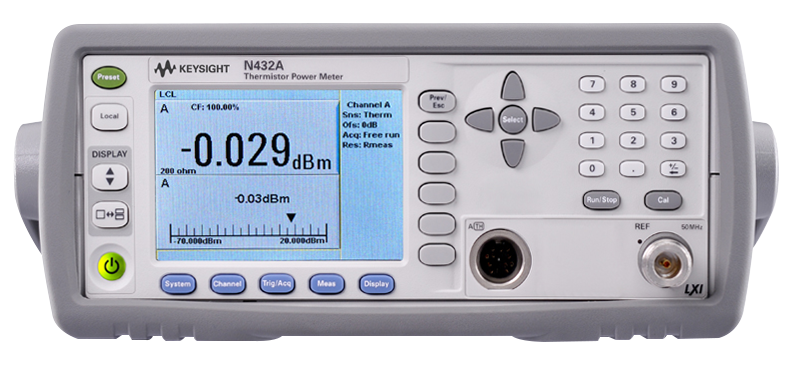
N432A Thermistor Power Meter
-
![]()
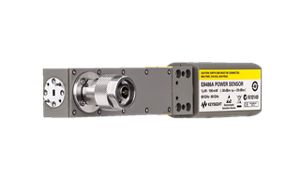
E8486A Waveguide Power Sensor
-

![]()
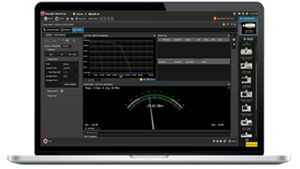
BV0007B PathWave BenchVue Power Meters/Sensors App


Discover Resources and Insights
Additional Resources for Traceable Power Calibration
Related Use Cases


-
![]()
Learn More
How to Measure Thermal Drift in Radio Frequency Power Sensors
Measure thermal drift in radio frequency power sensors to ensure long term measurement accuracy and stability using power sensors, power meters, and automated measurement control and data logging software.
Learn More

-
![]()
Learn More
How to Validate Absolute Power Accuracy of Signal Sources
Validate signal source power accuracy using traceable measurement techniques and high precision sensors using power sensors, power meters, and automated measurement control and data logging software.
Learn More
-
![]()
Learn More
How to Verify Oscillator Close-In Stability
Verify oscillator close-in stability using gap-free counter measurements, modulation-domain analysis, and Allan deviation.
Learn More

Get in Touch with One of Our Experts
Need help finding the right solution for you?