Choose a country or area to see content specific to your location
What are you looking for?
-
-
Integrated Physics Suite
Bridging design and physical testing to evaluate drop, impact, shock, and vibration compliance before hardware exists.


-
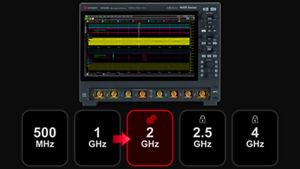
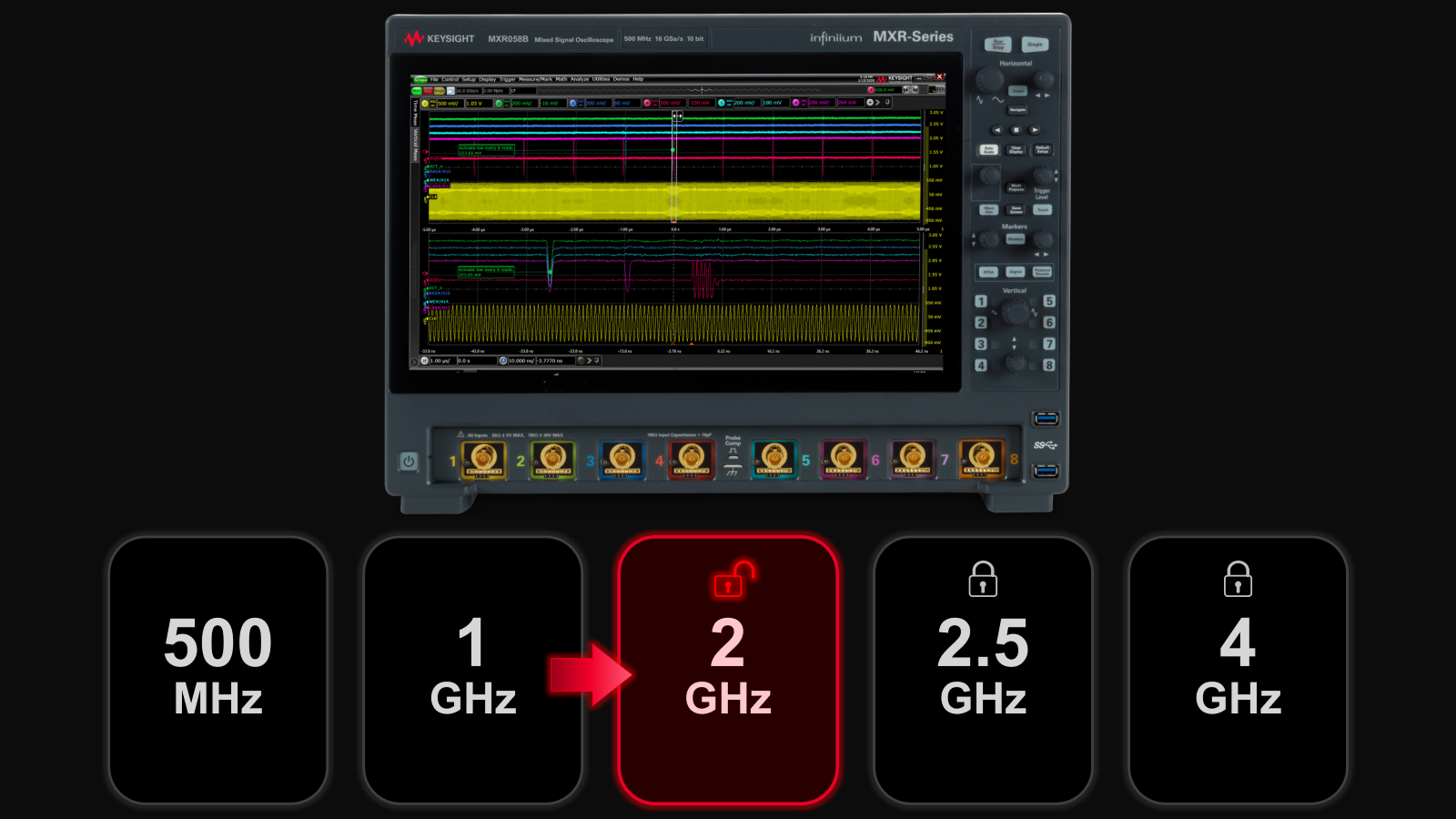
Buy an Expert Oscilloscope, Boost Your Bandwidth
Unlock your free upgrade to the next bandwidth tier.
-
End-to-End Validation for AI Data Center
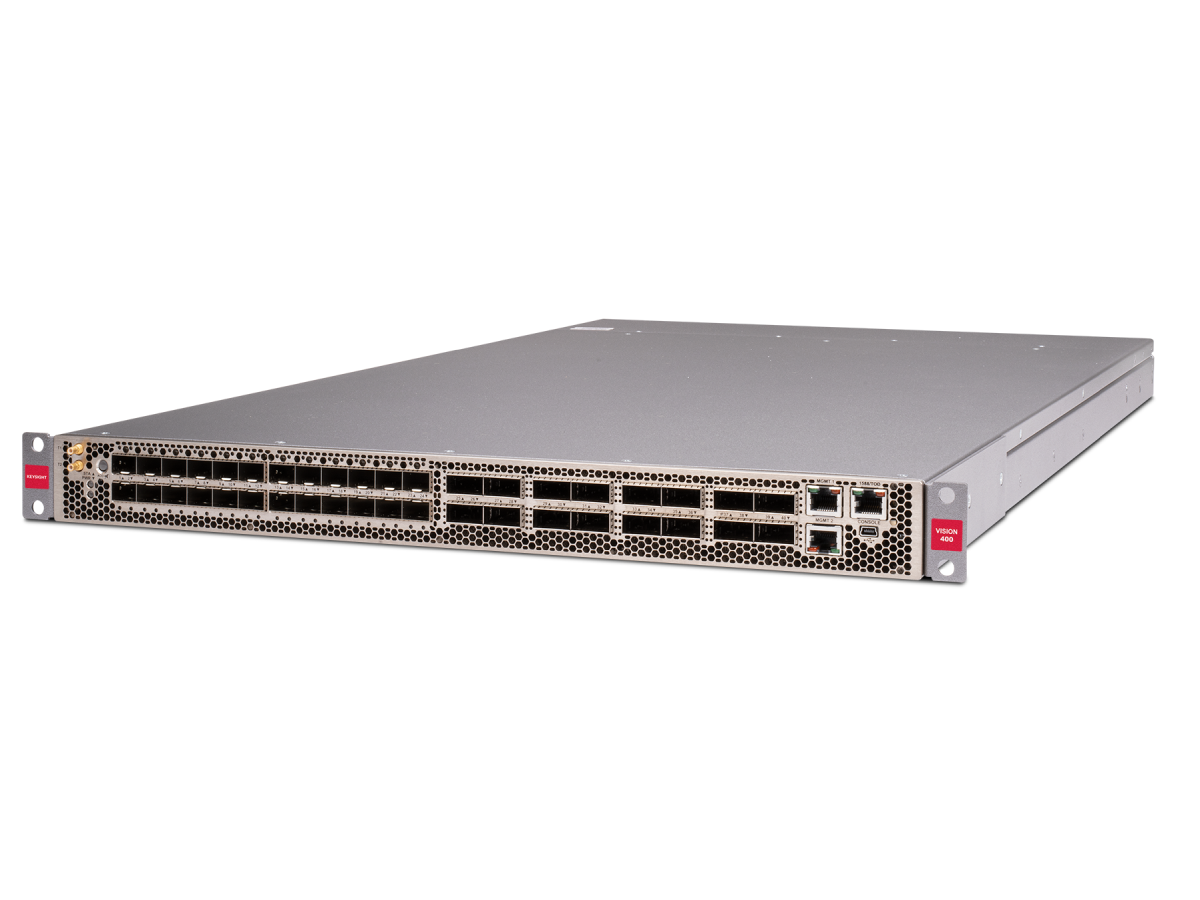
Strengthen 1.6T network reliability for AI-scale workloads from transceivers to interconnects.

-
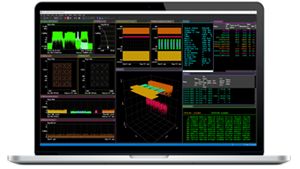
Take On Complex MIMO Signals
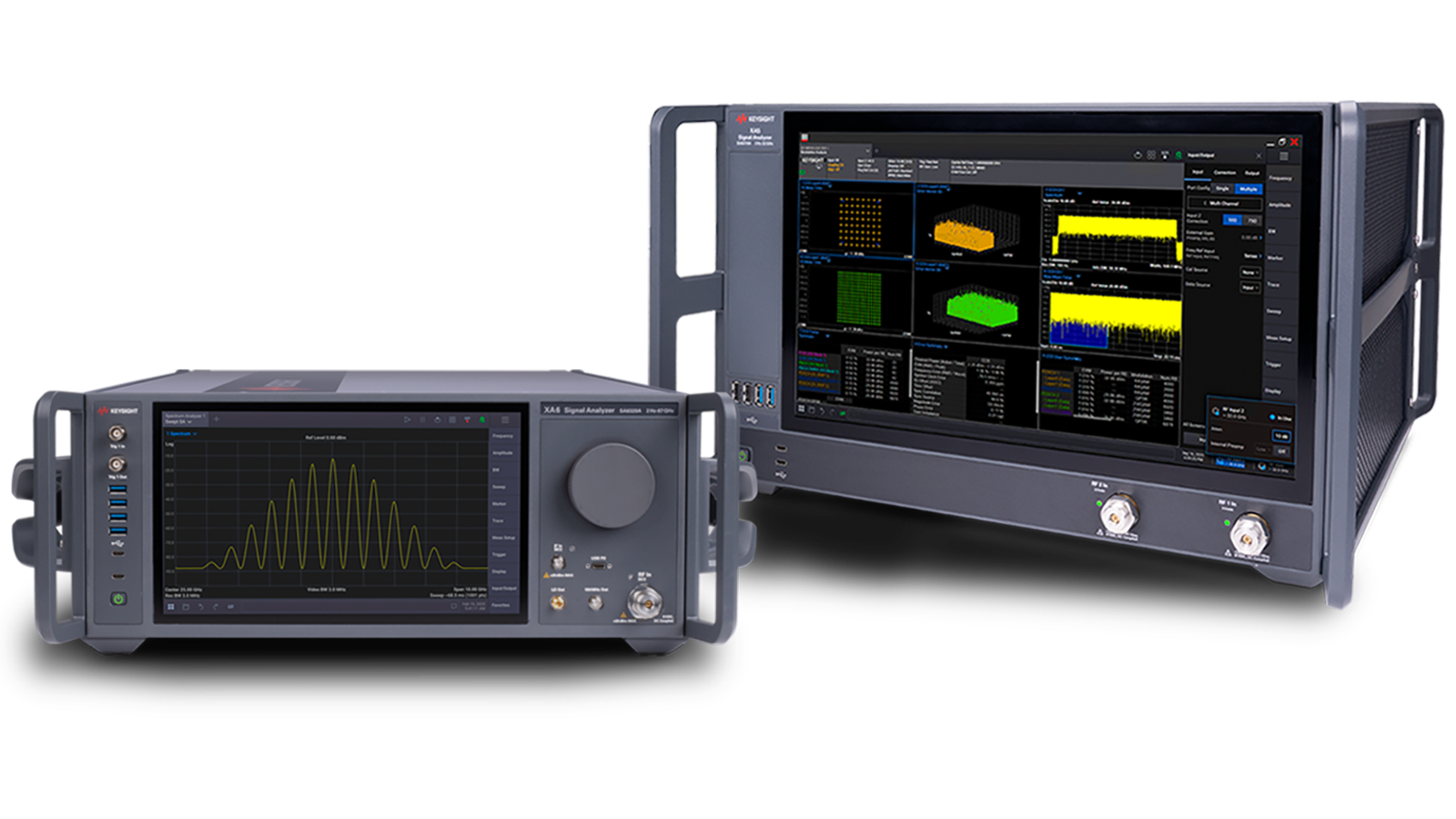
Pair Keysight VSA software with the new XA5 signal analyzer for advanced visualization, demodulation, and analysis — start your 30-day trial today.
-
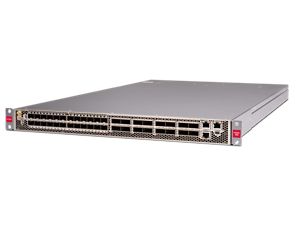
Introducing AI-Enhanced Packet Brokers
With extra memory and storage, these enhanced NPBs run Keysight's AI security and performance monitoring software and AI stack.
-
Accelerate Semiconductor Innovation
Explore end-to-end workflows spanning IC design, validation, wafer test, and photonics.
-
Accelerate Your Innovation Engine
Explore curated support plans, prioritized to keep you innovating at speed.

-
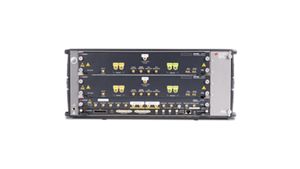
448 Gb/s Waveform Generation
Achieve 200+ Gbaud multi-level modulated signals with high-speed AWGs for digital and optical standards.
-
The Right Connection Makes the Measurement
Maximize accuracy and performance with precision accessories engineered for Keysight instruments.

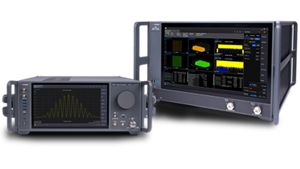
Analyze Complex RF Signals FasterExplore dual-channel and ultra-wideband signal analysis for demanding RF workflows.
 Digital Validation. Faster.
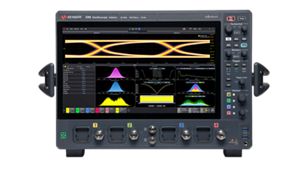
Get faster, clearer insights with our new multicore, 12-bit oscilloscope up to 33 GHz. Trade in your old oscilloscope and get credit toward a new XR8.
-
-
Purpose-built solutions engineered for the design and test challenges unique to your industry.
Use Cases mapped to every stage of your product lifecycle, from design through operations.
Success Stories
HPE Juniper Networking Builds Next-Gen AI Infrastructure -
Authoritative application notes, data sheets, reference designs, and test procedures to accelerate design and validation decisions.
FeaturedHands‑on bootcamps that teach system design, test methods, and production workflows engineers can apply immediately.
Learning Hub
AI TechnologyExplore methodologies, test strategies, and technical resources for designing, validating, and scaling AI systems and networks.
- Buy
-
Quick access to support related self-help tasks.
Additional content to support your product needs.
Do more with Keysight ServicesExplore services to accelerate every step of your innovation journey.









PCIe Protocol Exercisers PCIe traffic generation and simulation
Keysight LA5-class PCIe protocol exercisers include the P5573A


- Overview
- All Models
- Accessories
- Software
- Support
Rigorously test the performance of PCIe devices and systems
Keysight LA5-class PCIe protocol exercisers generate and simulate PCIe traffic, enabling you to rigorously test and validate the performance and robustness of PCIe devices and systems. By emulating a wide range of real-world scenarios and error conditions, our PCIe protocol exercisers help you uncover design flaws, verify compliance, and optimize system behavior under various workloads. Choose one of our popular configurations or configure one specific to your application. Need help selecting? Check out the resources below.
Broad protocol emulation
Supports multiple PCIe generations (1.0 to 6.0) and CXL, enabling generation of protocol traffic to create realistic test scenarios for legacy and next- generation PCI and CXL devices.
Link training control
Enables precise configuration of parameters like lane speed, width, equalization settings, and timing to establish and validate stable PCIe and CXL links under a wide range of conditions.
Enhanced error injection
Introduces controlled protocol errors and challenging traffic conditions, enabling thorough validation of device resilience, error recovery mechanisms, and system robustness.
Lane flexibility
Supports x1, x4, x8, and x16 lane widths for testing PCIe devices across link configurations to validate performance, link training, and compliance across varying bandwidth needs.
-
Protocols
NRZ, PAM4
Most Popular Configurations
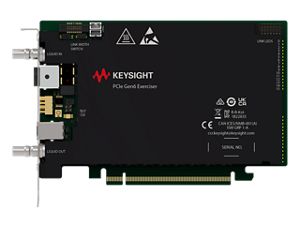
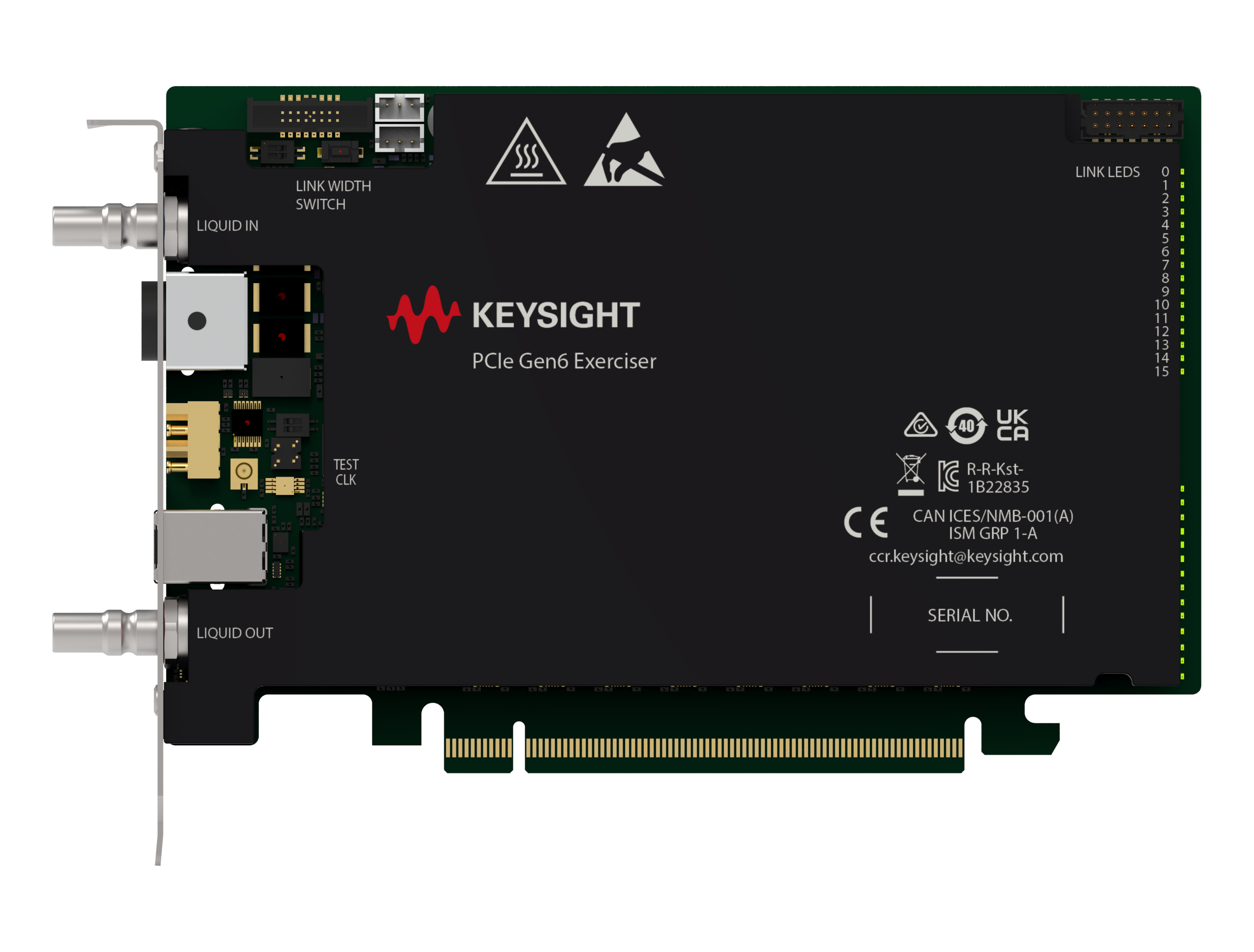
LA5-class PCIe Protocol Analyzer, for PCIe 6.0
LA5-class PCIe Protocol Analyzer, for PCIe 6.0
P5573A
Keysight P5573A PCIe 6.0 Protocol Exerciser gives the flexibility in providing realistic traffic to devices under test and also able to emulate as a complex host system.
See the Real Performance of Your Design
The foundation of the P5573A is the improved signal integrity provided through the integrated design of the Exerciser card which provides a solid, trustworthy test platform. This compact design allows Keysight engineers great versatility in ensuring that the P5573A would have signal integrity characteristics that could be configurable enough to be tuned for many different test environments, while also offering quick link up capability for test cases that focus on higher layer protocol debugging. The P5573A is designed to be easy to setup, connect, and be quickly configured to bring up the PCIe link and check basic LTSSM and protocol functionality. To support this the P5573A has many features included that allow for quick validation of fundamental PCIe features.
- Support up to 64GT/s with x4, x8 and x16 physical lane width options
- Automated Link training with skip and bypass support
- Traffic generation with lane reversal and polarity detection
- Scalable flow control support
- Link training and LTSSM control
- Real Time Equalization
- Transactional Layer Generation
- Error Insertion
- Complete RAS test protocol solution
Services and support
Innovate at speed with curated support plans and prioritized response and turn-around times.
Get predictable, lease-based subscriptions and full lifecycle management solutions—so you reach your business goals faster.
Experience elevated service as a KeysightCare subscriber to get committed technical response and more.
Ensure your test system performs to specification and meets local and global standards.
Make measurements quickly with in-house, instructor-led training, and eLearning.
Download Keysight software or update your software to the newest version.
Frequently asked questions
A PCIe protocol exerciser is a sophisticated tool used to emulate the behavior of PCIe devices, such as root complexes or endpoint devices, to validate and test PCIe interfaces in high-speed data communication systems. These exercisers are essential for ensuring that PCIe devices operate correctly under various conditions, providing a controlled environment to simulate different scenarios and stress tests. By using a PCIe protocol exerciser, engineers can identify potential issues early in the development process, leading to more reliable and robust PCIe implementations.
Protocol analysis requires observing traffic between two devices (a root complex, or host, and an endpoint) and ensuring that they are communicating correctly. Protocol exercisers can emulate the behavior of both PCIe root complex and endpoint devices to communicate with the device under test. They work alongside the protocol analyzer to enable you to observe the communication between the devices. The PCIe protocol exerciser generates traffic, emulating real-world behavior and enabling robust system testing and debugging.
PCIe protocol exercisers offer numerous benefits, including high-speed data capture, flexible emulation options, advanced error detection, and deep memory for extended trace analysis. These features ensure reliable performance and efficient debugging of PCIe interfaces. By using a PCIe protocol exerciser, you can simulate real-world conditions and stress tests, identify and resolve protocol errors, and optimize the performance of PCIe devices. This comprehensive testing capability is crucial for industries such as data centers, computing, and storage, where high-speed data communication and reliability are paramount.