How to Test LiFePO4 Battery Packs

Lithium Iron Phosphate (LiFePO4) Battery Pack Testing and Profiling
LiFePO4 battery testing requires a controlled bidirectional power connection that can charge and discharge the battery while measuring voltage and current at the device terminals. Use a four-wire configuration to compensate for cable voltage drop, then establish the initial open-circuit voltage before applying the selected current profile. Battery capacity validation measures the charge delivered during discharge or stored during charging until a defined cut-off condition is reached. For internal resistance measurement, apply short current pulses followed by rest intervals and calculate resistance from the resulting voltage and current changes. Battery profiling repeats open-circuit voltage and resistance measurements at defined state-of-charge points, producing the electrical data needed to characterize pack behavior across the usable charge range.
Battery cycling combines controlled charge, discharge, and rest steps into repeatable sequences while continuously logging voltage, current, capacity, and timing. Profiles can use constant current or dynamic waveforms that represent the intended operating load. Cut-off conditions can be based on open-circuit voltage, load voltage, or consumed capacity, and temperature monitoring can be integrated when the test environment requires it. The resulting battery profile associates state of charge with open-circuit voltage and internal resistance and can be reviewed during the test or exported for additional analysis. LiFePO4 battery testing can therefore combine battery capacity validation, battery profiling, internal resistance measurement, and battery cycling within the same measurement workflow, with the resulting model available for subsequent battery emulation.

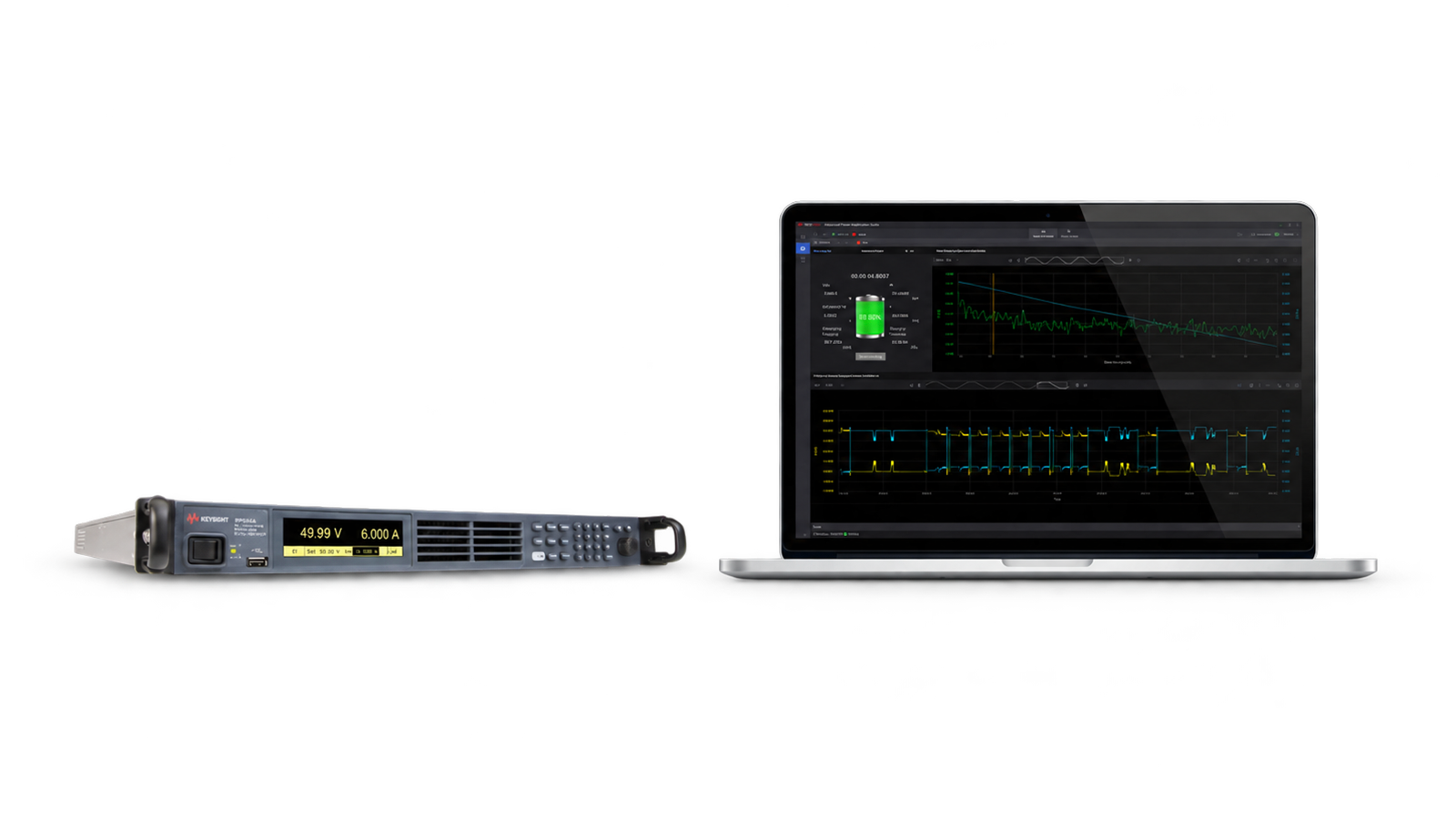
LiFePO4 Battery Pack Test Solution
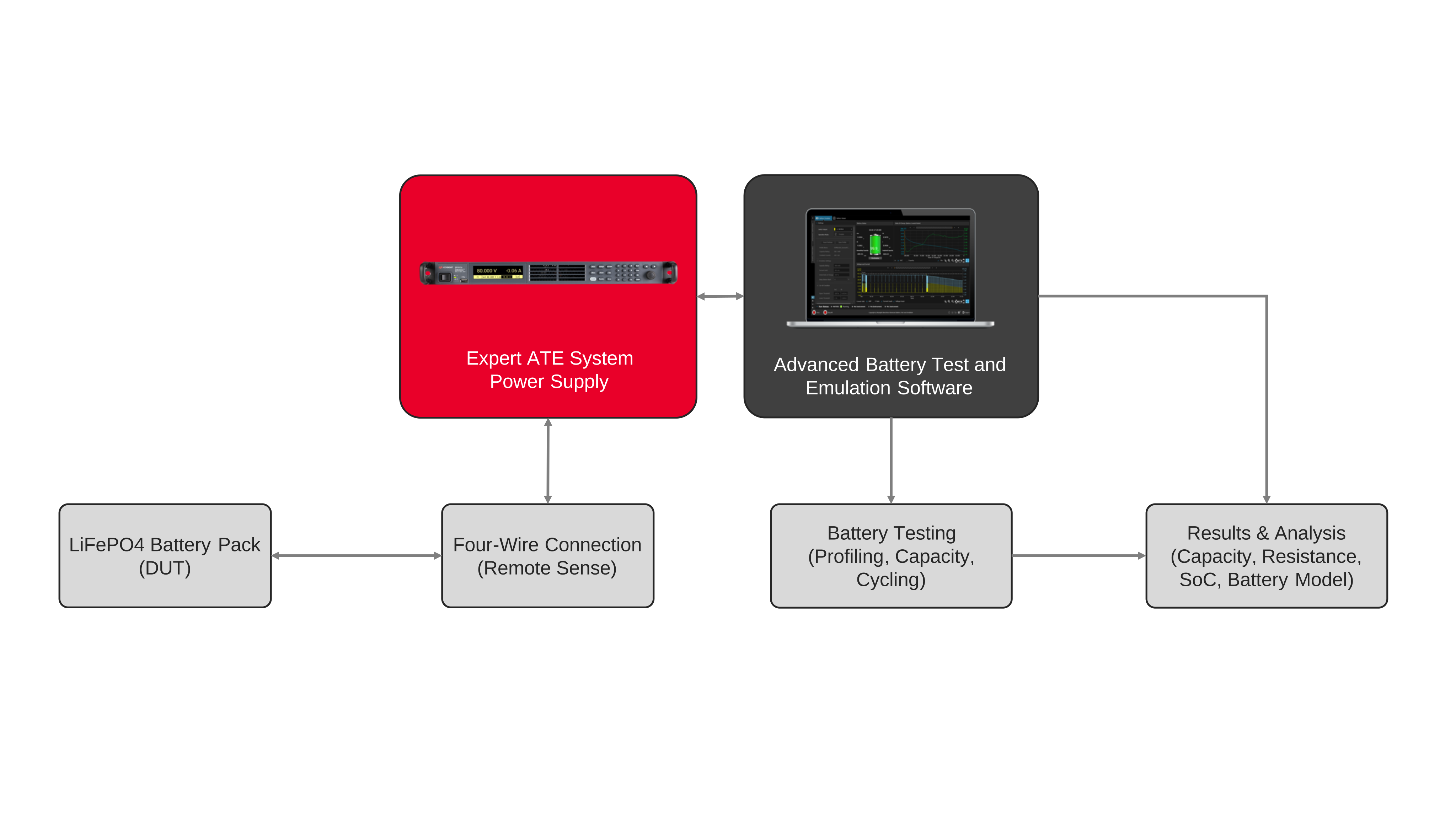
See Block Diagram of LiFePO4 Battery Pack Test Solution

Explore Products in Our LiFePO4 Battery Pack Test Solution
-

![]()
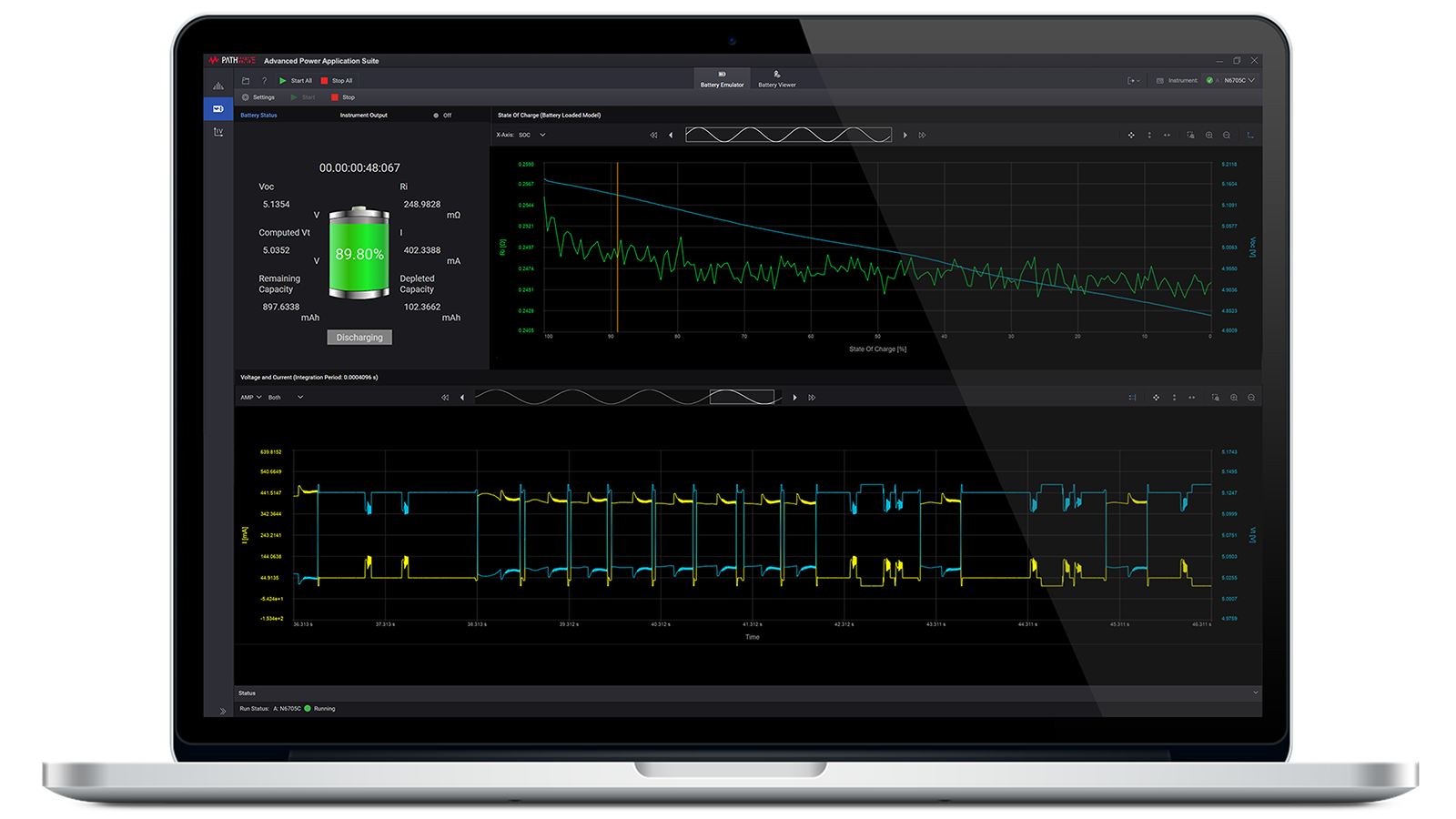
PW9253A PathWave Advanced Battery Test and Emulation
-


![]()
RP5913A Regenerative DC Power Supply, 80V, +/-40A, 2kW


Discover Resources and Insights
Additional Resources for Battery Testing
Related Use Cases


-
![]()
Learn More
How to Test 18650 Battery Cells
Test 18650 battery cells with controlled source and load profiles while measuring voltage, current, capacity, and internal resistance. Use a two-quadrant power setup and battery test software to perform battery modeling, battery capacity validation, discharge testing, data logging, and later battery emulation from the measured model.
Learn More

-
![]()
Learn More
How to Test Pouch Cell Batteries
Test pouch cell batteries using controlled charge and discharge profiles while measuring voltage, current, capacity, and internal resistance. Apply two-quadrant power hardware and battery test software to perform battery modeling, battery capacity validation, dynamic discharge testing, data logging, and model generation for later battery emulation.
Learn More
-
![]()
Learn More
How to Validate Solar Inverter Maximum Power Point Tracking Efficiency
Validate solar inverter MPPT efficiency using solar array simulators to replicate real-world irradiance and optimize power tracking performance.
Learn More

Get in Touch with One of Our Experts
Need help finding the right solution for you?