













- Overview
- All Models
- Support
Cover More Tests and More Standards in Less Time
Keysight regulatory compliance test solutions accelerate certification for wireless IoT devices operating in unlicensed frequency bands, supporting global standards such as ETSI and FCC across the 2.4 GHz, 5 GHz, and emerging 6 GHz bands. Complementing this, the Keysight wireless coexistence testing solution enables engineers to validate device performance in real-world RF environments by identifying interference risks early and reducing costly rework.
Together, these compliance and coexistence test solutions help improve product reliability, streamline regulatory approval, and speed time to market. Integrated automation software streamlines test execution and reporting, improves repeatability, and shortens test cycles, while a scalable architecture enables parallel testing and future expansion.
Request a quote for one of our popular configurations today. Need help selecting? Check out the resources below.
Broad frequency coverage
Supports regulatory testing across 2.4 GHz, 5 GHz, and 6 GHz unlicensed bands, addressing signaling test requirements of the most recent versions of the ETSI and FCC standards.
Automated test software
Includes built-in test plans, automated sequencing, and report generation for regulatory compliance test; automated, standards-aligned wireless coexistence testing to identify interference risks early and reduce manual setup.
Scalable architecture
Modular system design supports multi-device, parallel testing for regulatory workflows; enabling flexible, scalable configuration for wireless coexistence test scenarios and future expansion without major hardware changes.
Coexistence performance validation
Simulates real-world RF interference to validate device performance, assess coexistence behavior, and reduce rework before regulatory submission.


-
Number of DUTs
1
-
Test types
Signal conditioning, MIMO
-
Supported standards
Dependent on your EUT, ETSI EN 300 328, EN 301 893, EN 303 687, FCC part 15.247, FCC 15.407 (inclusive KDB987594 for U-NII 6 GHz), KC KS-X-3123 2024, MIC, SRRC
Most Popular Configurations

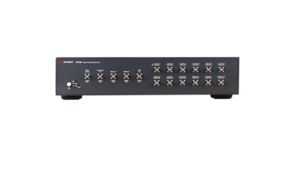
4-Channel MIMO Power Test Set
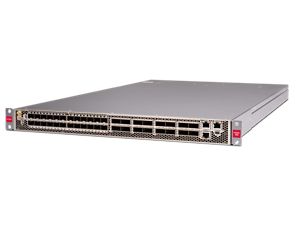
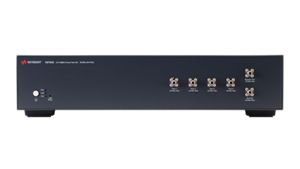
The X8750 MIMO power test set performs synchronously triggered MIMO power measurements for up to four transmit chains. It is part of the Keysight IOT0047A regulatory test solution.
The X8750 MIMO power test set performs synchronously triggered MIMO power measurements for up to four transmit chains. It is part of the Keysight IOT0047A regulatory test solution.

Signal Conditioning Test Set
The X8749B signal conditioning test set interconnects test instruments, devices under test (DUT), and companion devices with the IOT0047A regulatory test solution.
The X8749B signal conditioning test set interconnects test instruments, devices under test (DUT), and companion devices with the IOT0047A regulatory test solution.
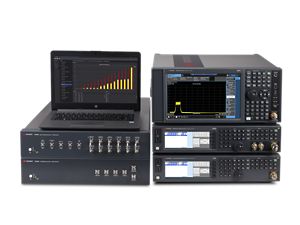

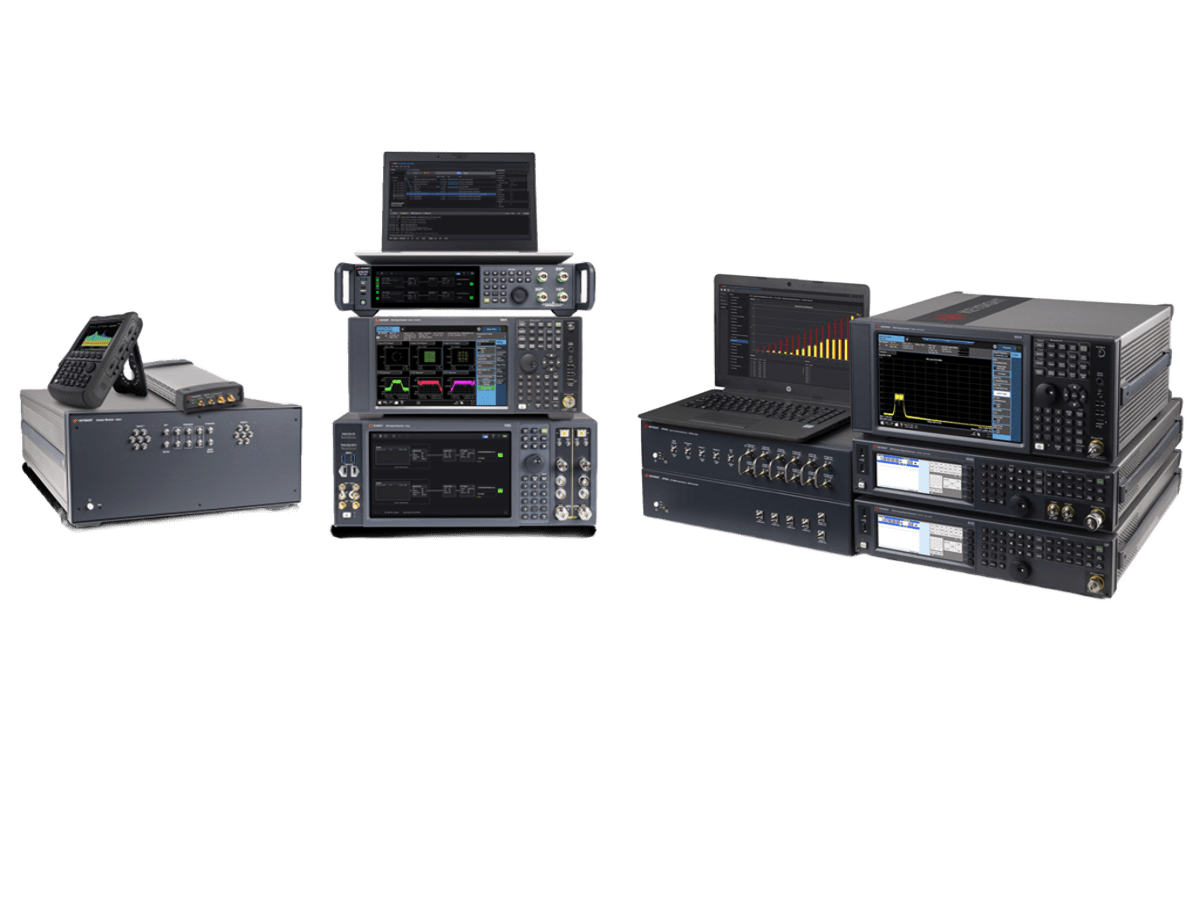
Regulatory Compliance Test Solution
Regulatory compliance test solution validates the regulatory compliance of unlicensed wireless devices across a range of major standards, such as the ETSI and FCC.
Regulatory compliance test solution validates the regulatory compliance of unlicensed wireless devices across a range of major standards, such as the ETSI and FCC.
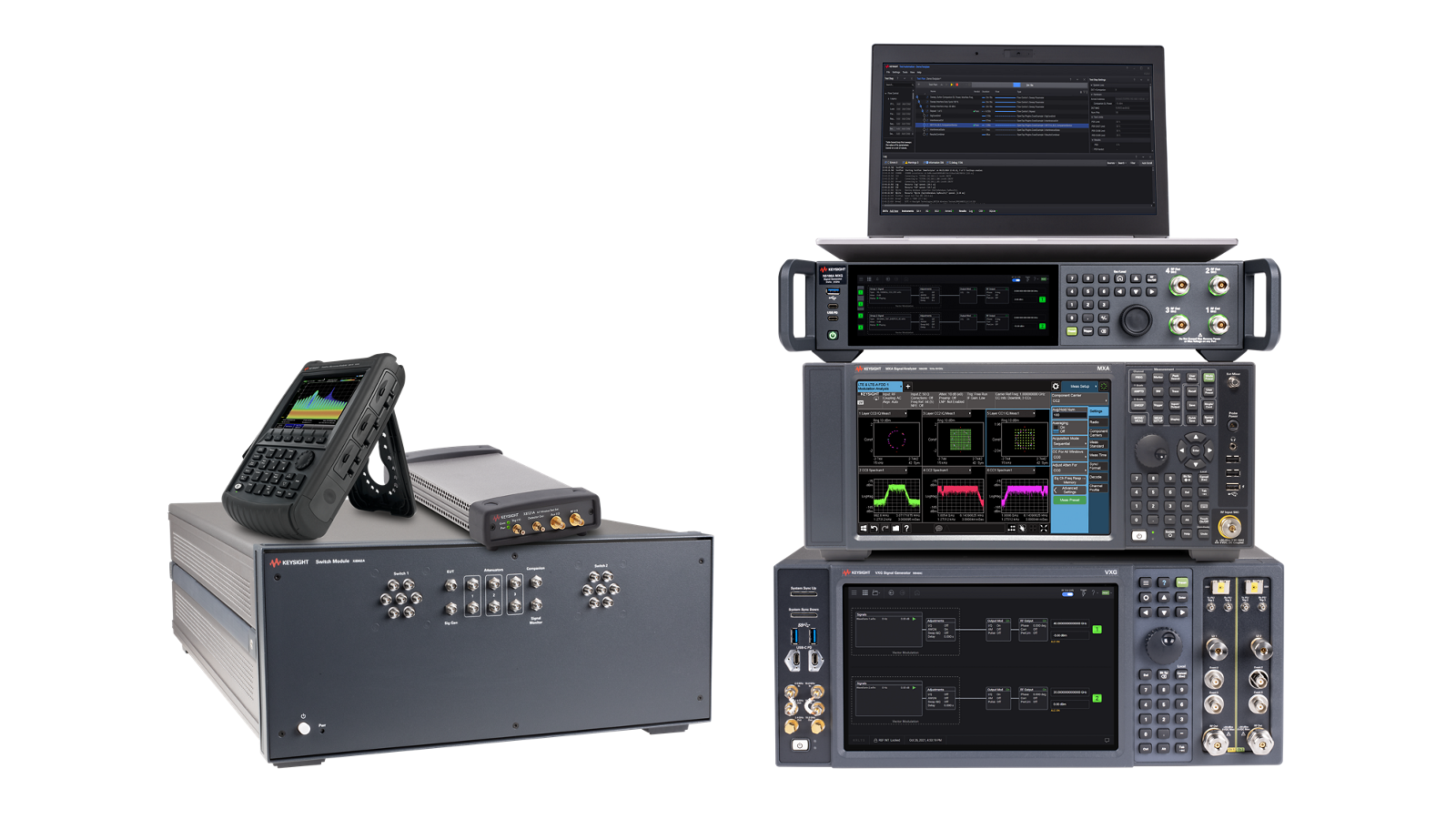
Wireless Coexistence Test Solution
Simulate real‑world interference with Keysight’s Wireless Coexistence Test Solution—fast, ANSI C63.27‑aligned testing to ensure reliable performance in a noisy RF environment.
Simulate real‑world interference with Keysight’s Wireless Coexistence Test Solution—fast, ANSI C63.27‑aligned testing to ensure reliable performance in a noisy RF environment.
Services and support
Innovate at speed with curated support plans and prioritized response and turn-around times.
Get predictable, lease-based subscriptions and full lifecycle management solutions—so you reach your business goals faster.
Experience elevated service as a KeysightCare subscriber to get committed technical response and more.
Ensure your test system performs to specification and meets local and global standards.
Make measurements quickly with in-house, instructor-led training, and eLearning.
Download Keysight software or update your software to the newest version.
Frequently Asked Questions
The IoT regulatory compliance testing process typically involves three stages: pre-compliance testing, formal compliance certification, and post-certification validation. Pre-compliance testing helps identify potential regulatory issues early, reducing the risk of failure at an accredited lab. Formal compliance involves testing at authorized facilities to achieve the required wireless device certifications for market release.
Post-certification validation ensures that devices produced in manufacturing remain compliant with applicable IoT regulatory standards. Following these stages not only ensures legal compliance but also improves long-term product reliability and brand reputation in competitive IoT markets.
Debugging failures in IoT regulatory compliance testing involves identifying the specific cause of non-compliance through targeted testing and signal analysis. Engineers may use spectrum analyzers, signal path inspection, and event correlation to isolate problems such as excessive emissions, incorrect modulation formats, or poor receiver sensitivity.
Visual tools that correlate device activity with test measurements can accelerate troubleshooting. By addressing these issues early, manufacturers can avoid repeated certification failures, reduce time-to-market, and ensure that devices maintain wireless device certification over their lifecycle.
Automated test plans bring speed, accuracy, and efficiency to IoT regulatory compliance testing. Engineers can predefine regulatory test sequences, execute them without manual reconfiguration, and generate compliance reports automatically. This reduces human error, ensures repeatable results, and accelerates wireless device certification readiness.
Automated plans are particularly useful for multi-standard IoT devices, as they can easily switch between different IoT regulatory standards. They also enable continuous testing throughout the product lifecycle, ensuring that any design or manufacturing changes do not compromise compliance.