












- Overview
- All Models
- Support
High-performance bandwidth and precision
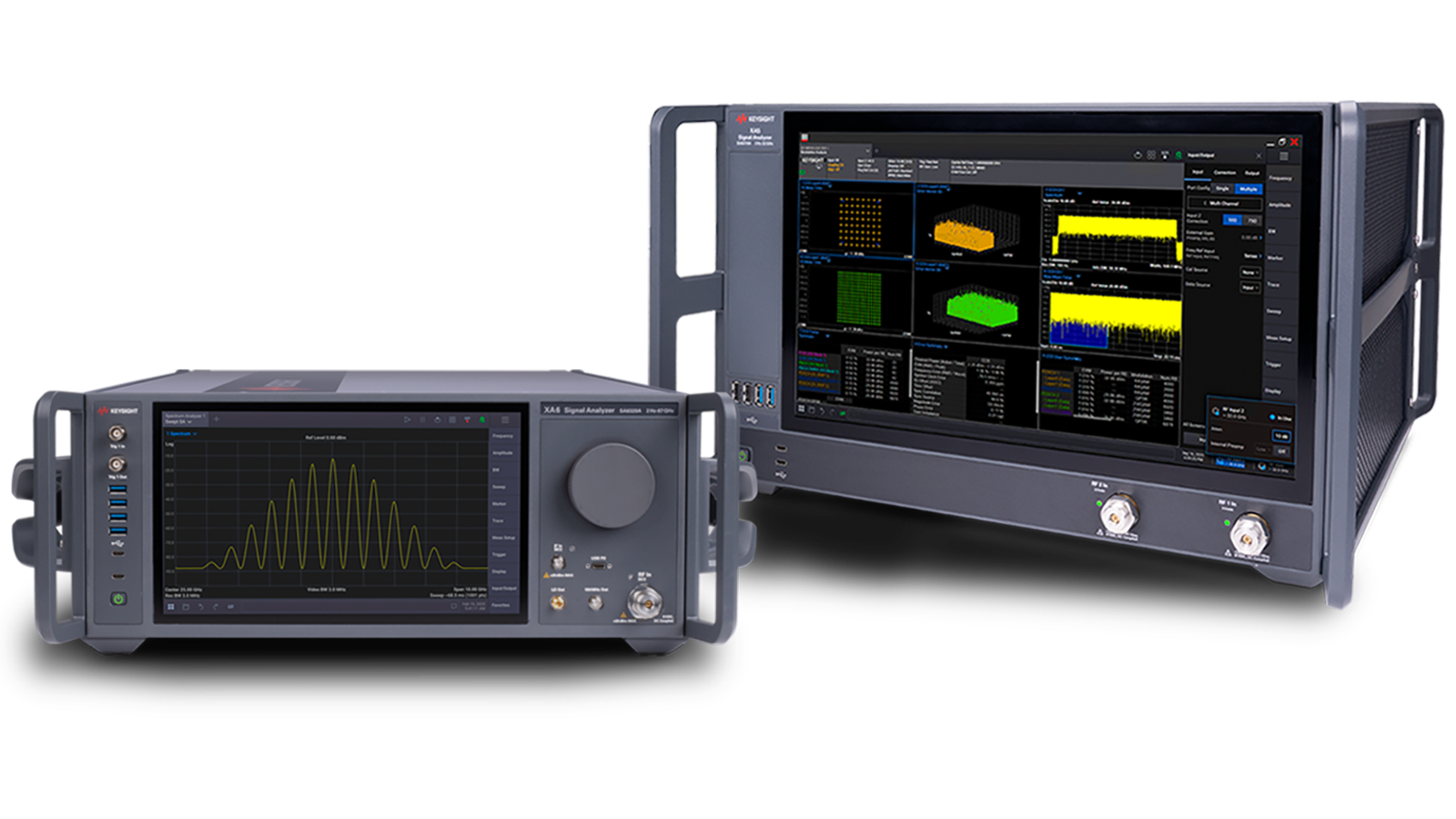
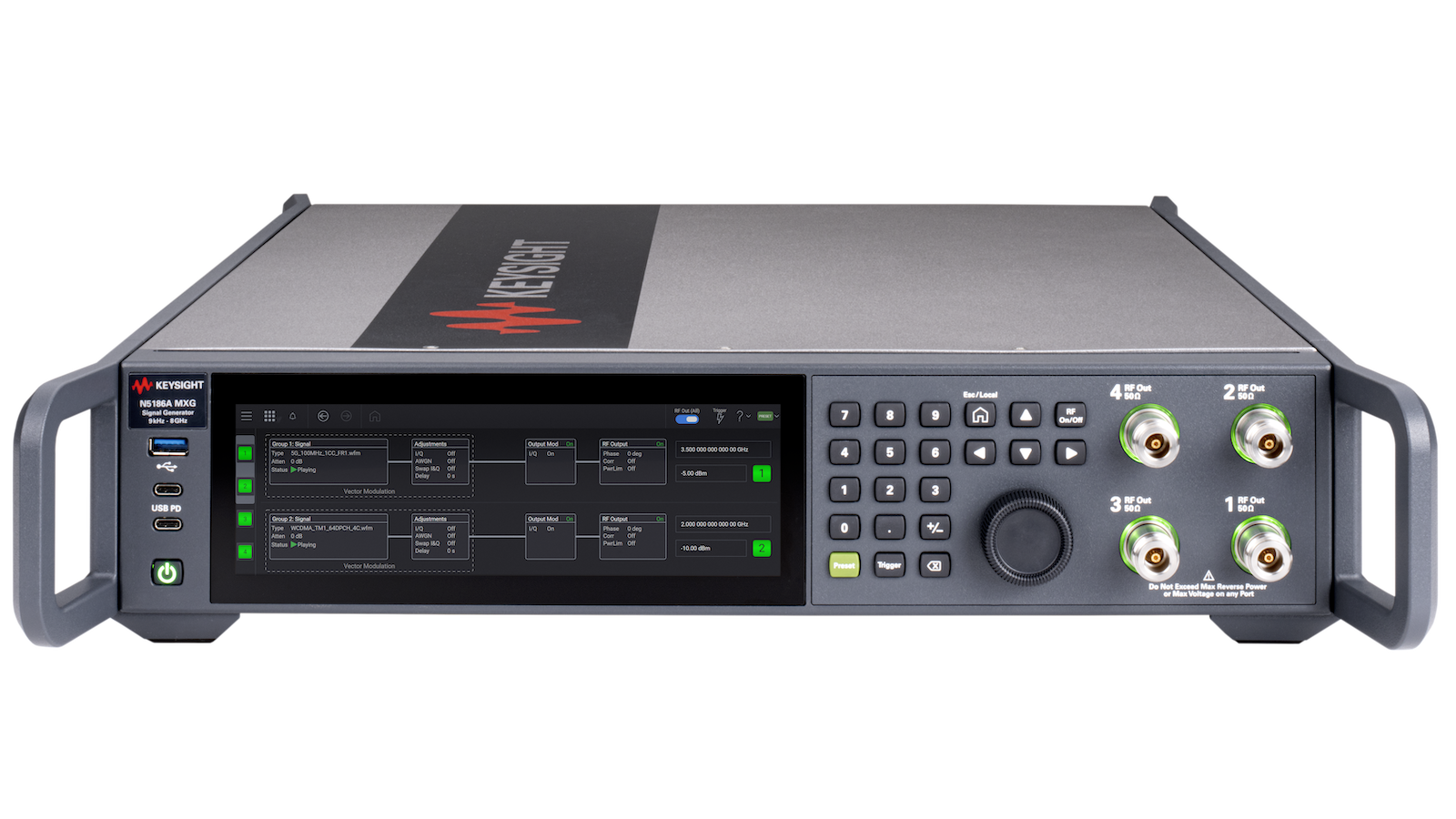
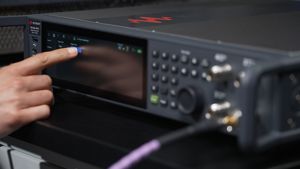
Keysight Expert vector signal generators come in two classes. The XG4-class includes the AP5041A-AP5042A and the XG5-class includes the N5186A MXG. Our Expert models build upon the capabilities of our Essential models with wider bandwidths and enhanced spectral purity, as well as cutting-edge capabilities like direct digital synthesis (DDS), an embedded reflectometer (XG5-class), and up to four phase-coherent outputs for complex testing like multiple-input / multiple-output (MIMO) and beamforming. DDS enables fast frequency switching and reduces phase noise and distortion. The embedded reflectometer characterizes the device under test (DUT) match with a single button to generate a match-corrected signal at the reference plane for reduced measurement uncertainty. Expert vector signal generators feature software to create complex modulations like 5G NR and multi-tone signals. Choose one of our most popular configurations or build the one you need for your application. Need help selecting? Check out the resources below.
Complex wideband signals
Generate complex wideband signals needed for carrier aggregation and digital pre-distortion (DPD) applications with up to 1 GHz bandwidth per channel.
Spectrally efficient signals
Ensure repeatable, high-quality measurements to speed up R&D testing or optimize production test margins with low adjacent channel power ratio (ACPR) and high output power.
Fast switching speeds
Accelerate testing or emulate fast-moving signals like radar with rapid switching speeds and list mode pre-programming of frequency, amplitude, and other parameters.
Ultra-low phase noise
Critical for capturing precise measurements in highly sensitive applications like radar, satellite communications, and high-frequency oscillators.

-
Maximum frequency
8.5 GHz to 40 GHz
-
Maximum modulation bandwidth
400 MHz to 1 GHz
-
Number of outputs
1 to 4
-
Phase noise @1 GHz (20 kHz offset)
-147 dBc/Hz to -145 dBc/Hz
-
Output power @1 GHz
18 dBm to 25 dBm
-
Harmonics @ 1 GHz
-45 dBc to -35 dBc
-
Frequency switching speed
2 µs to 800 µs
Most popular configuration
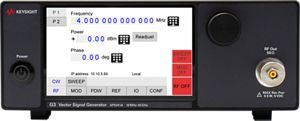

XG4-class Vector Signal Generator
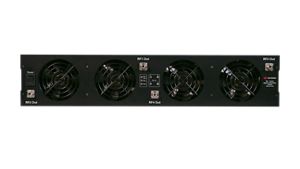

XG4-class Vector Signal Generator
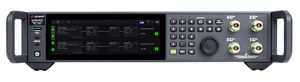

XG5-class Vector Signal Generator
Services and support
Innovate at speed with curated support plans and prioritized response and turn-around times.
Get predictable, lease-based subscriptions and full lifecycle management solutions—so you reach your business goals faster.
Experience elevated service as a KeysightCare subscriber to get committed technical response and more.
Ensure your test system performs to specification and meets local and global standards.
Make measurements quickly with in-house, instructor-led training, and eLearning.
Download Keysight software or update your software to the newest version.
Frequently asked questions
Traditional generators use IQ modulators to create digital signals. IQ modulators modulate a signal after it passes through a digital-to-analog converter (DAC). A downside of this architecture is its susceptibility to images and LO feedthrough. In contrast, the Pro signal generator employs a DDS architecture that utilizes digital upconversion, which means it modulates the signal before it passes through a DAC. The Pro signal generator takes advantage of the digital upconversion technique for excellent signal fidelity, eliminating distortion from images or LO feedthrough and ensuring accurate test results.
Fixture de-embedding is a technique used in RF testing to eliminate the impact of test fixtures—such as cables, connectors, or test boards—from measurement data. This process enables engineers to accurately assess the true performance of the Device Under Test (DUT). In high-frequency configurations, fixtures can introduce parasitic effects such as capacitance, inductance, or signal loss, which may distort measurements of the DUT’s characteristics, including gain.
De-embedding consists of characterizing the fixture’s electrical properties and mathematically subtracting its influence from the raw data. This effectively shifts the measurement reference plane to the DUT’s terminals, ensuring accurate characterization of the DUT as if it were directly connected to the test instrument. This process is crucial for validating RF components in applications such as wireless systems or antennas.
A reflectometer measures both the incident wave and the reflected wave at the measurement plane using a pair of directional couplers. By capturing this information, you can calculate the necessary correction to deliver the desired power level at the measurement plane and minimize ripple. Adjusting the output level of the source ensures that the incident power at the measurement plane meets the desired level without unwanted effects, such as ripple.
An embedded reflectometer in a vector signal generator allows you to easily:
- characterize fixtures with Ecal and generate an s2p file for de-embedding.
- measure S11 at the reference plane and generate an s1p file to correct for impedance mismatches.
- perform a spot correction into the current load or ideal 50-ohm load.
With the press of one button, you can now calculate the DUT reflection coefficient or perform spot correction. Traditionally, it required a specialized technical expert to de-embed test fixtures or characterize the match of our DUT.