What are you looking for?
Accelerate EV Battery Testing
EV Battery Testing: Ensuring Safety, Performance, and Reliability
EV (Electric Vehicle) battery testing is the process of evaluating electric vehicle batteries to ensure they meet performance, safety, and reliability standards throughout their lifecycle. This includes testing battery cells, modules, and packs under various electrical, thermal, and environmental conditions.
As electric vehicles (EVs) gain traction in the market, effective testing of EV batteries has become more important than ever. High-performance batteries are crucial not just for the efficiency of the EV vehicle, but also for the overall safety and reliability of the entire EV system. At Keysight Technologies, we understand the unique challenges that come with EV battery technology, and we provide comprehensive testing solutions to ensure battery performance across various conditions.

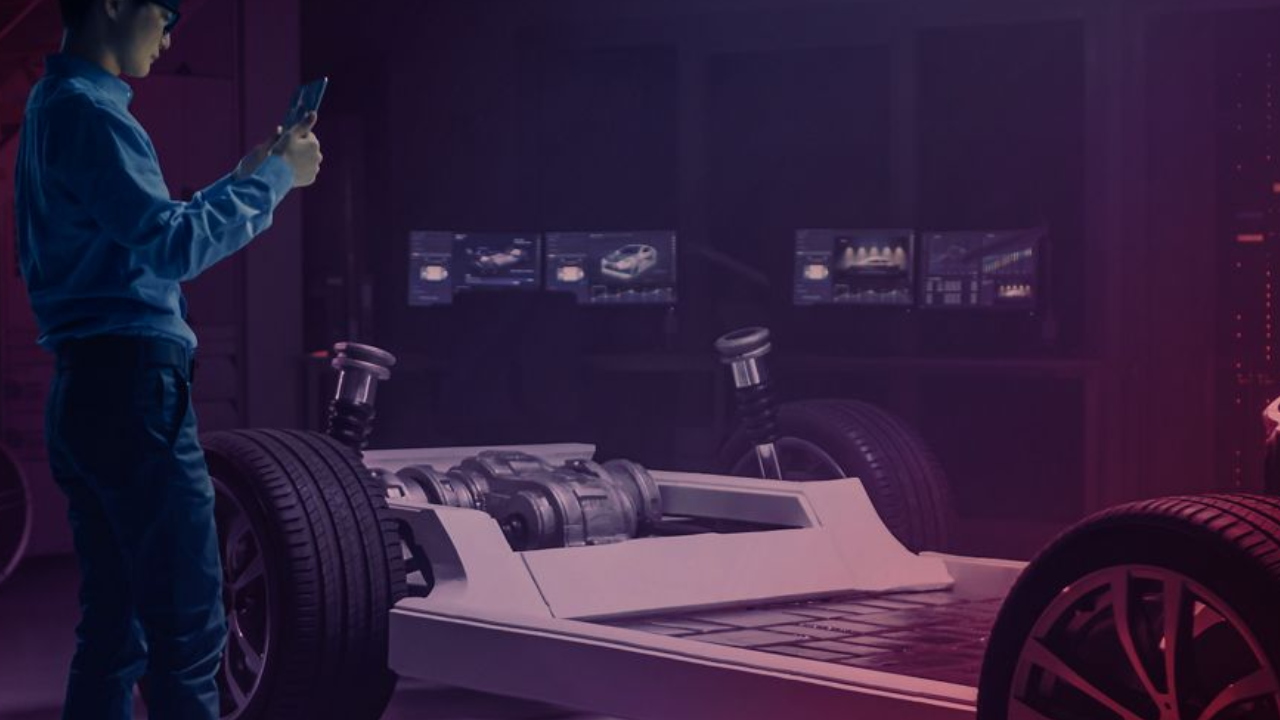
Drive EV Battery Innovation
With Keysight's design, emulation, and test solutions, you can accelerate the development, integration, and deployment of electric vehicle (EV) battery systems. Contact us today to learn more about how Keysight can help you accelerate your next EV battery breakthrough.
Future-Proof Battery Technologies for EVs
This report outlines the latest developments in automotive battery packs, focusing on high-voltage systems (400–800 V) that enable ultra-fast charging above 350 kW. It highlights strategies for safe, efficient charging in all conditions, including cold climates, and explores innovations in energy density (up to 300 Wh/kg) that support EV ranges beyond 1000 km. The study also examines emerging technologies like sodium-ion batteries and rare-earth-free alternatives, with applications extending into aviation.


Explore Solutions Tailored to Your EV Battery Use Cases
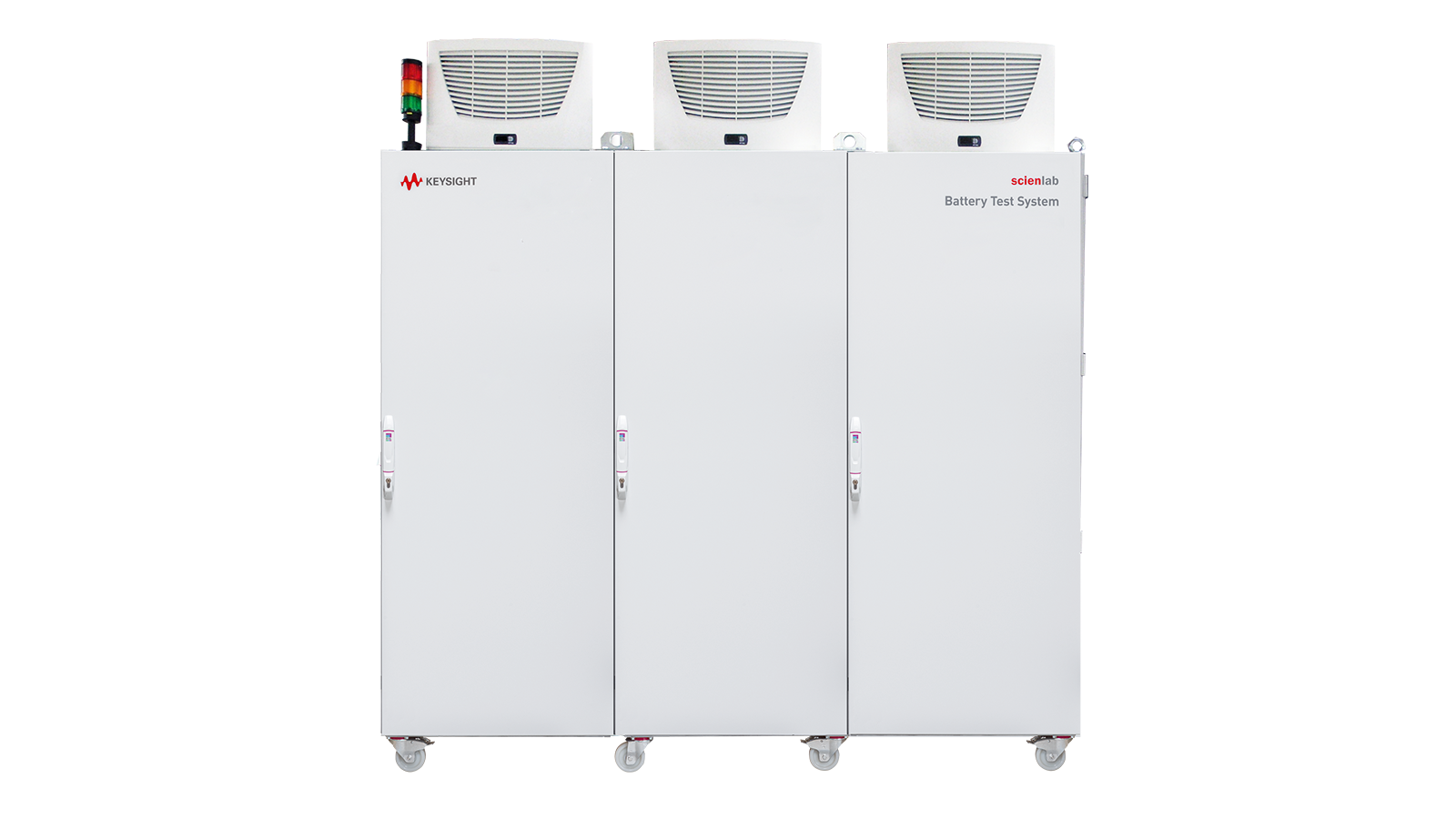
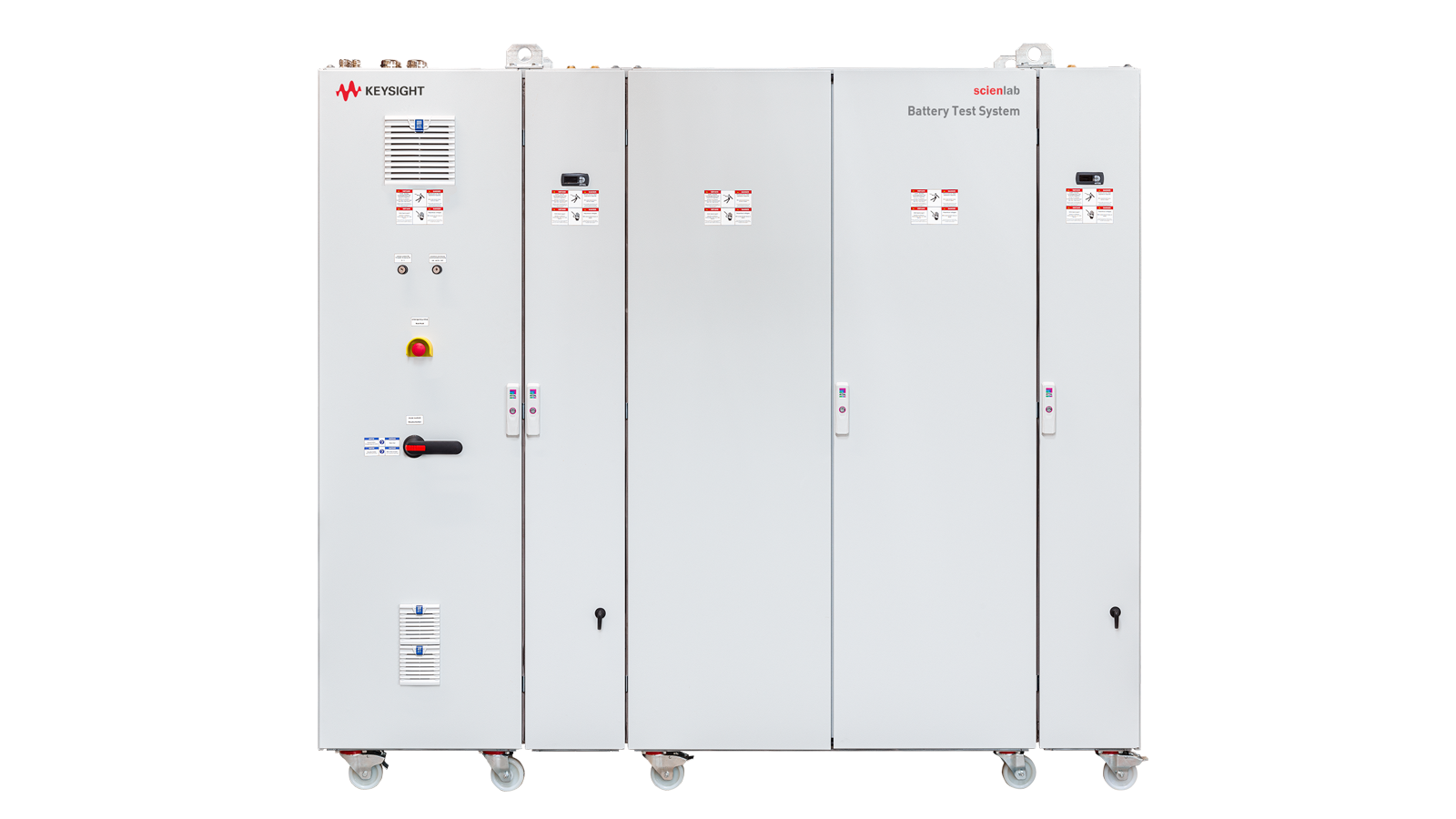



/BenchVue_Advanced_Battery_Test_Software_1.png)
/BenchVue_Advanced_Battery_Test_Software_1.png)
Basics of EV Battery Design and Innovation
Comprehensive EV Battery Testing Across Cell, Module, and Pack Levels
The development of Electric Vehicle (EV) batteries is an interdisciplinary task covering a wide range of areas and relates to various challenges. Depending on where in the development cycle we are, different EV battery tests are needed. Testing the batteries at all different levels enables chemists and engineers to gain insights and support their mission towards the latest and top-performing batteries. Keysight’s test equipment provides the right solution regardless of whether the scope is on cell chemistry, formation, module, or packs. With the gained insights through testing and validation, the solutions help you move from prototype to production with confidence.
Cell-Level Testing: From Chemistry to Prototypes
In general, tests differ between the levels of cell, module, and pack, and depend on whether parameter characterization or performance is the scope of testing. At the cell level, testing can be divided into early tests focusing on chemistry, formation tests that are production- and recipe-focused, and prototype tests for evaluating early designs.
For prototypes and chemistry work, special measurements like Electrochemical Impedance Spectroscopy (EIS) can reveal the behavior of different layers of the cell, as well as its quality and characteristics. In the formation stage, the cell undergoes charge and discharge cycles, temperature profiles, and rest periods to stabilize the chemistry and create a robust, high-performing battery.
Once chemistry is defined and batteries are produced, prototyping focuses on verifying characteristics against design goals and assessing performance. This may include aging tests to evaluate longevity under repeated charge–discharge cycles and varying temperatures, or drive cycle tests that simulate real-world current, power, or voltage demands.
Module and Pack Testing with BMS Integration
Modules and packs represent the next integration steps after cells. Here, testing still targets characterization or performance, but the presence of a Battery Management System (BMS) adds new requirements. The BMS measures individual cells, balances the charge during charging and discharging, monitors State of Health (SOH), ensures safety, and communicates with vehicle systems. Testing at this stage often requires Rest-Bus simulation to emulate real-world communication, verify safe operation, and refine algorithms. Many packs and modules also have start-up sequences requiring specific commands before tests can begin.
With expert insights and cutting-edge test solutions, Keysight supports your journey through the latest advancements in EV battery testing, ensuring your solutions are ready for the demands of tomorrow’s electric mobility. We can help you tailor your entire test laboratory to your unique requirements.


E-Mobility Ecosystem
Meet industry conformance standards by testing the entire e-mobility environment.


EIS Testing
Learn about advanced electrochemical impedance spectroscopy (EIS) for battery testing.


Measurement Accuracy
Understand how to define and interpret measurement accuracy specifications for battery testers.


Battery Design
Discover how investing in EV battery testing delivers benefits for EV battery designers.


Power Conversion
Dive into how power conversion and battery testing are driving the future of e-mobility.


EV Battery Testing
Learn from experts who break down the latest advancements in battery development and testing.
Find Your EV Battery Use Case
Learn how to do the following:
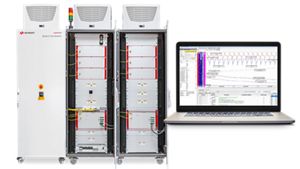
- Characterize and analyze EV batteries at the cell level.
- Measure cell capacity, efficiency, internal resistance, and lifespan.
- Test multiple cells across 64 individually calibrated EIS measurement channels.

Learn how to do the following:
- Test for faulty battery module connections.
- Evaluate the battery module for abnormal behavior.
- Detect early battery module failures.
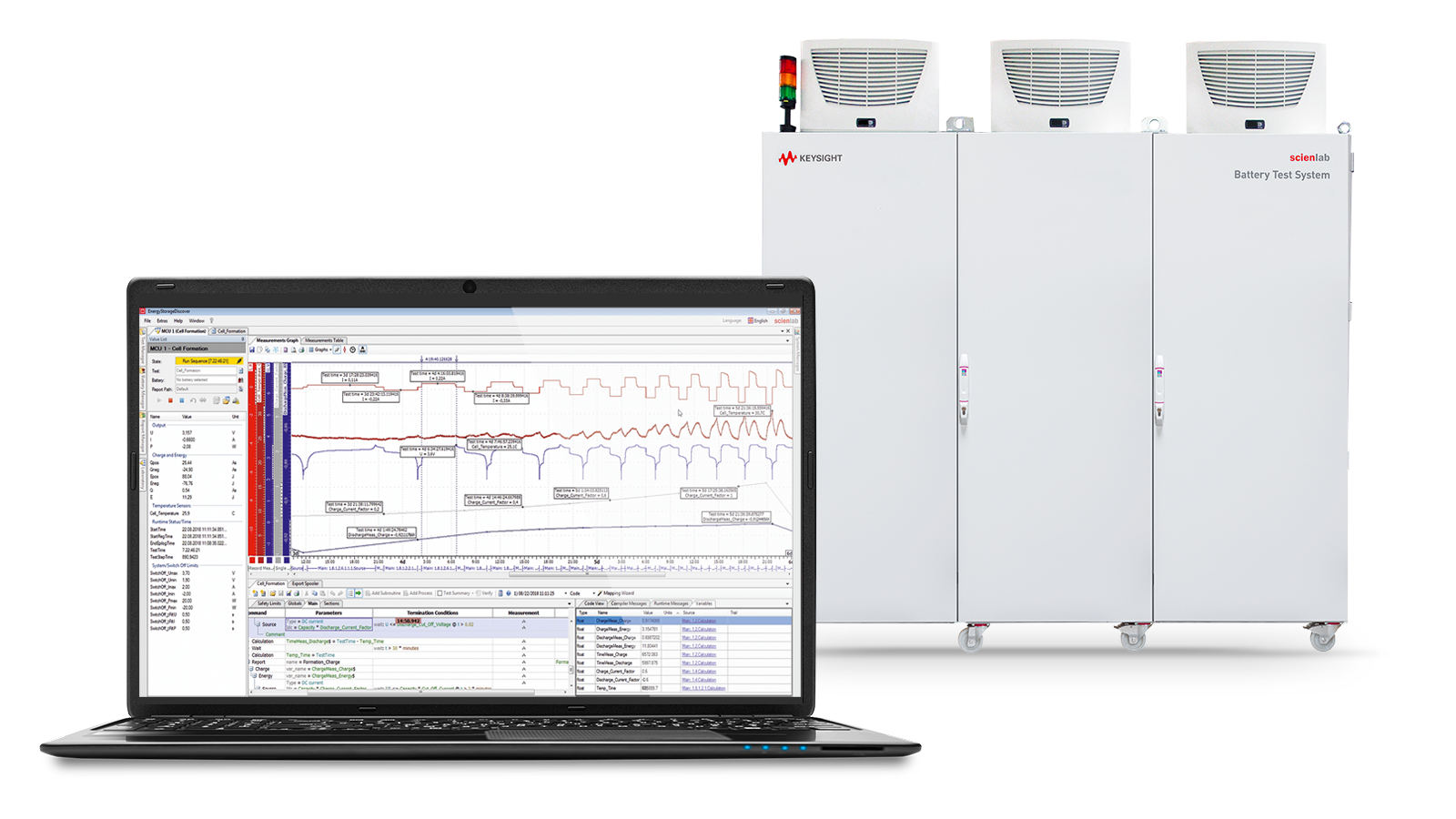
Learn how to do the following:
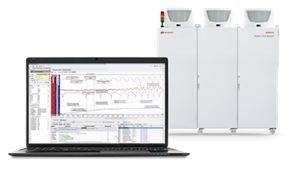
- Emulate real-world operating environments with varying electrical, climatic, and temperature parameters.
- Combine data from multiple scenarios to improve pack range performance, battery safety, and durability.
- Enable battery development and validation with output power up to 300 kW and voltage up to 1,500 V.
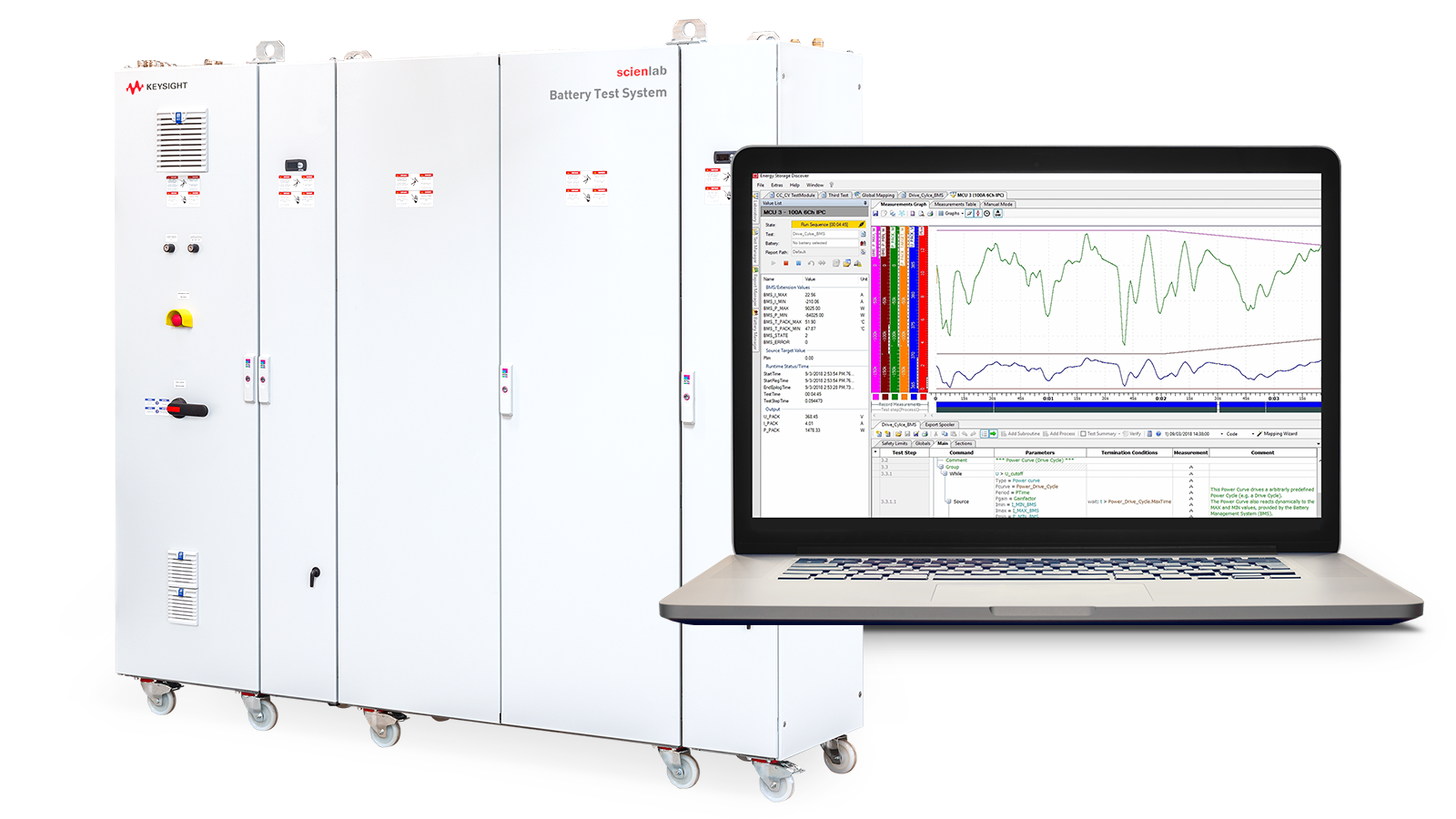
Learn how to do the following:
- Measure the self-discharge behavior of battery cell design.
- Enable fast battery cell characterization.
- Evaluate cell self-discharge in both R&D and manufacturing.

EV Battery Trends: Learn What's New and Emerging
Tackling Market Changes to Meet the EV Boom
Speaker: Adnan Al-Massalmeh (Business Development Engineer for Battery Testing at Keysight)
The electric vehicle market is driving a boom in EV battery development and manufacturing. With immense time and cost pressures, three key trends are helping battery developers meet market challenges: size of the battery test lab, speed of testing, and total cost of ownership. Auto Tech Talks explores the market trends in battery development.
Testing EV Batteries at Cell, Module, and Pack Levels
Electric vehicle (EV) batteries come in different form factors: at the individual cell level, these may be cylindrical cells, or more powerful pouch and prismatic cells. These cells are then assembled into modules, which are in turn connected to form battery packs, and then assembled into the vehicle chassis. Watch the video to learn how different battery test parameters at each stage guide how the battery will eventually perform in the EV.
Access More Insights and Resources







-


“Keysight helped us dramatically reduce development time and cost. Our engineers can verify the problems much earlier in the design process and fix the issues with Keysight’s automotive radar test solutions. Our risk of recall has been significantly reduced. With Keysight, our engineers are even more confident that our automotive radars can help save more lives on the road.”
A Top Global Automotive Maker
-
“We were using manual measurement methods to test our DC-DC converters and the turn-around-time was simply too long and incurring high re-current costs. Keysight proposed an automated parallel testing method that could measure four DUTs simultaneously. This greatly reduced our test turn-around time (TAT) and helped us save on resources while improving test efficiency.”
Major Automotive OEM, Japan
-
“Keysight jointly provided the most powerful end-to-end testing solution for automotive Ethernet spanning from physical layer testing to protocol conformance and performance validation.”
BYD AUTO
-
“Keysight's contributions to the C-V2X standard and broad set of C-V2X test capabilities helped OmniAir establish the world's first C-V2X certification program. We look forward to the next phase, which includes authorizing the first C-V2X test laboratories and certifying C-V2X devices in line with market demand.”
Jason Conley, Omniair Consortium
EV Battery Testing – Frequently Asked Questions
Battery testing in general is the verification of a battery's safety, performance, and quality. Testing is important to ensure production quality and safety, to ensure proper performance in use. It is also important to verify the effectiveness of new developments and ensure improvements in safety, performance, and reliability.
The two biggest areas are performance tests and characterizations.
Performance tests include, for example, charge-discharge cycles, in which artificial aging is simulated to observe how fast and in what way batteries age. Another example would be drive cycles. For these tests, real-world current or power demands are recorded and used as test input. The goal is to understand how a newly developed battery behaves under known conditions and see if there is an improvement in performance.
Characterization focuses on the parameters of a battery, which include tests for resistance, impedance, capacity, and thermal responses. These tests will be performed by using different stimuli and reading back the responses. For example, resistance and impedance. Classically, the stimulus is a current signal, and for resistance measurement, a DC current pulse is the most common method. For a defined period, a current pulse is active, and the voltage response is measured back. Based on the known current and the measured voltage, the internal resistance for DC could be calculated. This is known as Direct Current Internal Resistance (DCIR). Impedance measurements could be performed similarly, but instead of DC current, AC current is used. The impedance for a given frequency could be determined depending on the chosen frequency. If the fixed frequency is replaced by a sweep, the impedance measurement is considered as electrochemical impedance spectroscopy.
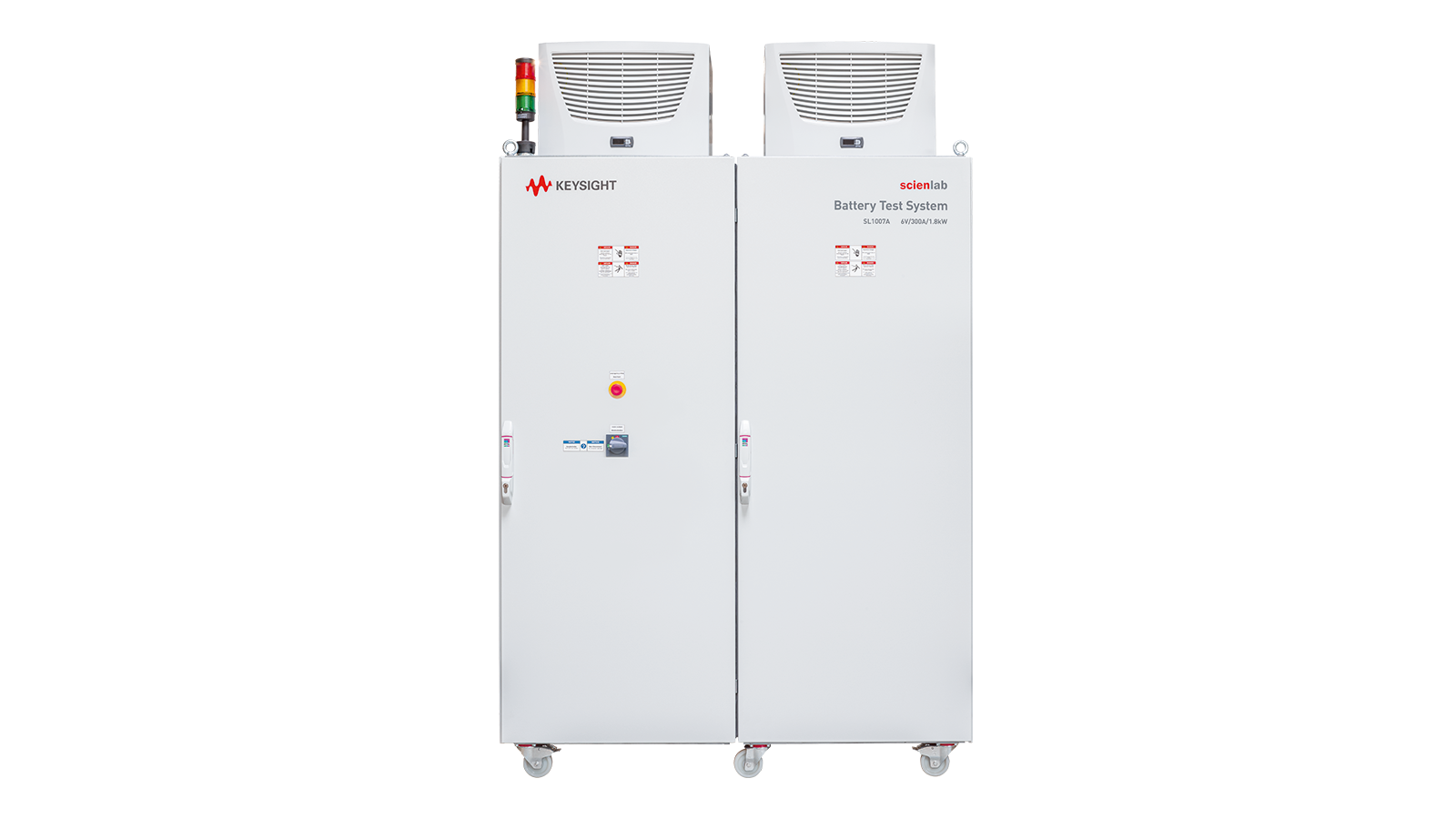
For electrical tests, the following components are the main parts: A battery test system, a climatic or temperature chamber, measurement equipment, communication and Rest-Bus simulation, a conditioning unit, and safety equipment.
The battery test system is a high-performing bidirectional power supply. It ensures communication with all other test components while handling the test scenarios and characterization tasks. Measurements are collected, and the test results are captured and prepared for analysis.
Battery tests are always performed in a test chamber to ensure safe operation and allow thermal and climatic tests. The test chamber ensures safety via safety equipment, such as redundant temperature measurement, gas sensors and detecting systems, venting and burst disks, fire extinguishing systems, inerting, and mechanical safety systems. Different temperature profiles and conditions can easily be achieved to verify robust behavior under all conditions or to stress test the batteries under extreme conditions. A subpart of the temperature and climatic control is the replacement of the in-vehicle cooling system. For packs and some modules, it is necessary to have a cooling circuit present that replaces the car’s cooling system. This could not only be used to have a static operation, but temperature profiles could be programmed to simulate different scenarios and test cases.
While the battery test system measures voltage and current during the test, additional measurements could be needed, such as temperature measurements, individual cell measurements, digital and analog input and output channels (IOs) to communicate and simulate behaviors, and digital higher-level communication with the BMS.
From an integration point of view, packs and modules are built out of cells in parallel and series. With that given, the tests are performed on a much higher voltage and power level than with cells.
In addition, the integration of cells into modules and packs is adding components that need either to be tested or controlled to enable tests. The BMS plays the biggest role by adding a communication component to the tests. All tests need to be in alignment with the BMS, and so a constant communication stream is flowing between the test system and the BMS. The BMS not only takes care of balancing the cells to ensure even charge and discharge, but also controls the output contactors. Communication with the BMS should test and verify its reaction to certain conditions, but it is also necessary to ensure proper operation by running the tests. One example would be pre-charge: Before a pack test can start, the test system's and battery's voltages need to be matched. This is necessary to limit high balancing currents at the very beginning of a test, once the contactors are closed. The BMS system coordinates this. Only if the voltage at the contactors matches the internal battery voltage will the contactors close.
Fast charging is one of the trends in the EV/EVSE sector. The batteries are only one part of the chain. A battery could support a given current for a given time. This could be verified and tested during performance tests. If the current is too high for too long a time, thermal effects could start, and permanent damage could be caused. The performance of batteries under higher charge currents could be improved by conditioning the cells prior to the charge event and keeping the temperature and thermal impact with cooling under control. But in general, fast charging is more challenging for the rest of the car chain, mainly for the plugs, cables, and contactors, as they need to be optimized for the current while keeping the weight and space at a tolerable level.
Keysight provides a wide range of battery test systems, software, and services. The systems are highly flexible and offer a wide range of built-in functionalities.
The cell test systems, for example, provide built-in Electrochemical Impedance Spectroscopy (EIS) measurement. This allows for the measurements to be performed without the need to rewire and use different test equipment. It could be part of a broader test cycle and automatically perform the measurements. This saves time, allowing for shorter times to gain more and deeper insights into the battery's behavior.
In addition, module and pack test systems are designed to adapt to changing test needs, with additional fine current and voltage ranges to enable module tests with a pack test system and cell tests with a module test system. This boosts flexibility and allows for the creation of a versatile and reliable test laboratory.
Offering a full turnkey solution could ensure a faster time to test. If desired, Keysight will take care of the planning and project management of the full laboratory, including all needed components. Delivery times and commissioning will be aligned to support the fastest possible ramp-up of the newly built battery test lab. This service is not fixed and can be adjusted to the individual needs and scope of the project.
Want help or have questions?