How to Measure Waveguide Power in Sub-THz Component Testing

Characterize Performance Across D-Band Frequencies
Sub-terahertz (Sub-THz) component development requires engineers to verify the power delivered through waveguide-connected sources, devices, and measurement paths at frequencies where conventional coaxial interfaces are no longer practical. Components such as amplifiers, frequency multipliers, sources, and other high-frequency devices may be characterized across D-band frequencies, where available power can vary with frequency and device operating conditions. Accurate knowledge of power at the waveguide measurement plane helps engineers establish appropriate stimulus levels, evaluate component output, and distinguish device behavior from changes elsewhere in the high-frequency test path.
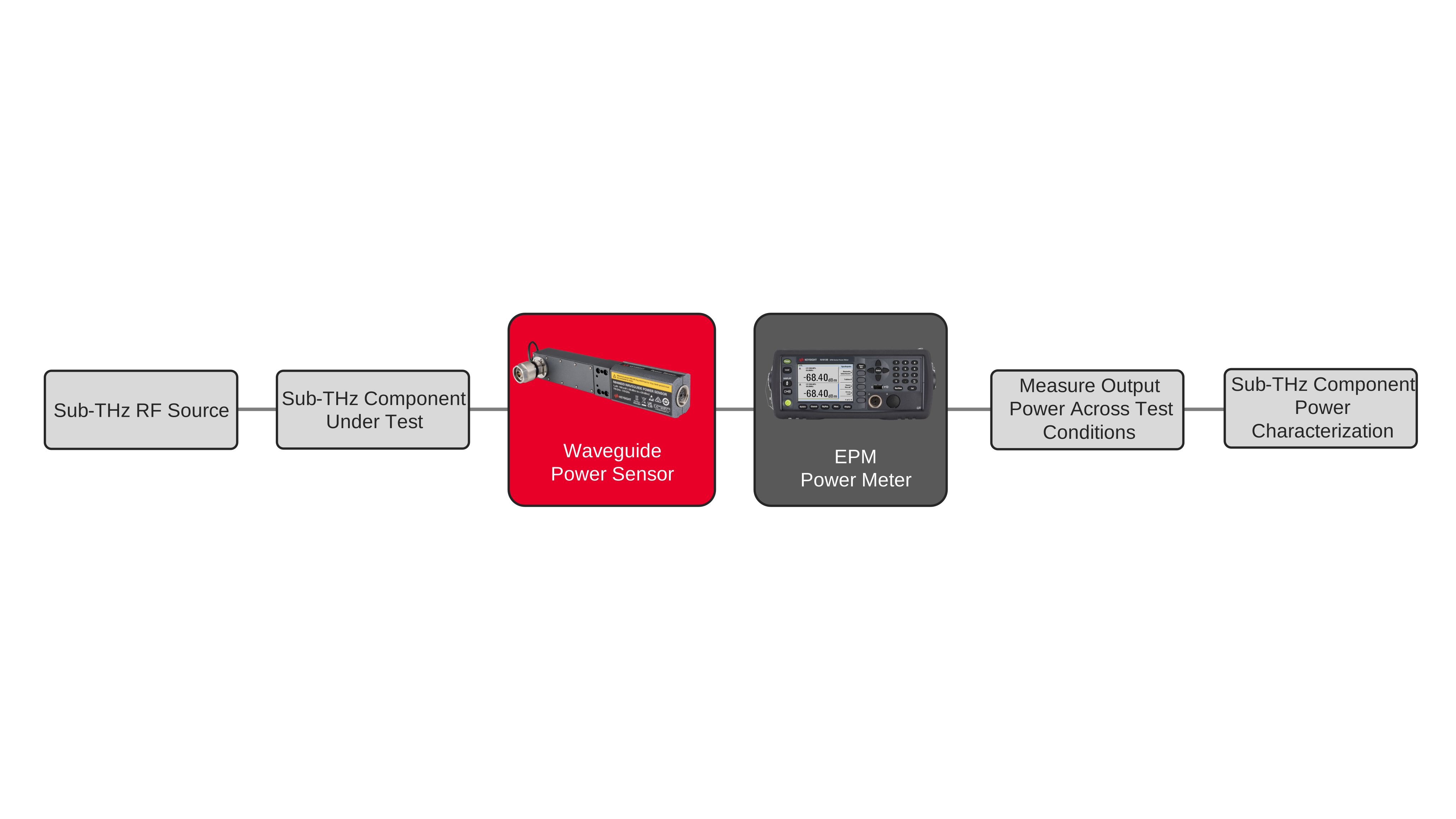
The measurement configuration includes a D-band waveguide power sensor connected to a compatible power meter and the source or component under test. Engineers establish the desired waveguide reference plane, make the appropriate waveguide connection, configure the measurement frequency, and apply the sensor's calibration information before acquiring average power. Measurements can then be repeated as frequency or device operating conditions change to characterize available power across the test sequence. This provides a direct waveguide-based power measurement workflow for research, component development, and functional characterization at sub-terahertz frequencies.

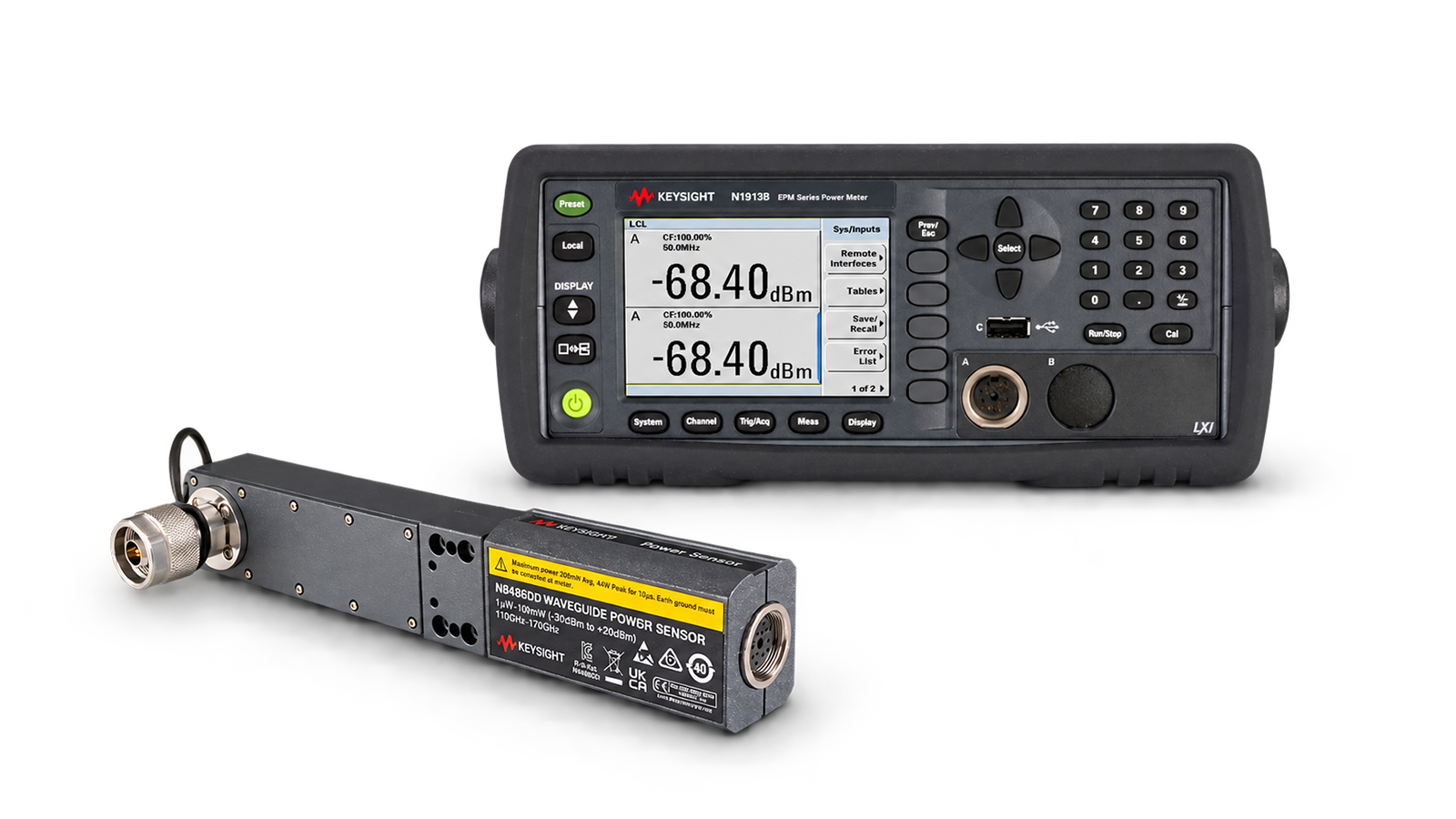
Sub-THz Waveguide Power Measurement Solution
See Block Diagram of Sub-THz Waveguide Power Measurement Solution

Explore Products in Our Sub-THz Waveguide Power Measurement Solution
-


![]()
N8486DD 110 to 170 GHz Waveguide Power Sensor
-
![]()
N1913B EPM Series Single-Channel Power Meter


Discover Resources and Insights
Additional Resources for Sub-THz Waveguide Power Measurement
Related Use Cases


-
![]()
Learn More
How to Characterize Dielectric Permittivity Across Frequency
Characterize dielectric permittivity and loss across frequency using precision capacitance measurements for material analysis and design validation with a capacitance meter.
Learn More

-
![]()
Learn More
How to Evaluate Electromagnetic Leakage in Secure Chips
Capture and analyze electromagnetic emissions from secure chips to identify leakage hotspots during cryptographic operation.
Learn More
-
![]()
Learn More
How to Mitigate Side-Channel Leakage
Validate embedded cryptographic implementations against side-channel leakage using acquisition, signal processing, and statistical analysis workflows.
Learn More

Get in Touch with One of Our Experts
Need help finding the right solution for you?