How to Measure Synchronous Power Across Multiple Antenna Outputs

Synchronize Multi-Antenna Power Measurements
Multi-antenna radio frequency (RF) transmitters require engineers to evaluate power behavior across multiple output channels under the same operating conditions. Measuring channels sequentially can make it difficult to compare signals when transmitter output changes over time or when the channels carry synchronized modulated signals. Synchronous measurements provide a common timing reference for evaluating how power is distributed across antenna paths, allowing engineers to compare channel behavior during the same transmission interval. This is particularly useful for multiple-input multiple-output (MIMO) transmitters and other multi-channel RF systems where relative power behavior between antenna outputs contributes to overall system performance.
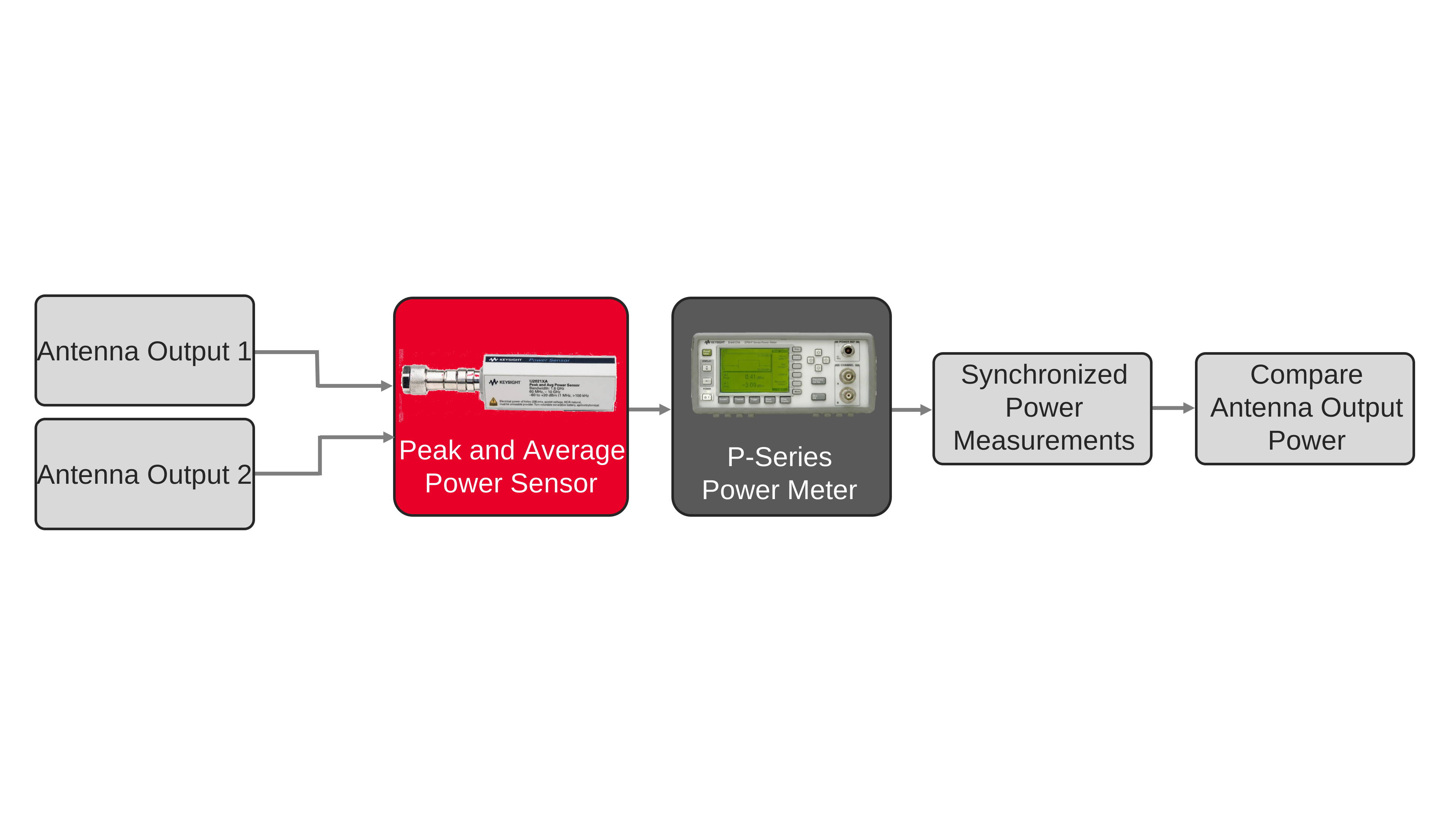
The measurement configuration uses peak and average power sensors connected to the antenna output paths and compatible multi-channel power measurement instrumentation. Engineers establish a common measurement timing reference and acquire power from the required channels under the same transmission conditions. Peak, average, or time-gated measurements can then be compared across antenna outputs to identify channel-to-channel power differences, verify output consistency, and investigate unexpected variations. Synchronous acquisition provides a more meaningful comparison than measurements collected independently at different times when characterizing dynamic multi-channel transmitters.

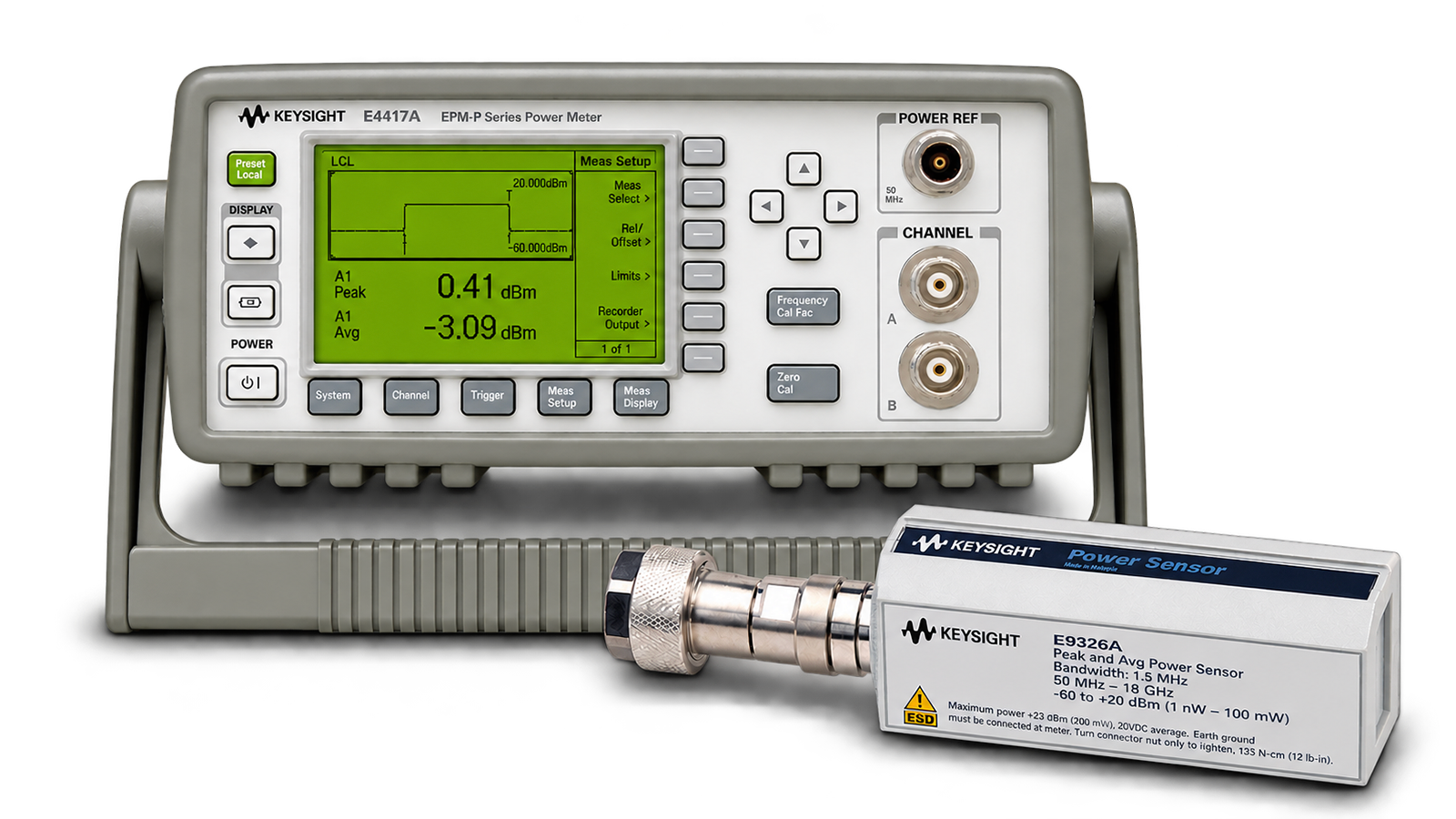
Synchronous Multi-Channel RF Power Measurement Solution
See Block Diagram of Synchronous Multi-Channel RF Power Measurement Solution

Explore Products for Our Synchronous Multi-Channel RF Power Measurement Solution
-

![]()
E9326A Peak and Average Power Sensor, 50 MHz - 18 GHz, 1.5MHz Bandwidth
-

![]()
E4417A EPM-P Series Dual-Channel Power Meter


Discover Resources and Insights
Additional Resources for Multi-Channel RF Power Measurement
Related Use Cases

-
![]()
Learn More
How to Achieve Traceable Radio Frequency Power Calibration
Achieve traceable radio frequency power calibration with thermistor sensors and automated measurement workflows using power sensors, power meters, and automated measurement control and data logging software.
Learn More

-
![]()
Learn More
How to Measure Thermal Drift in Radio Frequency Power Sensors
Measure thermal drift in radio frequency power sensors to ensure long term measurement accuracy and stability using power sensors, power meters, and automated measurement control and data logging software.
Learn More
-
![]()
Learn More
How to Validate Absolute Power Accuracy of Signal Sources
Validate signal source power accuracy using traceable measurement techniques and high precision sensors using power sensors, power meters, and automated measurement control and data logging software.
Learn More

Get in Touch with One of Our Experts
Need help finding the right solution for you?