How to Minimize Standing Wave Effects in RF Power Measurements

Standing Wave Effect Measurements
Radio frequency (RF) power measurements affected by standing wave conditions require thermal sensing methods capable of maintaining stable average power response across changing impedance environments and broadband operating frequencies. The measurement setup typically includes a power meter, thermocouple power sensor, broadband signal source, impedance-matched transmission paths, calibrated attenuators, frequency correction data, and synchronized acquisition controls to characterize reflected power behavior and impedance interaction effects during continuous swept-frequency validation workflows.
The measurement process evaluates the interaction between source impedance, transmission path discontinuities, and sensor impedance while continuously acquiring average power measurements across changing frequencies and operating levels. Acquisition, averaging, synchronization, correction factor application, logging, and statistical analysis techniques are used to characterize standing wave behavior, quantify reflected energy effects, and minimize measurement variation caused by impedance mismatch conditions during broadband radio frequency subsystem validation and microwave component characterization workflows.

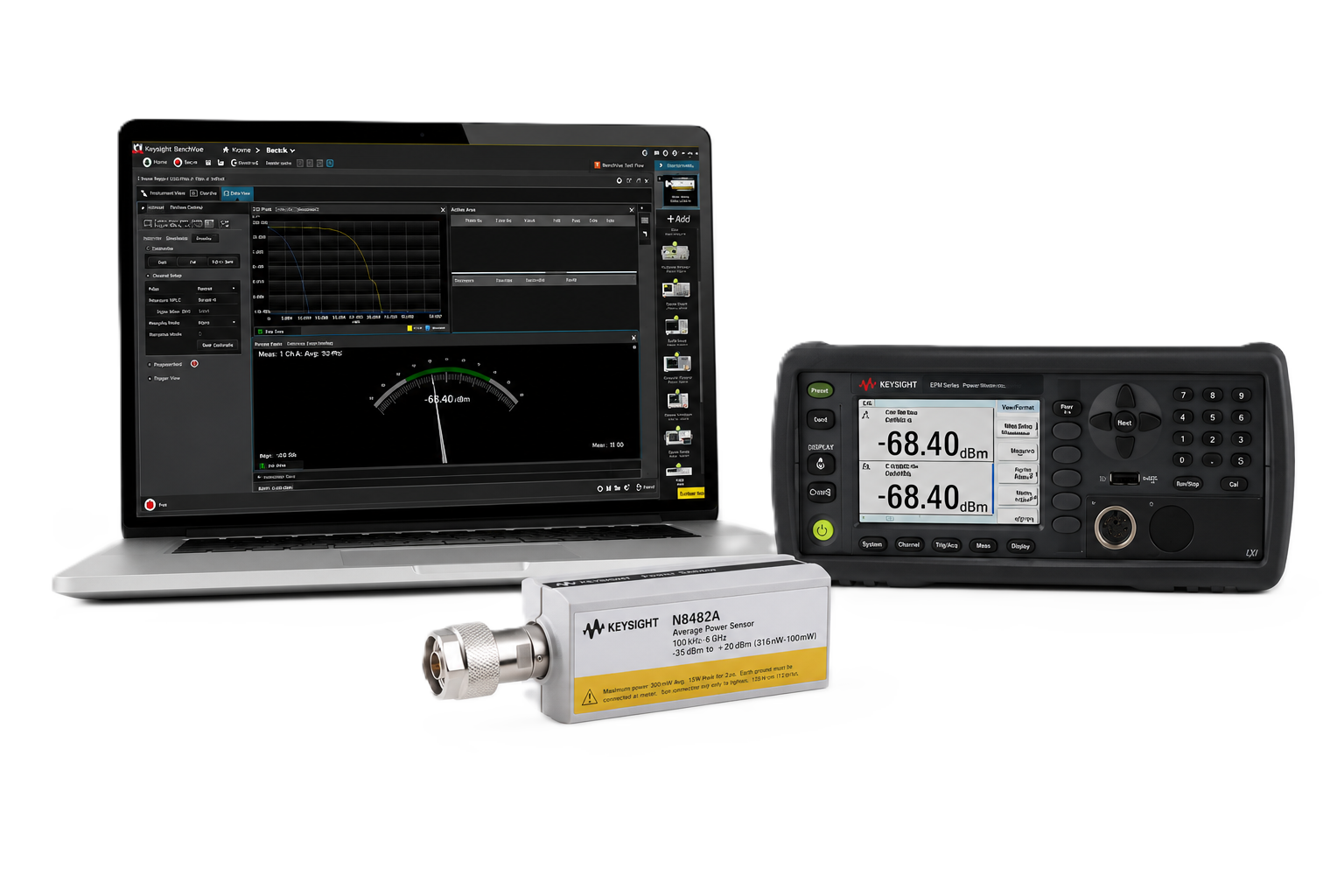
RF Standing Wave Measurement Solution
See Block Diagram of RF Standing Wave Measurement Solution


Explore Products for Our RF Standing Wave Measurement Solution
-

![]()
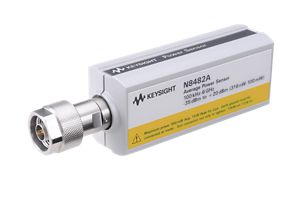
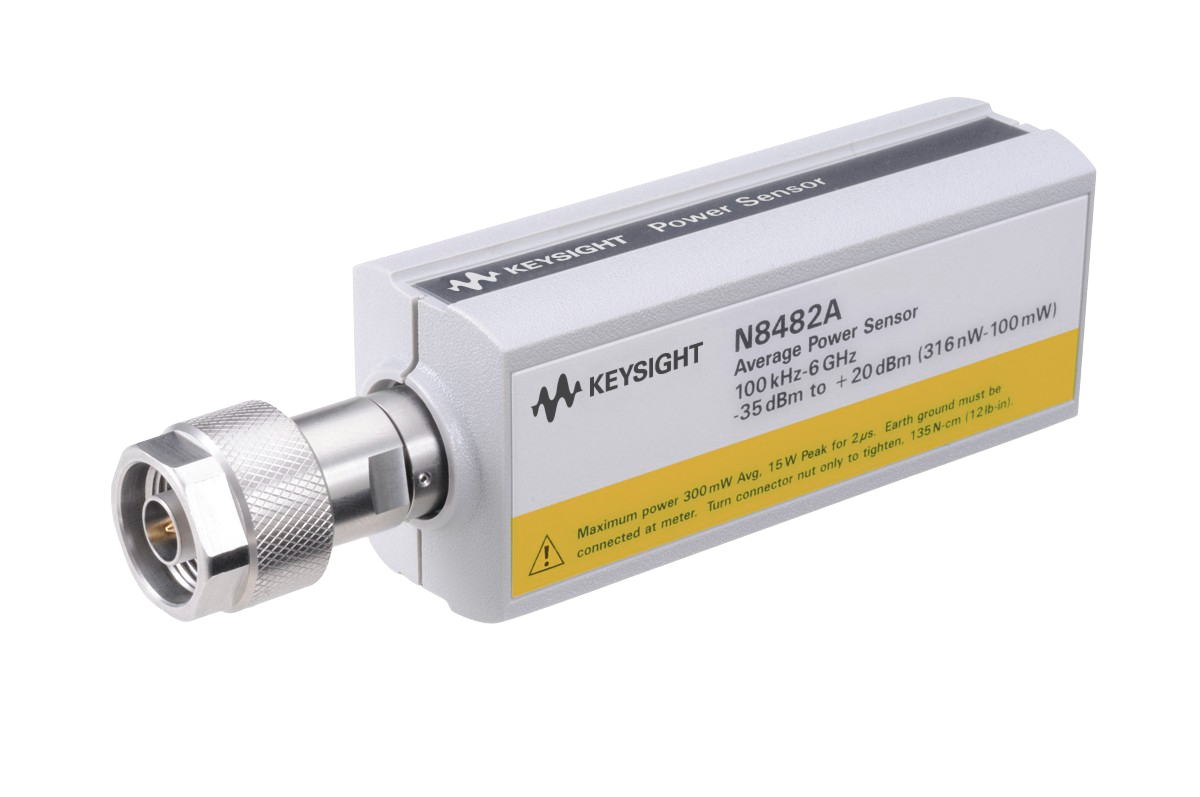
N8482A Thermocouple Power Sensors
-
![]()
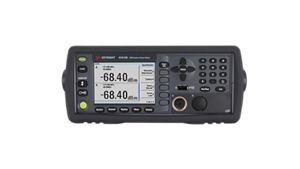
N1913B EPM Series Single-Channel Power Meter
-

![]()
BV0007B PathWave BenchVue Power Meters/Sensors App


Discover Resources and Insights
Additional Resources for RF Standing Wave Measurements
Related Use Cases

-
![]()
Learn More
How to Compare Thermal RF Power Across Multiple Frequency Bands
Compare thermal radio frequency power across multiple bands using a power meter and thermocouple sensor measurements.
Learn More

-
![]()
Learn More
How to Validate RF Power Sensor Frequency Response Compensation
Validate radio frequency power sensor frequency compensation using a power meter and thermocouple sensor measurements.
Learn More
-
![]()
Learn More
How to Characterize RF Power Sensor Mismatch Uncertainty
Characterize radio frequency power mismatch uncertainty using a power meter and thermocouple sensor measurement methods.
Learn More

Get in Touch with One of Our Experts
Need help finding the right solution for you?