How to Automate Radio Frequency Power Calibration Workflows with Software

Automate Calibration Measurement Workflows
Radio frequency power calibration workflows often involve repetitive measurement sequences, including power sweeps, reference comparisons, and application of correction factors across multiple frequency points. Manual execution of these tasks introduces variability due to operator handling, inconsistent timing, and potential data transcription errors. As calibration requirements become more stringent, particularly in metrology and high-frequency applications, the need for repeatable and well-documented measurement processes becomes critical.
Automation enables precise control of instrument settings, synchronized data acquisition, and consistent execution of calibration procedures. Engineers can define measurement sequences that include stabilization delays, averaging intervals, and correction factor application, ensuring that each step is performed identically across repeated runs. This approach improves measurement repeatability, reduces human error, and supports traceability by maintaining detailed records of calibration data and test conditions.

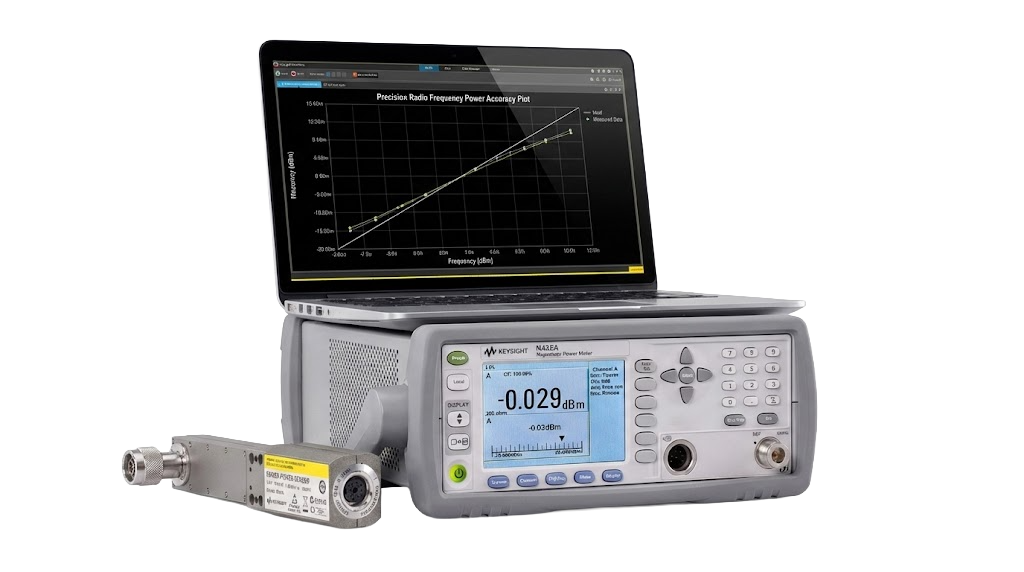
Automated Power Calibration Workflow Solution
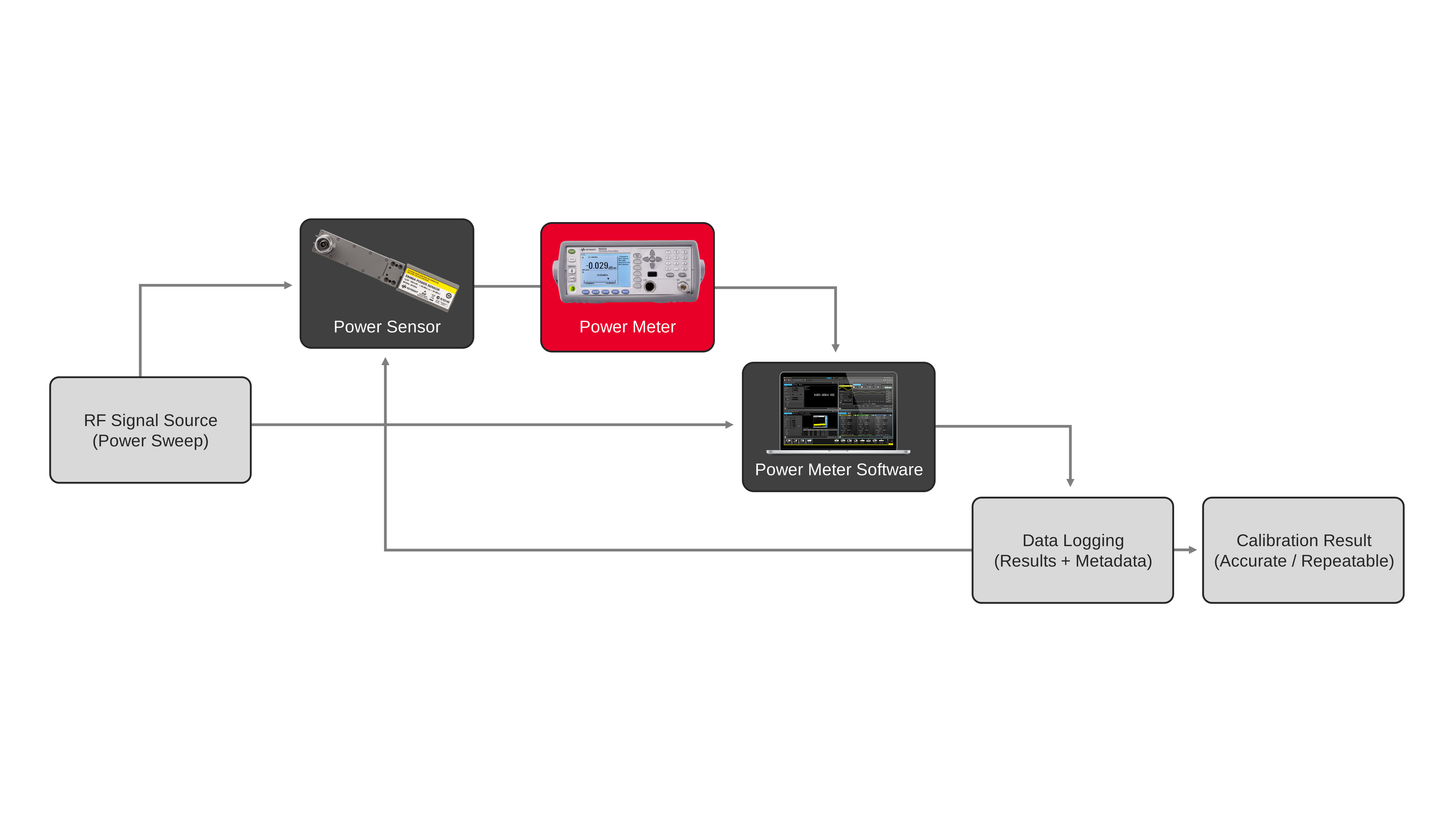
See Block Diagram of Automated Power Calibration Workflow Solution

Explore Products for Our Automated Power Calibration Workflow Solution
-

![]()
BV0007B PathWave BenchVue Power Meters/Sensors App
-

![]()
E8486A Waveguide Power Sensor
-
![]()
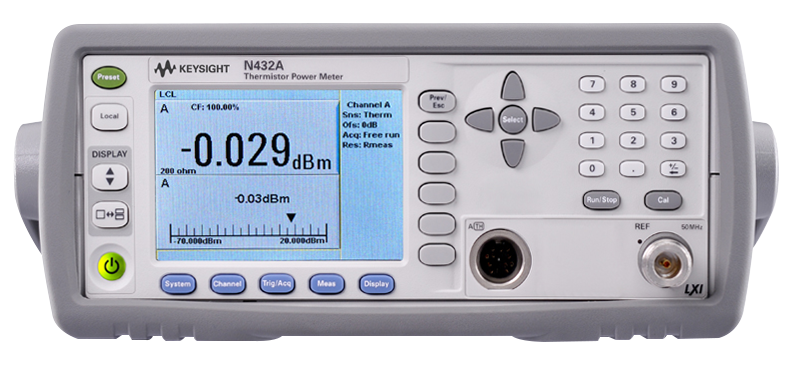
N432A Thermistor Power Meter



Discover Resources and Insights
Additional Resources for Automated Power Calibration Workflow
Related Use Cases

-
![]()
Learn More
How to Perform Remote RF Power Measurements Over a Network
Perform remote radio frequency power measurements using a LAN power sensor for network-based control, monitoring, and automated data acquisition.
Learn More

-
![]()
Learn More
How to Add RF Power Measurements to Field Analyzer Workflows
Add radio frequency power measurements to field analyzer workflows using a USB power sensor for direct power verification without a separate power meter.
Learn More
-
![]()
Learn More
How to Monitor RF Power Across Distributed Test Locations
Monitor radio frequency power across distributed test locations using LAN power sensors for remote measurement, network control, and data acquisition.
Learn More

Get in Touch with One of Our Experts
Need help finding the right solution for you?