What are you looking for?
Ten Tips for Making Your Best
Power Integrity Measurements
Measure Power Integrity with Higher Confidence
This application note shares ten practical techniques for measuring and analyzing DC power supplies with higher confidence. You’ll learn:
Why a baseline noise floor matters when measuring small AC signals riding on DC rails, and how to run a null measurement.
How bandwidth limits, attenuation, and probe offset choices can change measured ripple and noise results on a power rail.
How measurement loading can alter the supply under test and when a 50 Ω measurement path can become a problem.
How fast Fourier transform (FFT) analysis and triggering methods help isolate switching components and coupled noise sources on the rail.
Please complete the form and download 10 Tips for Making Your Best Power Integrity Measurements.


Power Integrity Insights, Accelerated by the MXR
The power integrity software for the MXR oscilloscope, quantifies interactions between DC power supplies and periodic switching signals. By modeling supplies as aggressors or victims, it reveals how power and digital signals would perform without unwanted coupling, helping you quickly identify and address power integrity issues.
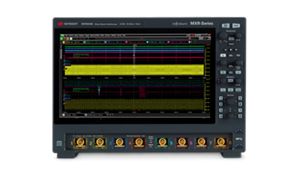
Combine the MXR's low-noise measurement architecture and hardware-accelerated analysis with the power integrity software to deliver fast, reliable results. With up to 6 GHz bandwidth, up to 8 analog channels, and a fast 16 GSa/s sample rate, the MXR streamlines power integrity debug and validation.

Want Help or Have Questions?