How to Perform PV Inverter Testing
Simulating PV arrays to test MPPT algorithms and circuits
Testing PV inverters requires engineers to verify the performance of the inverter’s maximum power point tracking (MPPT) algorithms and circuits. MPPT algorithms are complex, and under-the-sun testing at different temperatures and irradiance conditions is difficult, expensive, and time-consuming. The engineers also need to load and measure the output power of the PV inverter.
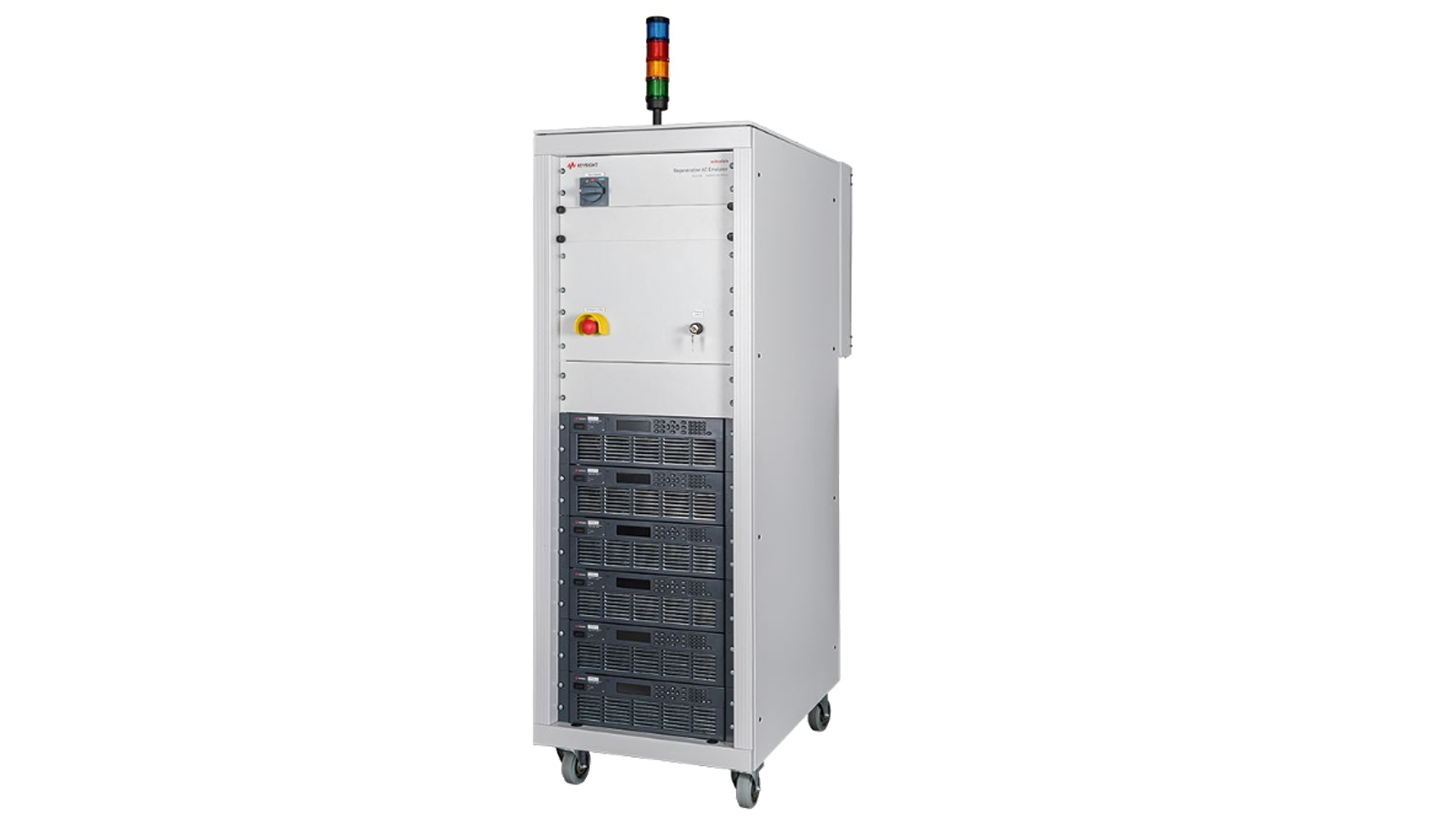
Escape the unpredictability of local weather conditions by using a PV / solar array simulator. Use a programmable DC power source to help simulate real-world PV / solar arrays, and test them against various environmental factors such as temperature, irradiance, age, and cell technology. Make sure to test the inverters according to the industry standards, such as EN50530, which provides a procedure for measuring the efficiency of MPPT. Use an AC / grid emulator to load and test the inverter’s output.
PV inverter test solution
See demo of the PV inverter test
Explore products in our PV inverter test solution
-

![]()
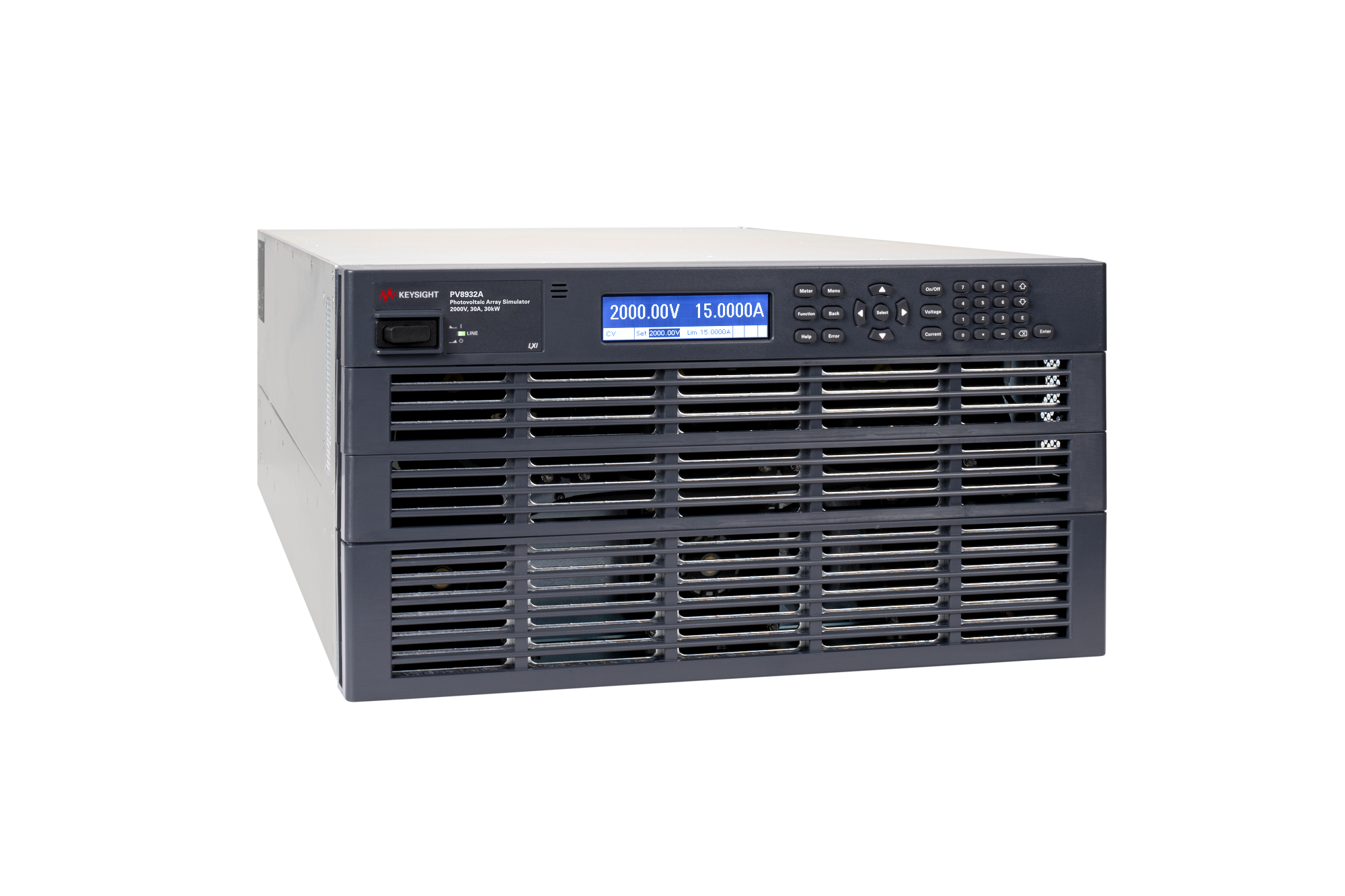
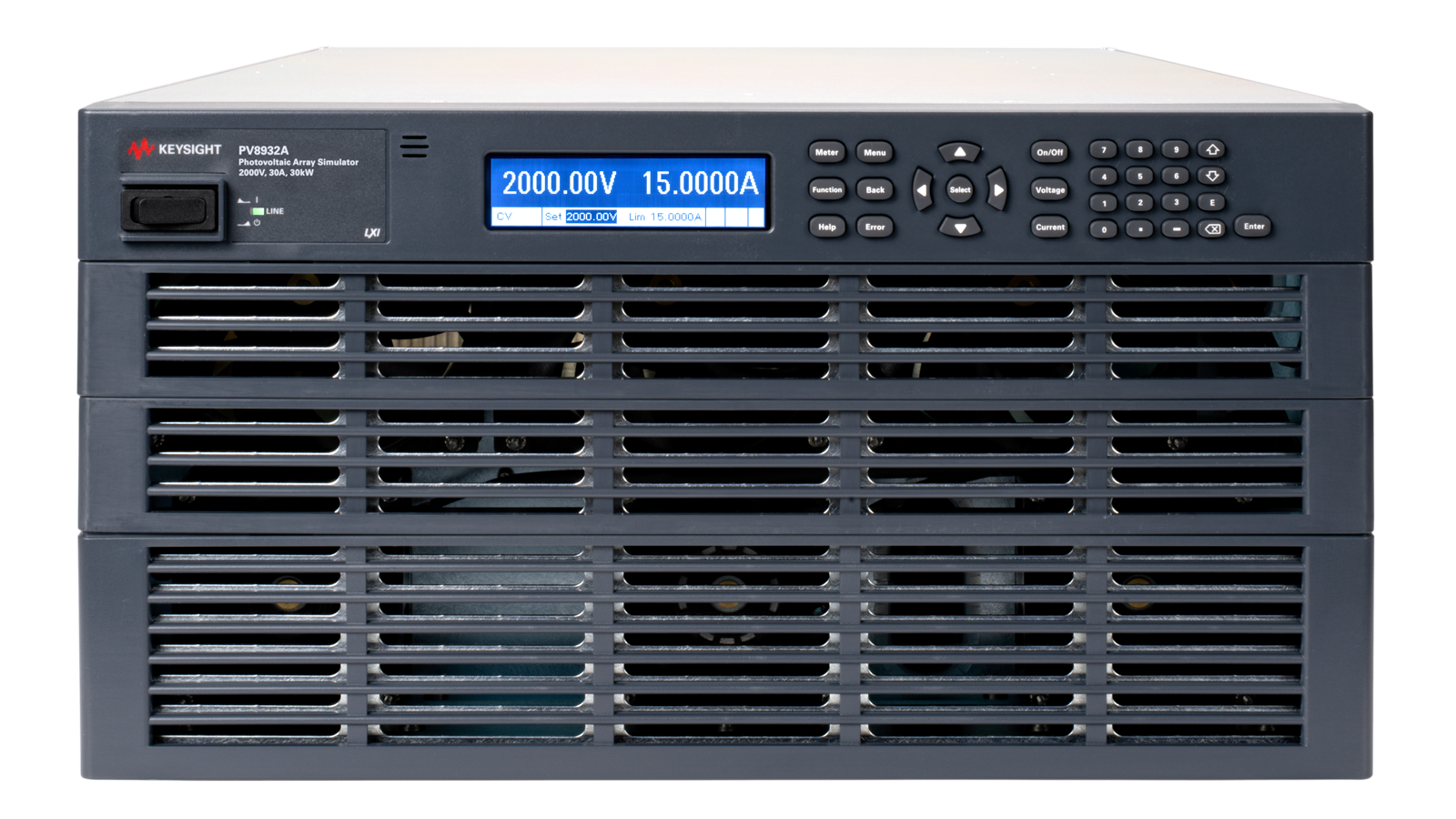
PV8932A Photovoltaic Array Simulator, 2000 V, 30 A, 30kW, 400/480 VAC
-

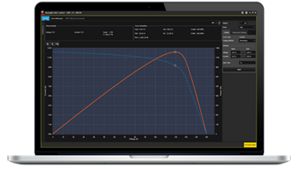
DG9112A Advanced Photovoltaic 12-Input Inverter Test Software
-
![]()
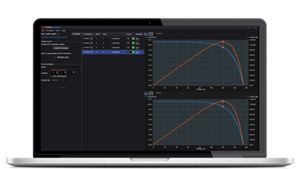
DG8901A License For Automated EN50530 Static and Dynamic MPPT Efficiency Testing
-
![]()
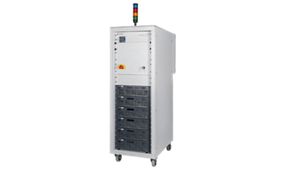
SL1213A Scienlab Regenerative AC Emulator, 1200 VAC, 65 A, 90 kVA, 3‑Phase



Discover resources and insights
Additional resources for PV inverter testing
Related use cases
-
![]()
Learn More
How to Benchmark 5G Devices
Benchmarking a 5G device means subjecting it to a wide range of network signaling and radio channel conditions. Learn how to set up a test to emulate real-world network conditions and equipment to stress your 5G device and verify its performance.
Learn more

-
![]()
Learn More
How to Test 5G NR MIMO
MIMO characterization requires a channel emulation system to measure fading and multipath. Learn how to set up EVM measurements for a 2x2 5G NR MIMO signal in the 28 GHz FR2 band and debug similar emerging high-band mmWave applications.
Learn more
-
![]()
Learn More
How to Validate C-V2X Device Performance
Validating C-V2X device performance requires automotive original equipment manufacturers (OEMs) to perform functional, protocol, and RF measurements against evolving standards. Learn how to set up a test to validate C-V2X device performance of both Uu and PC5 interfaces.
Learn more



-
![]()
Learn More
How to Form and Cycle Lithium-Ion Cells
Forming Li-ion cells requires a multistep charge-discharge process to form a high-quality solid electrolyte interphase SEI layer. Learn how you can charge, discharge, and accurately measure li-ion cells with a scalable, easy-to-configure cycling solution.
Learn more
-
![]()
Learn More
How to Test Automotive ECU Power Performance
Ensuring the performance of automotive electronic control units (ECUs) requires rigorous testing against various operational conditions to meet compliance. Learn how autoranging power supplies can help ensure the automotive ECU power performance is reliable and safe.
Learn more
-
![]()
Learn More
How to Test Battery Performance in E-Mobility Vehicles
Testing the battery performance of a low-power e-mobility vehicle requires emulating the power source in various operating conditions. Learn how to test the battery performance with a system power supply and software to gain insights into the device under test (DUT) performance.
Learn more

Get in touch with one of our experts
Need help finding the right solution for you?