


Why Use RF System Design?
Choose Keysight RF System Design to make confident architecture decisions earlier, reduce costly hardware redesigns, and accelerate verification. Combine RF and phased array simulation with measurement-based modeling to understand how hardware, antenna, and environmental impairments affect complete system performance. AI assistance, MCP support, and Python APIs simplify modeling, automate analysis, and connect simulation with broader engineering and MBSE workflows. Realistic RF digital twins help you explore design tradeoffs, validate requirements, and move from concept to hardware with greater confidence.
Key Capabilities

Create realistic system models with measurement-correlated RF behavior.

Analyze complex wireless systems with near-circuit accuracy.

Model, optimize, and validate advanced antenna architectures.

Develop baseband, modulation, coding, and signal-processing designs.

Accelerate large simulations with distributed compute resources.

Connect simulation, measurement, test, and enterprise tools.
- Wireless 5G/6G
- Aerospace: Non-Terrestrial Networks
- Aerospace: SATCOM System Design
- Aerospace & Defense: Radar/EW
Wireless 5G/6G
RF System Design generates training datasets for your neural network algorithms, incorporating your trained models into advanced 5G and future 6G communication system simulations. RF System Design simulations not only create valuable training data but also evaluate trained models, seamlessly integrating AI/ML to address optimization challenges.
Aerospace: Non-Terrestrial Networks
The 5G New Radio (NR) simulation library facilitates comprehensive end-to-end physical layer system simulations, accommodating diverse NTN deployment scenarios. The 5G channel model and an advanced transceiver element offer a detailed representation of the satellite link's propagation characteristics. These characteristics encompass large-scale and fast-fading modeling, large path delays, frequency Doppler Shift effects, and the ability to visualize satellite trajectories.
Aerospace: SATCOM System Design
The W4815B System Design, Satellite bundle gives you all the tools you need to design RF and baseband systems for satellite applications such as commercial communications, 5G NTN, and military comms and imaging. It includes the RF, Comms/DSP, and Phased Array simulators, as well as the Satellite Comms Library, the 5G and Cellular Library, the DPD Design Kit, and the STK Link.
More Resources
- WHITE PAPERSAdvantages System - Level Design Delivers for Phased - Array Development
- WHITE PAPERSView Download Boosting Phased Array Models: Power Amplifier Load Pull and Active Impedance
- LEANRING HUBSPhased Array Antenna Design and TestLearn the fundamentals of building a simulation and validation workflow.
Aerospace & Defense: Radar/EW
The W4811B System Design, Aerospace Defense bundle gives you all the tools you need to design RF and baseband systems for radar. It includes the RF, Comms/DSP, and Phased Array simulators, as well as the Aerospace Defense Library, the Aerospace Defense Designer, and the STK Link.
- Data Flow Engine
- Advanced RF Analysis Engine
- Phased Array Analysis Platform
Data Flow Time-Domain Simulation Engine
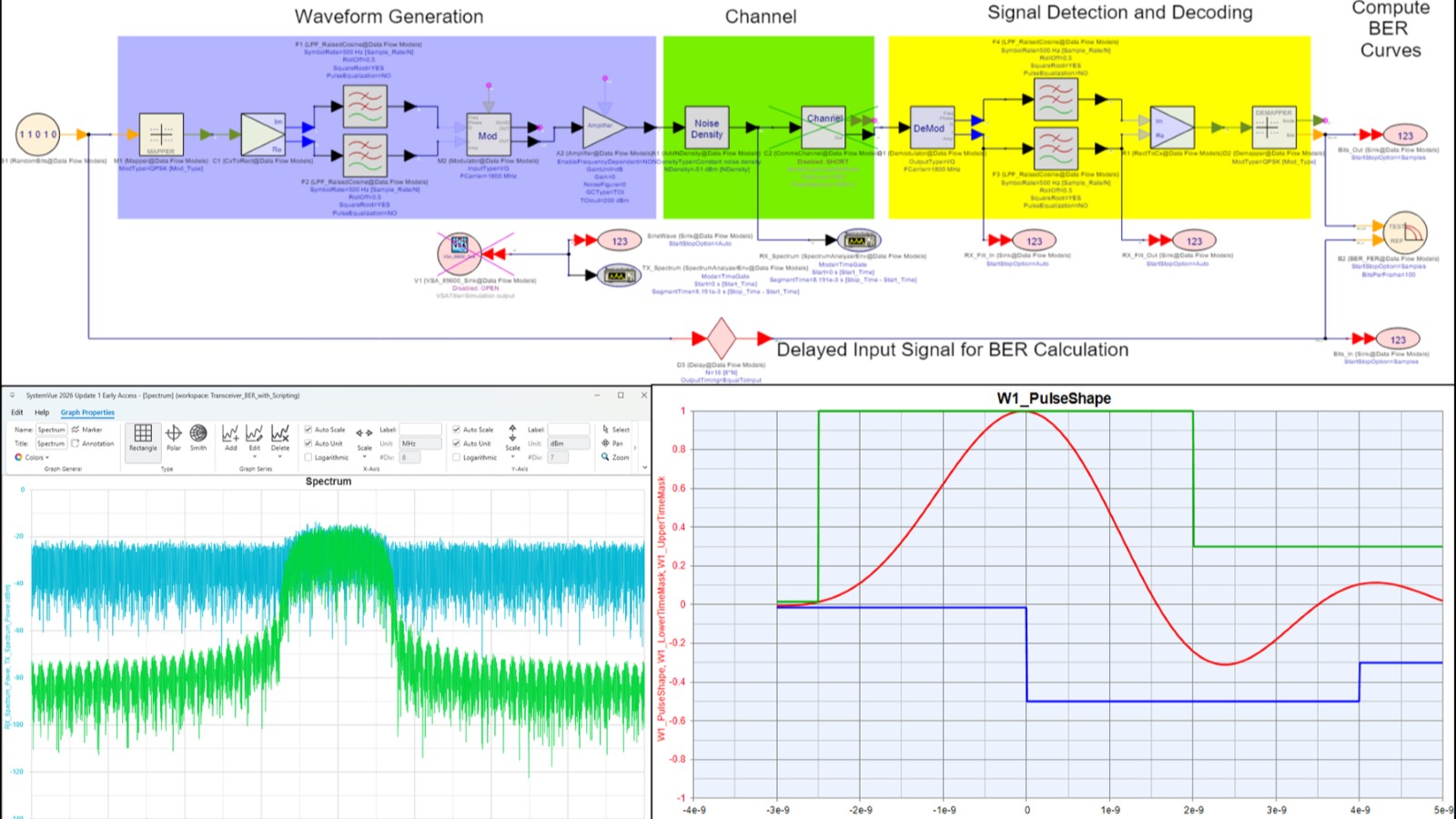
The SystemVue Data Flow engine provides a scalable time-domain simulation environment for mixed RF and baseband system modeling. Built on synchronous data-flow technologies, the engine supports realistic simulation of communications DSP, adaptive signal processing, AI-assisted algorithms, and hardware-aware wireless architectures using standards-based and custom waveforms. Integrated support for realistic RF impairments, phased-array effects, propagation channels, and hardware-aware behavioral models enables accurate end-to-end evaluation of modern 5G Advanced, NTN, Wi-Fi, radar, ISAC, and emerging 6G systems under real-world operating conditions.

Advanced RF Analysis Engine
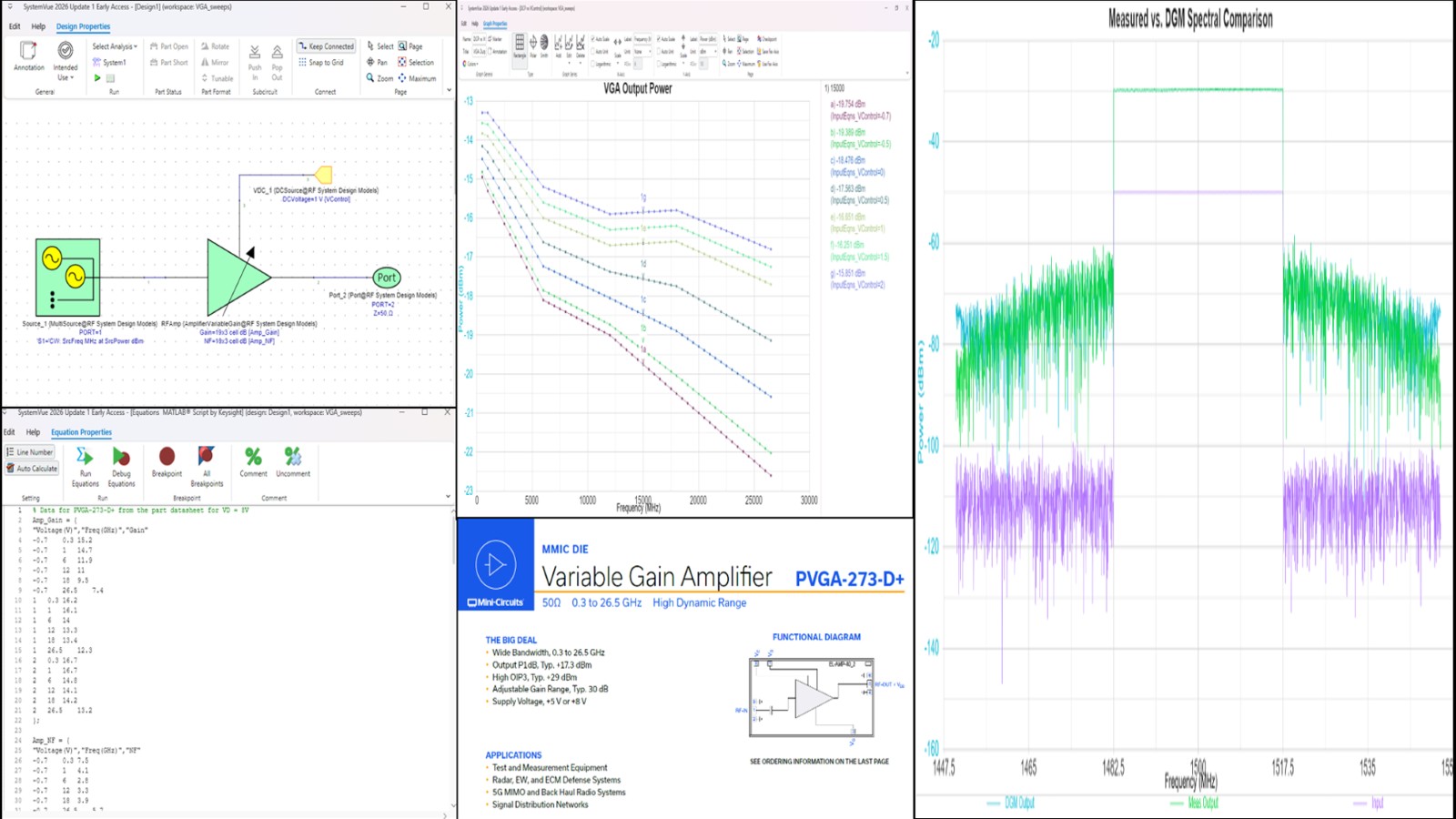
The Spectrasys II RF analysis engine is built on a modern modular RF architecture, supporting multidimensional RF modeling through Multi-Independent Parameter (MIP) scheme, enabling accurate representation of RF device behavior across frequency, power, temperature, bias, and operating conditions. The engine combines measurement-driven behavioral modeling, equation-based linear models, and dynamic RF configuration capabilities to accurately simulate nonlinear RF impairments, spectral regrowth, phase noise, leakage paths, active impedance effects, and wideband signal interactions within realistic system environments. Advanced measurement-correlated workflows, including Dynamic Gain Models (DGM) and enhanced mixer modeling, allow engineers to import measured hardware data and reproduce real-world RF behavior with strong correlation to laboratory measurements while significantly accelerating RF architecture exploration and validation.

Phased Array Analysis Platform
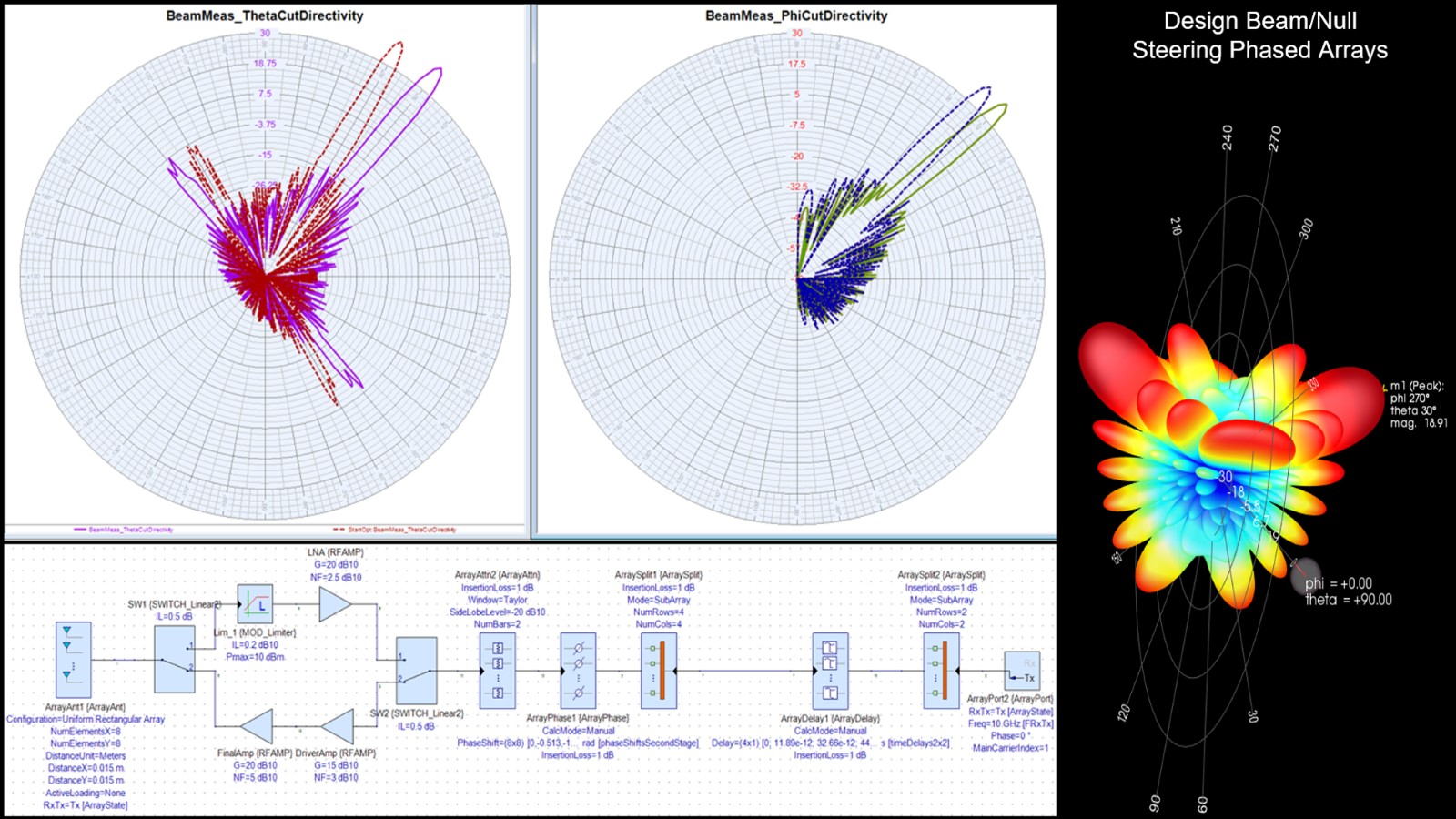
The Phased Array Analysis engine enables scalable simulation and optimization of advanced phased-array, massive MIMO, radar, satellite payload, and electronically steered antenna systems within a unified RF digital twin environment. Intelligent phased-array modeling technologies dramatically simplify development of large array architectures by automatically replicating RF signal paths based on splitter and combiner stages, allowing engineers to represent systems containing hundreds or thousands of antenna elements using compact and intuitive schematic structures. The platform supports realistic modeling of phased-array effects including mutual coupling, active impedance interactions, beamforming quantization, calibration errors, nonlinear RF impairments, hybrid beamforming, and adaptive beam steering.

- Agentic-AI Aided RF Design
- Linux and Windows OS
- High-Performance Computing (HPC)
Agentic-AI Aided RF Design, Optimization and Automation
SystemVue enables a new generation of agentic AI-driven design workflows by combining open Python APIs, realistic RF digital twins, and scalable HPC infrastructure. AI agents can autonomously configure simulations, explore large design spaces, optimize phased arrays, RF front ends, NTN links, and communication systems, while continuously evaluating performance metrics and validating results against measurement-based models. By automating complex design, optimization, and verification tasks, SystemVue allows engineers to focus on system-level objectives while AI accelerates innovation, improves design quality, and significantly reduces development time.
Linux and Windows OS


High-Performance Computing (HPC)
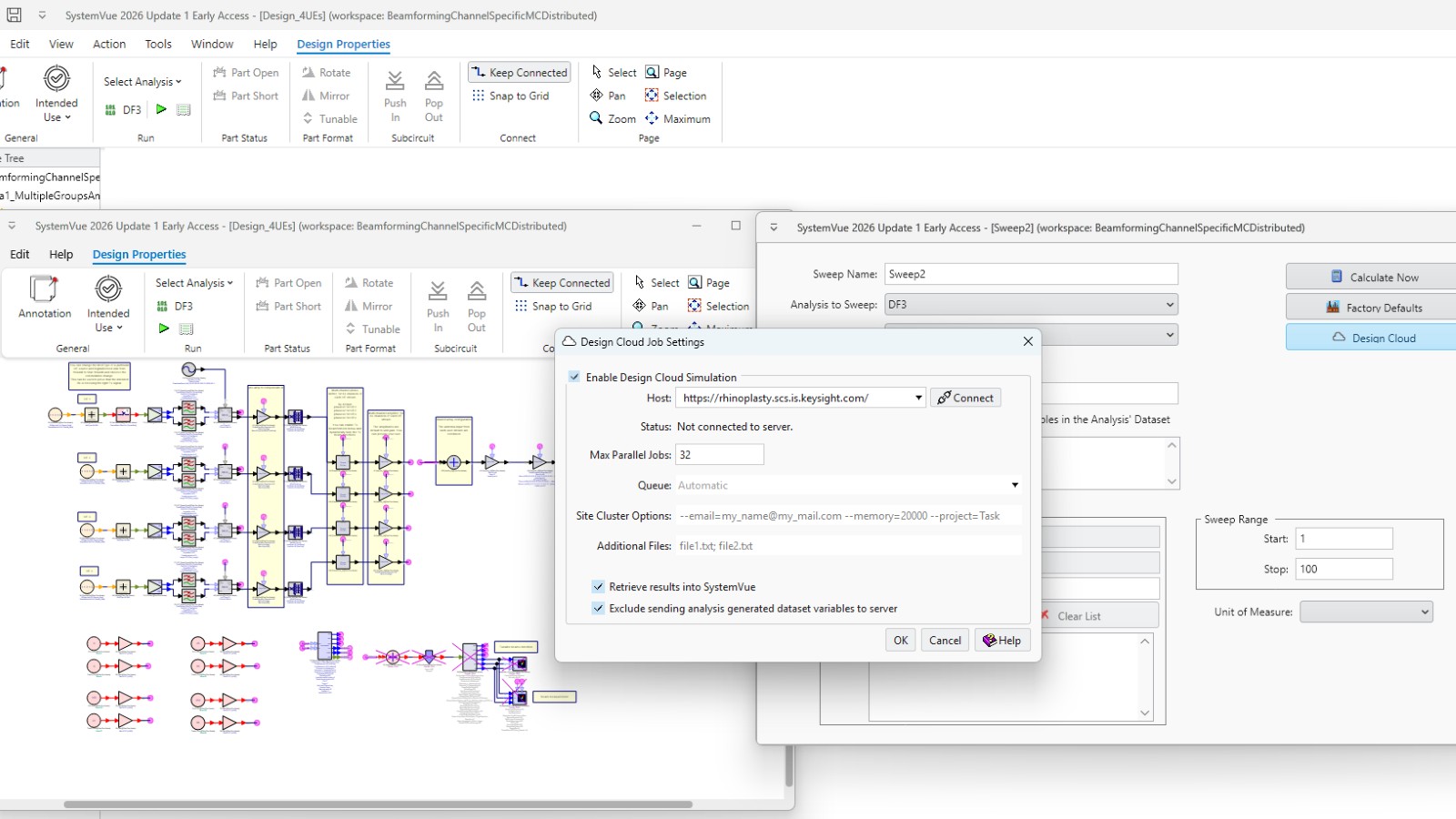
The W4581E HPC Design Cloud accelerates large-scale RF, phased array, and Data Flow simulations through scalable distributed computing and automated workload management across local servers, compute clusters, and cloud infrastructures. The platform enables engineers to efficiently execute parameter sweeps, Monte Carlo analysis, design-space exploration, and large phased-array simulations while automatically distributing jobs across available computing resources for maximum simulation throughput and efficiency. Integrated workflow management capabilities simplify job configuration, scheduling, resource allocation, and results aggregation, allowing engineers to manage complex multi-run simulations as unified datasets.



Vendor Component Libraries
Keysight EDA actively engages with component manufacturers to create model libraries that enable access to the latest models and technologies. Component vendors use Keysight software, hardware, and expertise to develop models for use in electronic design automation (EDA) and system simulation tools. By assisting vendors in this process and using a web-based model delivery approach, Keysight EDA customers can augment their existing libraries with the latest available parts from the industry.
Integrated Design Environment

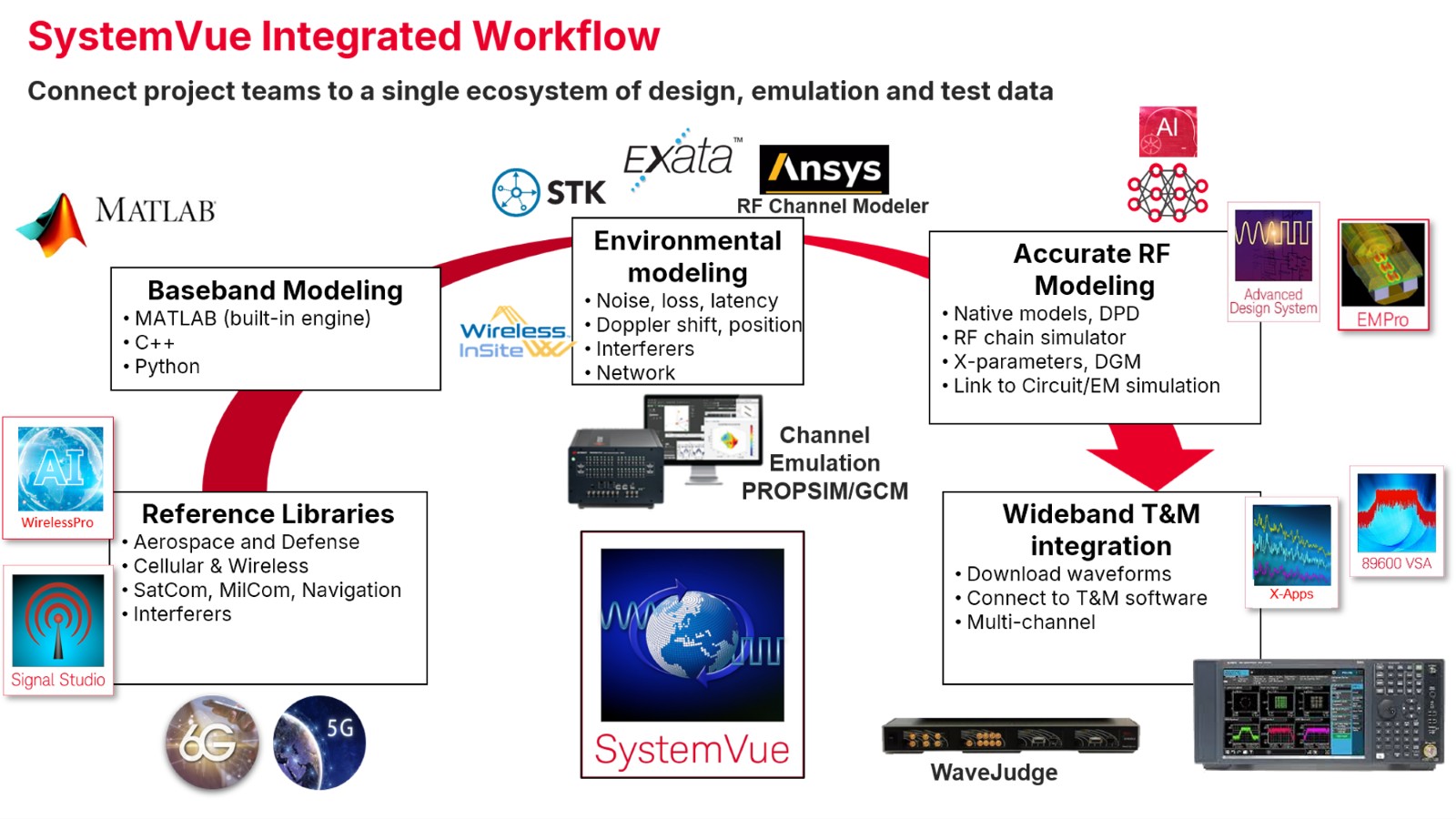
RF System Design provides effortless integration with a wide array of Keysight's software and other enterprise applications, including Signal Studio, VSA, X-App, EXata Network Modeling, Matlab®, Ansys STK, and seamless links to Keysight's cutting-edge instruments, thereby broadening the scope of its applications.
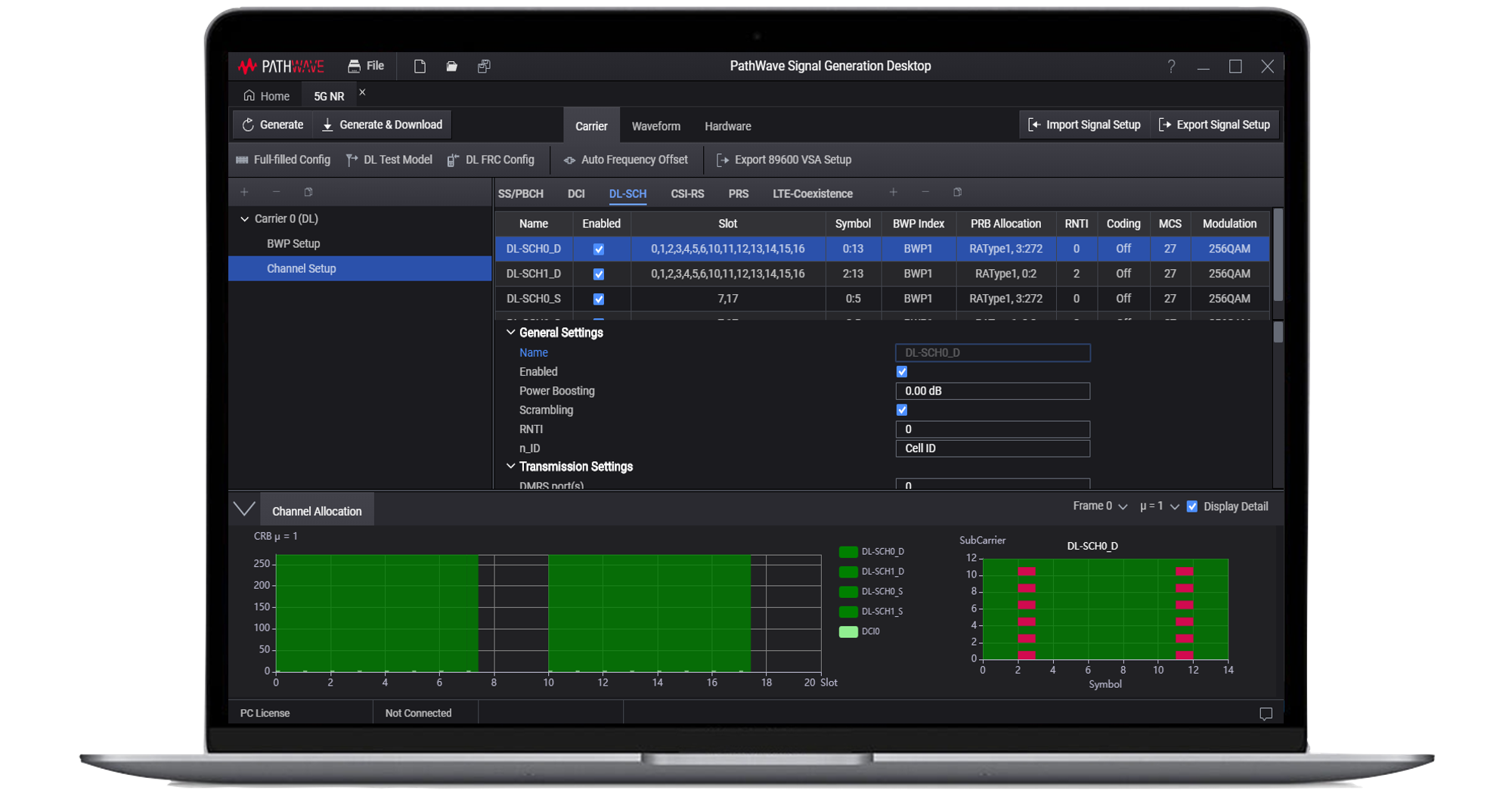
Signal Studio
Signal creation for a wide range of general purpose or standards-based signals.
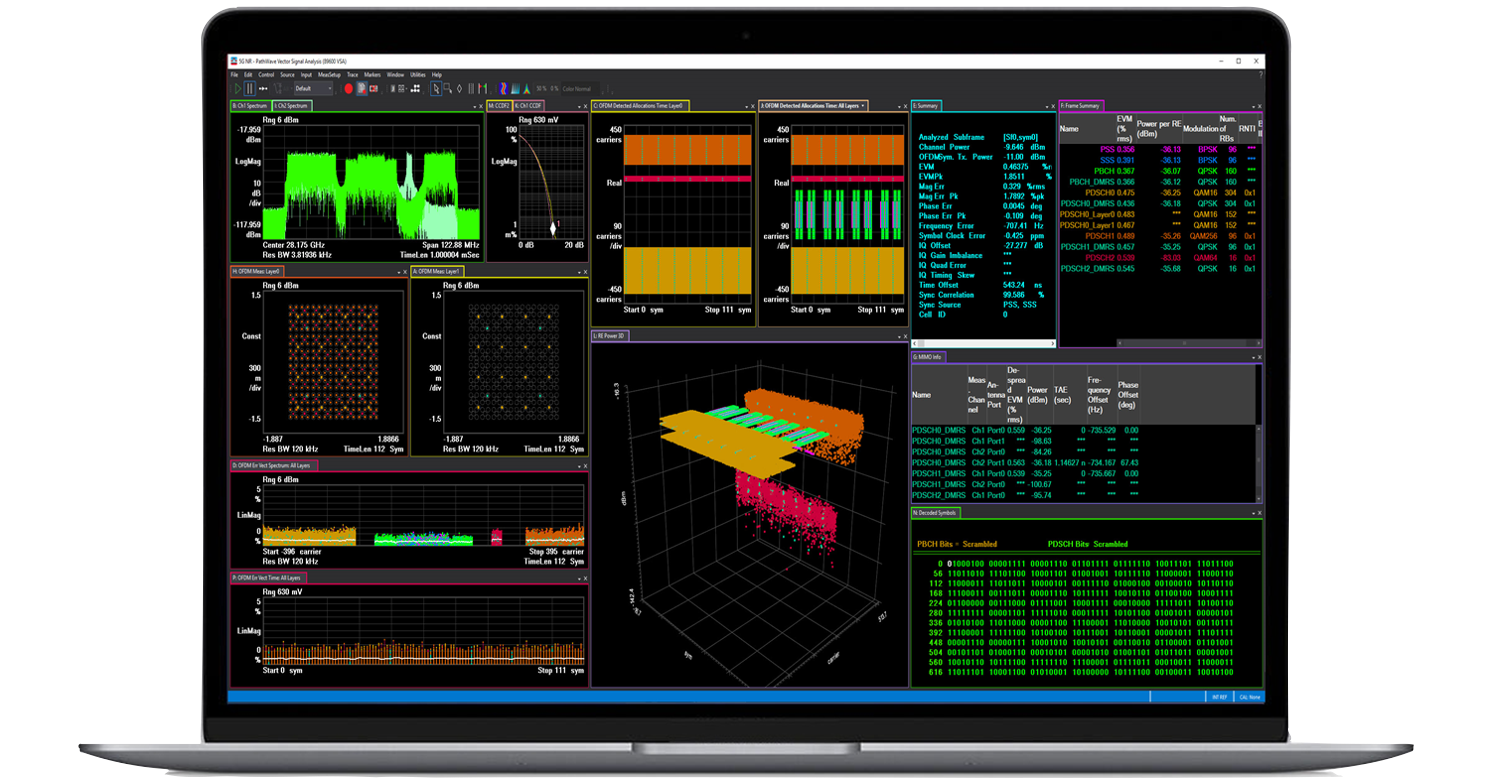
Vector Signal Analysis (89600 VSA Software)
Comprehensive software tool for demodulation and vector signal analysis.
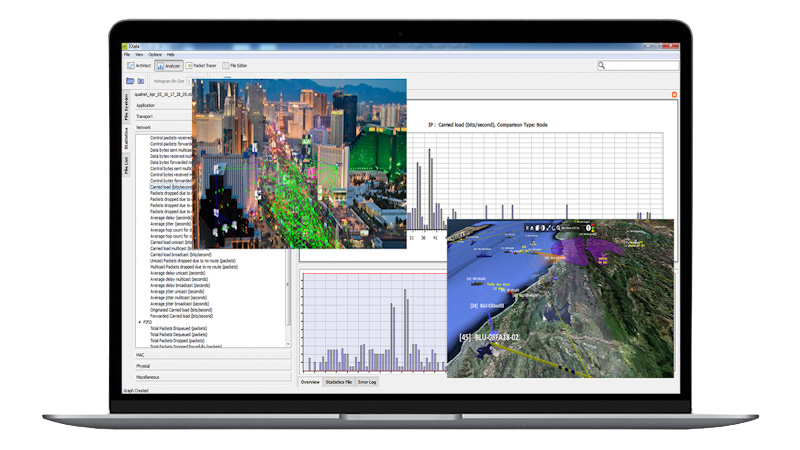
Exata Network Modeling
Digital twin for cyber training and threat modeling.
General Channel Emulation Solutions
From lab validation to real-world radio channel emulation for the most complex fading and interference challenges.

Channel Studio Modeling Software
Real-world radio wave propagation modeling for RF performance testing.

- RF System Explorer
- DPD Explorer
- Modulation Explorer
RF System Explorer
Learn how your circuit design impacts overall system performance with RF System Explorer (RFSE) in ADS. Use Extracted Behavioral Models (EBMs) of your actual ADS designs directly in RF lineup analyses and streamline your design process.
DPD Explorer
Discover how DPD Explorer in ADS helps PA designers tackle efficiency and linearization challenges. See how Power Added Efficiency measurement and Envelope Tracking can boost your amplifier’s performance for wideband applications.
Modulation Explorer
Modulation Explorer enables users to configure various signal formats such as 5G NR, LTE, WLAN, and I/Q user definitions to test their circuit design in ADS. The signal is generated and fed into the circuit design, and measurements are performed on the circuit's output, like Spectrum, ACLR, EVM, etc.
Resources to Get You Started
By combining realistic RF impairments, phased-array effects, propagation dynamics, and measurement-driven behavioral models into one scalable environment, SystemVue helps engineers reduce design risk, accelerate system validation, optimize performance, and significantly shorten time-to-market for next-generation RF and wireless systems.


White Papers
Advantages System - Level Design Delivers for Phased - Array Development

blogs
Designing Phased Arrays: Key Principles, Challenges, and Solutions

eBooks
How to Design and Test a Phased Array Antenna
Application Notes
Hardware-Driven Mixer Behavioral Modeling with the VanDyke Mixer in SystemVue
Application Notes
A Next Generation RF Analysis Engine for High-Fidelity Digital Twin Modeling
Solution Briefs
Engaging New SatCom Missions Hit Aggressive Goals with PathWave System Design
Solution Briefs
Realistic Simulation of 5G/6G NTN RF Systems and Transmission Channels
Application Notes
Radar Development Using Model-Based Engineering (MBE)
Application Notes
Radar Signal Processing Models
White Papers
6G System Design: Realistic Modeling, Simulation and Verification of Next Generation Wireless Systems
Solution Briefs
Boosting Phased Array Models: Power Amplifier Load Pull and Active Impedance
blogs
RF Digital Twins: Why 5G-Advanced and 6G Need Predictive Simulation

Explore EDA Bootcamps for e-learning on specific design topics, including RF Digital Twins, SATCOM Systems, 5GNTN and 6G Research. Combining webinars, videos, application notes, case studies, and blogs, this is a bookmark that you will want to share.


Explore SystemVue Bundles
EDA software bundles provide designers with pre-configured combinations targeted to a specific design workflow.
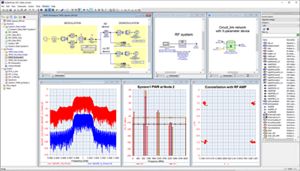

System Design Core, RF, Comms/DSP
Access both the RF and Comms/DSP analyses, allowing RF Link to connect timed dataflow analysis with accurate RF system models.
Access both the RF and Comms/DSP analyses, allowing RF Link to connect timed dataflow analysis with accurate RF system models.


System Design Core, RF, Comms/DSP, Phased Array
Create advanced Phased Array system designs using beamforming and real antenna patterns with modeling for RF and signal processing in time and frequency domain
Create advanced Phased Array system designs using beamforming and real antenna patterns with modeling for RF and signal processing in time and frequency domain


System Design, Aerospace Defense
Complete aerospace defense system development bundle. Includes the RF, Comms/DSP, and phased array simulators as well as the Aerospace Defense Library and Visualization Kit.
Complete aerospace defense system development bundle. Includes the RF, Comms/DSP, and phased array simulators as well as the Aerospace Defense Library and Visualization Kit.


System Design, Satellite
Complete satellite communications system development bundle. Includes the RF, Comms/DSP, and phased array simulators as well as the Satellite Comms Library, 5G and Cellular Library, DPD Design Kit, and STK Link.
Complete satellite communications system development bundle. Includes the RF, Comms/DSP, and phased array simulators as well as the Satellite Comms Library, 5G and Cellular Library, DPD Design Kit, and STK Link.


System Design, WiFi and Connectivity
Complete WiFi and Connectivity system development bundle. Includes the RF, Comms/DSP, and phased array simulators as well as the WiFi and Connectivity Library and the DPD Design Kit.
Complete WiFi and Connectivity system development bundle. Includes the RF, Comms/DSP, and phased array simulators as well as the WiFi and Connectivity Library and the DPD Design Kit.


System Design Core, AMI
Complete HSD AMI model generation bundle. Includes the System Design Core, Comms/DSP simulator, AMI Modeling Kit, and C++ Code Generation Kit.
Complete HSD AMI model generation bundle. Includes the System Design Core, Comms/DSP simulator, AMI Modeling Kit, and C++ Code Generation Kit.
Have Questions? We've Got Answers
RF System Design enables engineers to model, simulate, and validate wireless, radar, satellite, phased-array, and aerospace systems using realistic RF digital twins before building physical hardware.
The platform supports 5G Advanced, 6G, NTN, Wi-Fi, radar, electronic warfare, satellite communications, massive MIMO, phased-array, and aerospace and defense applications.
The software combines measurement-driven behavioral models, high-fidelity RF analysis, realistic impairments, and hardware-aware simulation techniques that closely correlate with laboratory measurements.
Yes. The platform integrates with MATLAB®, Python, Signal Studio, Vector Signal Analysis (VSA), EXata, STK, Wireless InSite, Keysight instruments, and ADS for circuit-system co-simulation workflows.
RF System Design supports scalable cloud and HPC environments, enabling engineers to run large parameter sweeps, design-space exploration, phased-array simulations, and optimization studies efficiently.