What are you looking for?
AI Interconnects
Reimagine AI infrastructure for 1.6T and beyond.
Ensure Reliable Connectivity for AI Interconnects
Validate optical transceivers against the real-world demands and conditions of AI data centers. Scale R&D and production testing for AI-ready interconnects with advanced, low-noise design and test solutions. Ensure 1.6T connectivity by optimizing and validating optical and electrical performance at every layer with AI-optimized test and measurement tools.
Expand Your Knowledge in AI Interconnects

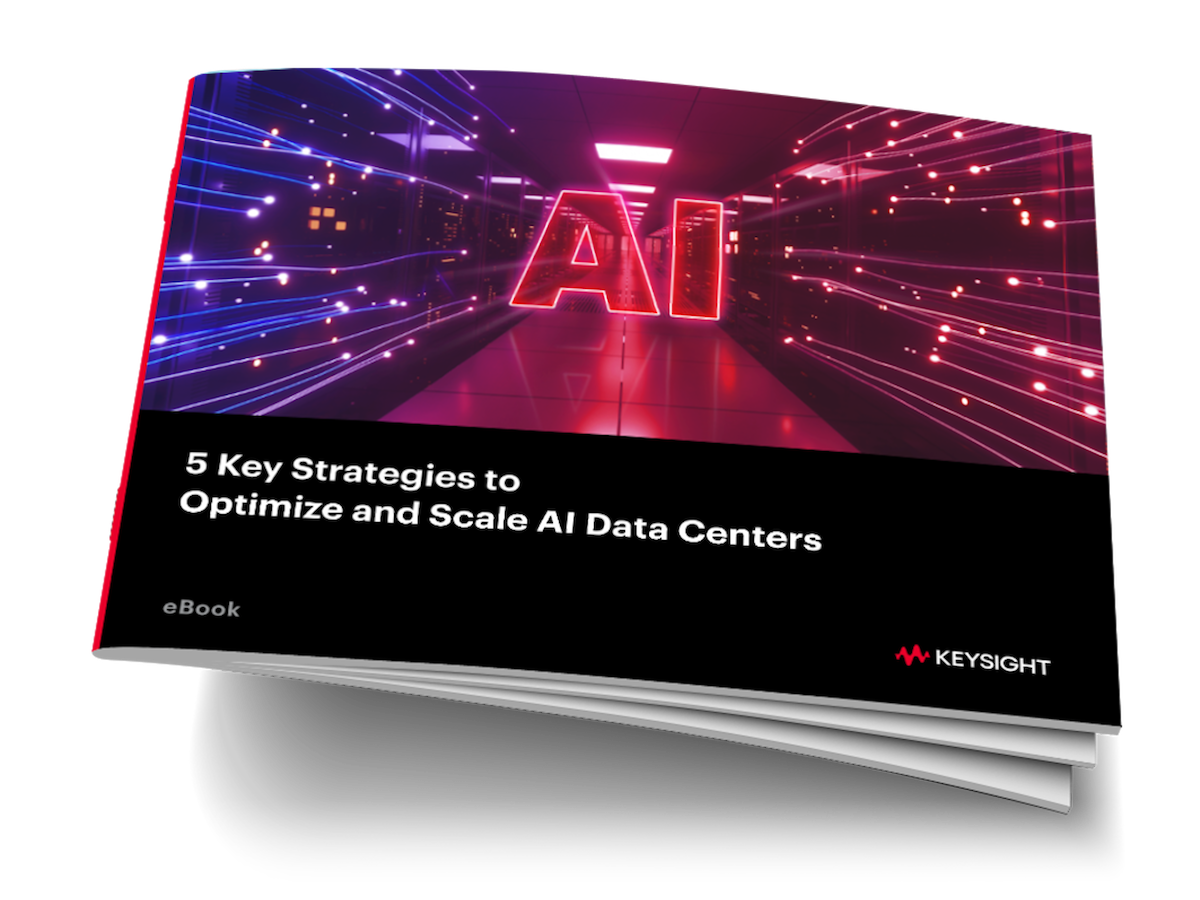
5 Strategies to Optimize and Scale AI Data Centers
AI is transforming industries and driving innovation. However, unique traffic patterns, dynamic workloads, and relentless performance pressures can escalate even the smallest issues into critical problems.
Read this eBook to discover five practical solutions to optimize AI data center performance for modern applications.


800G / 1.6T Data Center Transceiver Test
Meet your data center's need for AI-ready interconnects and 800G and 1.6T speeds. Discover the new technologies you need to support the fast response times and high bandwidth rates of high-speed Ethernet.
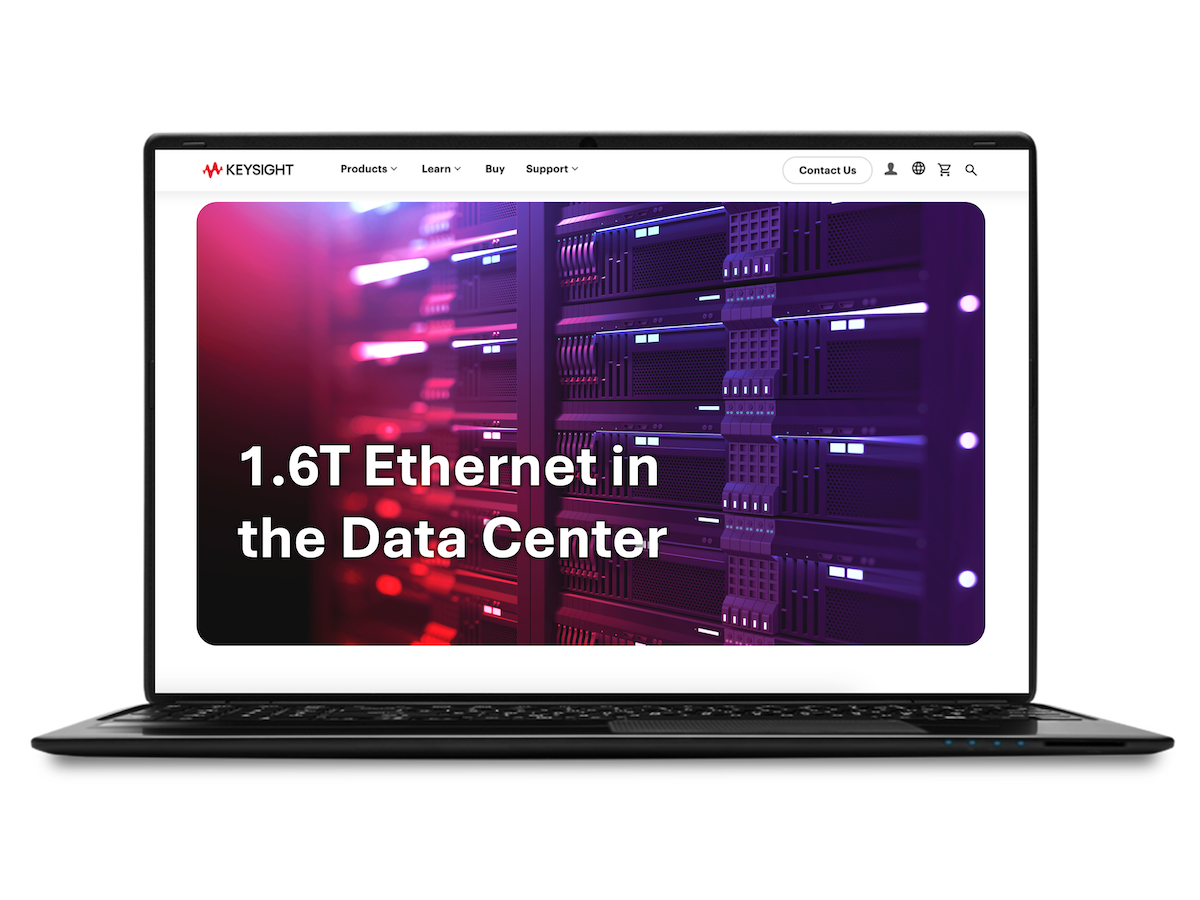
1.6T Ethernet in the Data Center
AI is pushing interconnect speeds higher and higher. As 800G gives way to 1.6T, this course provides valuable insights on enabling 1.6T Ethernet while shedding light on the new electrical and optical technologies enabling 212 Gb/s and 224 Gb/s lane speeds.

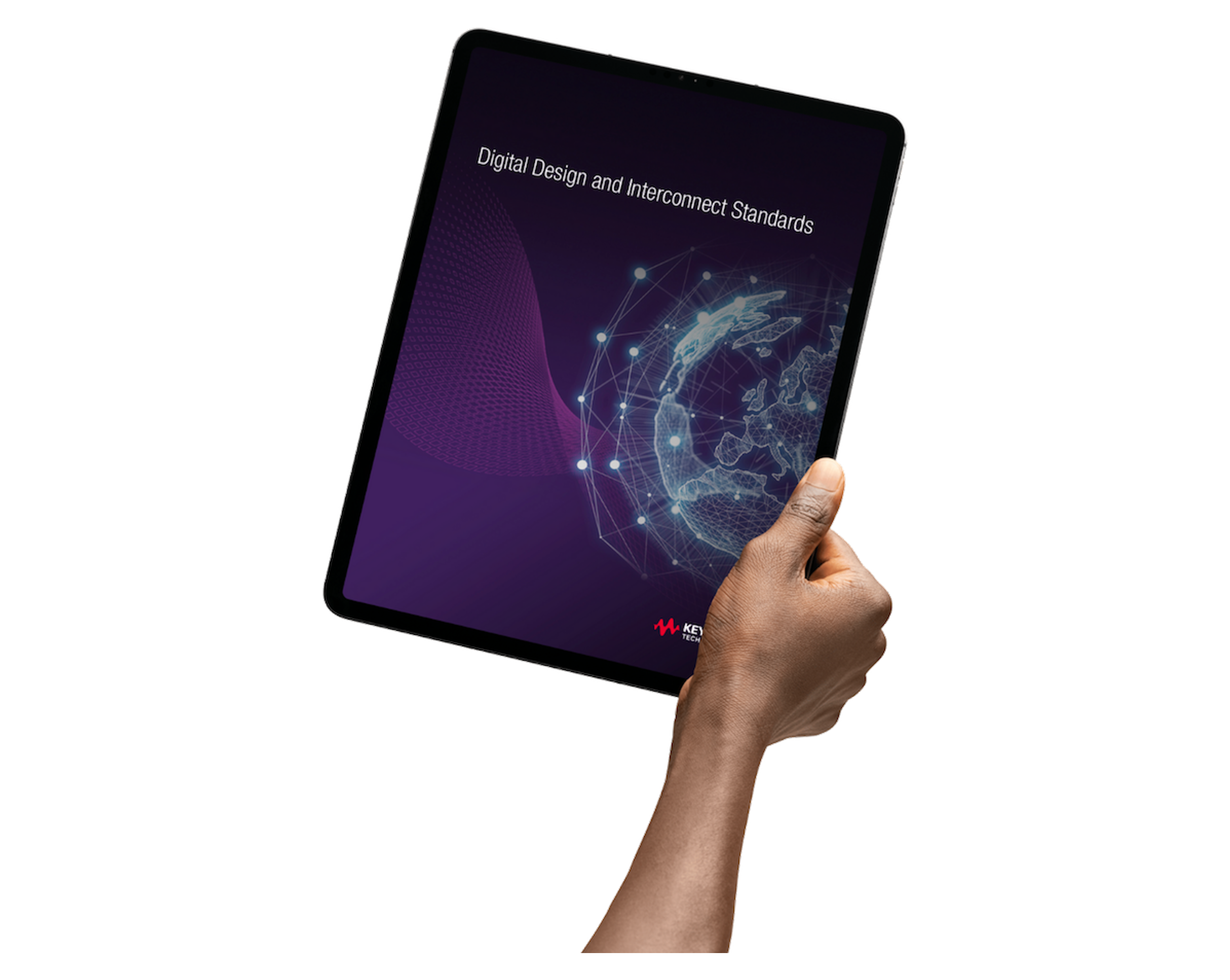
Digital Design and Interconnect Standards
When digital signals reach gigabit and terabit speeds, the unpredictable becomes normal. And when it comes to digital standards, every new generation and technology advancement puts new obstacles in your path. Explore tools for simulation, measurement, and compliance to cut through the challenges of cutting-edge digital designs.
Optimize performance and reliability at 800G and 1.6T speeds
Stay ahead of increasing performance demands for AI interconnects with high-bandwidth, low-noise test solutions for optical transceivers.
Accelerate development of next-gen, AI-ready optics
Fast-track R&D with high-performance, future-proof instruments built to handle multiple generations of data center networking standards development
Maximize test efficiency without compromising accuracy
Streamline compliance and production testing with automation solutions that increase throughput and lower costs without sacrificing quality
Solutions for AI Interconnect Testing

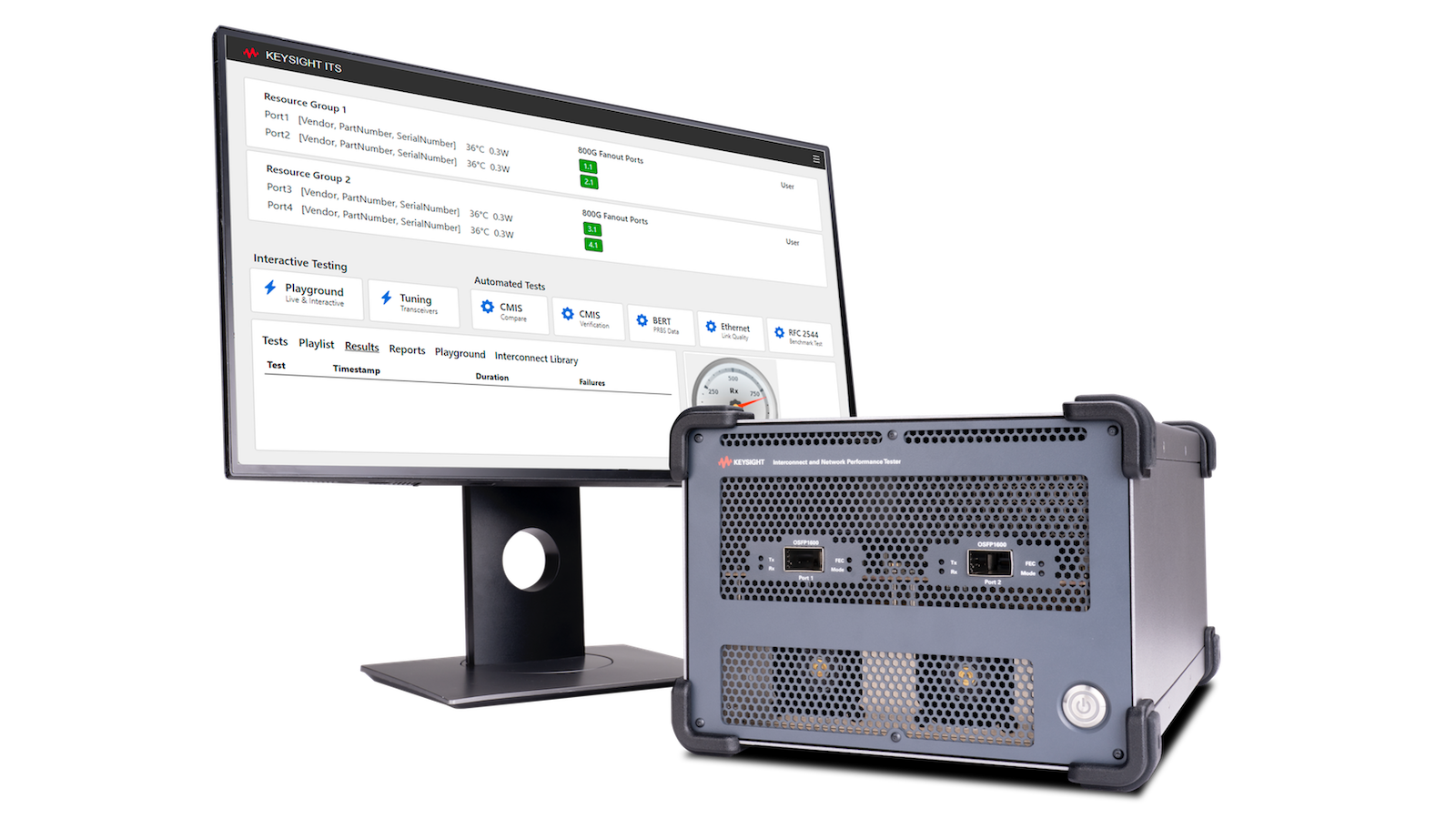
Maximize 1.6T Ethernet reliability and performance
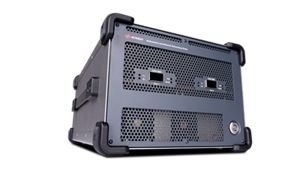
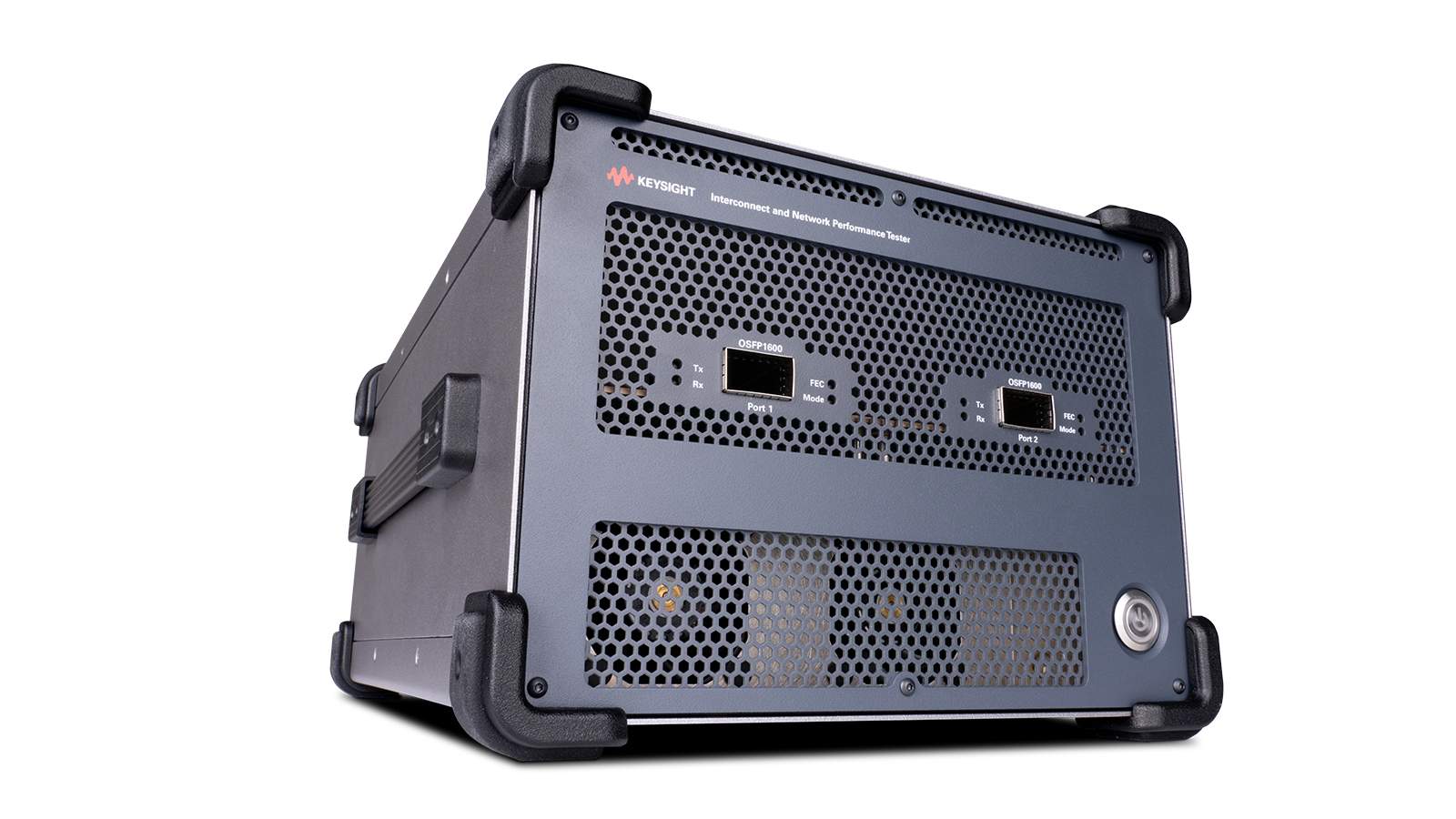
Test leading-edge Ethernet products for AI interconnects and data center networks. With physical (L1) and protocol (L2-3) layer test support, the Keysight Interconnect and Network Performance Tester 1600GE offers unmatched test coverage for optical and active cable interconnects, silicon chips, network equipment, and AI networks.

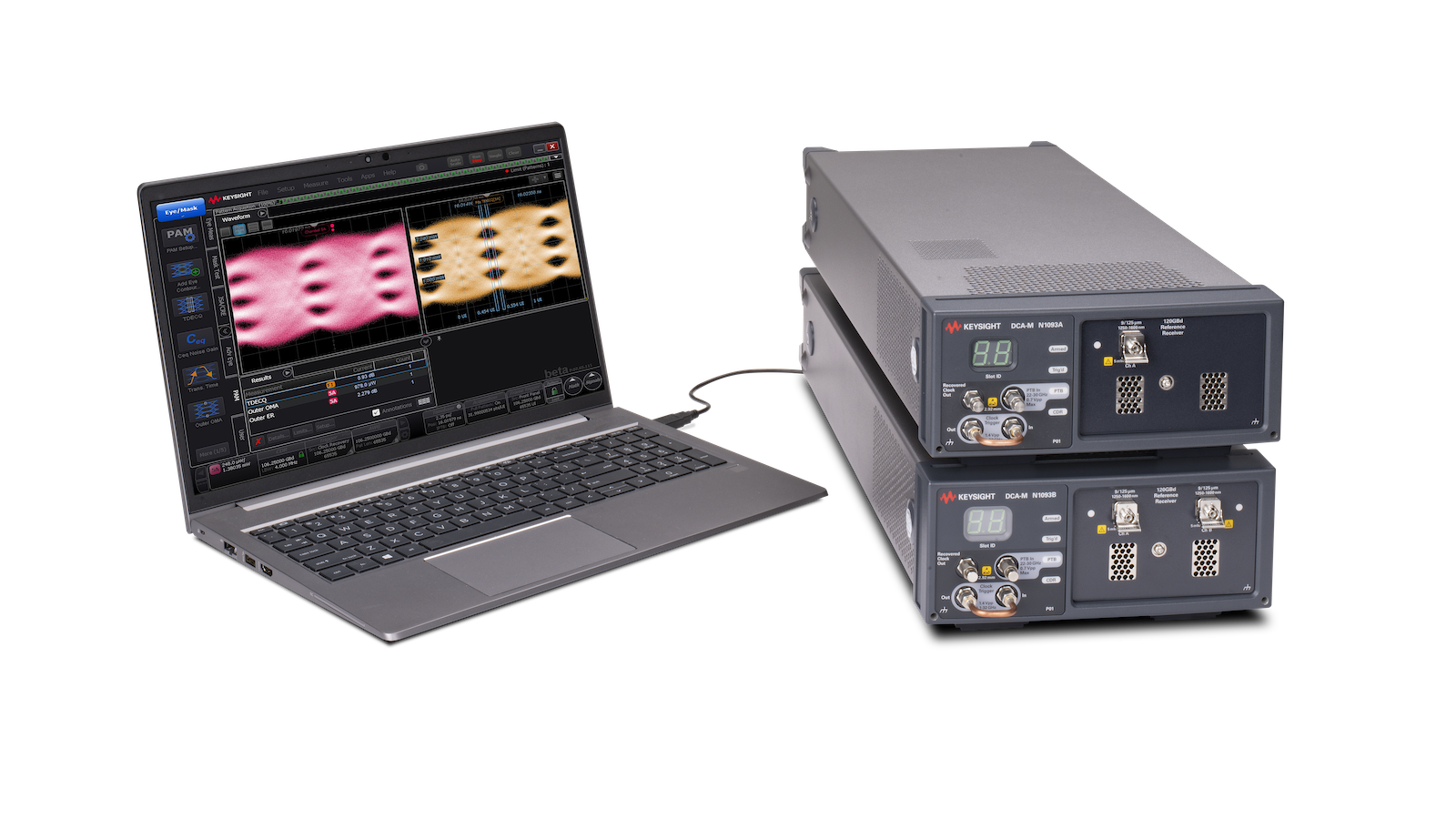
Validate AI interconnects with fidelity and precision
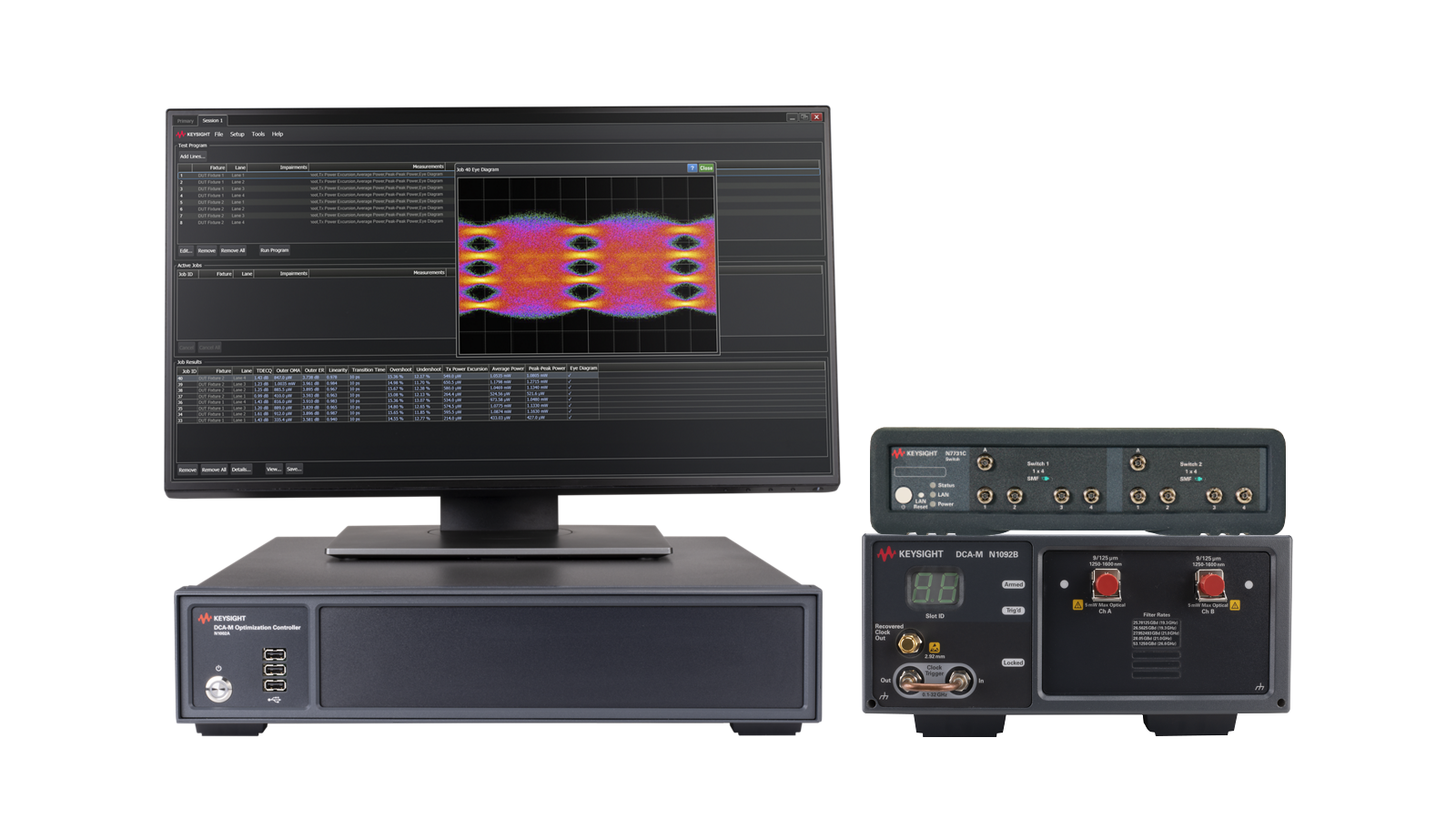
Keysight DCA-M sampling oscilloscopes make 224 Gb/s optical measurements to validate optical transceiver performance for AI data centers. Pair with powerful, flexible optical test optimization software to create efficient high-volume optical transceiver manufacturing test programs.

Prove compliance with AI data center standards
Overcome complex Ethernet test requirements and achieve efficient, accurate optical transceiver compliance with Keysight Bit Error Ratio Testers (BERTs). Analyze advanced receiver signals with high bandwidth, low noise measurements to troubleshoot receiver issues or elsewhere in the link.

Accelerate 448 Gb/s lane rate research and pathfinding
Fast-track research and development for 448 Gbps / 3.2T AI interconnects with Keysight arbitrary waveform generators (AWGs). Generate unique high-bandwidth, low-jitter optical signals using different modulation formats and data sources to test receiver compliance and streamline design validation.
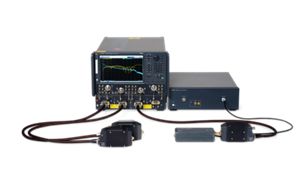

Streamline optical Tx and Rx testing for AI interconnects
Future-proof your test setup for optical receiver and optical transmitter testing. Keysight Lightwave component analyzers offer high bandwidth ranges for testing high baud rate network equipment in return-to-zero (RZ), non-return-to-zero (NRZ), and pulse amplitude modulation (PAM) formats.
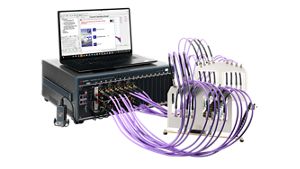

Improve signal integrity measurements for 1.6T
Choose the same tool signal integrity labratories use for R&D prototyping and high volume manufacturing. With 16- or 32-port s-parameter measurements and multi-port channel analysis, the Keysight Physical Layer Test System (PLS) 2025 mitigates crosstalk issues that cause bit errors in 1.6T AI interconnects.
1.6T is the Future of Ethernet. Are You Ready?
The AI-driven explosion in data center traffic is well underway. Before long, even 800G won't be enough. 1.6T is the future of Ethernet, and the future is now.
As standards and compliance tests continue evolving, technology must stay ahead of the market. Make sure you’re ready with expert predictions, advice, and test solutions. Listen in as industry experts discuss the latest Ethernet developments, what to expect from 1.6T, challenges the market must overcome, and comprehensive test solutions for the technology.


Test Setups for Validating AI Interconnects
Validate Ethernet Interconnects in AI Data Centers
Ensure high-quality data transmission and error correction.

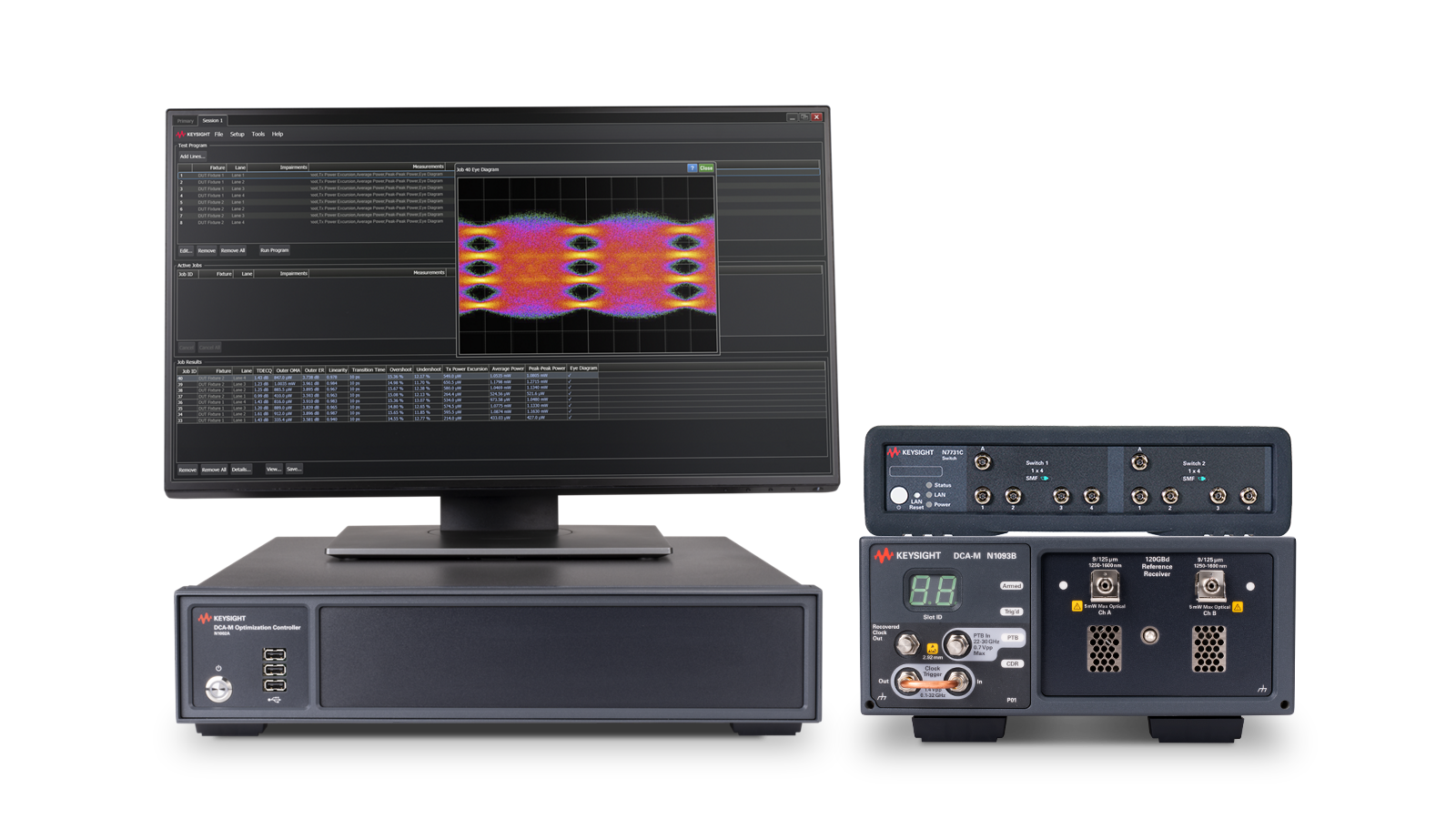
Optimize 1.6T Optical Transceiver Testing
Scale 1.6T optical transceiver production with fast, efficient transmitter dispersion and TDECQ measurements.
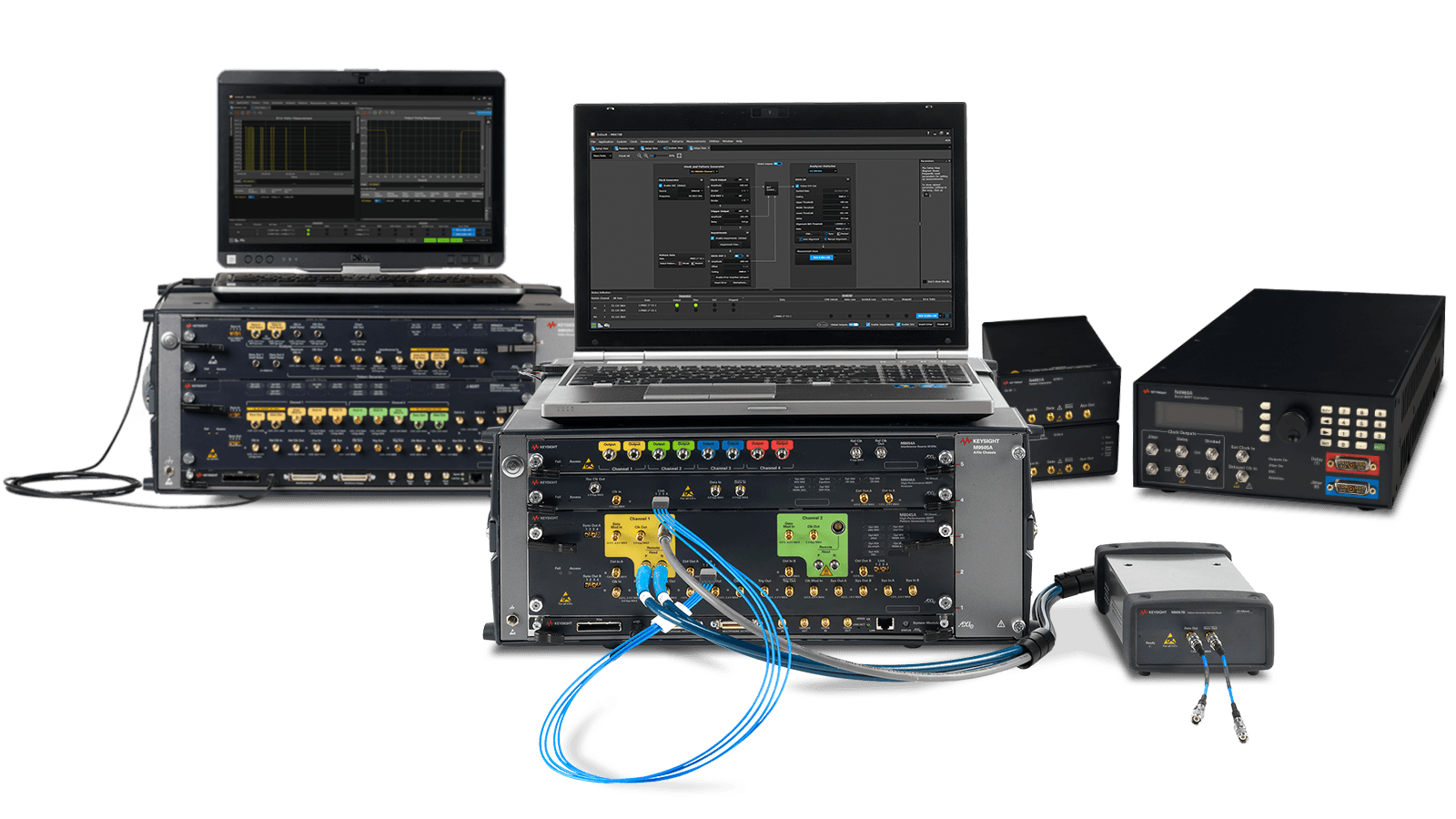
Analyze PAM4 Receiver Signals
Use error analysis to gain insight into PAM4 receiver signals.
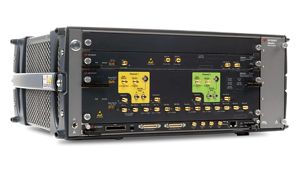

Evaluate FEC Performance
Test high-speed Ethernet links by evaluating error-correction mechanisms.
Optimize 800G Optical Transceiver Tests
Increase throughput to lower the cost of high-volume testing.

Test 800G Electrical Receiver Conformance
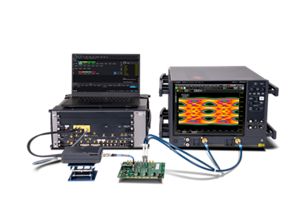
Prove conformance to IEEE and OIF specifications at 53 GBd PAM4.
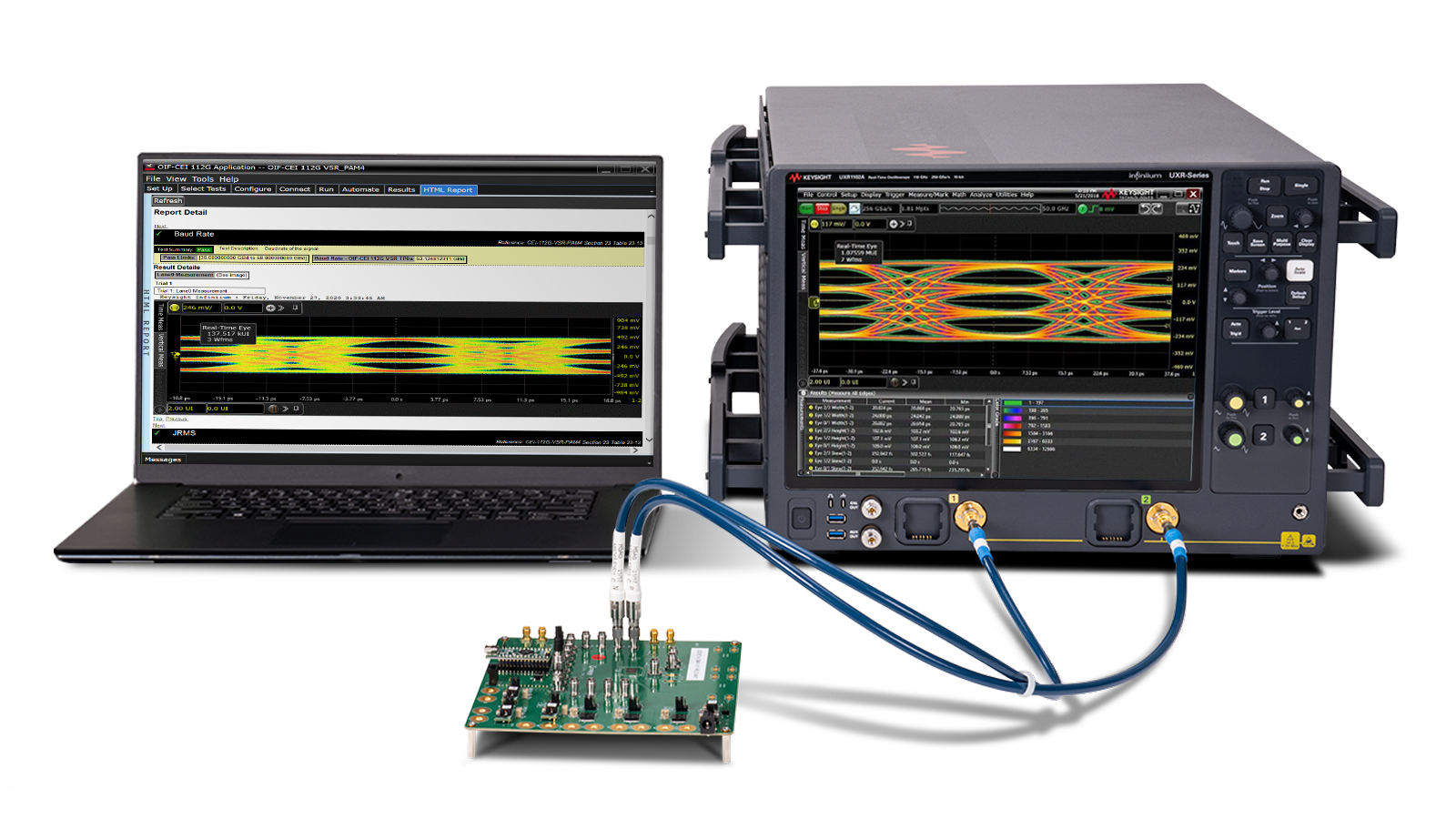
Test 800G Electrical Transmitter Conformance
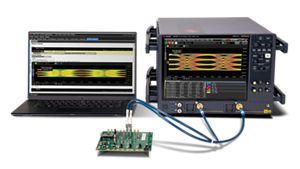
Automate the test process and provide fast, accurate interoperability results.
Learn More About AI Interconnects











Frequently Asked Questions: AI Interconnects
An interconnect (transceiver) is a device that links servers to switches within a network, enabling data transfer between components. For short distances, the interconnect may be electrical (copper) or optical. For longer distances, optical interconnects are typically used due to their higher performance and lower signal loss over extended lengths.
While an AI interconnect (used in a machine learning data center environment) will not be any different from a similar interconnect used in the inference (traditional data center environment), the load / utilization on the interconnect will be much greater over extended periods of time. The selection of interconnects for a machine learning AI deployment should be done carefully to ensure performance and longevity in the network. Attention should be paid to measurements such as Bit Error Rate (BER) to ensure there is sufficient headroom for sample-to-sample variations among production interconnects.
An interconnect in a network connects servers to switches or switches to switches. For a high-performance AI network, it is important that the workloads are running in an optimized environment. High-speed, quality interconnects running in an optimized network help ensure that in an AI network, workloads are not waiting on the network for data.
There are two primary families of interconnect technologies used in AI systems: off-chip and on-chip interconnects.
Off-chip interconnects handle communication between separate components — such as servers, switches, and accelerators — often across boards or racks. Leading technologies in this category include Ethernet with RDMA / RoCEv2, InfiniBand, PCI Express (PCIe), Compute Express Link (CXL), and NVLink.
On-chip interconnects operate within a single chip or package, enabling ultra-fast communication between internal components like cores and memory. Key technologies in this family include High Bandwidth Memory (HBM), Network-on-Chip (NoC), and Co-Packaged Optics (CPO).
On-chip interconnects are limited to communications within components such as GPUs, CPUs, and memory on a single chip. These are extremely short, fast, and power-efficient communication paths. Off-chip interconnects can span a data center and beyond. They are fast, but not as fast as short, on-chip interconnects. However, they are more fault-tolerant and are optimized for system-level communications.
Innovations in AI interconnects include Coherent Optics, Linear Pluggable Optics (LPO), Co-Packaged Optics (CPO), Compute Express Link (CXL), and advanced interconnect network topologies.
Want help or have questions?