How to Transfer Frequency Sweep Lists Using APIs

Transfer and Verify Frequency Sweep Lists
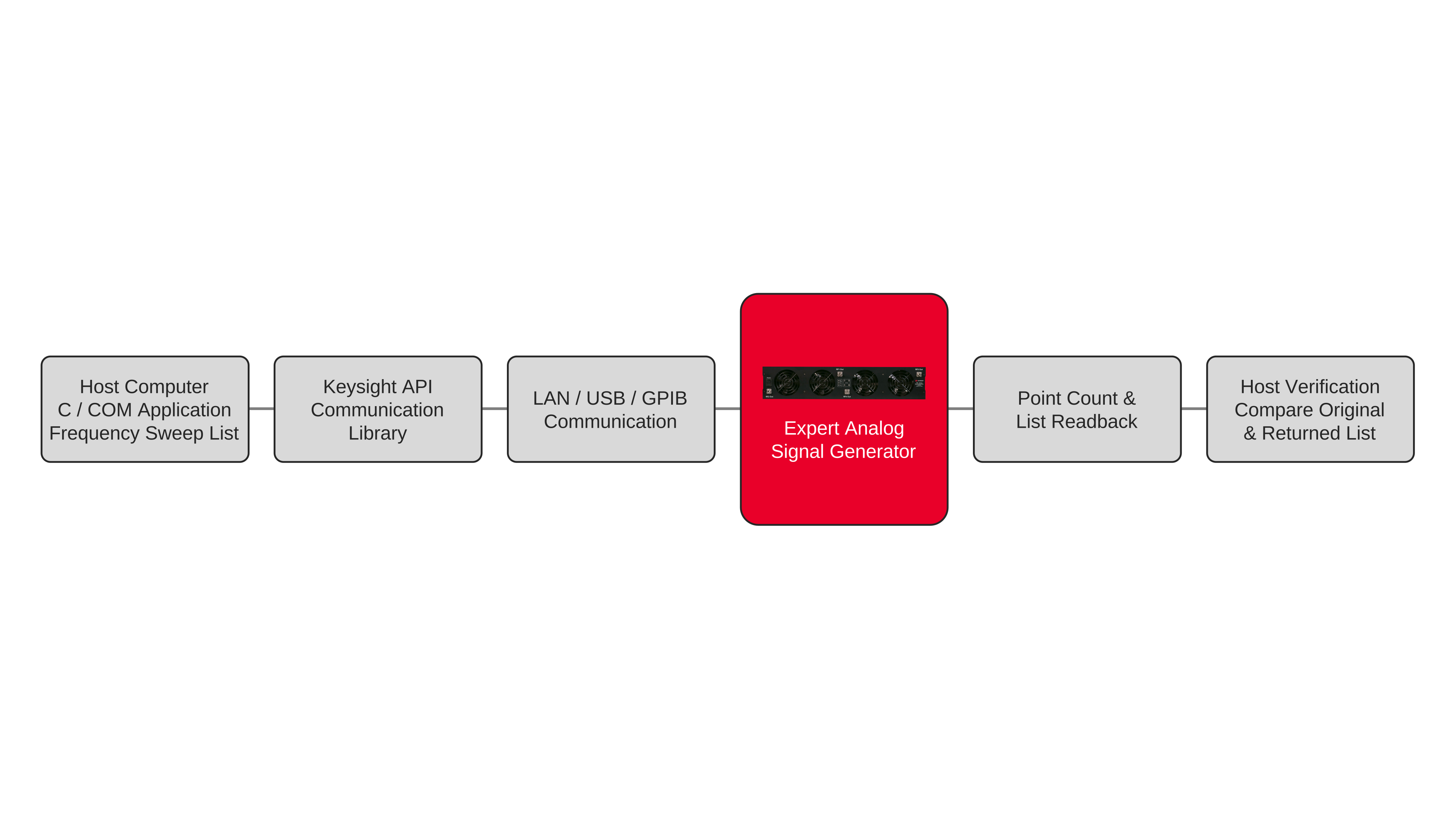
Frequency sweep list transfer begins by establishing a communication session between a host computer and a signal generator through a supported interface. The setup includes the instrument, a host application, the appropriate communication libraries, and a local area network (LAN), Universal Serial Bus (USB), or General Purpose Interface Bus (GPIB) connection. An application programming interface (API) provides functions for discovering the instrument, opening a session, and exchanging data. Engineers can use C or Component Object Model (COM) libraries to prepare a sequence of sweep-list entries and send it to the connected instrument. The example workflow uses a structured list of frequency and associated configuration values. Instrument-specific command syntax and the interpretation of list fields must be checked against the corresponding programmer’s manual before applying the sequence to a particular device.
After establishing the connection, the host application transfers the sweep list as a block of data and requests confirmation of the number of points received. It can then retrieve the processed list and compare the returned values with the original configuration. This readback step checks the integrity of the frequency sweep list transfer without assuming that the instrument has executed a physical sweep or produced measurement results. A repeatable workflow separates list preparation, transfer, point-count verification, readback, and session cleanup into distinct operations. Communication timeout settings and return codes help identify transport failures or incomplete exchanges. Binary block-transfer functions handle the data payload, while the host software parses the returned content and checks the expected structure. The instrument's programmer’s manual remains the authority for supported list formats, operating modes, and configuration parameters.

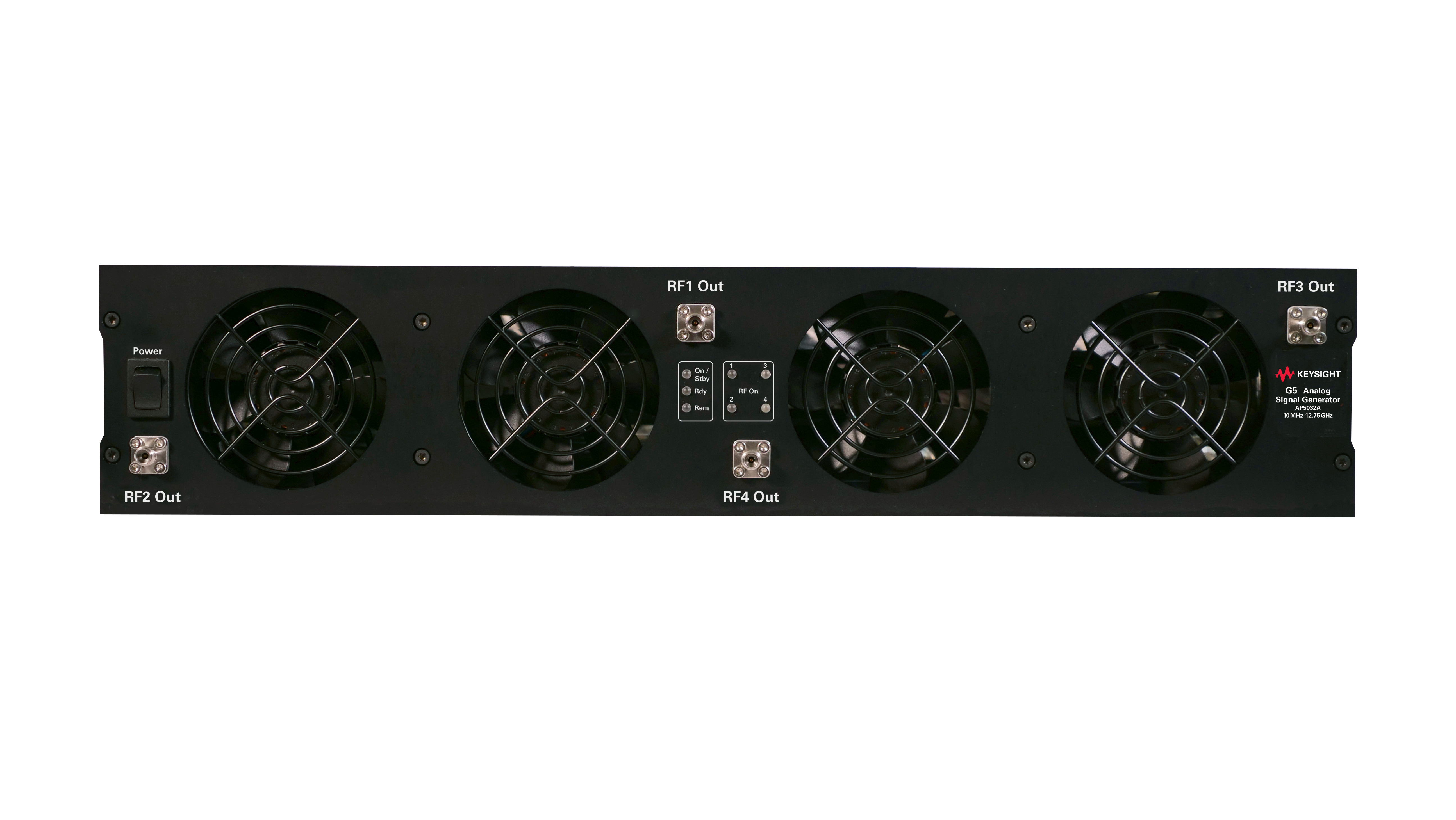
Frequency Sweep List Transfer Solution
See Block Diagram of Frequency Sweep List Transfer Solution

Explore Products in Our Frequency Sweep List Transfer Solution
-


![]()
AP5032A Analog Signal Generator, 1 kHz to 51 GHz


Discover Resources and Insights
Additional Resources for Frequency Sweep List Transfer
Related Use Cases

-
![]()
Learn More
How to Perform IoT RF Receiver Testing
Validate IoT receiver sensitivity and robustness with controlled RF signals from the N5166B.
Learn More

-
![]()
Learn More
How to Create Custom I/Q Waveforms
Create and download custom baseband I/Q waveforms with the N5166B for flexible RF signal generation and receiver test.
Learn More
-
![]()
Learn More
How to Generate Interference Signals for Receiver Testing
Use the Keysight N5166B Essential Vector Signal Generator to generate controlled RF interference signals for receiver robustness and coexistence testing.
Learn More

Get in Touch with One of Our Experts
Need help finding the right solution for you?