













- Overview
- All Models
- Support
Signaling protocol and RF performance testing
Keysight protocol development solutions are ideally suited for next-generation wireless research, protocol verification, and custom protocol development. They support every phase of wireless device development, from pre-silicon protocol prototyping to systems integration and verification. Benefit from the early access to cutting-edge 5G features, enabling thorough testing of your implementations in complex, simulated real-world network scenarios. Within the portfolio, there is robust support for developing tailored 4G / 5G control plane protocol signaling, backed by proven 3GPP-compliant L1 / L2 layers. Request a quote for one of our popular configurations today. Need help selecting? Check out the resources below.
Multiprotocol support
Develop and test 5G NR and LTE protocols in non-standalone (NSA) and standalone (SA) modes, enabling precise verification for cutting-edge wireless applications.
Wide frequency coverage
Supports sub-6 GHz (FR1) and mmWave (FR2) frequencies, providing detailed insights into diverse deployment scenarios.
Powerful debugging
Use logging features, including access to protocol stack parameters, enabling rapid troubleshooting and in-depth analysis of test case failures.
Flexible test automation
Create, edit, and automate test cases with high flexibility, including simulation of real network conditions and error injection.
-
Technology
5G NR, LTE, RedCap, W-CDMA, CAT-M, NB-IoT, WLAN
-
Test types
Signaling, Audio Quality, Battery Life, Data Throughput, Field-to-Lab, IMS, Negative Testing, Positioning
-
Use cases
Custom Protocol Stack Development, Protocol stack development, Field-to-lab, Regression testing
Most popular configurations


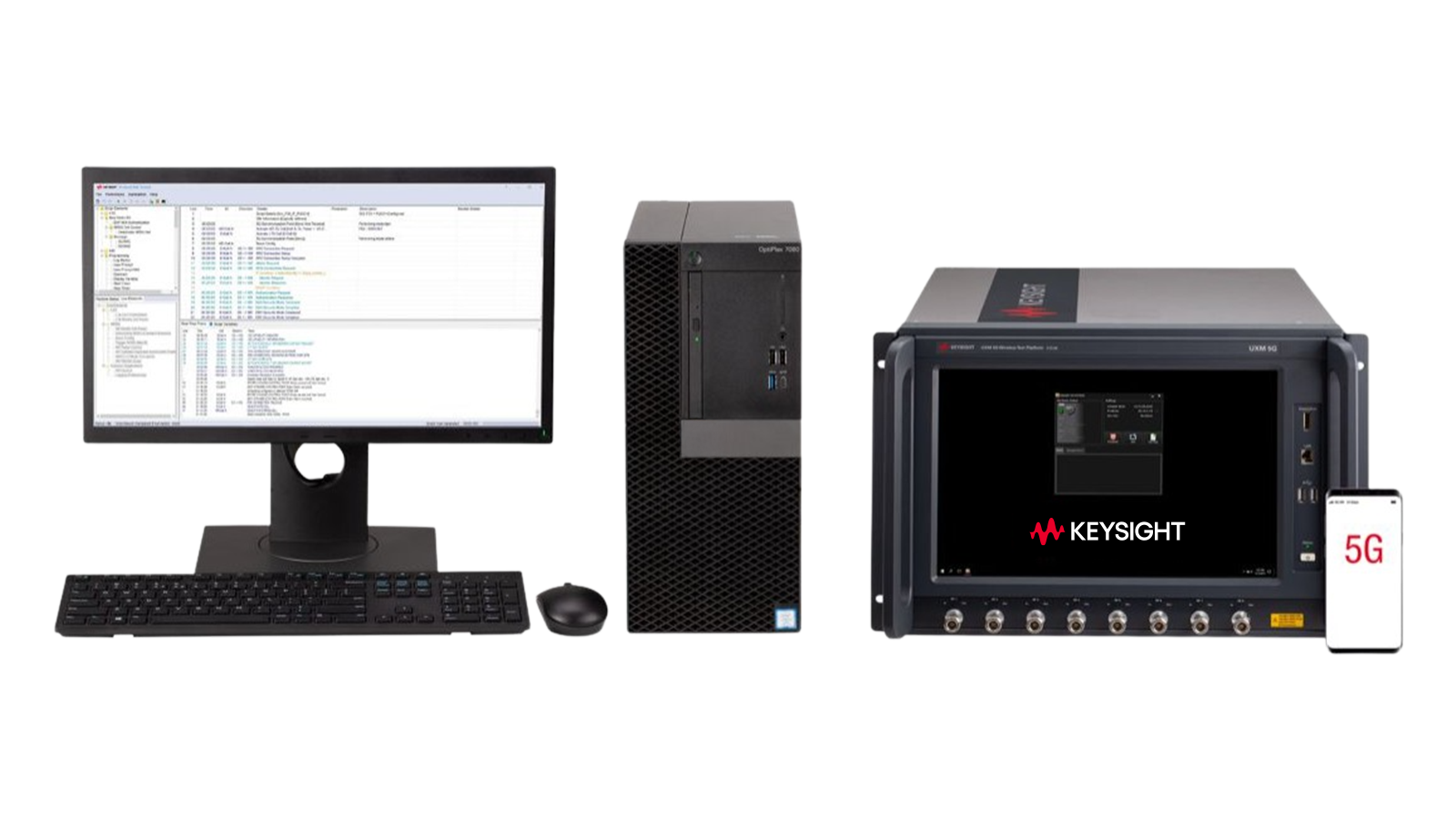
Protocol R&D Toolset

Custom Protocol Development Toolset
Services and support
Innovate at speed with curated support plans and prioritized response and turn-around times.
Get predictable, lease-based subscriptions and full lifecycle management solutions—so you reach your business goals faster.
Experience elevated service as a KeysightCare subscriber to get committed technical response and more.
Ensure your test system performs to specification and meets local and global standards.
Make measurements quickly with in-house, instructor-led training, and eLearning.
Download Keysight software or update your software to the newest version.
Frequently asked questions
Protocol development tools offer specialized software platforms designed to emulate, test, and analyze wireless communication protocols, particularly in the context of evolving standards such as 5G New Radio (NR) and LTE. These tools enable researchers and developers to simulate complex network environments, validate protocol implementations, and accelerate the development cycle for chipsets, devices, and infrastructure components in next-generation wireless systems. Key capabilities of these tools include:
1. Protocol Prototyping and Emulation:
Such tools enable the pre-silicon prototyping of signaling protocols, allowing developers to model and simulate protocol stacks (e.g., for 5G NR in standalone or non-standalone modes) before physical hardware is available. This is crucial for next-generation research, as it supports experimentation with sophisticated features like ultra-reliable low-latency communications (URLLC), massive machine-type communications (mMTC), and enhanced mobile broadband (eMBB) in simulated real-world scenarios, including sub-6 GHz (FR1) and mmWave (FR2) frequency bands.
2. Conformance and Robustness Testing:
They facilitate comprehensive testing to ensure compliance with industry standards (e.g., 3GPP specifications for 5G). By introducing intentional protocol errors, corner cases, or impairments, these solutions verify the robustness of device implementations against real-network anomalies, such as interworking with non-3GPP networks or handling high-mobility scenarios.
3. Performance Analysis and Debugging:
Sophisticated logging and analysis features enable rapid debugging of test failures by replicating field-logged protocol call flows into lab-based test cases. This is particularly valuable for next-generation R&D, where tools can automate the transformation of real-world data (e.g., from device field trials) into reproducible tests, reducing analysis time and improving efficiency.
4. Integration and Scalability in Development Workflows:
These tools integrate with complementary hardware and software, such as network emulators or conformance test suites, to support end-to-end verification from early modem development to device certification.
Overall, tools of this type streamline the R&D process by providing flexible, high-control environments that exceed basic industry requirements, enabling faster time-to-market for innovative wireless technologies while maintaining high quality and reliability.
In 5G device testing, NSA and SA modes represent two foundational deployment architectures, each with distinct implications for protocol behavior, network performance, and testing requirements.
NSA mode anchors the device to an existing 4G LTE eNodeB for control signaling while using the 5G New Radio (NR) gNodeB for user-plane data transmission via Dual Connectivity (EN-DC). This architecture leverages the 4G EPC (Evolved Packet Core) and was widely adopted during early 5G rollouts to accelerate time-to-market by reusing existing LTE infrastructure. NSA testing emphasizes LTE–NR interworking, dual connectivity signaling, mobility procedures, and performance metrics, including throughput, latency, and handover success rates. Test challenges include synchronization across RATs, inter-RAT handovers, and uplink-downlink coordination under varying network conditions.
In contrast, SA mode operates independently using a full 5G NR architecture, including the 5G Core (5GC) and gNodeBs for both control- and user-plane functions. This enables full support for native 5G features, such as network slicing, ultra-reliable low-latency communications (URLLC), and massive machine-type communications (mMTC), allowing for use cases like industrial IoT, smart cities, and autonomous vehicles. SA testing validates the complete NR protocol stack, including interactions with core functions such as the Access and Mobility Management Function (AMF) and the Session Management Function (SMF). It also measures performance across FR1 and FR2 frequency bands, focusing on end-to-end latency, mobility, slicing functionality, and service orchestration.
Testing methodologies differ based on architectural dependencies:
- NSA testing focuses on LTE–NR integration, dual connectivity complexity, and inter-RAT mobility.
- SA testing validates pure 5G performance, including slicing, QoS enforcement, and standalone core procedures.
Cutting-edge testing tools emulate both NSA and SA network configurations, simulate 3GPP-compliant call flows, and introduce real-world impairments (e.g., handovers, latency spikes, or gNodeB failures). These tools offer comprehensive protocol logging and trace analysis, enabling engineers to debug control-plane issues, optimize performance, and ensure device compliance with certification and operator acceptance criteria.
Tailored test strategies are crucial to ensure that 5G devices perform reliably across various deployment modes and evolving network architectures.
3GPP has supported IoT devices since Release 13 using LTE or LTE-based technologies, with enhancements in subsequent releases. Release 17 introduced support for IoT devices with 5G NR through RedCap, which satisfies cost and power consumption requirements and provides more capacity than its LTE-based peers.
Release 18 further enhances this with eRedCap for even lower complexity devices. These make RedCap and eRedCap good choices for devices with capacity needs beyond previous IoT-specific technologies like NB-IoT and LTE Cat-M. With RedCap and eRedCap, networks adapt to support devices for Industrial IoT, wearables, and security and surveillance applications. The ability to support diverse device types on a single network brings additional benefits to network operators and service providers that can contribute to the success of new IoT-based businesses.
As device launches now include support for LTE-based and 5G NR RedCap/eRedCap technologies, the rapid growth of 5G deployments and subscribers worldwide is hastening the transition to devices that use RedCap/eRedCap exclusively.