How to Measure Average Power Without Tracking Signal Peaks

Measure Average Signal Power
Radio frequency (RF) signals with changing envelopes can contain short-duration peaks that differ substantially from their long-term average power. In many transmitter, component, and subsystem measurements, engineers need to determine the average energy delivered by the signal rather than characterize individual envelope peaks. Average power measurements provide a stable representation of signal power over the measurement interval, allowing engineers to evaluate output level without requiring detailed tracking of instantaneous peak behavior. This is useful for continuous-wave and modulated signals where the primary test requirement is accurate average power rather than pulse-shape or peak-envelope characterization.
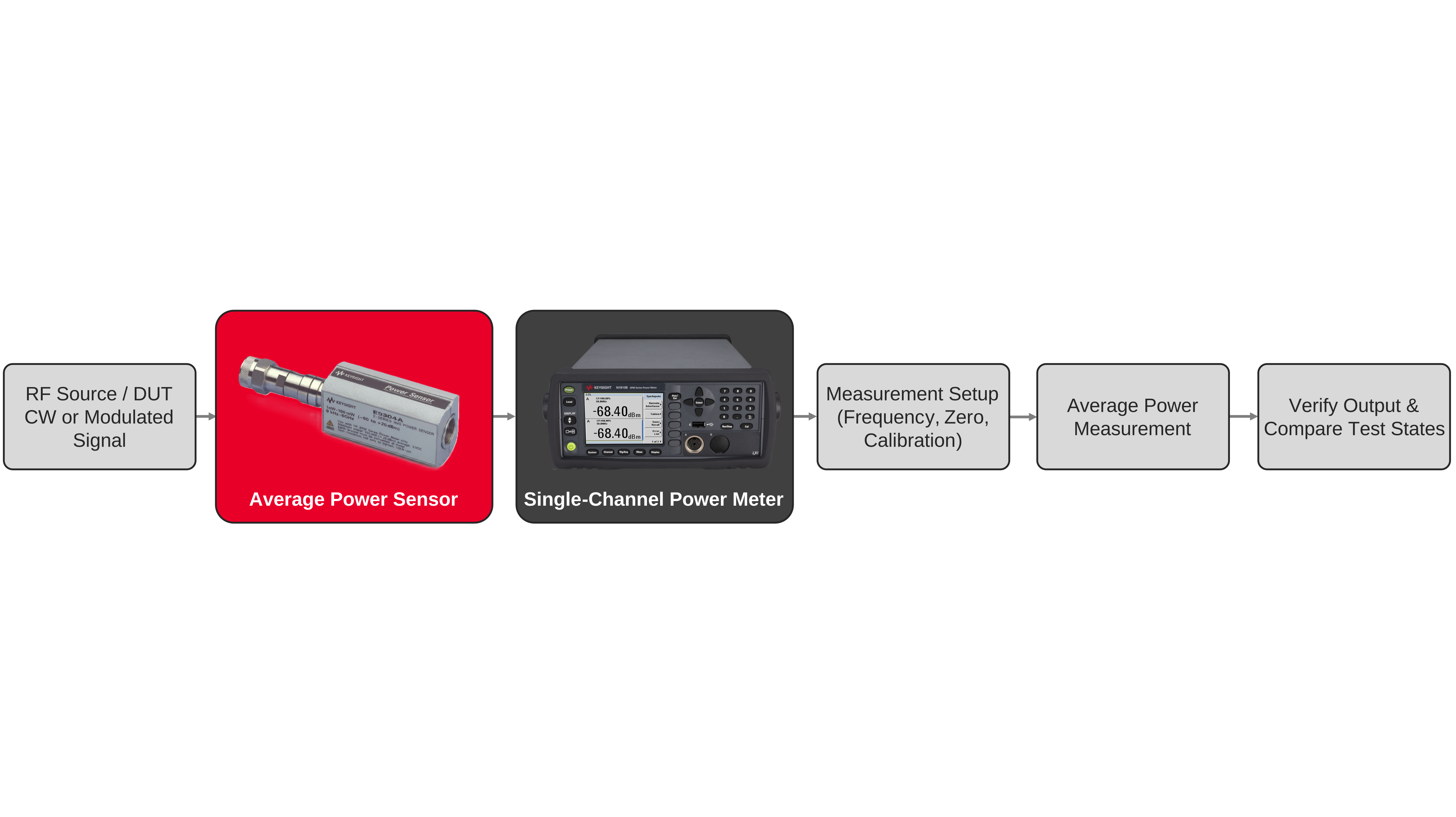
The measurement setup includes an average power sensor connected to a compatible power meter and the radio frequency source or device under test. Engineers establish the measurement frequency, verify the expected power level, perform zeroing and calibration as required, and acquire the average power result over the selected measurement interval. The sensor's wide dynamic range supports measurements across changing signal levels while maintaining a consistent sensor configuration. Engineers can use the resulting average power measurements to compare operating states, verify transmitter or component output, and evaluate signal power across different test conditions without requiring a wideband peak-power measurement system.

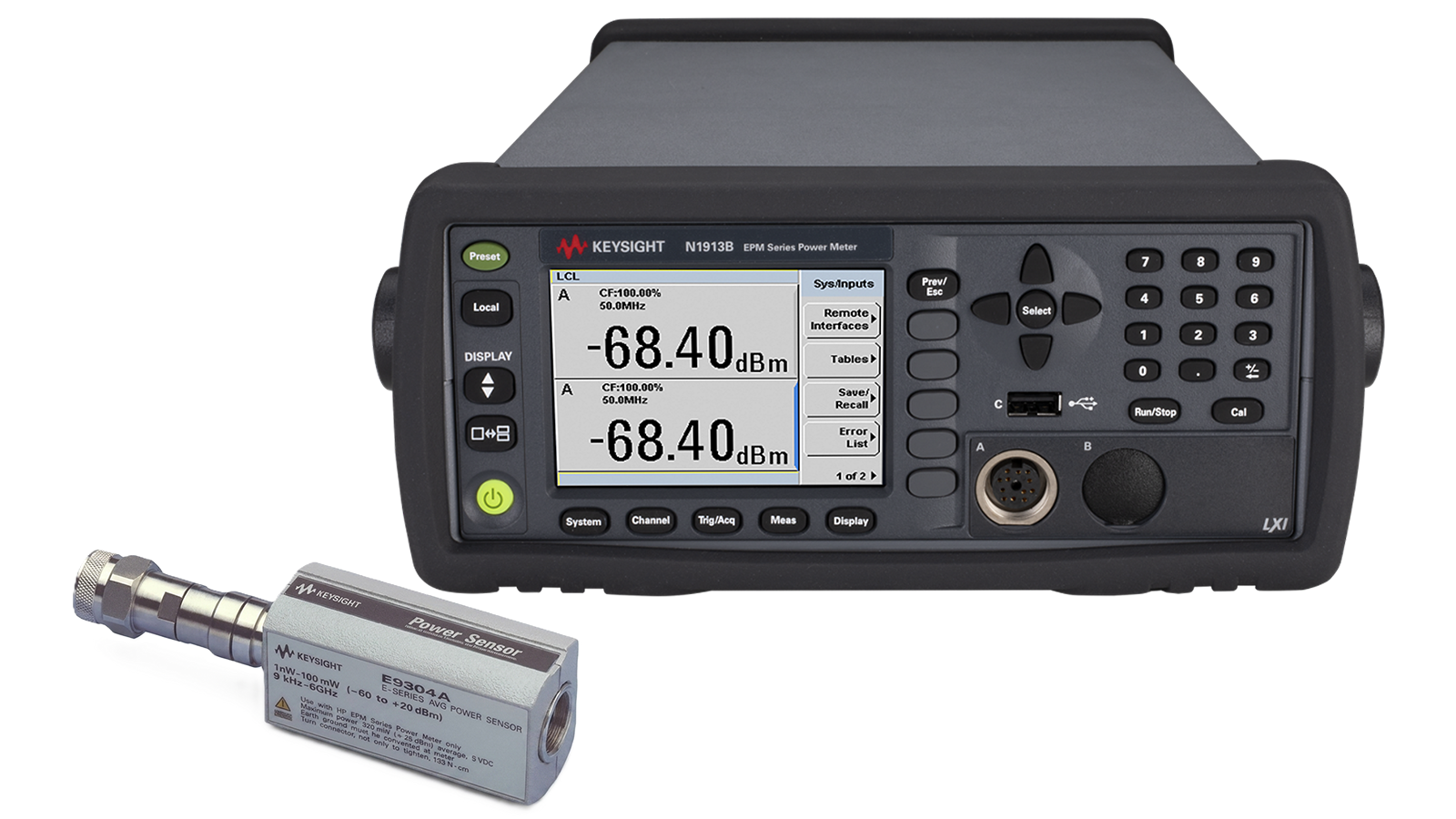
Average RF Power Measurement Solution
Block Diagram of Average RF Power Measurement Solution

Explore Products in Our Average RF Power Measurement Solution
-

![]()
N1913B EPM Series Single-Channel Power Meter
-
![]()
E9300A E-Series Average Power Sensor


Discover Resources and Insights
Additional Resources for Average RF Power Measurement
Related Use Cases


-
![]()
Learn More
How to Measure RF Power Without a Separate Power Meter
Measure radio frequency power without a separate power meter using a USB power sensor with direct computer connectivity and integrated measurement capability.
Learn More

-
![]()
Learn More
How to Measure Average Pulse Power with a Handheld Power Meter
Measure average pulse power of radio frequency signals in the field using a handheld power meter with an integrated sensor and pulse timing parameters.
Learn More
-
![]()
Learn More
How to Verify Average RF Power Across Different Signal Levels
Verify average radio frequency power across changing output levels using an average power sensor and compatible power meter.
Learn More

Get in Touch with One of Our Experts
Need help finding the right solution for you?