What are you looking for?
AI Data Centers
Unleash the next generation of AI innovation

Unlock the Potential of AI
An AI data center is only as reliable as its weakest link. On the cutting edge of performance, every chip, cable, interconnect, switch, server, and GPU represents both potential and risk. Not only must individual components function independently; they also need to work cohesively as a system under relentless demand.
Building networks capable of handling the demands of AI workloads means validating every component, connection, and configuration. With the stakes and scale this high, even the smallest efficiency gain, operational improvement, or performance enhancement can unlock significant returns — reducing disruptions and preventing cascading failures.
AI Data Centers: A Technical Inflection Point
Ethernet
Data center speeds will climb from 400 / 800G to high-speed 1.6 / 3.2T Ethernet.

Memory
DDR5 is giving way to DDR6 and HBM3 — with speeds as high as 12.8 GT/s.

Optical
112 Gb/s transfer speeds will give way to 224 and 448 Gb/s standards.

PCIe® / CXL
PCIe® 7 will update PCIe® 5 and PCIe® 6, as transfers climb from 32 to 128 GT/s.
Testing AI Data Centers: A Multi-Layer Challenge
Accelerating high-speed digital design in the age of AI
AI data centers demand AI-ready semiconductors, chipsets, and high-speed digital (HSD) designs. But cutting edge performance comes at a cost. Speeds and standards are always evolving, and staying up-to-date sometimes means thinking one to two generations ahead. Conforming with advanced design requirements means going beyond debugging. Meeting — or exceeding — the latest PCIe®, DDR, and CXL standards demands advanced simulation tools that can analyze designs and predict potential issues before they occur.
Reimagining AI infrastructure for 1.6T and beyond
With AI data centers adopting 1.6T Ethernet speeds, network equipment manfuacturers are building new optical transceivers to support them. High-speed connectivity, however, also requires high-speed validation against the real-world demands of AI networks. Scaling R&D and production testing means going beyond the low-noise instruments that measure the physical layer — it also means employing protocol-layer Ethernet testing to validate real-world performance.
Optimizing AI data center performance and efficiency
AI networks demand more than component-level validation. Physical-layer testing isn't enough. Interoperability, performance, and efficiency can only be measured at the system level — under real-world network conditions. Validating AI cluster components, optimizing efficiency, and scaling capacity require advanced insights gleaned from full-stack AI workload emulation. Tracking metrics such as job completion time and collective communication bandwidth helps detect bottlenecks, optimize AI workload distribution, identify component-level issues which would otherwise remain hidden.
Maximizing power efficiency to scale AI workloads
In AI data centers, energy management is just as important as performance. However, while high-end servers and rack switches utilize best-of-breed chips and interconnects, crosstalk and electromagnetic interference can cause power management issues that can ultimately impede an AI data center's ability to scale. Without versatile design automation and measurement tools, it's exceedingly difficult to simulate power delivery networks, identify the root causes of power issues, and ultimately ensure power efficiency.
Level Up Your Knowledge in AI Data Centers

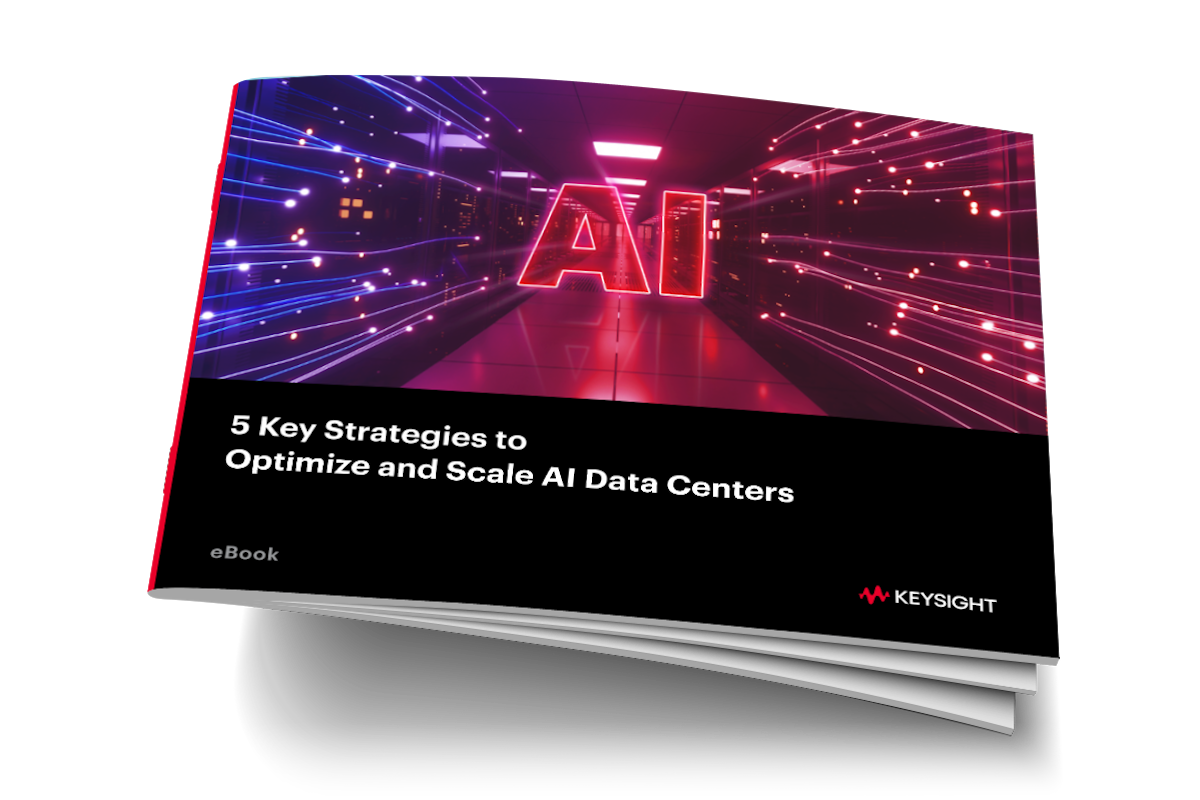
5 Strategies to Optimize and Scale AI Data Centers
AI is transforming industries and driving innovation. However, unique traffic patterns, dynamic workloads, and relentless performance pressures can escalate even the smallest issues into critical problems.
Read this eBook to discover five practical solutions to optimize AI data center performance for modern applications.

AI Networking Bootcamp
Join Keysight engineers for a deep dive into the world of testing AI networks and validating AI data center deployments. By the end of this course, you will gain the insights — and confidence — necessary to take control of this rapidly changing, innovative new networking paradigm.

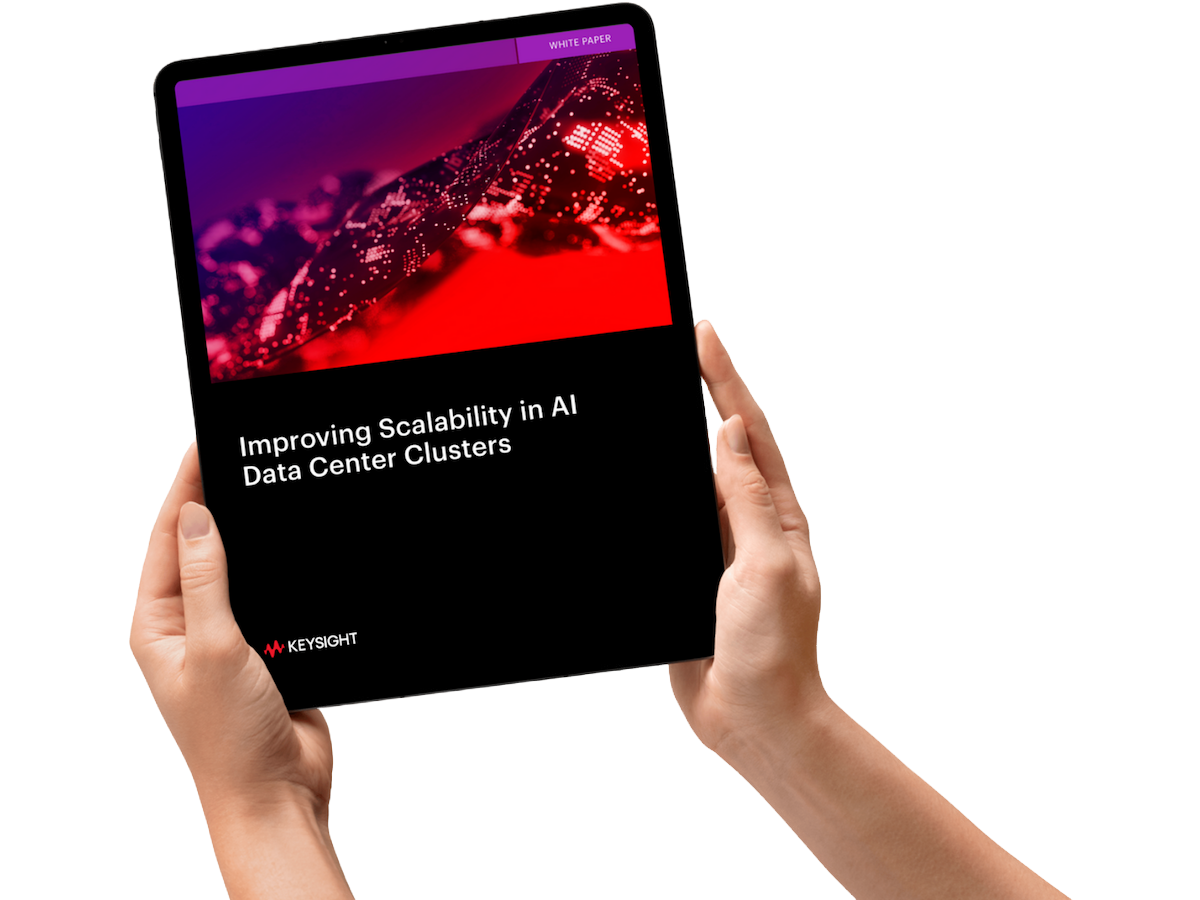
Improving Scalability in AI Data Center Clusters
Can your network infrastructure scale to handle the complex, high-traffic AI training workloads? This white paper delves into AI data center cluster scaling, identifies critical network challenges, and explains how to ensure scalable and reliable networks for your organization’s AI ambitions.


Benchmarking Collective Operations
Measuring or benchmarking the network performance in an AI cluster can help organizations identify opportunities to optimize and improve overall throughput without additional hardware costs. This white paper explains the operation of AI collectives, defines terminology, and reviews the most common metrics associated with benchmarking AI networks.
How Keysight Helps Enhance AI Data Centers
Eliminate weak links
Ensure component-level performance with physical-layer testing and system-level network emulations.
Optimize every layer
Model data center designs, validate network equipment at AI scale, and fine-tune system-level performance.
Scale AI capacity
Maximize data center performance with real-world protocol, application, and network emulations.
Explore our Newest AI Data Center Solutions

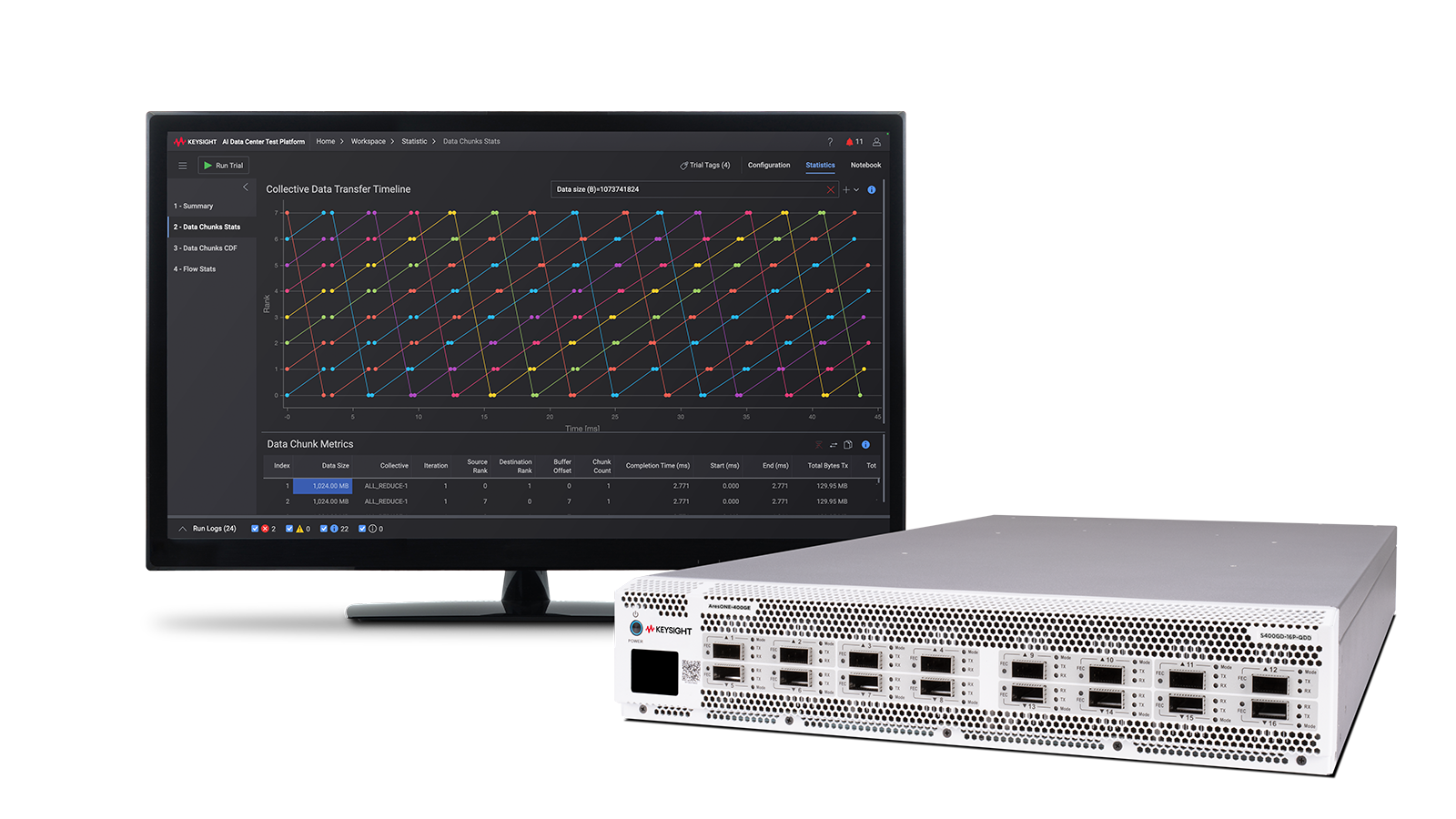
Optimize AI infrastructure with KAI Data Center Builder
Benchmark AI data center performance with unparalleled fidelity. KAI Data Center Builder emulates the combination of collective communications and algorithms used to build a large learning model (LLM) — making it easy to validate network infrastructure and AI fabrics via system-wide testing.

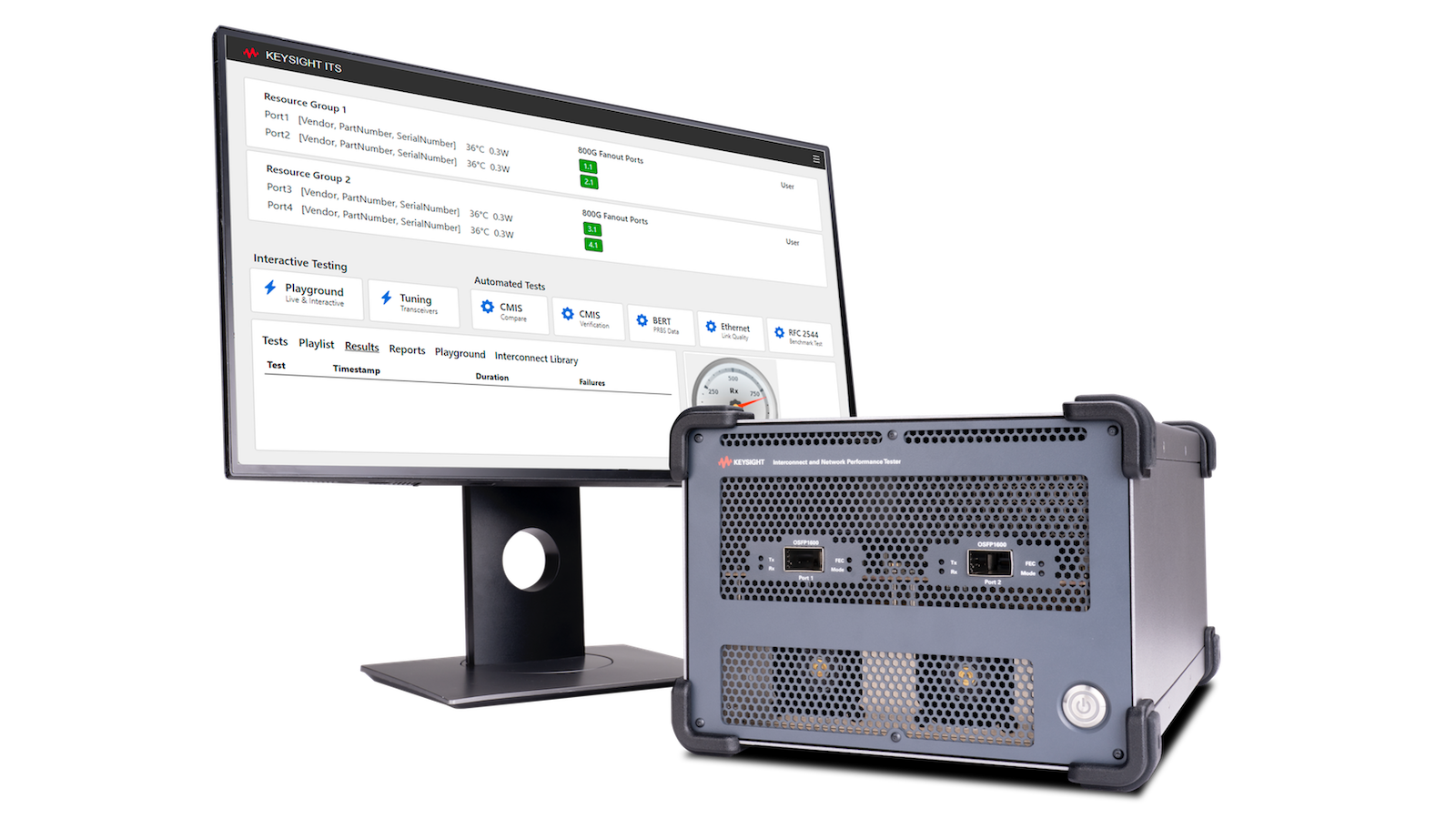
Maximize Ethernet reliability with high-speed benchtop testers
Test the newest generation of AI-optimized networks and interconnects. With full, layer 1-3 test coverage and support for up to 40W per port, the Keysight Interconnect and Network Performance Tester 1.6T offers leading-edge Ethernet testing capabilities for switch manufacturers and hyperscalers alike.

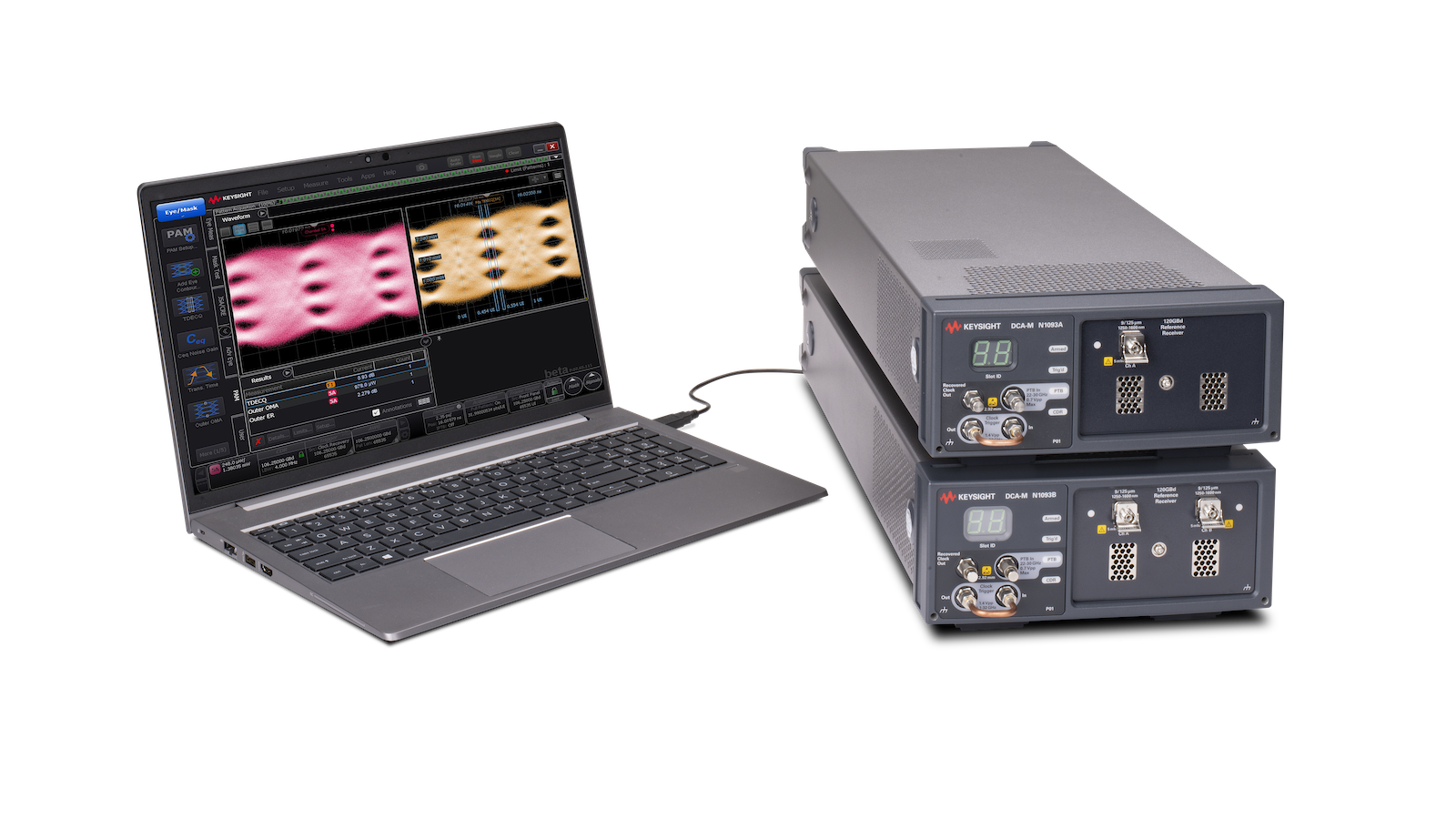
Validate AI interconnects with DCA-M sampling oscilloscopes
Maximize network reliability with 224 Gb/s sampling oscilloscopes offering unmatched optical precision and transceiver test efficiency. Test AI-ready 800G / 1.6T network equipment with optical test software that streamlines manufacturing testing for high-volume optical transceivers.
Attend Our AI Showcase Event
Learn how to design, validate, and scale AI data centers without costly GPU resources. Discover new ways to maximize performance with tools that work from the physical all the way to the application layer — all while engaging in live Q&A with top Keysight engineers working at the forefront of AI innovation.


Explore AI-Ready Test Setups
Test AI Data Center Networks
Emulate AI workloads to benchmark network equipment and validate AI / ML fabrics.
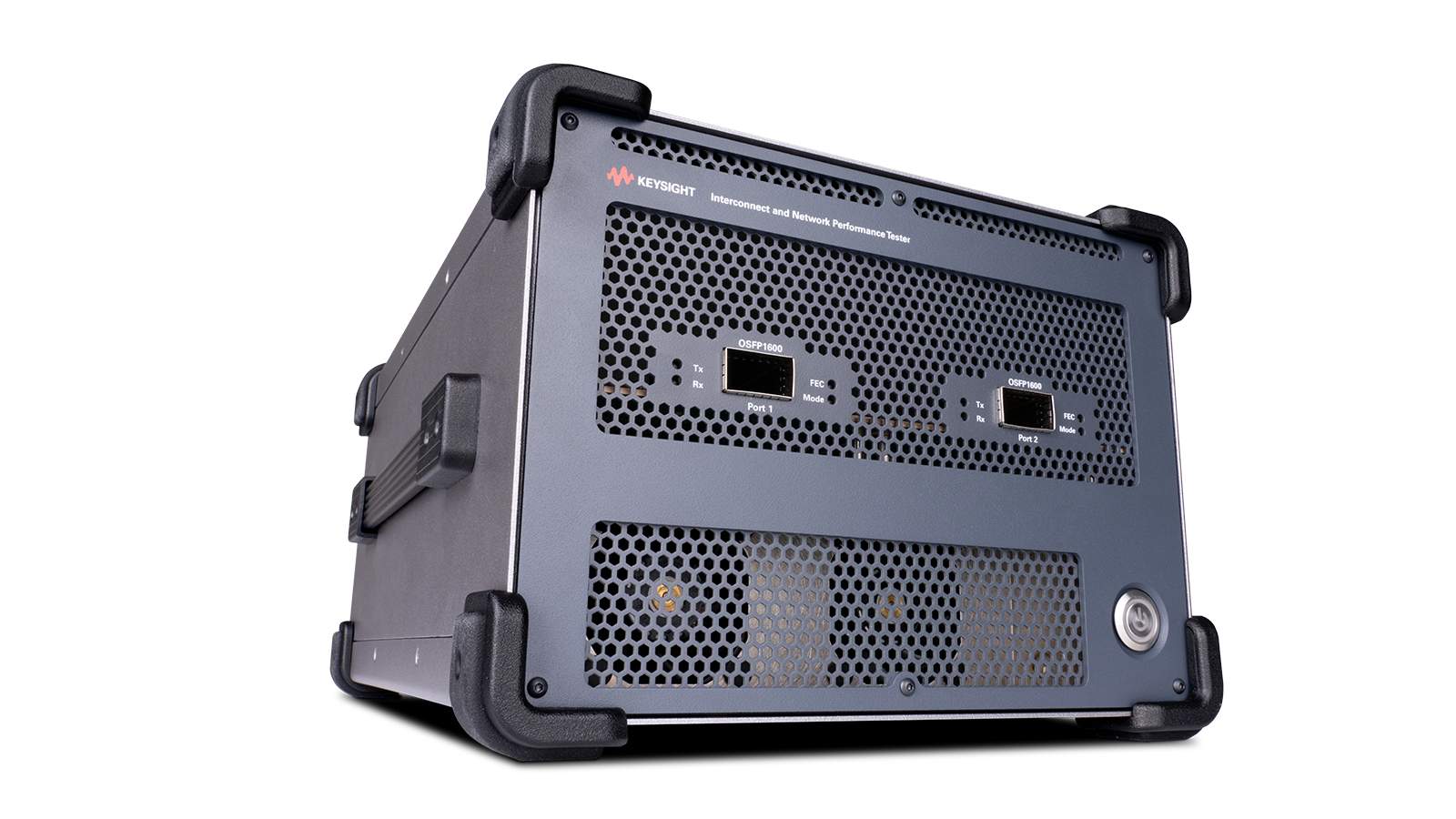
Validate Ethernet Interconnects
Ensure high-quality data transmission and error correction by testing for reliability and performance.
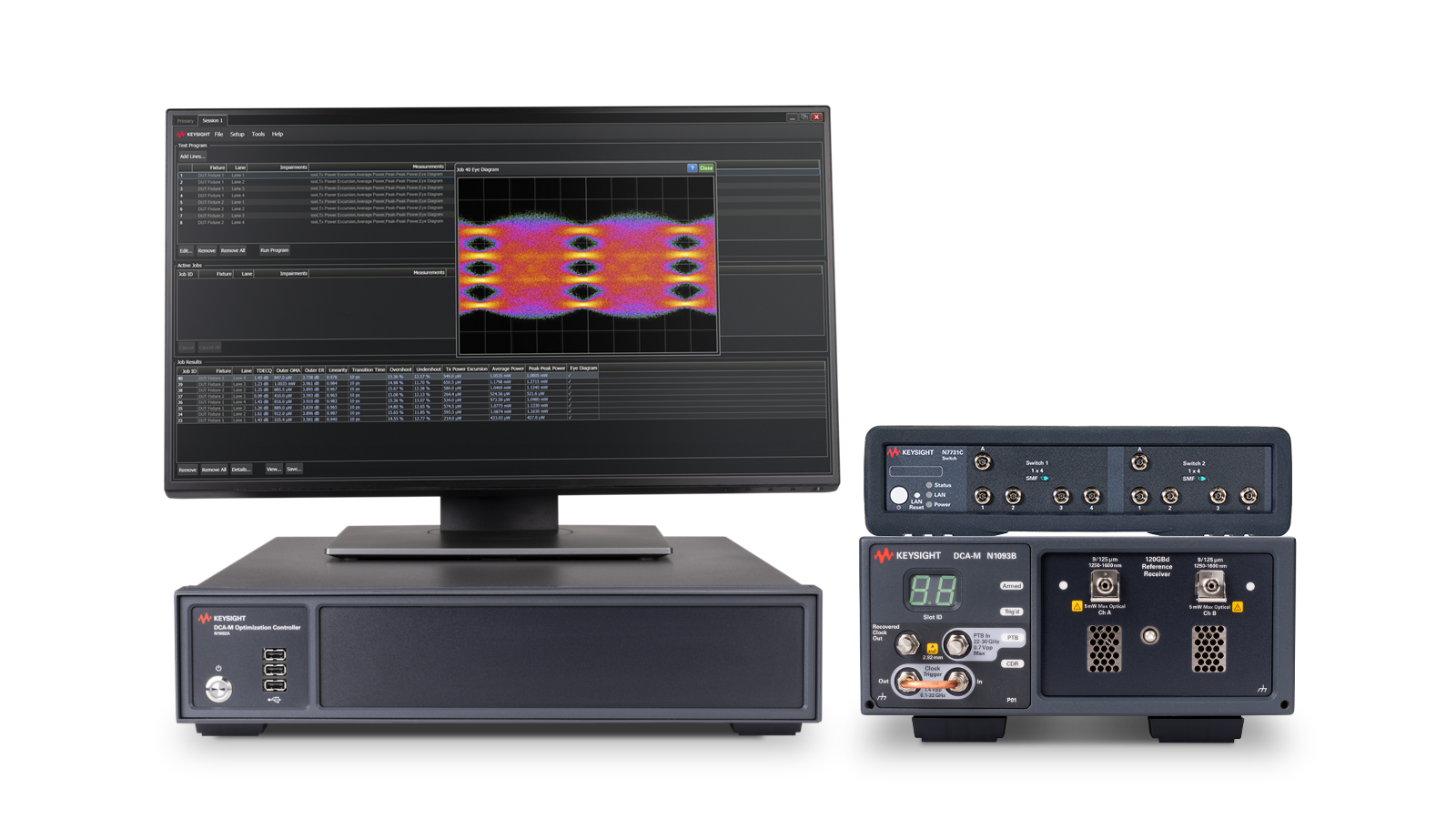
Optimize 1.6T Optical Transceiver Testing
Scale 1.6T optical transceiver production with fast, efficient transmitter dispersion and TDECQ measurements.
Emulate AI Data Center Workloads
Optimize infrastructure for AI training performance with a consistent and scalable testing methodology.
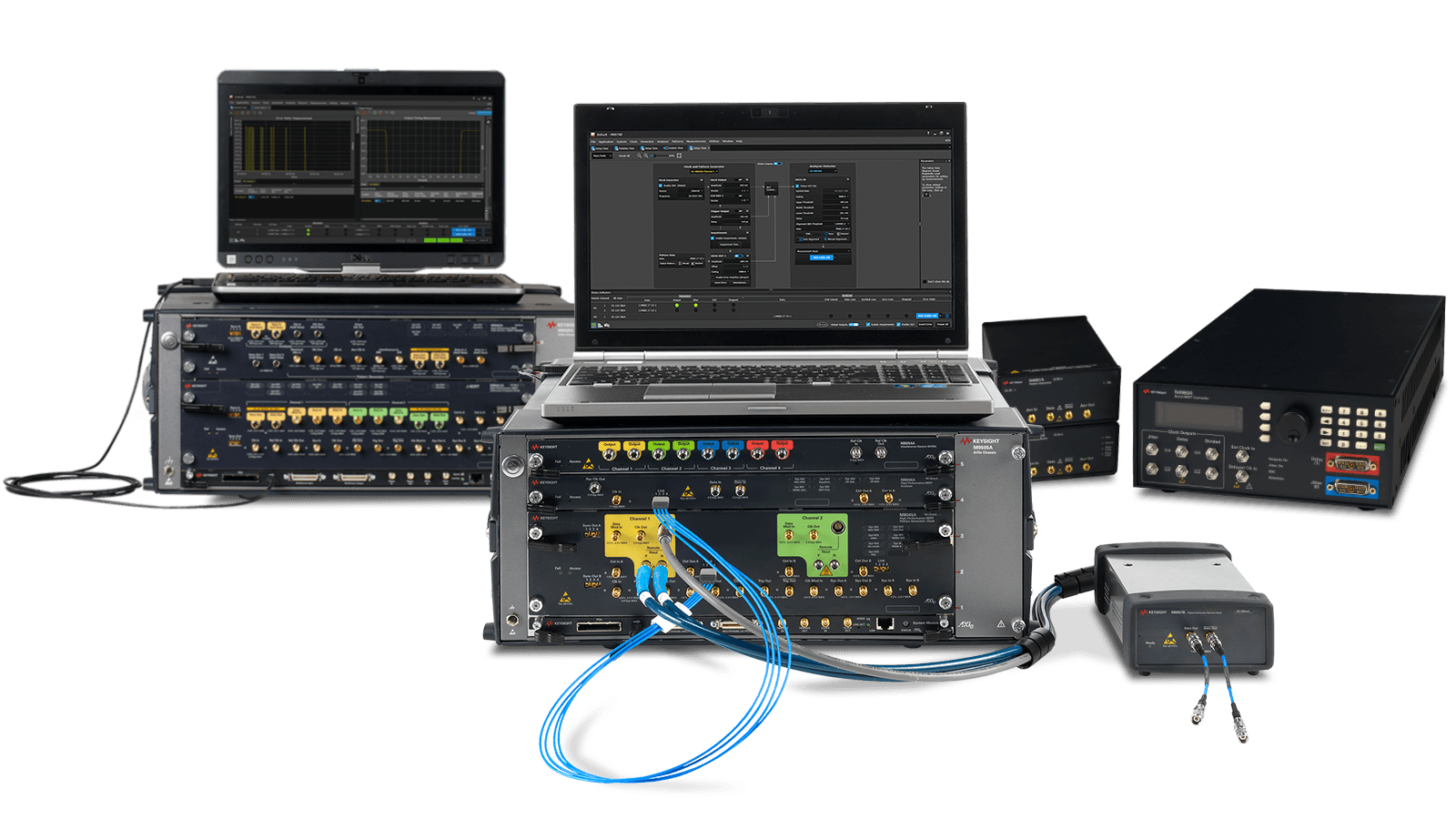
Analyze PAM4 Receiver Signals
Use error analysis to gain insight into PAM4 receiver signals.
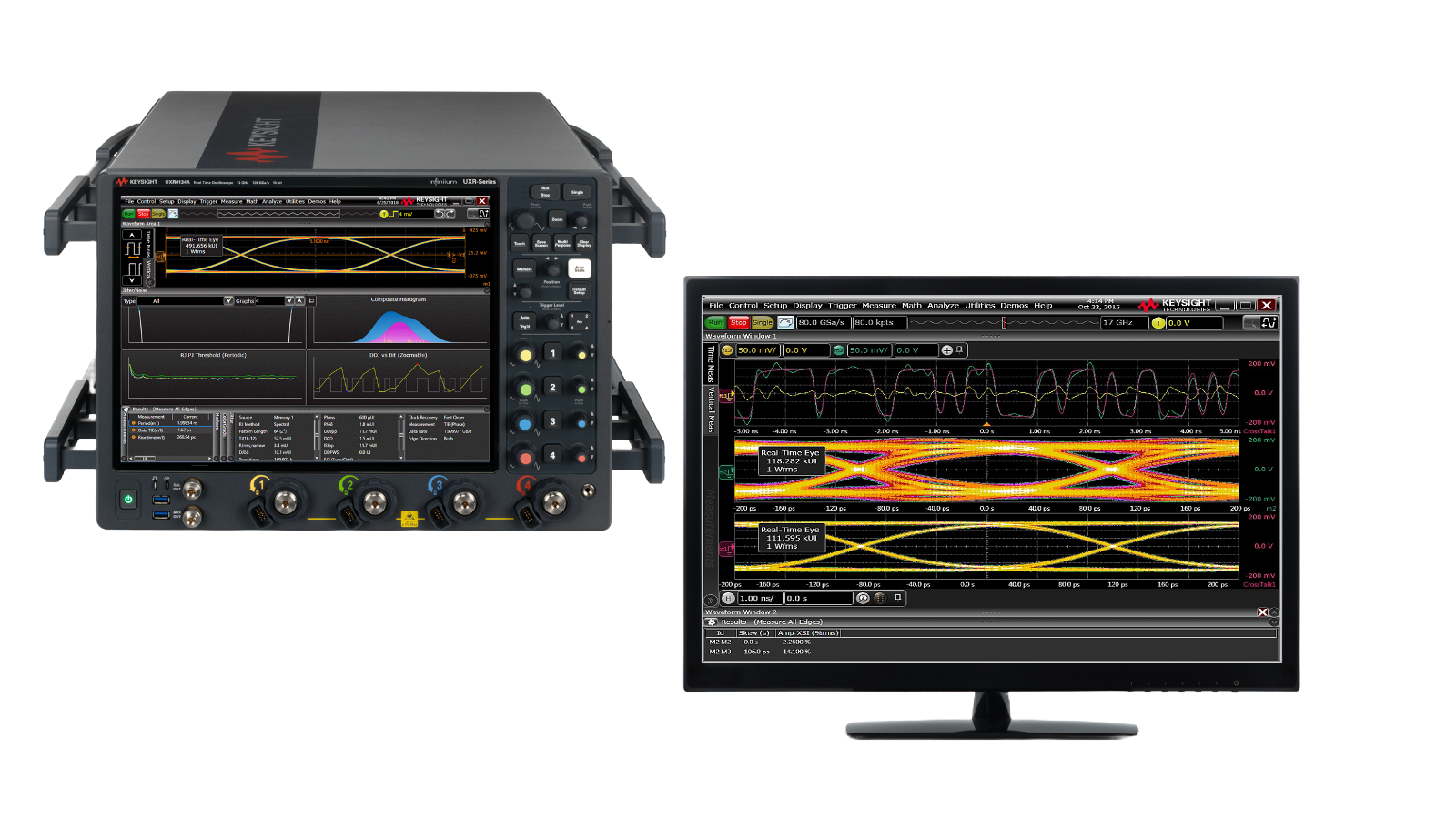
Analyze PCB Signal Integrity
Reduce signal integrity risks in a high-speed digital PCB through the detection and diagnosis of cross talk, jitter, vertical noise, and phase noise.
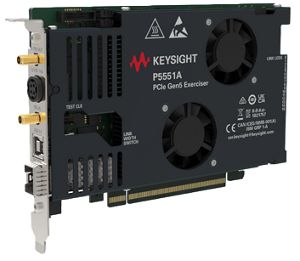
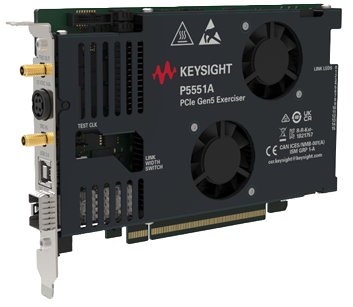
Perform PCle® 6.0 Protocol Validation
Achieve protocol validation at the physical, data link, and transaction layers.
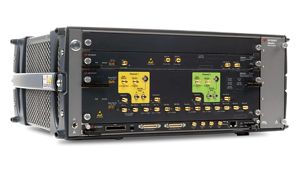

Evaluate FEC Performance
Test high-speed Ethernet links by evaluating the error-correction mechanism.
Learn More About Testing AI Data Centers














Frequently Asked Questions: AI Data Centers
An AI data center is a unique type of computing facility — purpose-built to support artificial intelligence (AI) applications. AI data centers utilize robust tools, including Graphics Processing Units (GPUs) and Tensor Processing Units (TPUs), which enable them to process large volumes of traffic, train large learning models (LLMs), and execute user queries — a term commonly known as "inference".
AI data centers are being built worldwide to meet growing demand. However, the majority of AI data centers are located in the United States — specifically in Texas, California, and Virginia.
AI-ready data centers have several distinguishing features:
- Hardware: High-performance GPUs and TPUs that accelerate AI computing.
- Storage: High-speed, large-capacity storage systems that manage the huge amounts of data required for AI training and inference.
- Cooling: AI infrastructure generates a lot of heat, so AI-ready data centers need advanced cooling technologies like liquid cooling and precision cooling to prevent overheating.
- Scaling: AI data centers must scale resources efficiently based on the fluctuating demands of AI tasks.
- Networking: High-bandwidth and low-latency connections are crucial for real-time data processing and communication.
- Security: Robust security measures and reliable infrastructure ensure protection and availability against an array of AI-specific cyberattacks.
While traditional data centers handle a wide range of general computing tasks, AI data centers are optimized for processing large volumes of data, training large learning models, and inferencing against user queries. Traditional data centers use CPUs for general computing tasks and standard network architectures for data transfers across storage, servers, and cloud environments — while AI data centers rely on GPUs, TPUs, and high-speed / low-latency networking to handle rapid data movement between processors.
AI data centers handle a variety of workloads — each with unique requirements for computing and storage. Some of the most common types of workloads include the following:
- Data processing workloads
- Machine learning workloads
- Deep learning workloads
- Natural language processing (NLP) workloads
- Generative AI workloads
- Computer vision workloads
AI data centers utilize multiple strategies for efficient data management — including high-performance storage systems like NVMe SSDs (to ensure fast data access and retrieval), data tiering that moves data between different storage tiers (based on usage patterns), and data compression and deduplication techniques that save storage space and improve efficiency.
AI-optimized data centers employ specialized hardware to accelerate training and inference. Here are a few of the most common components:
- Graphics processing units (GPUs): Essential equipment for parallel processing tasks — which are commonly required for AI applications.
- Tensor processing units (TPUs): Designed for machine learning tasks, offering high-performance training and inference for AI models.
- AI-optimized storage: High-performance storage solutions like NVMe SSDs help manage large datasets with efficient retrieval.
- Networking infrastructure: Infiniband, Ethernet, and NVIDIA Spectrum-X provide high-speed communications, reduce bottlenecks, and enhance throughput.
- Cooling systems: Advanced cooling technologies like liquid cooling help manage thermal efficiency throughout network equipment and infrastructure.
GPUs and TPUs accelerate performance in AI data centers by efficiently processing the intensive computational demands of AI workloads. Here are a few key benefits they provide:
- Reduced training time: GPUs and TPUs shorten the time to train AI models — making it easier to develop and deploy AI applications with speed and efficiency.
- Energy efficiency: GPUs and TPUs are energy-efficient — helping hyperscalers manage operational costs and environmental impact.
- Enhanced capabilities: GPUs and TPUs help AI data centers support more complex and advanced AI models — driving innovation across various industries.
AI computing cycles generate massive amounts of heat. That's why AI data centers require advanced cooling solutions to manage and offset the heat. Here are a few of the most common techniques AI data centers use for cooling:
- Liquid cooling: Liquid coolant is circulated directly into heat sources — such as GPUs and TPUs.
- Immersion cooling: IT components are submerged in a dielectric fluid — which absorbs heat more effectively than air.
- Rear-door heat exchangers: Cooling systems that attach to the back of server racks — using liquid cooling to remove heat directly from the rack's exhaust air.
AI data centers typically employ multiple strategies to ensure scalability:
- Modularity: AI data centers use modular components that can be expanded as demand grows, enabling incremental scaling without significant downtime.
- Cooling: Efficient cooling is essential for AI data centers to maintain performance and reliability. Liquid cooling and AI-driven management can help optimize energy use and support additional scaling.
- AI management: AI can help predict and manage workloads, optimize resources, and enhance data center efficiency. This proactive approach helps hyperscalers scale to fluctuating demands and maintain optimal performance.
Edge computing can improve performance, reduce latency, and optimize resource usage in AI data centers. Edge computing offers real-time data processing, since inferencing can take place closer to its source, which minimizes the distance data needs to travel — optimizing bandwidth and reducing overall latency.
Hyperscalers employ several innovative strategies to ensure efficient energy consumption in AI data centers:
- Renewables: Hyperscalers are increasingly looking to renewable energy sources — including solar and wind. These sustainable sources reduce carbon footprints and ensure a sustainable supply of energy.
- Cooling: Thermal management is crucial for reducing energy consumption in AI data centers. That's why hyperscalers are investing in liquid cooling and AI-driven cooling management to ensure efficient energy usage.
- Infrastructure: AI data centers' layout and design play a critical role in energy consumption and efficiency. Strategies like hot aisle and cold aisle containment, ideal server placement, and proper airflow can all improve energy efficiency.
AI data centers demand a specialized security approach to protect against certain vulnerabilities. For example, large learning models are particularly susceptible to prompt injection and adversarial attacks, where malicious inputs could potentially deceive AI models. That's why security strategies like continuous testing (with an application and security test tool), access control (including multi-factor authentication and role-based access control), and routine security audits are critical.
AI data centers are purpose-built to support the demanding requirements of deep learning and machine learning:
- High-performance network hardware, such as GPUs, TPUs, and AI accelerators, handles the complex computations involved in training models for machine learning and deep learning.
- High-bandwidth interconnects ensure efficient, high-speed data exchanges between storage and compute nodes.
- Scalable infrastructure accommodates growing demands for compute power and storage, which is essential for complex AI models and increasingly large datasets.
There are a number of hyperscalers and AI providers building and maintaining AI data centers around the world. Some of the largest providers include Amazon Web Services, Google, OpenAI, Apple, and Meta.
Want help or have questions?