AI Solutions

- Network Test
- Interconnect Test
- Compute Test
- Component Test
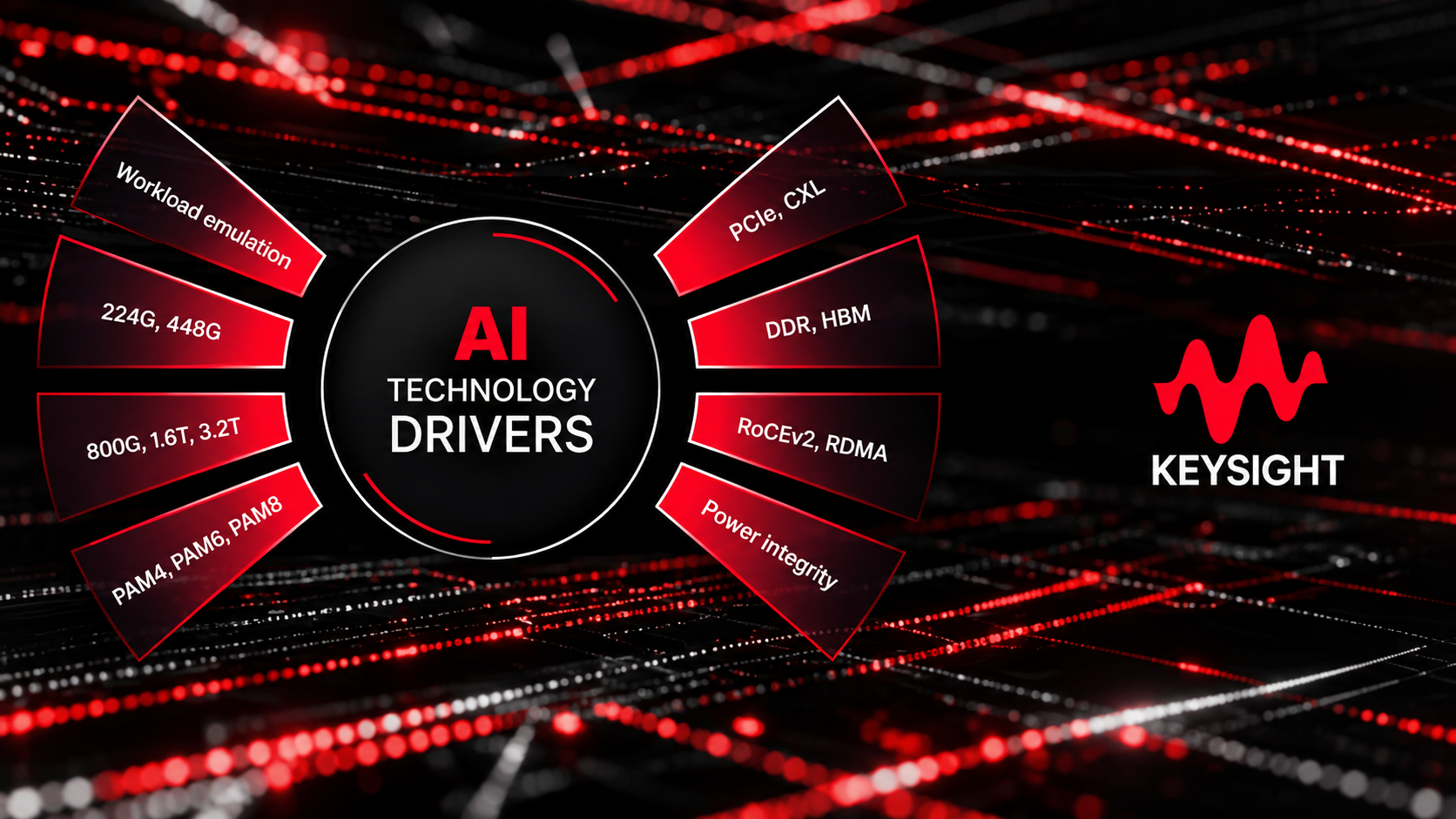
Explore AI solutions that simplify benchmarking, validate network performance, and optimize data center efficiency. Test lossless Ethernet up to 1.6T and evaluate cluster performance for training and inference using realistic, high-density traffic, workload, and protocol emulation — reducing dependence on GPU-based lab setups. Model AI-specific traffic patterns and workload profiles to understand how network parameters affect performance at both component and system levels.
AI Data Center Validation
Benchmark AI data center performance, emulate real-world AI workloads at scale, and validate network equipment and AI networks.

Network Traffic Generation
Characterize network device performance before deploying in AI-ready 400G to 800G production networks. Test a broad range of L2-L3 use cases, including AI data centers.

Network Performance Test
Improve network benchmarking and optimize AI data center deployments with AI-native RoCEv2 protocol generation and testing.

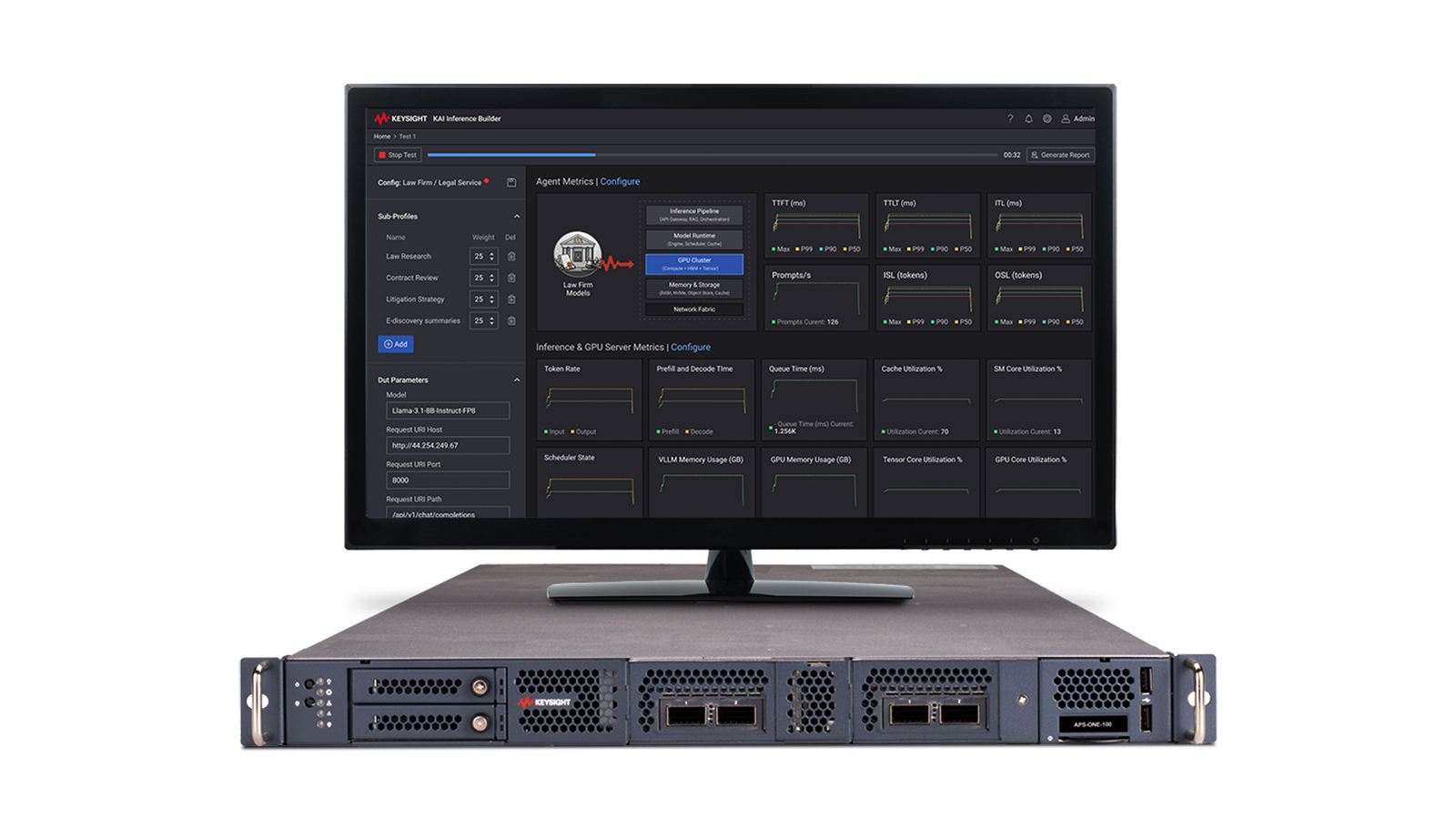
AI Inference Validation and Benchmarking
Emulate realistic LLM prompts and user concurrency at scale. Correlate inference performance with system telemetry to identify latency bottlenecks before deployment.
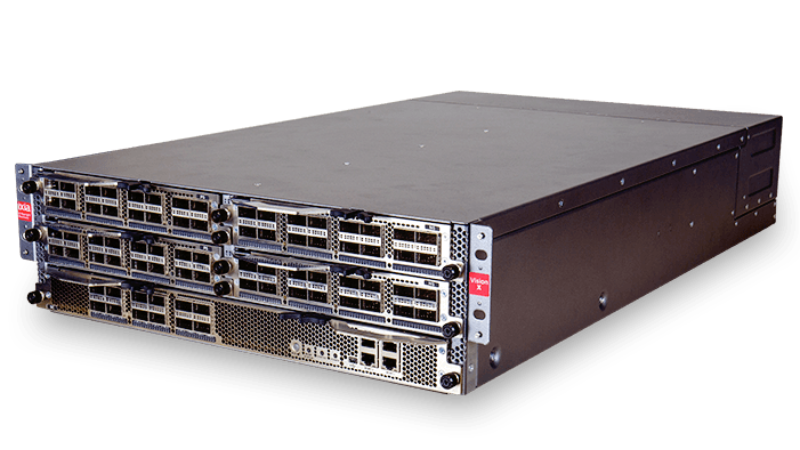
Network Visibility and Monitoring
Deliver the right AI data center traffic to monitoring and security tools. Improve network visibility, eliminate blind spots, and accelerate troubleshooting at scale.
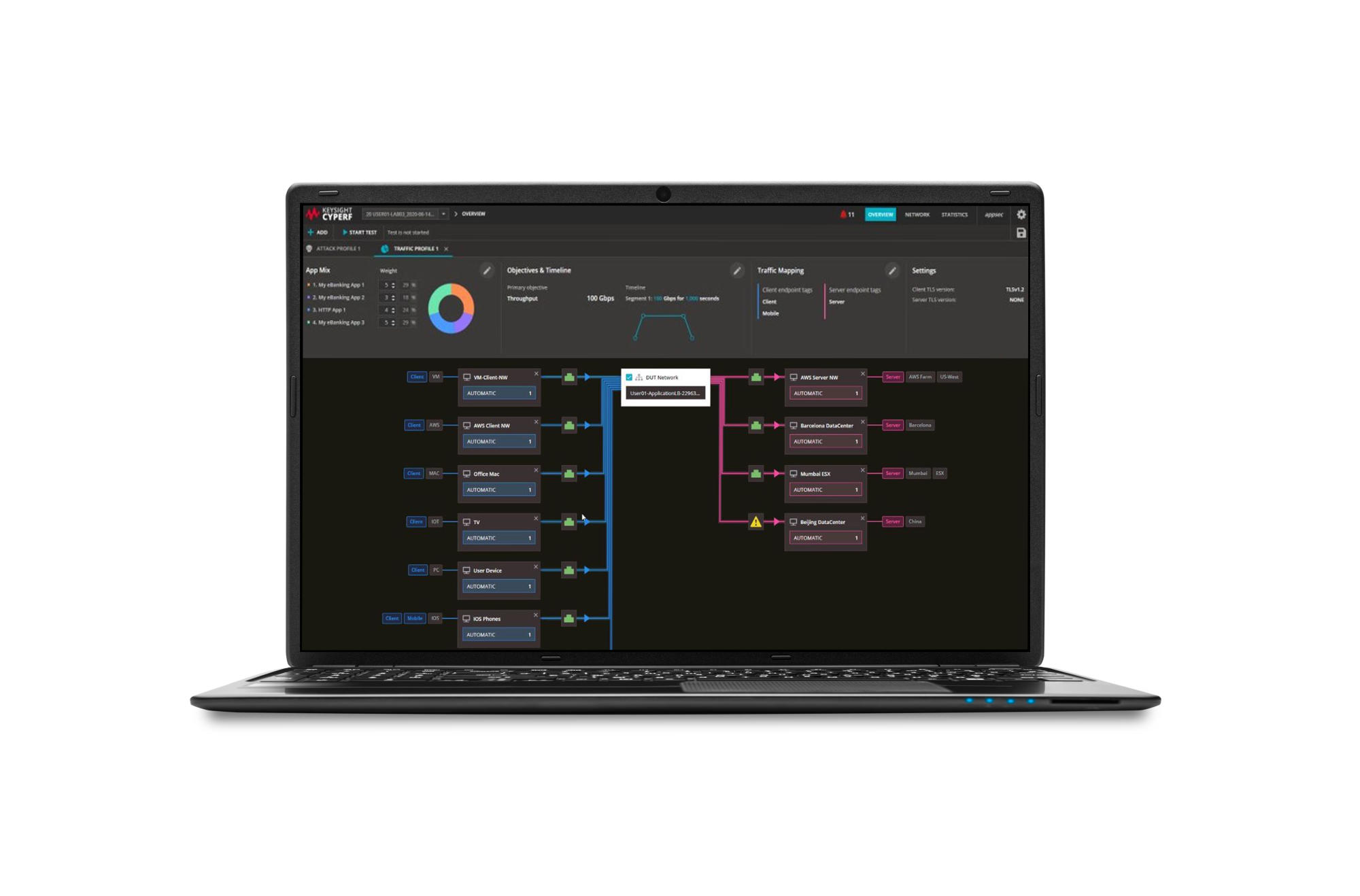
Cloud-Based Network Test
Assess AI network performance, stability, and security with AI-native benchmarking, compute-intensive traffic simulation, and high-scale testing.
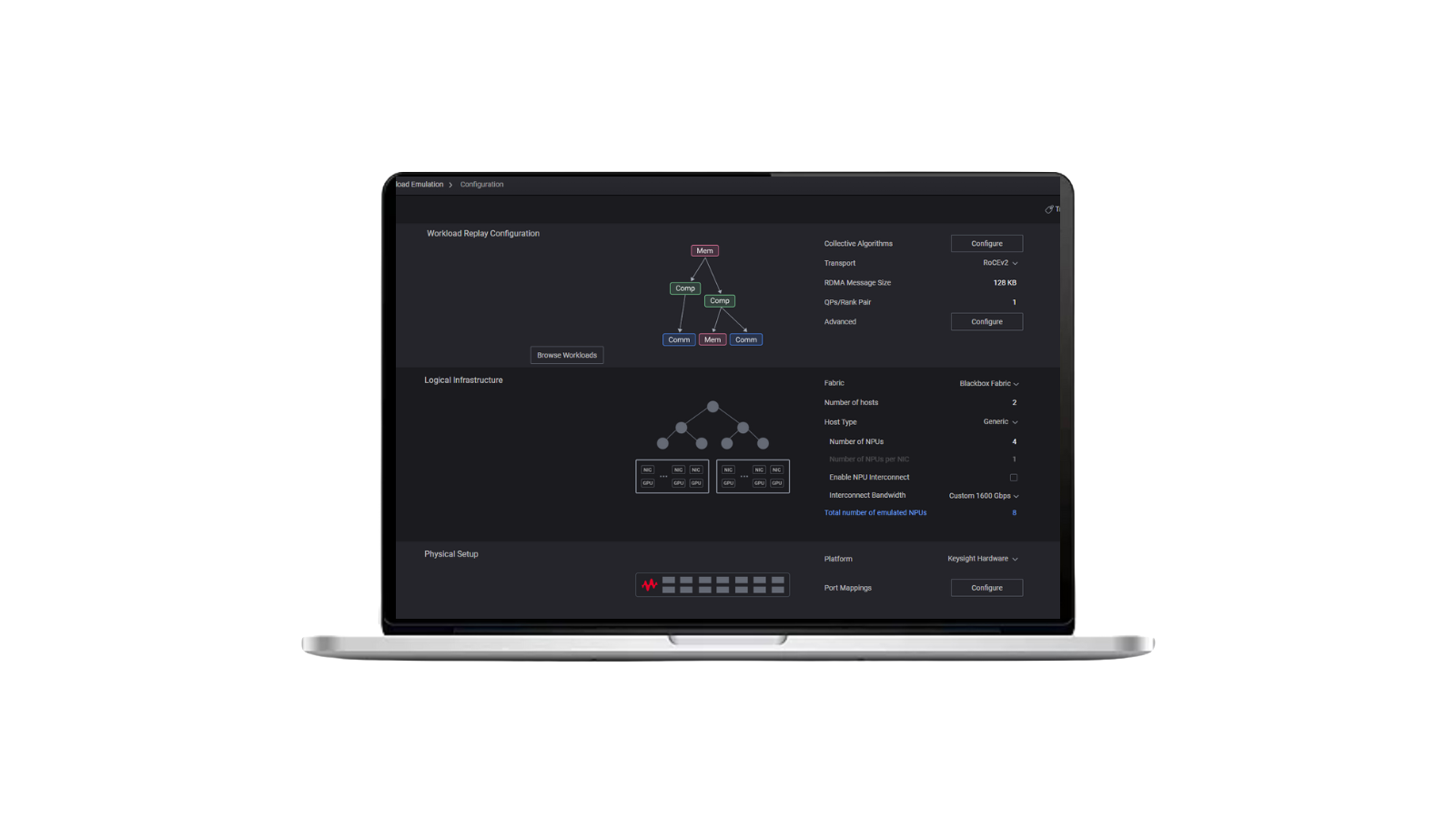
Workload Emulation
Emulate realistic AI training traffic and collective communications without costly GPU clusters. Measure job completion time, throughput, and latency to expose network fabric bottlenecks.
Accelerate development of AI data center interconnects with AI solutions that validate electrical and optical transceivers under real-world performance conditions. Simplify compliance and production testing for 800G and 1.6T systems using high-bandwidth, low-noise instruments and automated workflows that improve throughput and reduce test time. Enable R&D for 3.2T Ethernet and beyond with scalable design and test platforms engineered to support multiple generations of high-speed networking standards.
Optical Transceiver Manufacturing Test
Scale 1.6T optical transceiver production with fast, accurate testing across multiple 224 Gb/s PAM4 lanes. Automate measurements to improve throughput, utilization, and yield.
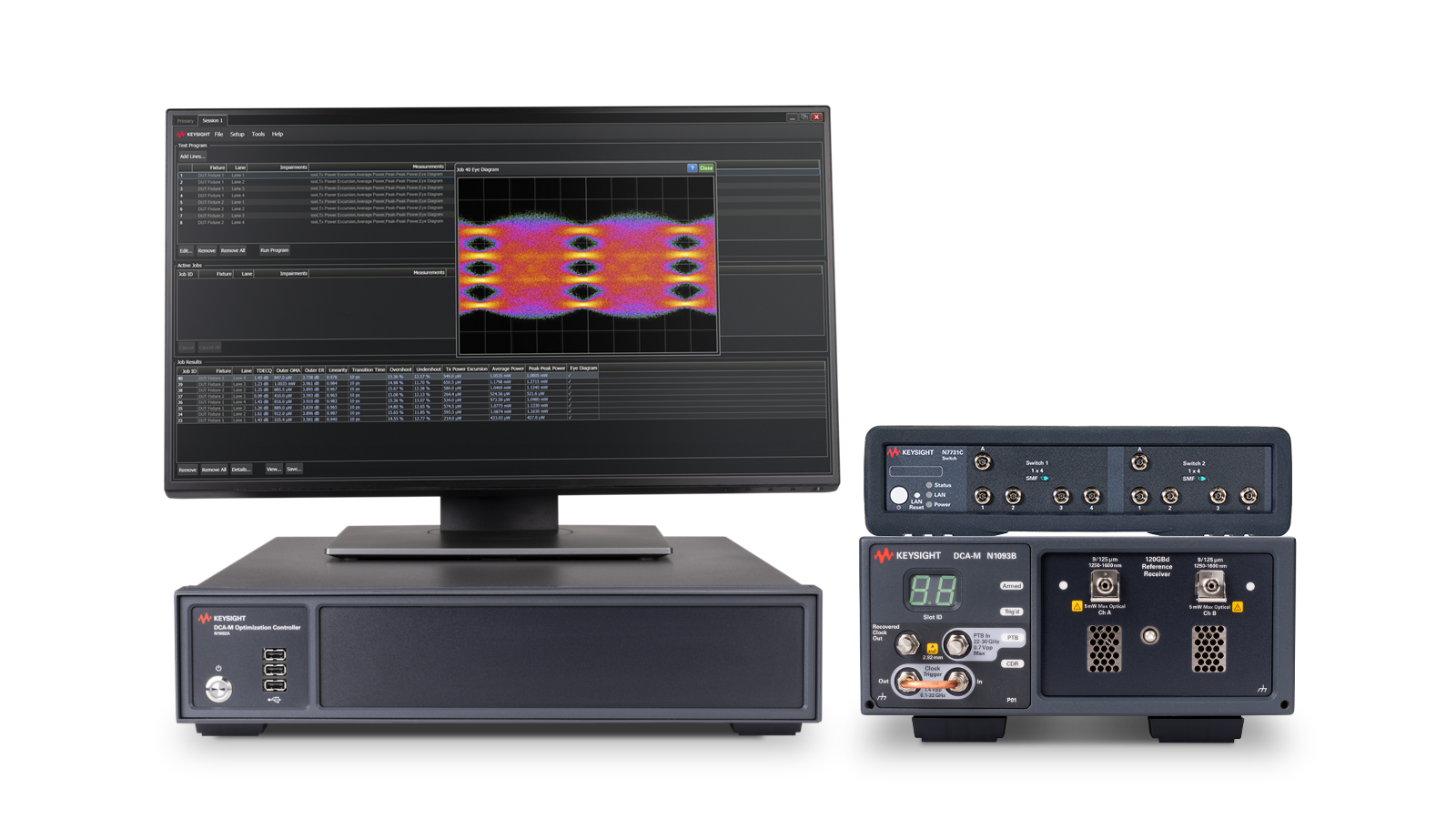
Photonic and Optical Test
Validate optical transceiver performance for AI data center deployments with 224 Gb/s optical measurements.
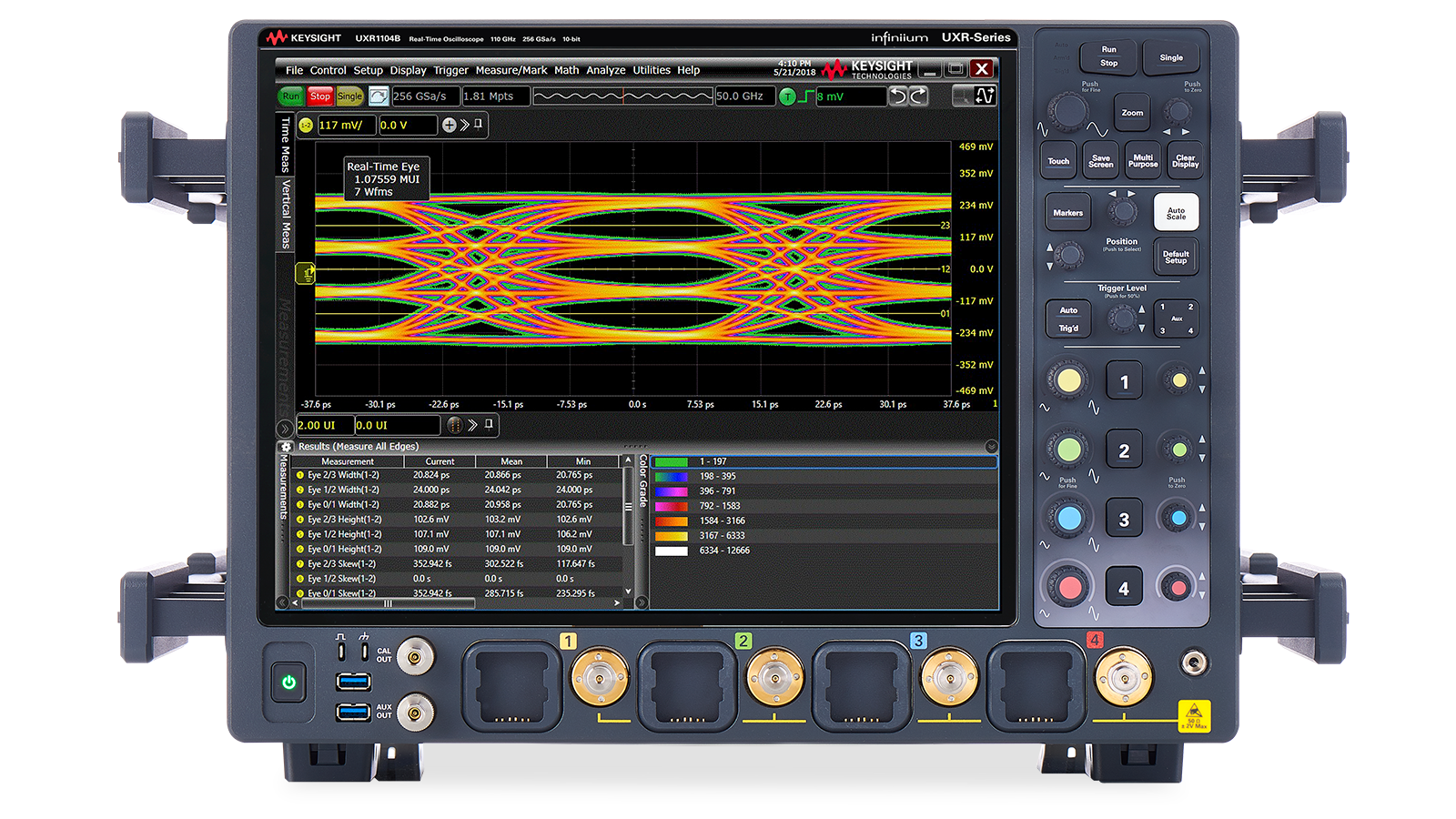
Interconnect and Network Performance Test
Validate reliability, stability, performance, and interoperability of AI-optimized Ethernet devices and interconnects using 212 Gb/s electrical lane interfaces.
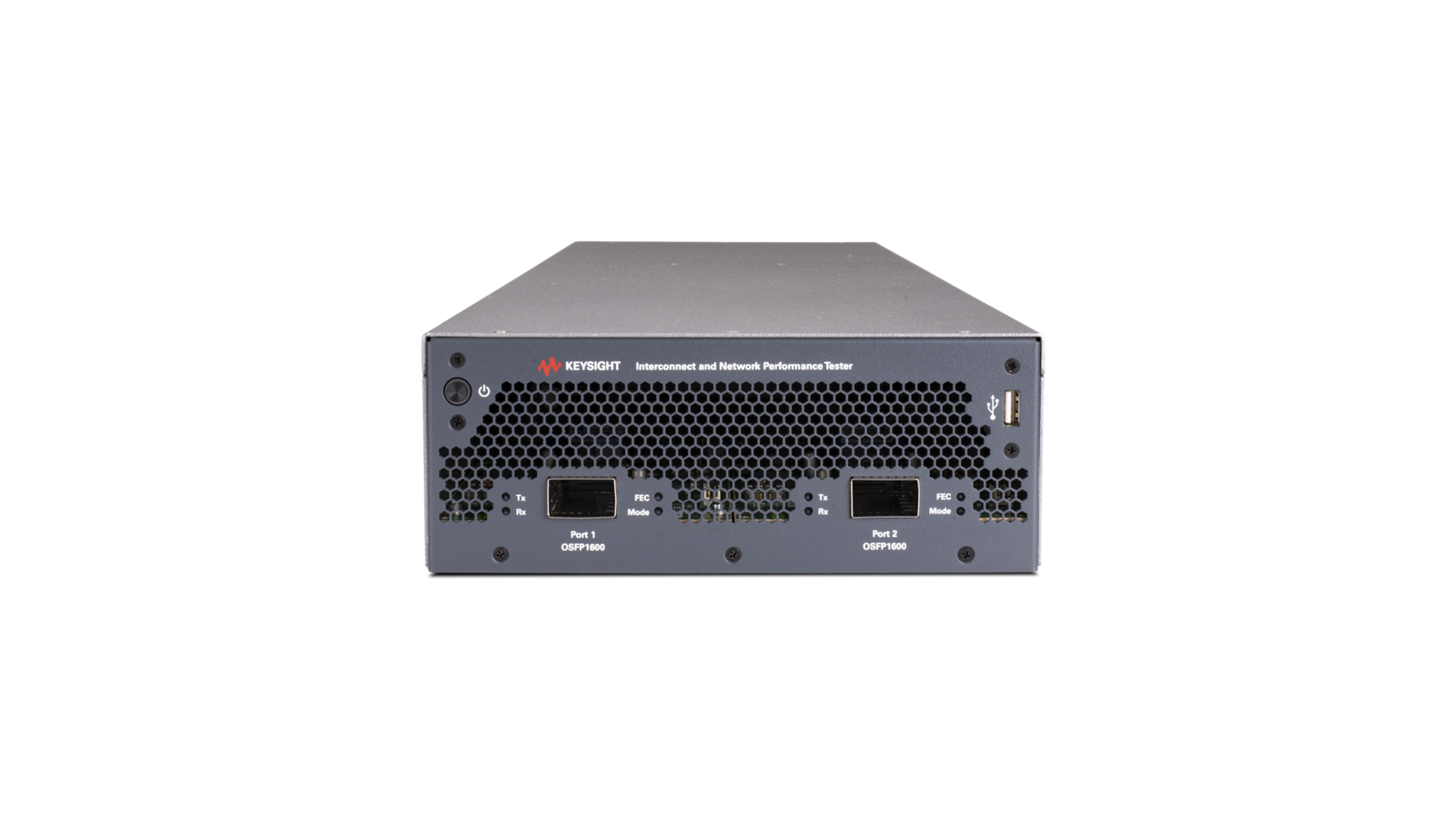
Optical & Electrical Interoperability and System Test
Validate optical and electrical Ethernet links under realistic traffic and FEC conditions. Measure throughput, latency, frame loss, and link resilience before AI cluster deployment.

400G/800G ZR Transceiver Design
Characterize coherent ZR-class transmitters using reference-receiver optical modulation analysis. Measure modulation quality and transmitter impairments for high-capacity data center interconnects.

Copper Interconnect Validation
Characterize high-speed cables, connectors, packages, and PCB structures to 250 GHz. Validate broadband interconnect performance and signal integrity for next-generation AI infrastructure.
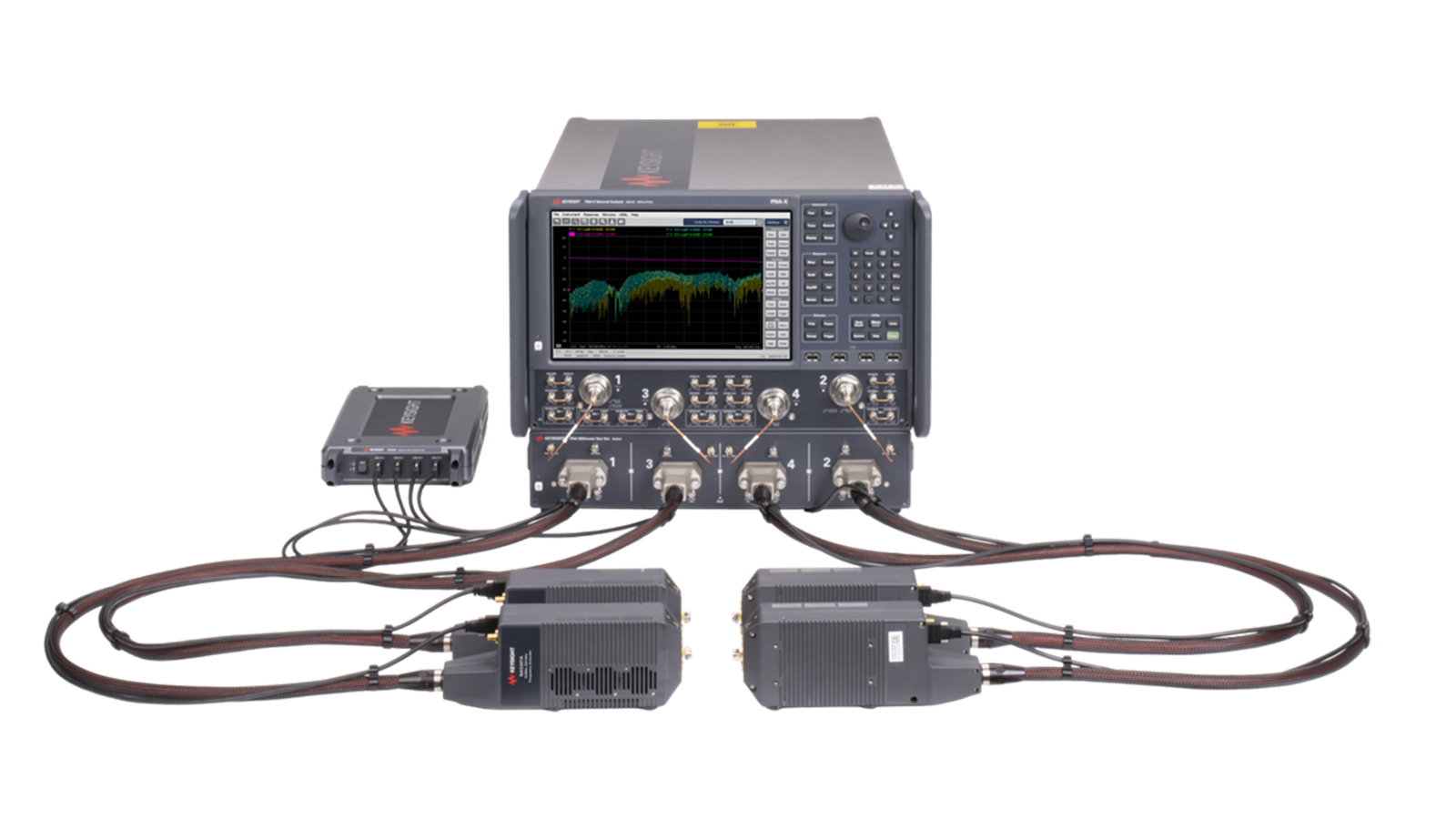
Optical I/O Closer to the Package
Characterize ultra-wideband electrical-to-optical behavior of integrated photonic devices. Measure electro-optical S-parameters to validate optical I/O close to AI silicon and advanced packages.
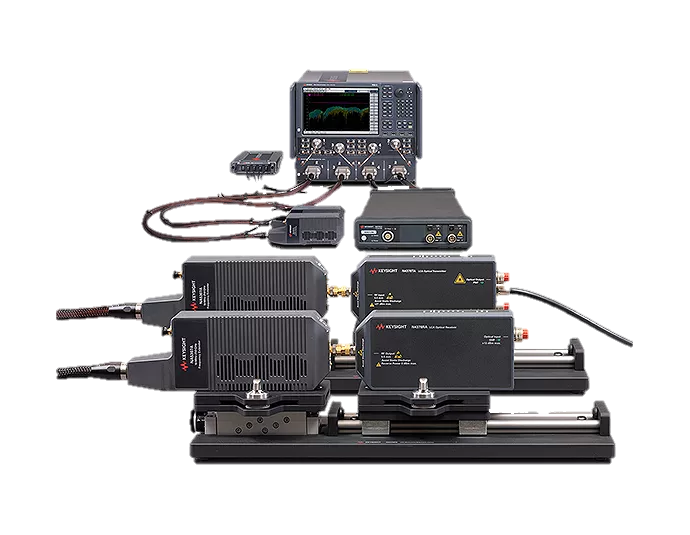
Silicon Photonics
Automate wafer-level silicon photonics characterization with controlled wavelength, polarization, and optical power. Improve repeatability and measurement accuracy across photonic devices.

Advance AI-ready semiconductor and high-speed digital design with AI solutions optimized for AI data center architectures. Debug memory and PCB designs, minimize design spins, and accelerate development with high-accuracy instruments for signal analysis and validation. Automate compliance testing for PCI Express® (PCIe®), double data rate DDR memory, and Compute Express Link (CXL) standards to simplify workflows and ensure reliable, standards-based performance.
Receiver Compliance Test
Test a wide range of digital high-speed buses to comply with the latest generation of AI data center standards — including PCIe, USB4, MIPI, and more.
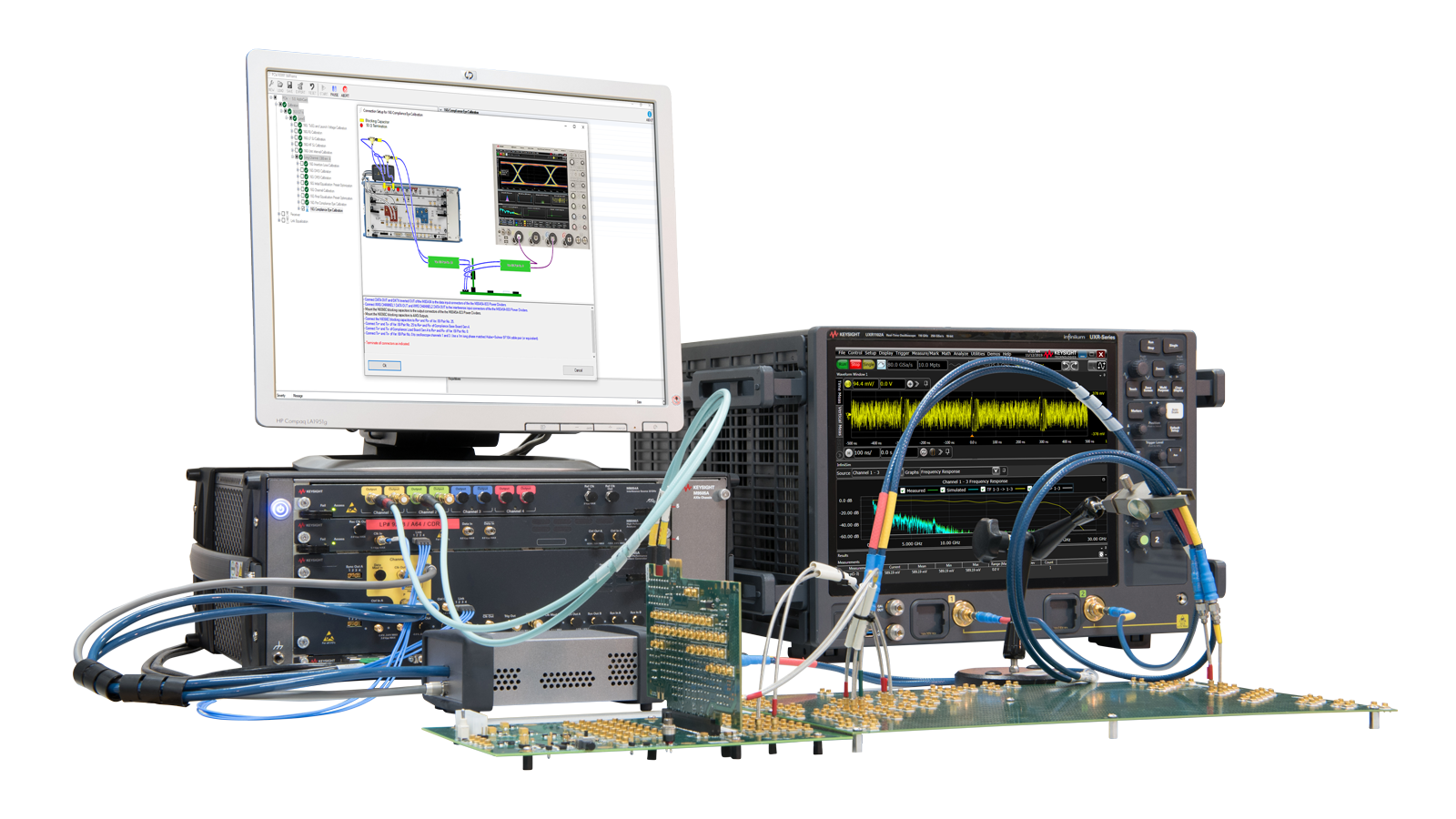
PCI Express® and Compute Express Link Test
Validate PCIe transmitter performance at 128 GT/s PAM4. Measure eye quality, SNDR, and jitter, and automate compliance testing for next-generation AI compute interfaces.
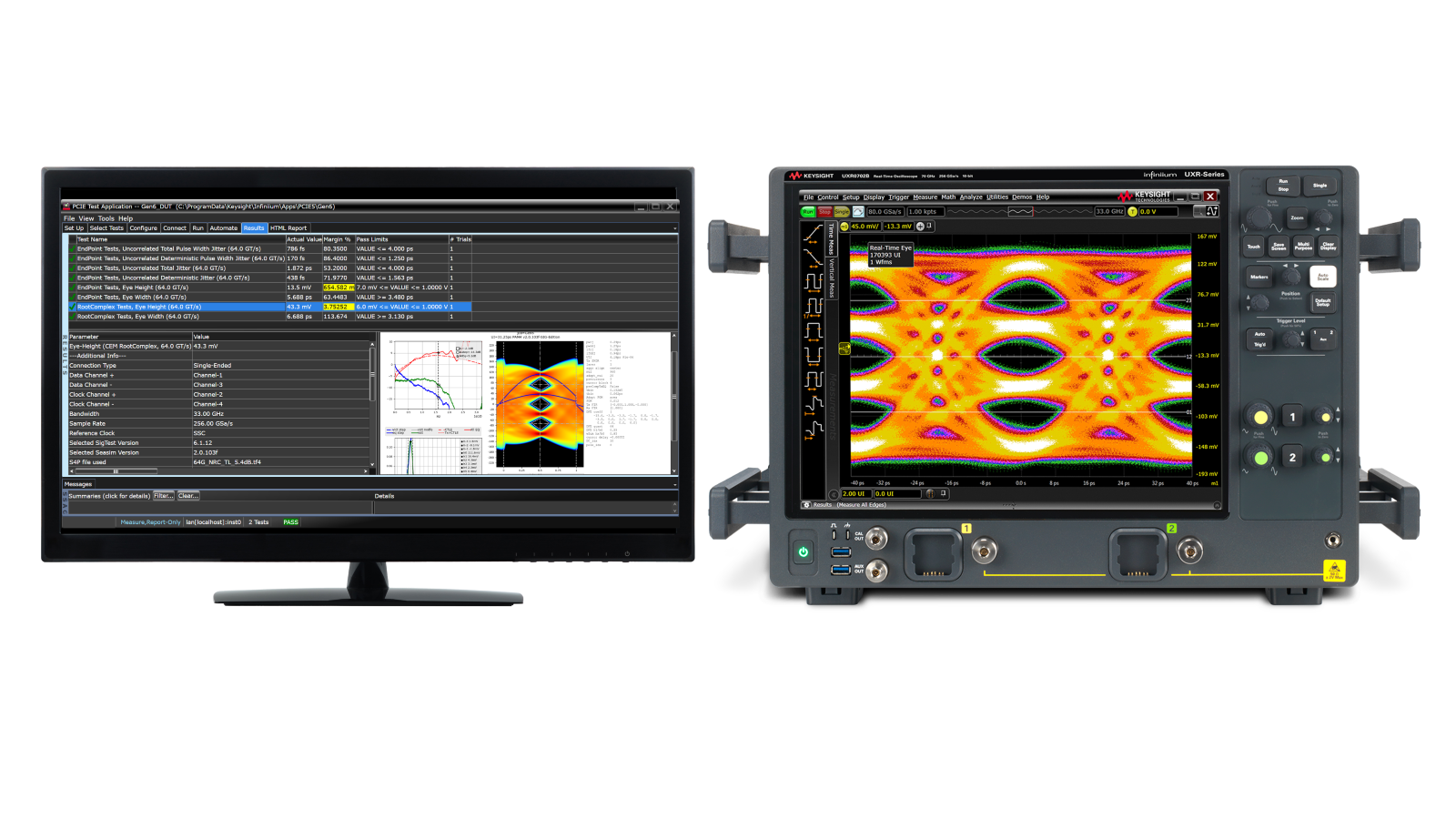
Protocol Analysis
Perform deep protocol analysis on AI-ready PCIe® devices with no calibration needed. Emulate and visualize data traffic to pinpoint issues with AI data center readiness.
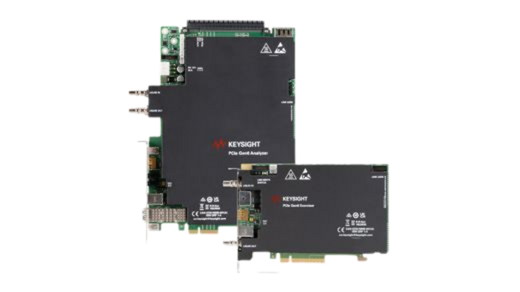
Create Shared Memory Pools
Exercise CXL fabrics across hosts, switches, accelerators, and memory devices. Validate coherency and memory transactions for scalable shared-memory AI architectures.
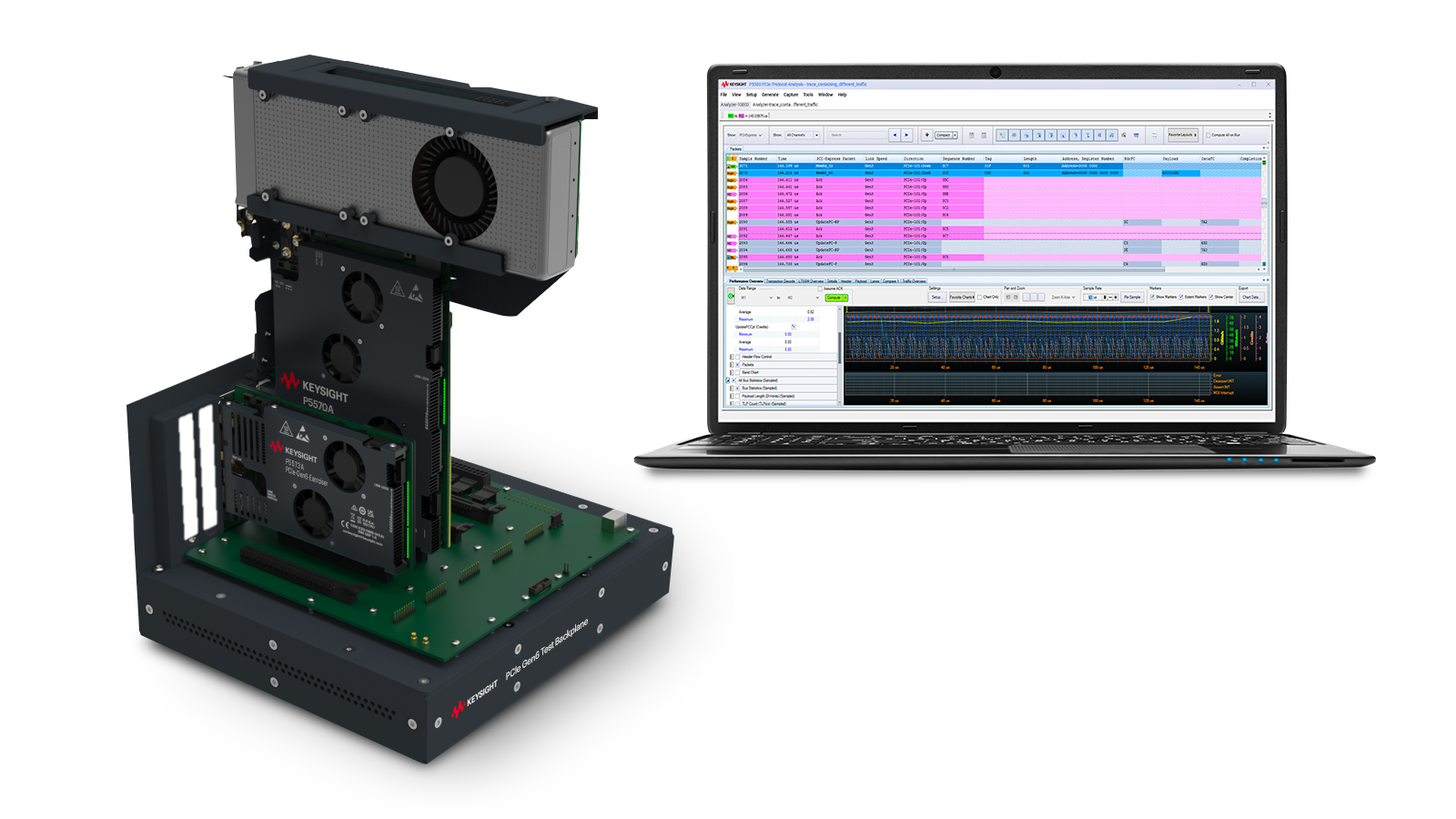
Scale High-Performance XPU Coupling
Validate UALink and other high-speed accelerator interconnects. Measure transmitter signal quality and compliance margins to ensure reliable, low-latency, high-bandwidth XPU connectivity for scale-up AI systems.
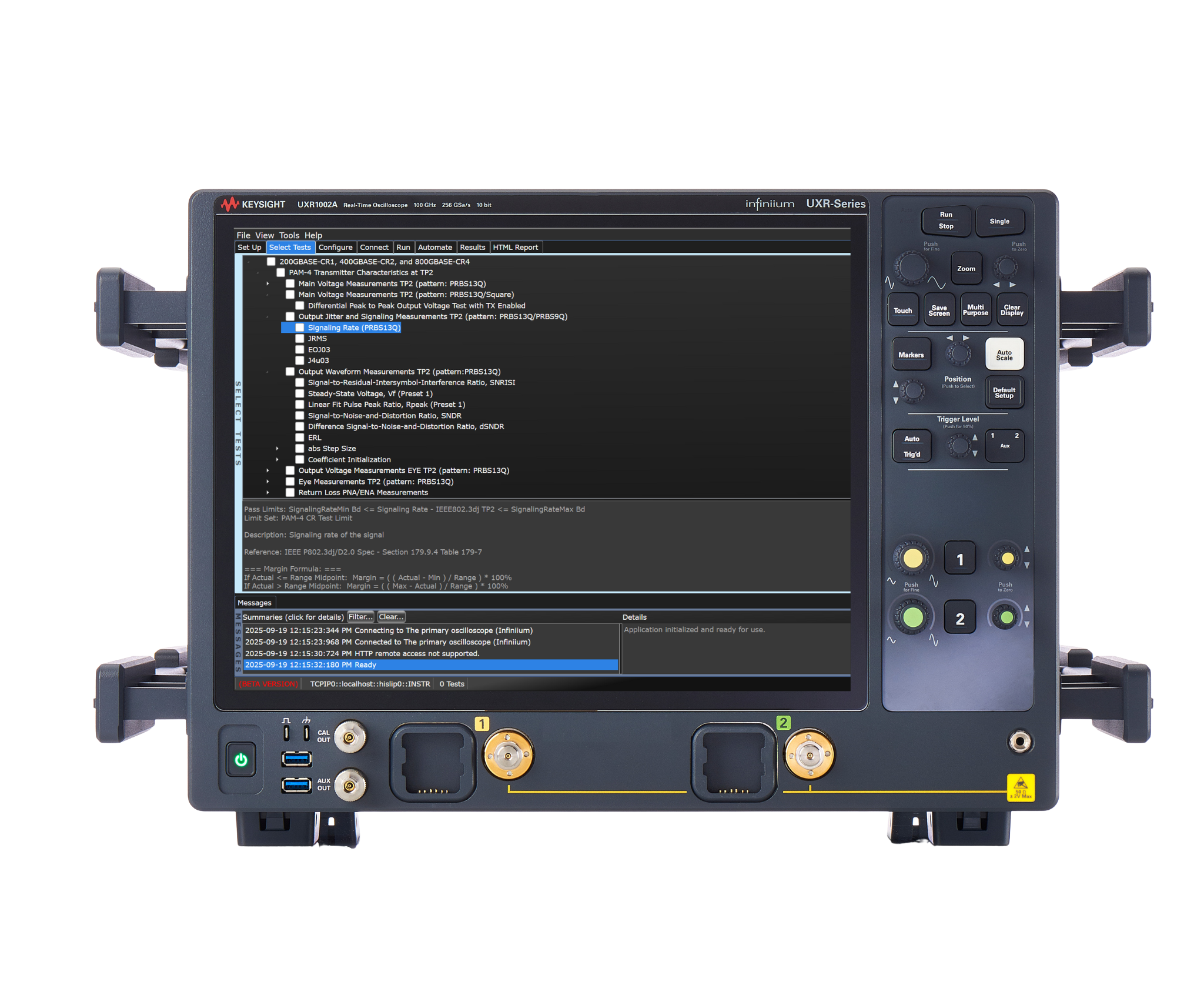
Optimize the Backbone of the Node
Validate CXL communication between hosts, accelerators, and memory devices. Analyze link initialization, protocol negotiation, coherency, and interoperability across the AI server backbone.

Memory Integration
Validate high-speed DDR memory systems across protocol, timing, and signal integrity. Identify margin and interoperability issues for bandwidth-intensive AI compute platforms.
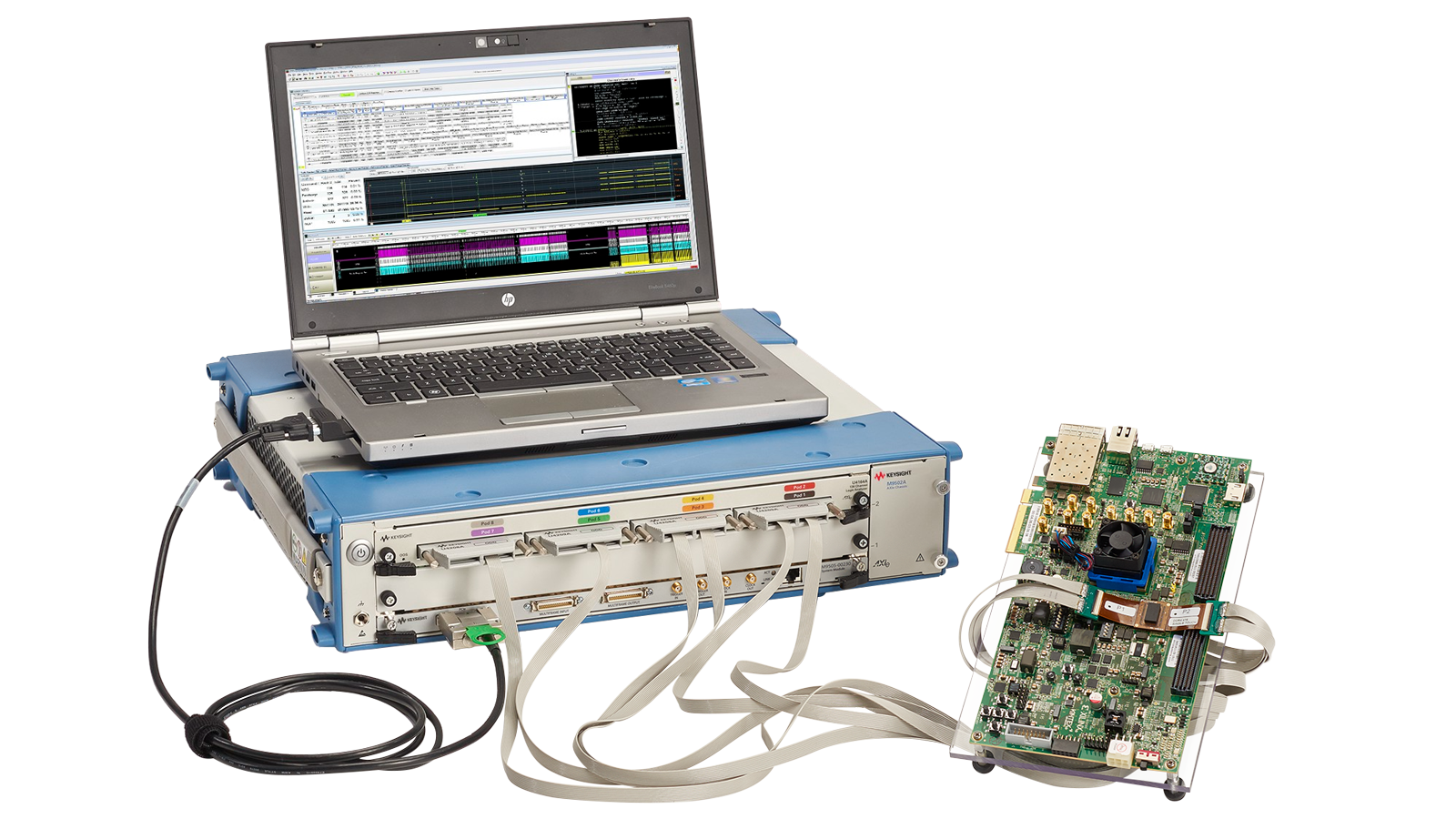
Chiplet Design
Model and optimize high-speed die-to-die chiplet interconnects before silicon. Analyze channel and signal-integrity behavior to accelerate AI chiplet and UCIe design.
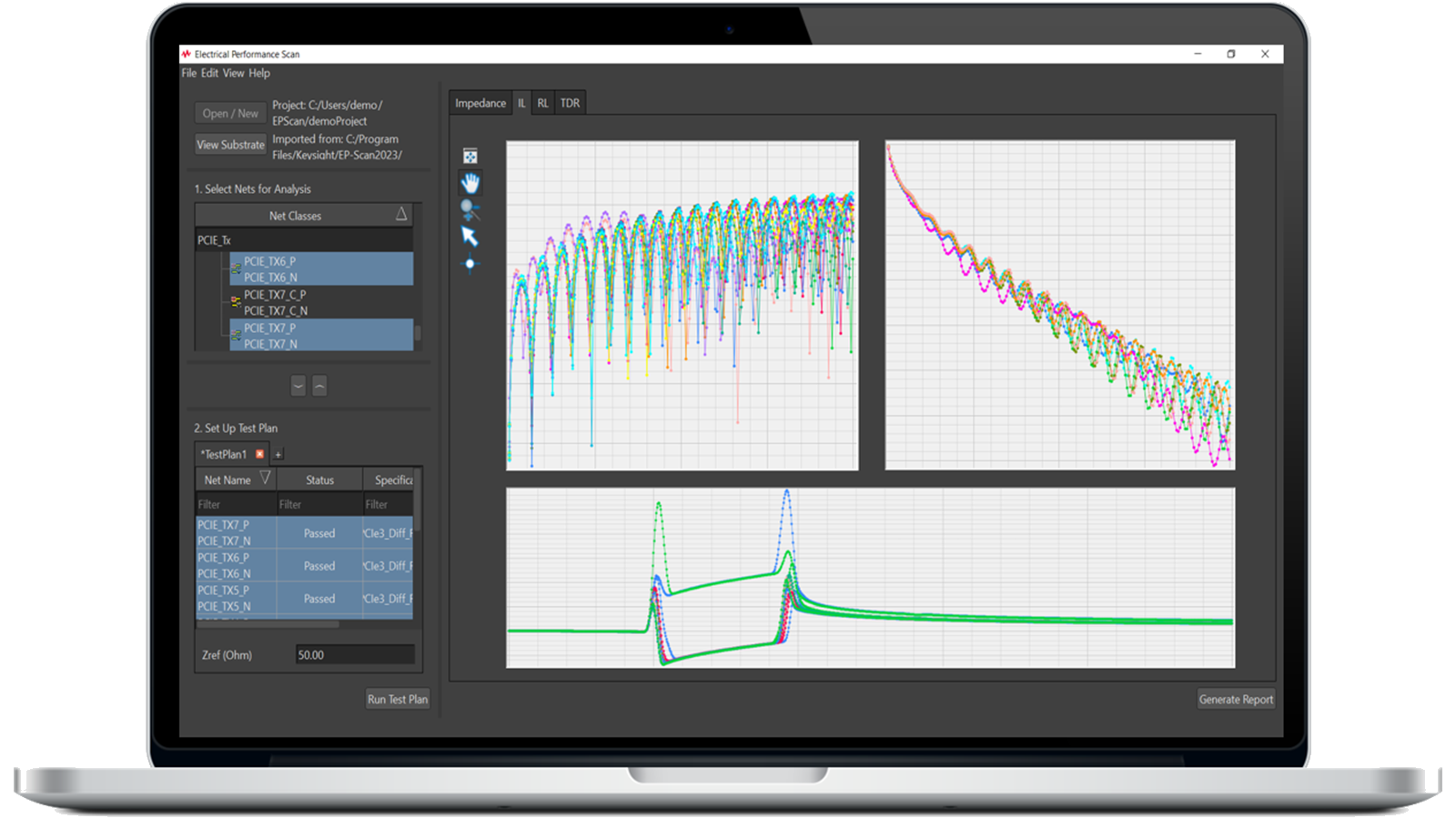
Explore AI solutions for AI data center infrastructure built in collaboration with leading network equipment manufacturers. Debug network components, verify compliance, and characterize power integrity in AI data centers using optical and electrical simulation, validation, and test solutions that cover every layer of the network stack. Reduce design risk and setup complexity with integrated tools for design, validation, and automated test — ensuring interoperability and signal integrity under high-speed conditions.
Semiconductor Parametric Test
Perform precise on-wafer semiconductor characterization to extract device parameters and validate electrical behavior before packaging and system integration.

Component Analysis
Characterize AI-ready optical components for receiver and transmitter testing. Test high-baud-rate network equipment across multiple modulation formats.
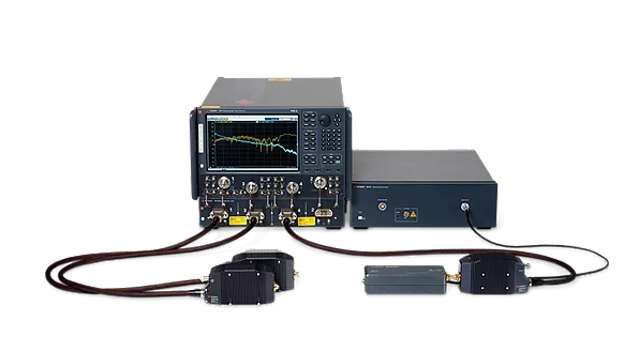
Debug and Compliance Test
Gain deep insights into the physical layer performance of AI-optimized electrical and optical components at 200 Gb/s+. Test conformance to many IEEE and OIF standards.

Receiver Characterization and Compliance Test
Generate, characterize, and test high-speed optical and electrical links up to 3.2T, ensuring AI data center interconnects meet stringent performance and reliability demands.

Power Integrity Analysis
Measure power integrity and perform root-cause analysis on AI data center infrastructure and high-speed digital designs.
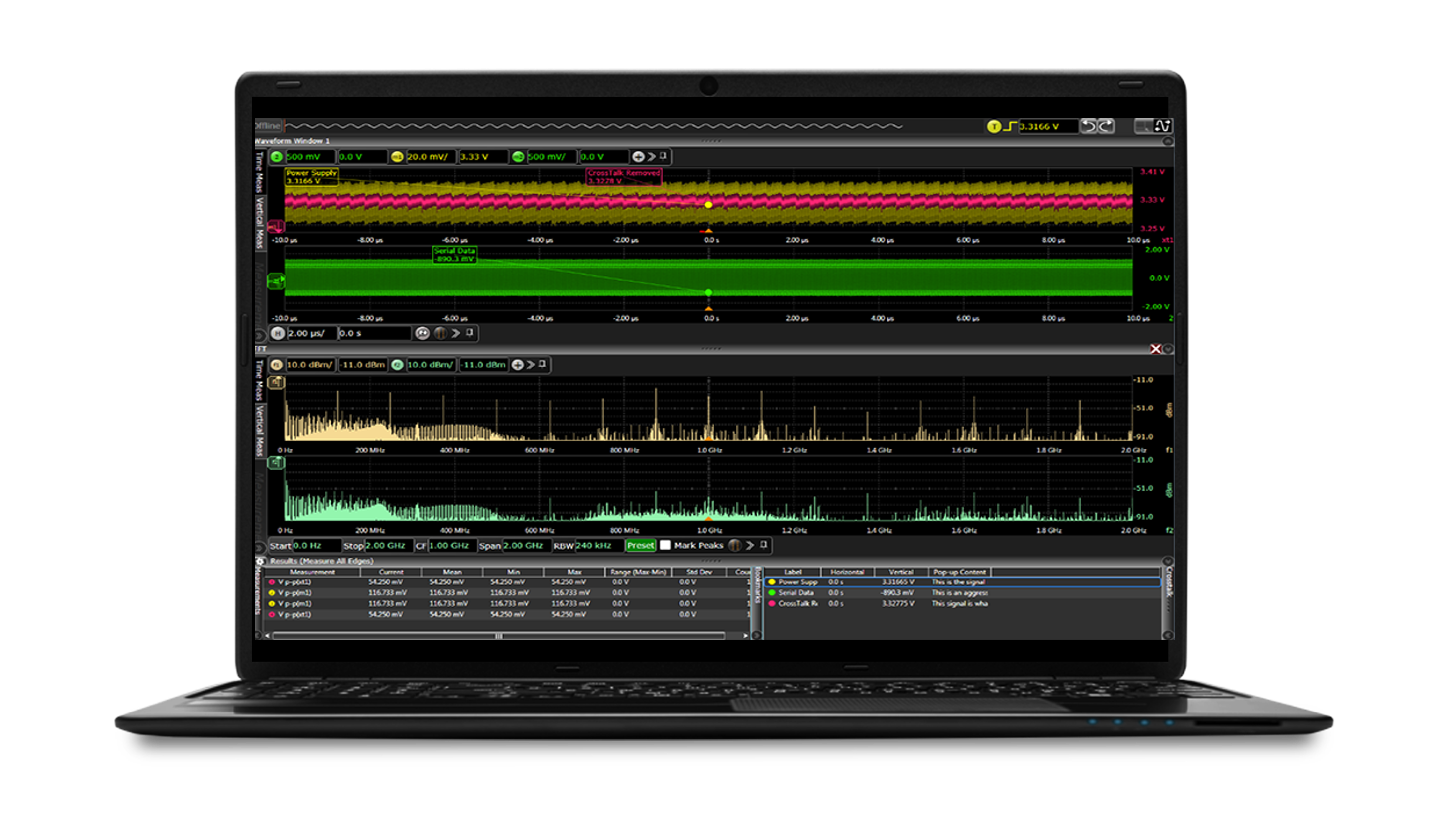
Power Rail Analysis
Make power integrity measurements needing mV sensitivity when measuring noise, ripple, and transients on network equipment for AI data centers.

Server Power Supply Validation
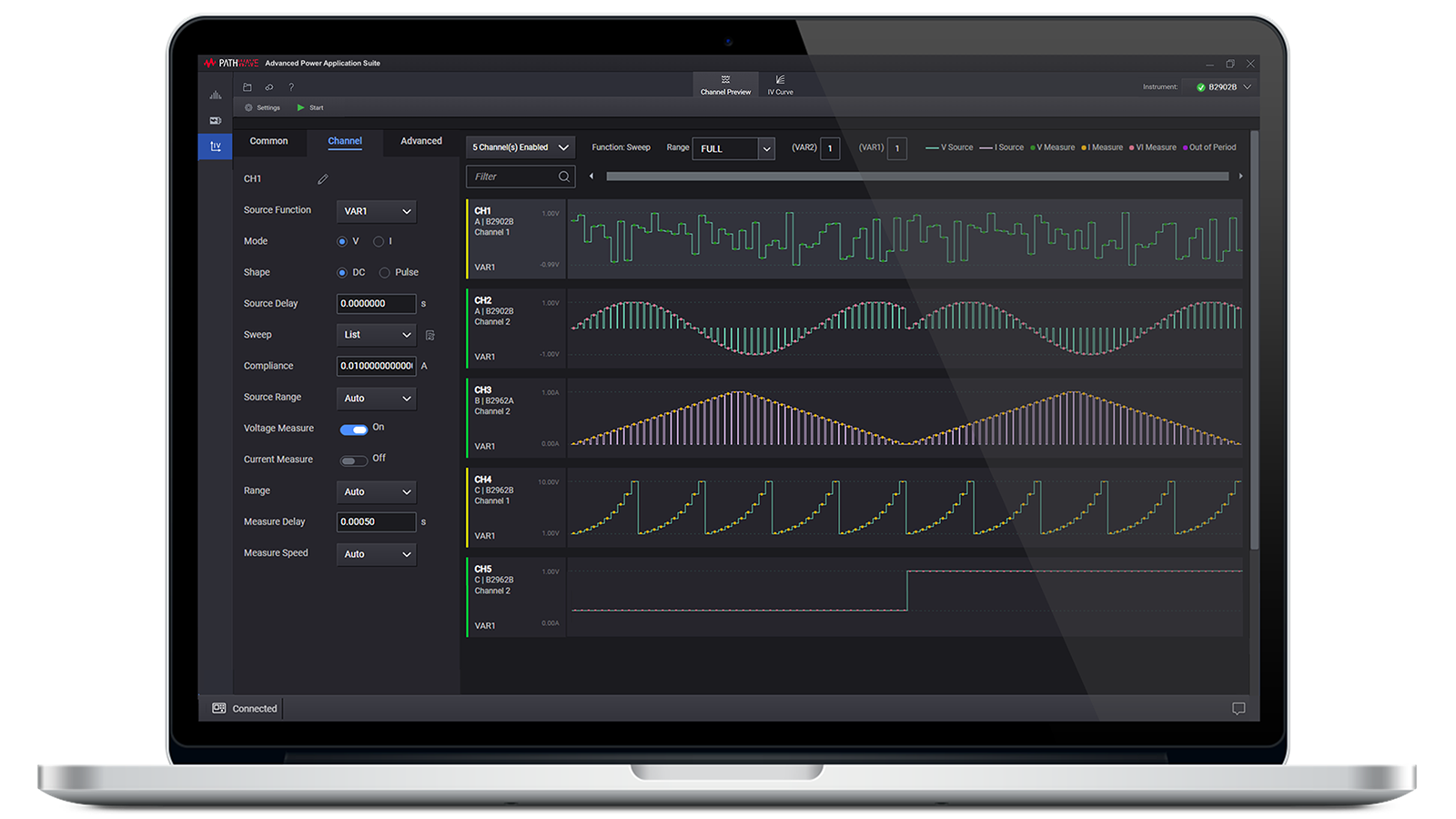
Validate AI server power supplies under steady-state, peak, transient, and fault conditions. Automate efficiency, stability, and protection testing for reliable high-power operation.

Emulate high-power data center DC architectures and dynamic loads. Validate startup, transients, protection, and efficiency with regenerative power and automated test workflows.
In-Circuit / PCBA Manufacturing Test
Test dense, high-speed PCB assemblies and detect opens, shorts, incorrect components, and interconnect defects. Improve manufacturing coverage and first-pass yield.

Explore AI Data Center Use Cases
Learn More About AI Solutions

eBook
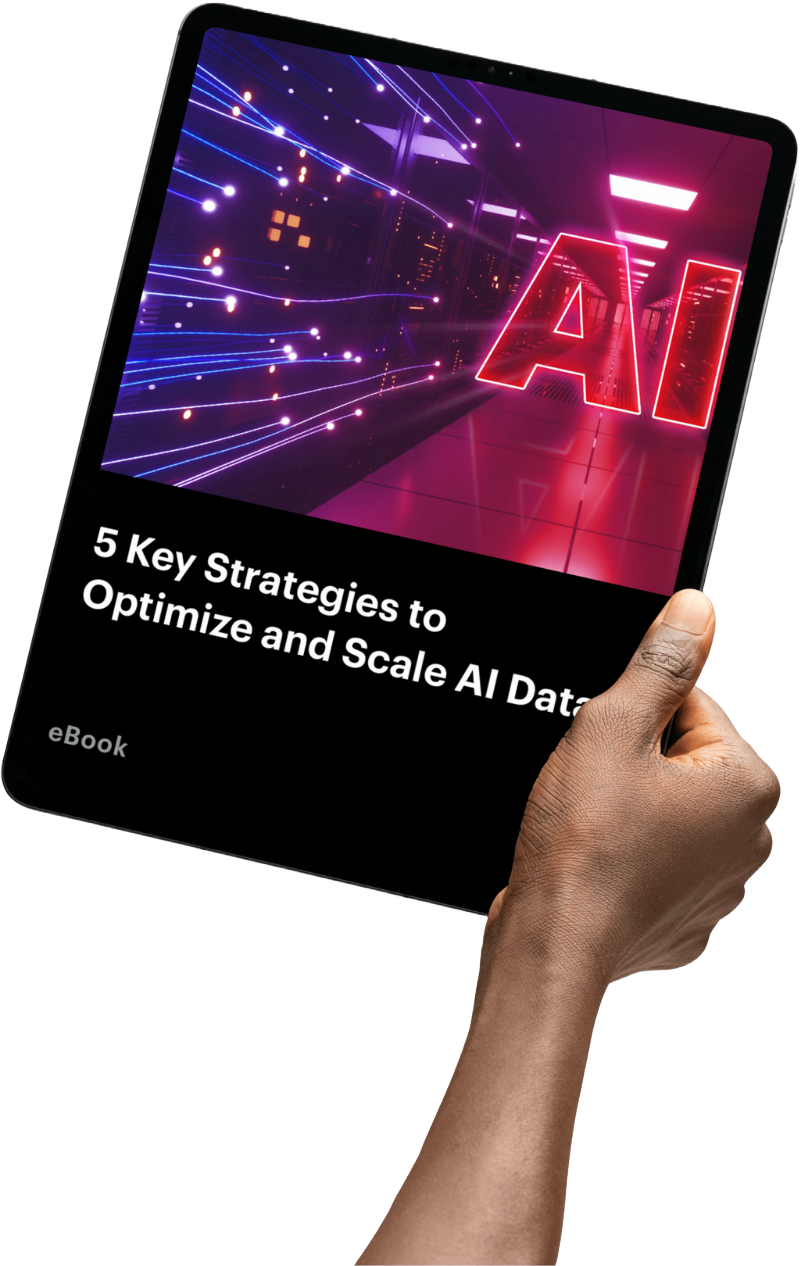
5 Strategies to Optimize and Scale AI Data Centers
Emulate AI workloads, benchmark infrastructure, and improve network resilience to better optimize data center performance.
White Paper
Top questions and answers on how artificial intelligence and machine learning really impact data center networking and design.
White Paper
Scale AI clusters with advanced emulation solutions.
White Paper
Scale data center infrastructure from 400G / 800G to 1.6T and beyond.
Catalog
Meet or exceed the latest industry standards, reduce time-to-market, and ensure compliance and interoperability across data center infrastructure.
AI Solutions FAQs
An AI solution is more than just a model — it’s an orchestrated system involving data, compute, and operations, optimized for tasks like inference, prediction, and automation. In infrastructure-heavy contexts such as data centers, AI solutions must integrate seamlessly with the compute stack (DDR/HBM memory, PCIe/CXL lanes), interconnects (400G, 800G, 1.6T), and networking protocols (RoCEv2, RDMA). Scalability depends on the ability of these layers to support jitter-free data movement, low latency, and high signal integrity under workload stress.
To function reliably at scale, an AI solution must combine:
- Compute: High-bandwidth memory (HBM/DDR), accelerated with PCIe/CXL interconnects
- Interconnect: 800G/1.6T backbones and 224G SerDes validated for signal quality and modulation
- Network: Low-latency communication with collective bandwidth optimization
- Power: Thermal-aware design and power integrity tools to manage consumption and prevent hotspots
KPIs like jitter, crosstalk, recovery time, algorithm bandwidth, bus bandwidth, and job completion metrics are tracked to ensure sustained performance across environments.
AI solutions differ significantly by industry based on latency tolerance, compute intensity, and data locality. For example:
- Financial services require ultra-low latency and high interconnect integrity (PCIe Gen5 / CXL).
- Healthcare relies on robust memory bandwidth for imaging workloads (DDR / HBM performance).
- Cloud / hyperscale operators prioritize thermal efficiency and job completion time across rack-scale deployments.
These trade-offs must be modeled and benchmarked using tools like workload emulation and simulation.
AI-related benefits include workload automation, reduced operational costs, and smarter system management. Infrastructure-aware AI solutions can dynamically allocate compute, route data efficiently, and anticipate failures based on telemetry.
These challenges include:
- Design validation across memory, interconnect, and power domains
- Maintaining modulation quality at high signaling speeds (224 Gbps, 1.6T)
- Controlling thermal and power integrity under AI load conditions
Without thorough emulation and benchmarking, AI deployments risk failure due to unexpected jitter, latency, or bandwidth bottlenecks.
AI data pipelines must be designed with infrastructure constraints in mind. In high-performance environments:
- Data is pre-processed close to memory (e.g., HBM near-processing)
- PCIe / CXL enables memory pooling and efficient access
- Network configurations allow low-latency transfer across compute nodes
Additionally, telemetry collected during early validation (e.g., from signal integrity tests or workload emulation) helps refine model performance and training strategies.
While our AI data center solutions focus on system-level performance and scalability, Keysight also offers software solutions for validating AI in safety-critical domains such as automotive. With Keysight, you can achieve trustworthy AI deployments by analyzing data sets, validating model behavior, and monitoring AI in deployment.
Let's Solve What's Next.
Book a meeting or demo with one of our experts