How to Automate RF Power Measurements Directly from a PC

Automate PC-Controlled Power Measurements
Automating radio frequency (RF) power measurements directly from a personal computer requires a measurement device that combines power sensing, measurement processing, and digital communication without relying on a separate hardware power meter. A USB power sensor provides this architecture by connecting the radio frequency signal directly to the sensor while using the USB interface for communication and power. Engineers can configure measurement parameters from the computer, acquire repeated average power readings, and integrate measurement results into automated validation or production workflows. Direct connectivity also reduces the number of instruments and interfaces required when building compact automated test configurations.
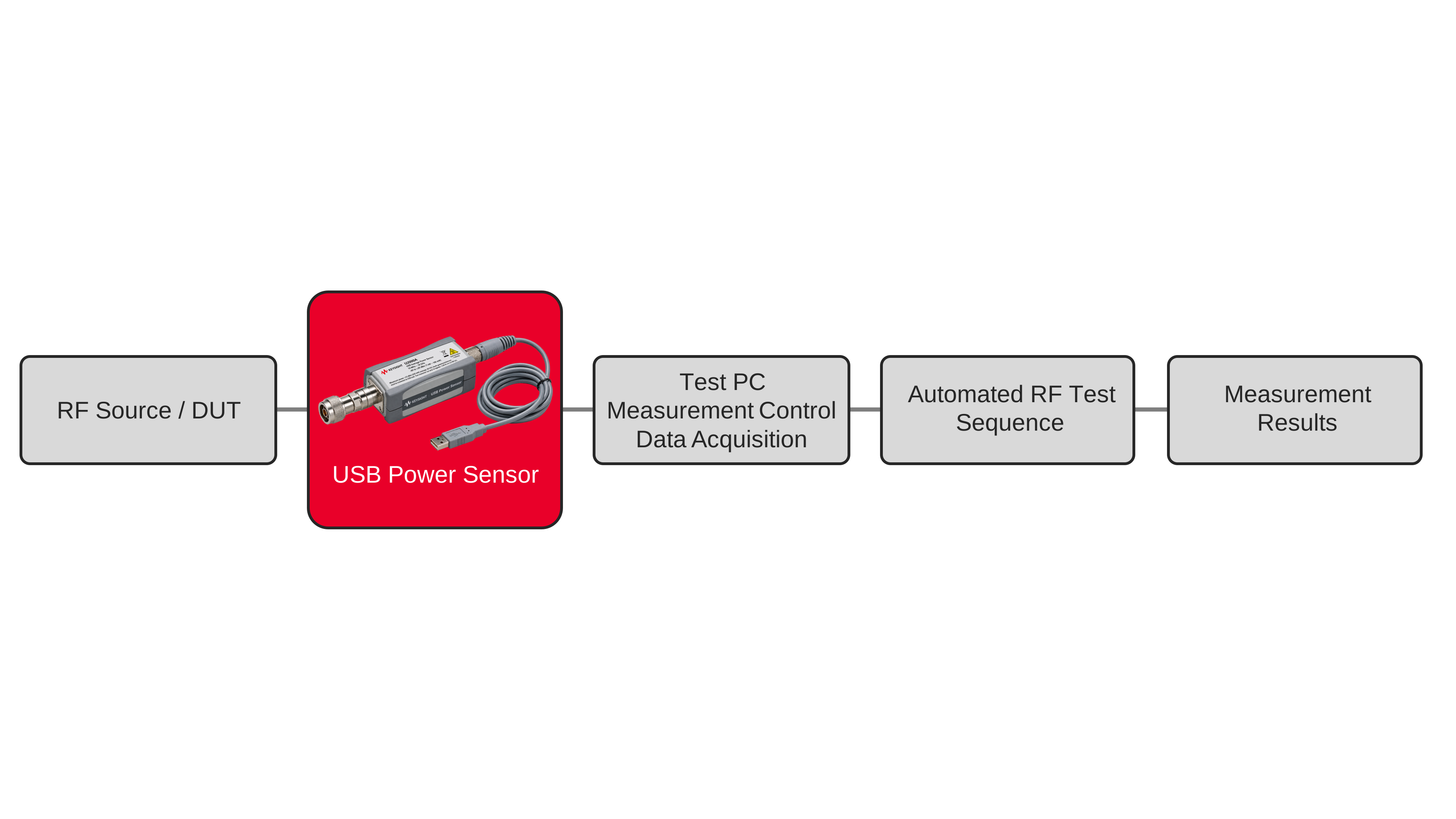
The measurement setup typically includes the radio frequency source or device under test, a USB power sensor, and a computer running supported measurement software or an automated test program. Engineers verify the expected frequency and signal level, establish the radio frequency connection, perform zeroing as required, and configure acquisition parameters before starting the measurement sequence. Repeated readings can then be collected programmatically, displayed for monitoring, or stored for subsequent analysis. Standard Commands for Programmable Instruments provide a consistent command interface for integrating power measurements into custom test applications and repeatable automated workflows.

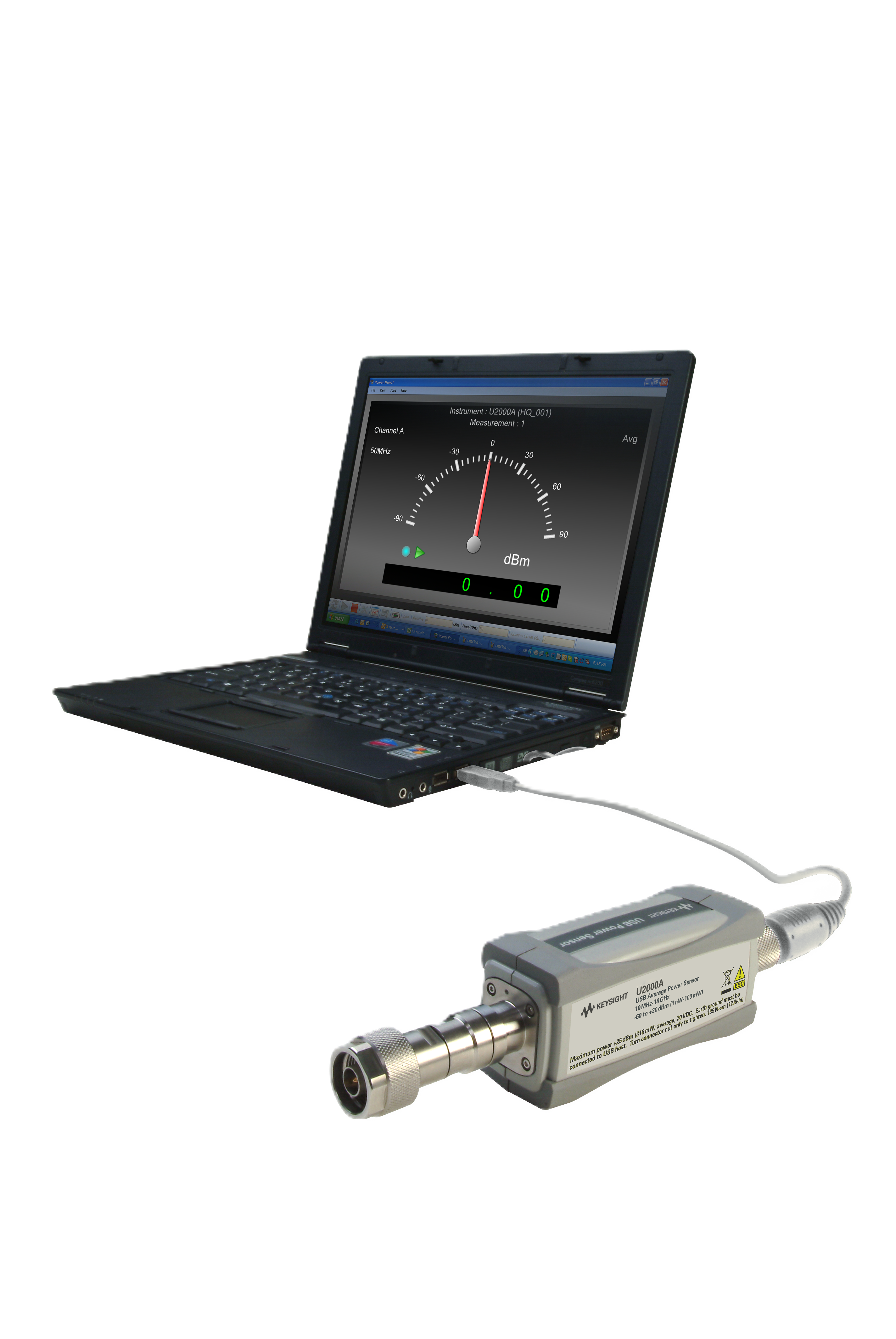
PC-Controlled RF Power Measurement Solution
See Block Diagram of PC-Controlled RF Power Measurement Solution

Explore Products for Our PC-Controlled RF Power Measurement Solution
-

![]()
U2000A 10 MHz - 18 GHz USB Power Sensor


Discover Resources and Insights
Additional Resources for Automated RF Power Measurements
Related Use Cases

-
![]()
Learn More
How to Perform Burst Power Measurement
Measure burst RF signal power using time-gated averaging with power meters, sensors, and automated control software for TDMA systems.
Learn More

-
![]()
Learn More
How to Measure RF Power During Rapid Amplitude Switching
Measure RF power during rapid amplitude transitions using a power meter, fast-response sensors, continuous acquisition, and automated measurement techniques.
Learn More
-
![]()
Learn More
How to Measure Average Power of Frequency-Hopping Signals
Measure average RF power of frequency-hopping signals using power meters, sensors, and time-aligned measurement techniques for accurate results.
Learn More

Get in Touch with One of Our Experts
Need help finding the right solution for you?