













- Overview
- All Models
- Support
Enhanced RF characteristics for wider bandwidth applications
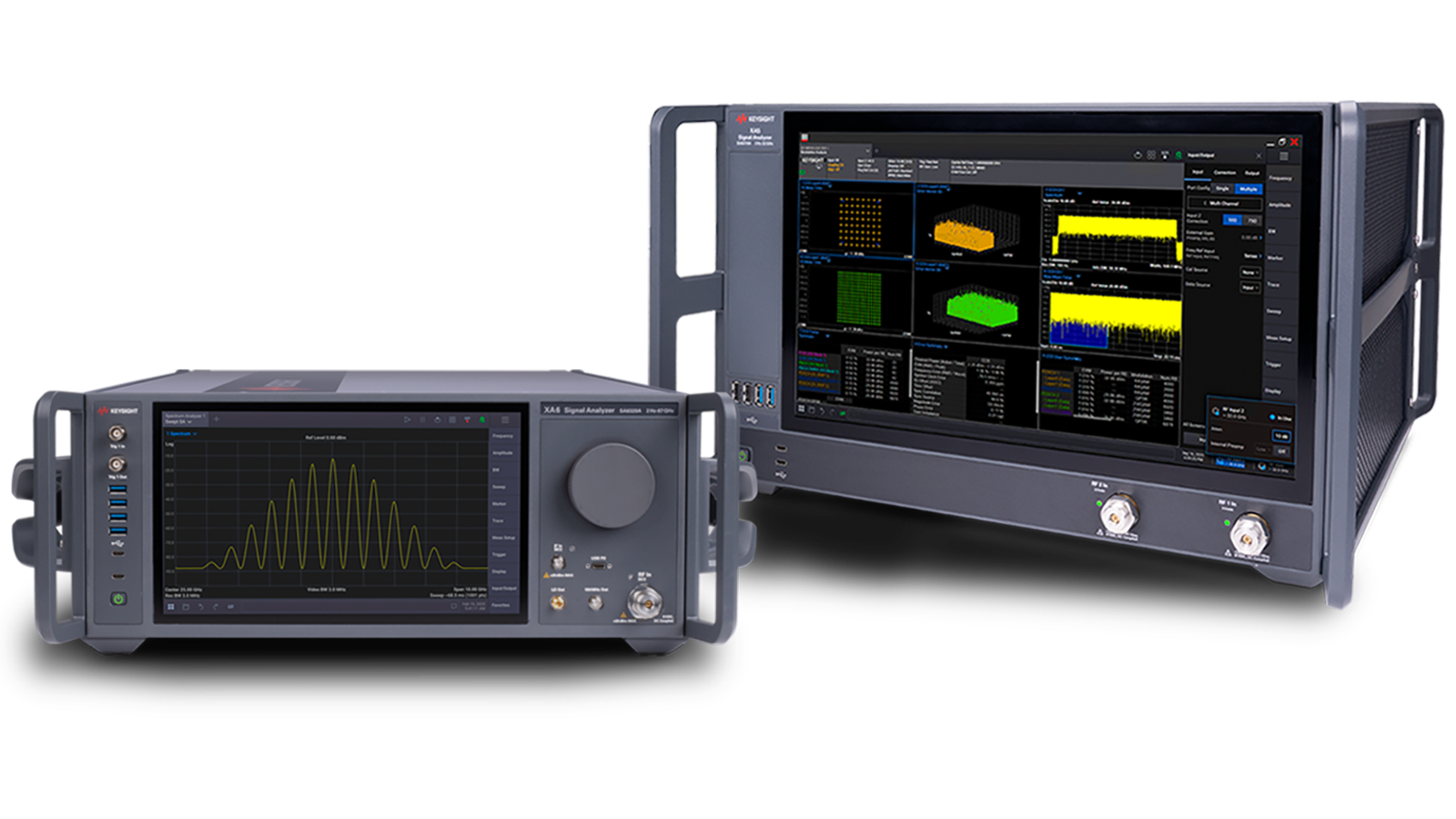
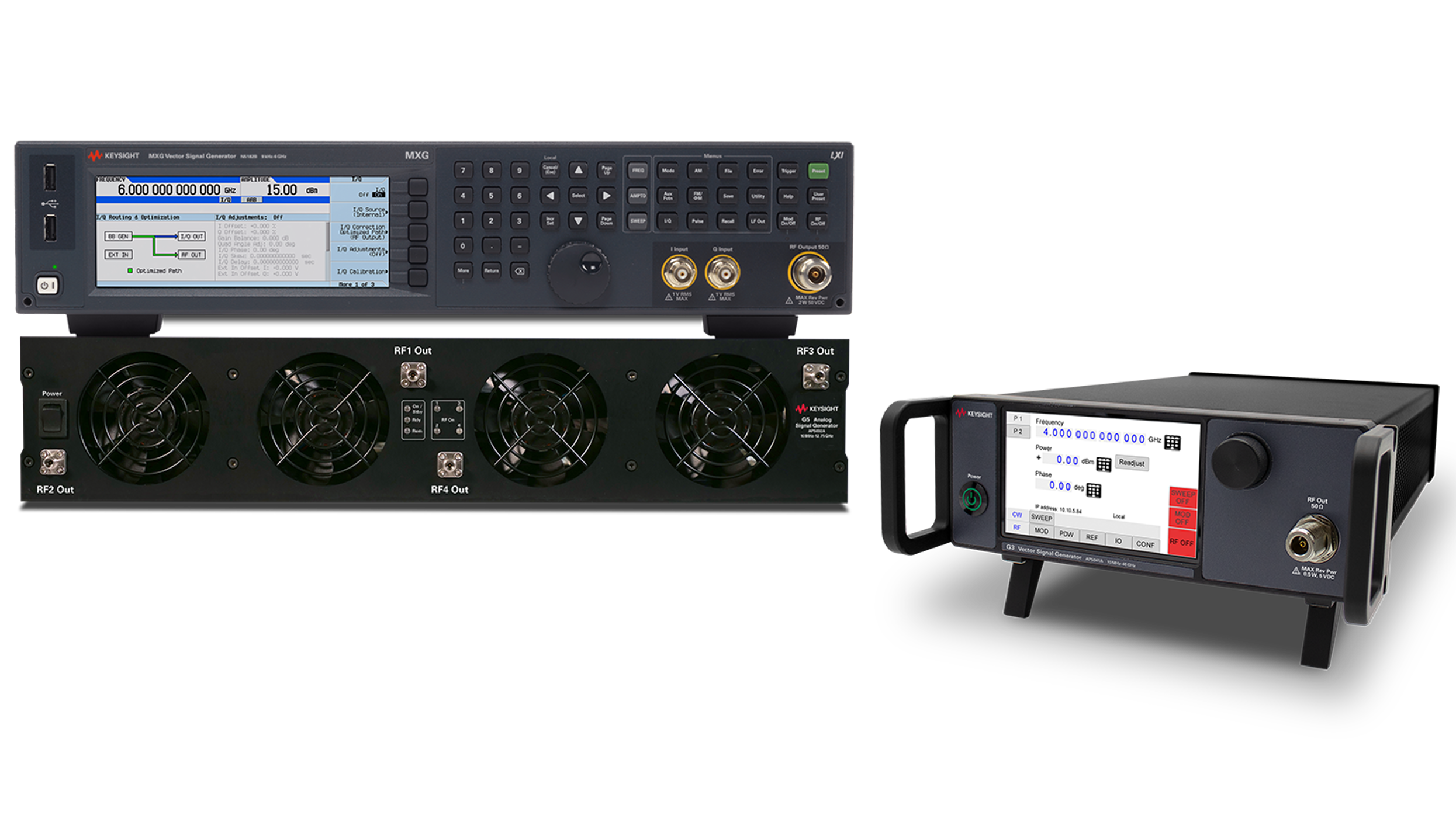
Keysight Advanced vector signal generators build on our Essential signal generator’s capabilities, supporting higher frequencies, wider bandwidth, and multiport configurations. Advanced models offer configurations with frequencies up to 40 GHz, bandwidths up to 400 MHz, and up to four phase-coherent outputs for complex testing like multiple-input / multiple-output (MIMO) and beamforming. Choose one of our popular configurations or configure one specific to your application. Need help selecting? Check out the resources below today.
Wideband application support
Generate wideband signals to simulate wireless communication standards like Wi-Fi 6 / 6E and LTE-Advanced Pro and satellite standards like DVB-S2.
Spectrally efficient signals
Ensure repeatable, high-quality measurements to speed up R&D testing or optimize production test margins with low adjacent channel power ratio (ACPR) and high output power.
Fast switching speeds
Accelerate testing or emulate fast-moving signals like radar with rapid switching speeds and list mode pre-programming of frequency, amplitude, and other parameters.
Low phase noise
Generate pure signals with low phase noise to enable high-resolution and high throughput in next-generation communication systems.
Most popular configurations

XG4-class Vector Signal Generator

XG2-class Vector Signal Generator
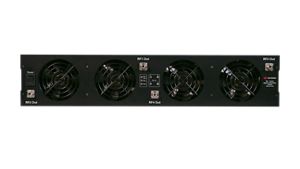

XG4-class Vector Signal Generator
Services and support
Innovate at speed with curated support plans and prioritized response and turn-around times.
Get predictable, lease-based subscriptions and full lifecycle management solutions—so you reach your business goals faster.
Experience elevated service as a KeysightCare subscriber to get committed technical response and more.
Ensure your test system performs to specification and meets local and global standards.
Make measurements quickly with in-house, instructor-led training, and eLearning.
Download Keysight software or update your software to the newest version.
Frequently asked questions
Fast switching speed in an RF signal generator refers to the ability to quickly switch between different frequencies, amplitudes, or modulation states. This capability provides several significant benefits, especially in testing, development, and operational scenarios that demand rapid signal adjustments. Here are some key advantages:
1. Improved Test Efficiency:
Fast switching speed enables an RF signal generator to quickly cycle through various test conditions (e.g., frequency steps or amplitude levels) without significant delays. This minimizes overall test time in applications such as production line testing of RF components (e.g., filters, amplifiers) or automated test equipment (ATE) setups, enhancing throughput and productivity.
2. Simulation of Dynamic Environments:
In real-world RF systems, such as wireless communications or radar, signals often change rapidly due to factors like channel hopping, or Doppler effects. A generator with fast switching can replicate these dynamic conditions, allowing for realistic simulation and validation of receivers, transceivers, and signal processing algorithms.
3. Support for Frequency Agility:
Applications such as frequency-hopping spread spectrum (FHSS) radios, electronic warfare, and agile radar systems necessitate rapid transitions between frequencies to prevent jamming or improve performance. Fast-switching RF signal generators can replicate these agile signals, making them crucial for designing and testing these systems.
ACPR is a crucial performance metric in RF and wireless communication systems that measures the power leakage from a transmitted signal into adjacent frequency channels. It is an essential parameter for assessing signal purity and ensuring minimal interference in communication systems.
ACPR is defined as the ratio of the power in adjacent channel(s) to the power in the main channel. A more negative ACPR (such as -50 dB compared to -30 dB) indicates less interference and greater spectral efficiency.
Phase-coherent RF outputs refer to an RF signal generator's ability to produce multiple signals with a fixed and predictable phase relationship. This capability is invaluable in a variety of advanced applications. It ensures that the phase difference between outputs remains constant over time, even as frequencies or amplitudes change, enabling precise synchronization critical for systems like phased-array antennas, radar, and multi-input multi-output (MIMO) communications.
In radar systems, for example, phase coherence enables accurate beamforming by aligning the phases of transmitted signals to steer the beam electronically, which improves resolution and range. Likewise, in MIMO wireless systems, phase-coherent signals enhance channel capacity and signal reliability by maintaining consistent phase relationships across multiple antennas, optimizing data throughput and minimizing errors. For testing and simulation, phase-coherent RF outputs are crucial for replicating real-world scenarios where phase alignment impacts system performance, such as in electronic warfare or satellite communications.
Overall, phase-coherent RF outputs are valuable because they can deliver precision, synchronization, and reliability in complex RF systems, making them indispensable for cutting-edge technology development and validation.
The modulation bandwidth of an RF signal generator refers to the range of frequencies it can modulate around a carrier signal, which defines the spectral width of the output signal it produces. Measured in hertz (e.g., 100 MHz or 1 GHz), it indicates how much frequency content the generator can apply to a carrier through modulation, whether it involves simple analog modulation (such as AM or FM) or, in more advanced cases like vector signal generators, complex digital schemes that utilize in-phase (I) and quadrature (Q) components.
For practical purposes, modulation bandwidth determines the generator’s ability to create signals that match real-world requirements, such as wideband signals for 5G communications, broadband radar pulses, or high-speed data links. It is a critical specification that highlights the generator’s capacity to handle the spectral demands of modern RF technologies.