Choose a country or area to see content specific to your location
What are you looking for?
-
-
Integrated Physics Suite
Bridging design and physical testing to evaluate drop, impact, shock, and vibration compliance before hardware exists.


-
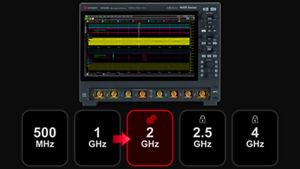
Buy an Expert Oscilloscope, Boost Your Bandwidth
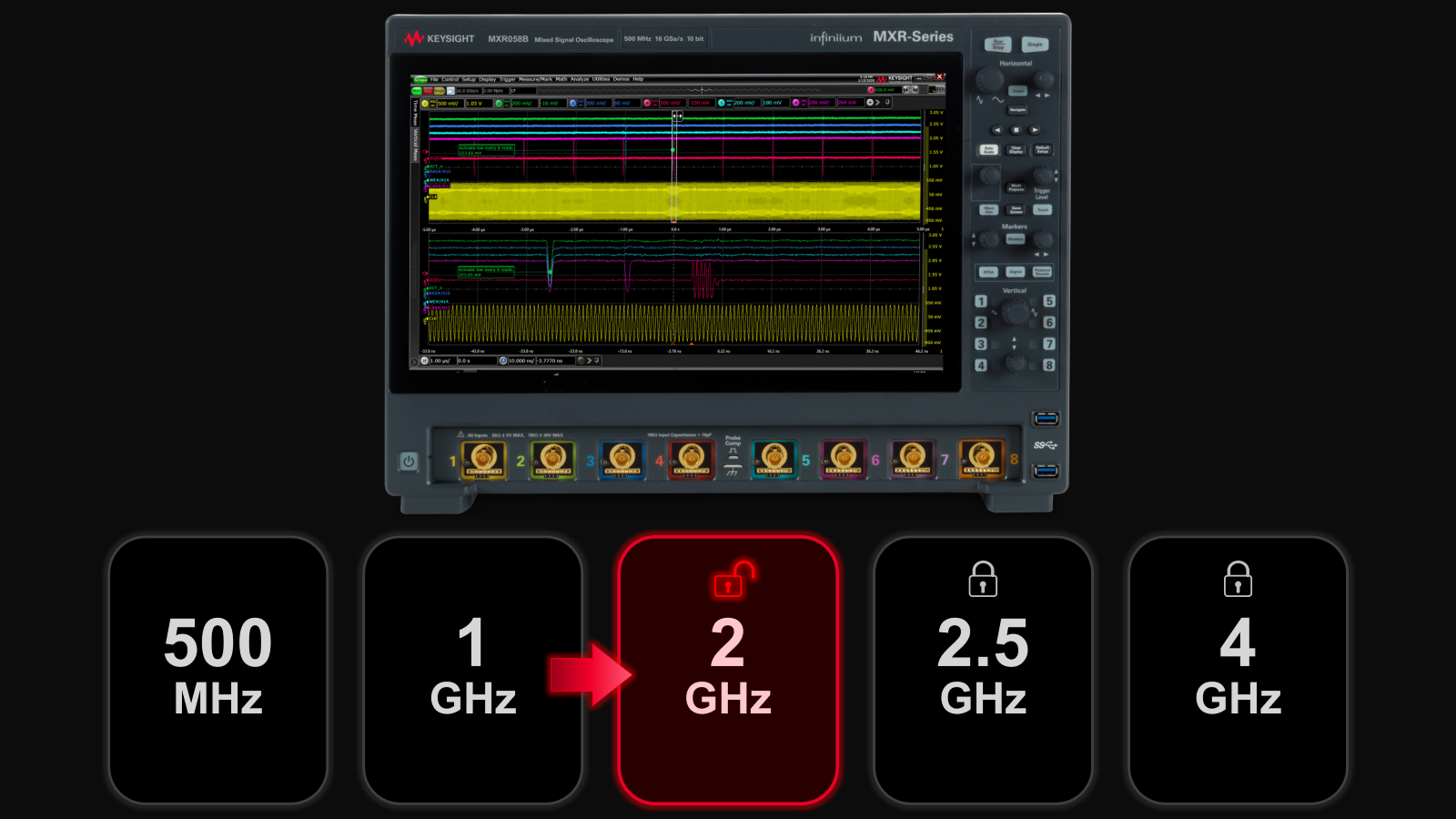
Unlock your free upgrade to the next bandwidth tier.
-
End-to-End Validation for AI Data Center
Strengthen 1.6T network reliability for AI-scale workloads from transceivers to interconnects.

-
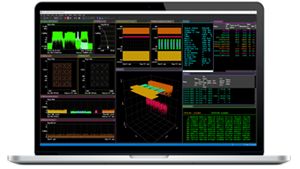
Take On Complex MIMO Signals
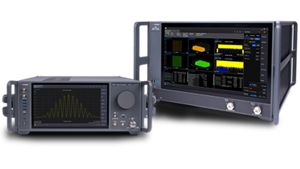
Pair Keysight VSA software with the new XA5 signal analyzer for advanced visualization, demodulation, and analysis — start your 30-day trial today.
-
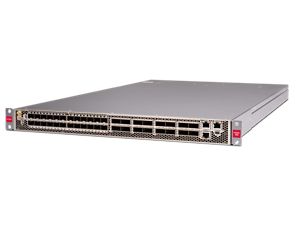
Introducing AI-Enhanced Packet Brokers
With extra memory and storage, these enhanced NPBs run Keysight's AI security and performance monitoring software and AI stack.
-
Accelerate Semiconductor Innovation
Explore end-to-end workflows spanning IC design, validation, wafer test, and photonics.

-
Accelerate Your Innovation Engine
Explore curated support plans, prioritized to keep you innovating at speed.

-
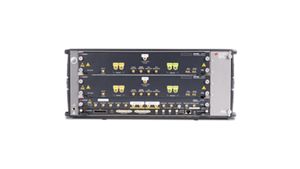
448 Gb/s Waveform Generation
Achieve 200+ Gbaud multi-level modulated signals with high-speed AWGs for digital and optical standards.
-
The Right Connection Makes the Measurement
Maximize accuracy and performance with precision accessories engineered for Keysight instruments.

Analyze Complex RF Signals FasterExplore dual-channel and ultra-wideband signal analysis for demanding RF workflows.
 Digital Validation. Faster.
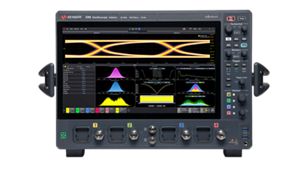
Get faster, clearer insights with our new multicore, 12-bit oscilloscope up to 33 GHz. Trade in your old oscilloscope and get credit toward a new XR8.
-
-
Purpose-built solutions engineered for the design and test challenges unique to your industry.
Use Cases mapped to every stage of your product lifecycle, from design through operations.
Success Stories
HPE Juniper Networking Builds Next-Gen AI Infrastructure -
Authoritative application notes, data sheets, reference designs, and test procedures to accelerate design and validation decisions.
FeaturedHands‑on bootcamps that teach system design, test methods, and production workflows engineers can apply immediately.
Learning Hub
AI TechnologyExplore methodologies, test strategies, and technical resources for designing, validating, and scaling AI systems and networks.
- Buy
-
Quick access to support related self-help tasks.
Additional content to support your product needs.
Do more with Keysight ServicesExplore services to accelerate every step of your innovation journey.








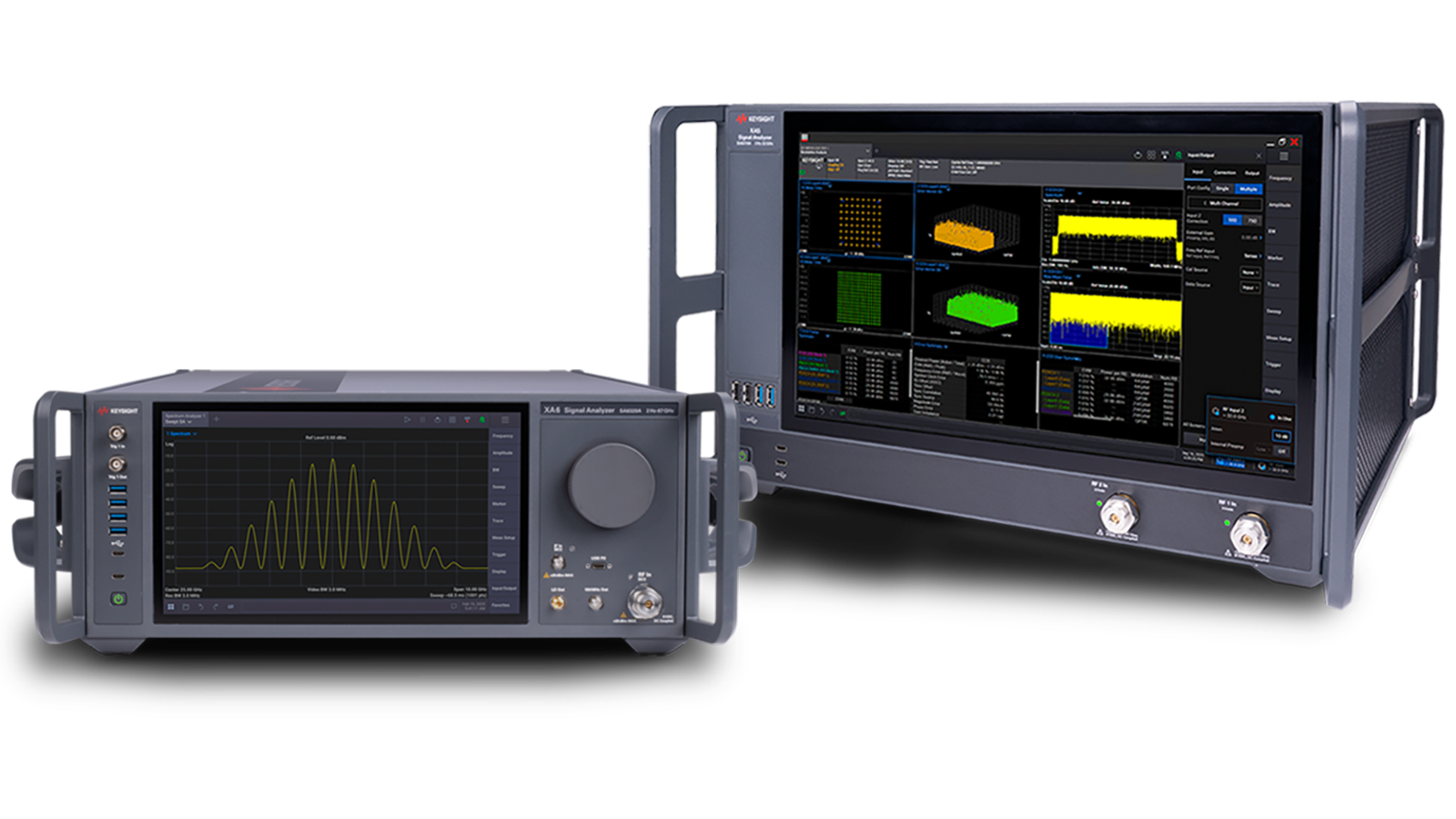


General Channel Emulation Solutions From Lab Validation to Real-World Radio Channel Emulation for the Most Complex Fading and Interference Challenges


- Overview
- All Models
- Accessories
- Software
- Support
Emulate Real-World Complexity with Confidence
Keysight’s channel emulation solutions enable engineers to recreate realistic and repeatable radio environments in the laboratory, helping accelerate wireless system validation from early development through final performance testing. Designed to model complex propagation effects, fading conditions, mobility scenarios, and interference sources, these solutions support testing across a broad range of applications, including commercial wireless, aerospace, defense, satellite, public safety, research and emerging communications.
Their flexible architecture allows users to evaluate device, chipset, and system behavior under controlled yet highly realistic conditions that would be difficult, costly, or impossible to reproduce in the field. By combining accurate channel modeling with scalable hardware configurations, Keysight’s solutions help teams improve test repeatability, reduce development risk, and gain deeper insight into system performance. The result is faster design optimization, more reliable validation, and greater confidence before deployment.
Realistic RF Conditions
Recreate real-world fading, mobility, and propagation effects to validate wireless performance under challenging operating environments.
Scalable Test Capacity
Support a wide range of channel counts and configurations, adapting easily from component testing to complex system validation.
Repeatable Results
Conduct consistent lab testing with controlled scenarios that eliminate variability commonly encountered during field measurements.
Complex Channel Models
Emulate multipath, fading, and interference scenarios with realistic channel models for accurate performance evaluation.
-
Workflow stage
Development, Acceptance, Interoperability, Deployment
-
Technology
All wireless
-
Test types
RF, Channel modeling
Most Popular Configurations
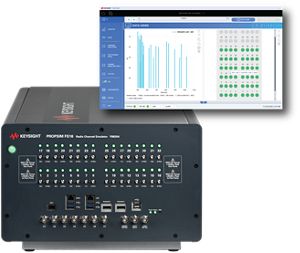

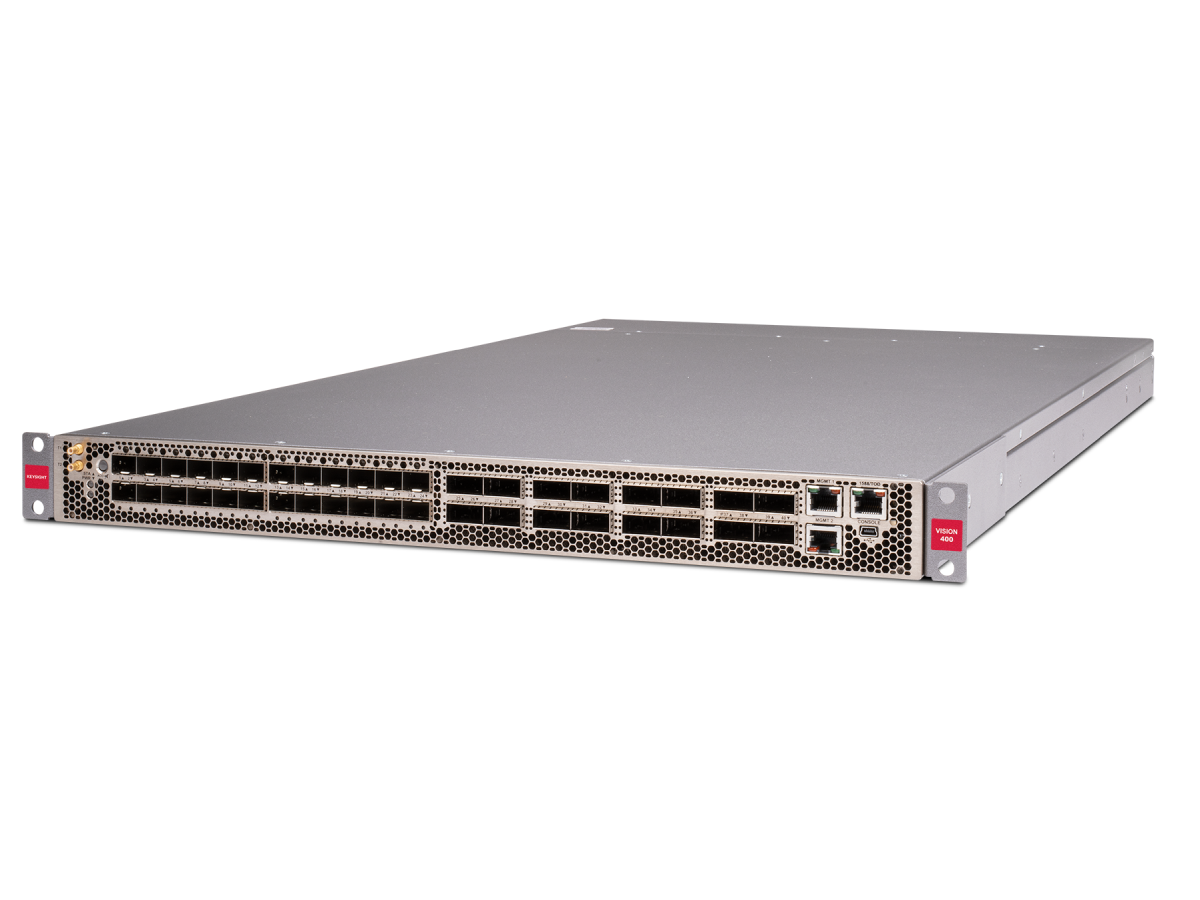
PROPSIM FS16 Channel Emulation Toolset
Compact channel emulator to perform in-lab benchmarking of devices, base stations, digital radio, and sensor systems across the entire product workflow.
Compact channel emulator to perform in-lab benchmarking of devices, base stations, digital radio, and sensor systems across the entire product workflow.
PROPSIM FS16 Channel Emulation Toolset
S8820A
Compact channel emulator to perform in-lab benchmarking of devices, base stations, digital radio, and sensor systems across the entire product workflow.
Keysight's S8820A PROPSIM FS16 Channel Emulation Toolset enables you to perform in-lab benchmarking of devices, base stations, digital radios, and sensor systems across the entire product workflow – from research and development to acceptance and field performance optimization. The toolset is based on the compact PROPSIM FS16 channel emulator, which emulates the dynamic radio channels between transmitters and receivers in real time. It cost-effectively supports uni-directional and bi-directional fading test configurations required in wireless testing across 5G, LTE and aerospace and defense applications.
The high modularity of the PROPSIM FS16 channel emulator with flexible uni- and bi-directional operation of each RF port enables users to implement cost-effective fading performance test systems for:
- 5G Device MIMO and MIMO OTA fading tests
- 5G Base Station MIMO or uplink only Massive MIMO tests
- WLAN 802.11ax access points and devices
- Automotive wireless connectivity validation
- Keysight Virtual Drive Testing Toolset
PROPSIM FS16 supports a wide RF frequency range, from 3MHz to 49GHz, and an ultrawide instantaneous signal bandwidth feature for realistic, repeatable low-cost laboratory testing in the following use cases:
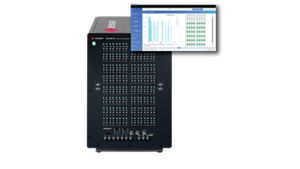

PROPSIM F64 Channel Emulation Toolset
Channel emulator to perform in-lab benchmarking of devices, base stations, digital radio, and sensor systems across the entire product workflow.
Channel emulator to perform in-lab benchmarking of devices, base stations, digital radio, and sensor systems across the entire product workflow.
PROPSIM F64 Channel Emulation Toolset
S8800A
Channel emulator to perform in-lab benchmarking of devices, base stations, digital radio, and sensor systems across the entire product workflow.
The 5G Solution Awarded by GTI for Innovative Breakthrough in Mobile Technology
Keysight’s S8800A PROPSIM F64 Channel Emulation Toolset is based on the first-to-market PROPSIM F64 5G channel emulator, which enables users to perform benchmarking of devices, base stations, digital radios, and sensor systems across the entire product workflow, from research and development to acceptance and field performance optimization. By performing a majority of the testing in a realistic lab environment, users can optimize time to market with improved maturity and reduce costs related to product development and maintenance.
Industry-leading mobile device, modem, and network equipment manufacturers use Keysight’s S8800A PROPSIM F64 Channel Emulation Toolset to integrate new 5G NR and 4G LTE product features and verify new hardware and software releases in a 24 / 7 automated test environment. Mobile network operators around the world use the S8800A toolset to validate 5G NR and LTE-A devices and base stations prior to product rollouts or software deployments in operational networks.
Keysight's PROPSIM F64 channel emulator supports a frequency range from 3 MHz up to 49 GHz as well as GCM-MANET and aerospace emulation tool options for aerospace and defense applications. These unique capabilities enable users to validate a wide range of RF and mmWave applications in the aerospace, avionics, satellite, and defense industries.
Key application areas include:
- 5G device FR1+FR2 maximum data throughput tests using MIMO and massive MIMO cells
- high capacity WLAN 802.11ax access point testing
- multi-cell, multi-RAT high cell density device and networks virtual drive testing in the lab
- large scale tactical radio networks and MESH networks
- Aerospace, Airborne, and Satellite radio system testing with up 64 simultaneous links
Services and support
Innovate at speed with curated support plans and prioritized response and turn-around times.
Get predictable, lease-based subscriptions and full lifecycle management solutions—so you reach your business goals faster.
Experience elevated service as a KeysightCare subscriber to get committed technical response and more.
Ensure your test system performs to specification and meets local and global standards.
Make measurements quickly with in-house, instructor-led training, and eLearning.
Download Keysight software or update your software to the newest version.