What are you looking for?
Non-Terrestrial Network Advantages, Challenges, and Applications
What is a Non-Terrestrial Network (NTN)?
A non-terrestrial network (NTN) is a communications network incorporating airborne or spaceborne assets as well as assets on the ground. These hybrid networks apply satellite communication (SATCOM) technology to extend existing cellular communications. A non-terrestrial network or NTN usually refers to networks connecting the cellular world and satellite links and how to attain direct access to satellite networks for end users.
With the advent of 6G, NTNs are evolving to support ultra-low latency, high-throughput connectivity, and seamless integration with terrestrial networks, enabling advanced applications such as real-time remote operations, immersive extended reality (XR), and global IoT coverage.
Today’s new space race primarily focuses on NTNs as governments and corporations seek to advance communications, surveillance, sensing, and monitoring capabilities. The NTN is the newest SATCOM evolution and a key supporter of space commercialization. The NTN has considerable inherent complexity, as the non-terrestrial network uses the NTN satellite for backhaul traffic, transforming it from a mere relay into a crucial component.
Table of Contents
Frequently Asked Questions About Non-Terrestrial Networks
What makes up a non-terrestrial network (NTN)?
An NTN is a network that includes nodes not physically located on Earth. Although we think primarily of satellites in NTNs, other components can consist of low-altitude platforms (LAP), high-altitude pseudo satellites (HAPS), drones, balloons, and unmanned aerial vehicles (UAVs) acting as base stations, which are increasingly considered in 6G NTN architectures.
Most development now focuses on direct-to-device (D2D) satellite connectivity, enabled by 3GPP Release 17 and beyond, allowing standard smartphones to communicate directly with satellites using 5G NR NTN protocols.
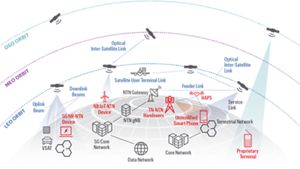
Every non-terrestrial network (NTN) has several points of presence where the satellite network connects to the terrestrial internet. Fiber-optic links connect land stations together, while laser-optical links are increasingly used between satellites, offering high-speed, low-latency, and interference-resistant communication essential for 6G NTN scalability. From satellite gateways on the ground, wideband links connect cellular networks to satellite constellations with feeder links now reaching up to 200 Gbps using optical inter-satellite links (OISLs) and laser communication systems, as demonstrated by NASA and commercial operators like Starlink. These points of presence connect to one or more gateways. The graphic illustrates these links between the gateways and the satellites as the wideband backhaul links for terrestrial cell towers.

Do non-terrestrial networks (NTNs) only operate in low Earth orbits (LEO)?
Non-terrestrial networks (NTNs) operate across geostationary (GEO), medium Earth orbit (MEO), and low Earth orbit (LEO). 6G NTN research includes highly elliptical orbits (HEO) and very-low Earth orbit (VLEO) to support ultra-low latency and global coverage, especially for mobility and IoT use cases. The current concentration of 5G NTN’s primary applications is in GEO and LEO. Today’s explosive growth in LEO satellites provides the foundation for most NTN use cases across the commercial, government, and military industries. Low Earth orbit satellites provide latency as low as 6–30 milliseconds, compared to ~150 ms for MEO and ~280 ms for GEO, making LEO ideal for real-time applications like direct-to-device connectivity.
Each orbit creates different challenges in communication networks. With LEO, the satellite operates at a nearer distance but moves more quickly. Due to the proximity, you can have low-latency communications from satellite to ground. In contrast, traditional GEOs provide long duration fixed connections with much longer delay in the signal path between satellites in that orbit and ground stations. This process exponentially increases latency depending on the number of times the signal must travel between points. For example, if the satellite must travel around the globe, noticeable latency will occur.
Latency also arises in store and forward scenarios. Here, a satellite receives a signal, then transmits that signal later when it gains visibility to the target ground station. This occurrence is often called discontinuous transmission.
What are the advantages of NTNs?
The primary benefit of NTNs is extended coverage. Remote and underserved regions such as rural areas, islands, and isolated communities can benefit from the technology. NTNs can also provide service to ships at sea, aircraft in flight, drones, autonomous vehicles, and wearable devices, supporting seamless connectivity in future mobility-centric 6G scenarios. NTNs enable network service providers to operate in an otherwise untapped market and offer premium services beyond the capabilities of traditional terrestrial networks. NTNs satisfy the ever-increasing demand for data, transmitting and receiving more information through their satellites for communications and data transfer. Machine-to-machine (M2M) and massive IoT applications, including smart agriculture, autonomous logistics, climate sensing, and industrial automation, benefit from AI-enhanced, low-power NTN connectivity in 6G.
Non-terrestrial networks also add a layer of resilience and redundancy to the existing 5G network. In the event of natural disasters, regional conflicts, or network outages, NTNs in the 6G era can offer distributed, AI-driven architectures that enable rapid recovery and prioritized emergency services during disasters, ensuring ultra-reliable, low-latency communication even when terrestrial infrastructure fails. The advantage of a distributed LEO satellite constellation is that it spreads risks and costs across hundreds or thousands of satellites.
By boosting non-terrestrial communications, NTNs provide numerous benefits including:
- Ubiquitous coverage
- Critical emergency support improvements.
- Diagnostic enhancement functionality for farming via sensing capabilities.
- Accurate monitoring of earth and climate variables.
- Effective spread of risk and cost expenses across satellites.
- Advanced climate and environmental sensing for real-time monitoring of air quality.
What are the challenges facing NTNs?
A number of challenges face NTNs and their applications, and additional obstacles will arise as these networks evolve.
The space environment: Space is the foremost challenge for NTNs. Once deployed, equipment is inaccessible. Furthermore, systems must operate in an extremely harsh environment with extreme temperatures and radiation. For successful performance, systems also need to provide consistent power generation and storage. Building mesh networks in space exacerbates these complexities by multiplying the chances for problems.
Size, weight, power, and cost: Another concern is the physical limits of placing high-frequency RF and computing resources in the sky. Size, weight, power, and cost (SWaP-C) become issues when moving away from the GEO 20 tonners into more compact LEO satellites and HAPS platforms, and payloads must transform accordingly. 6G NTN designs are evolving to mitigate SWaP-C limitations by separating satellite roles: service satellites focus on user links, while feeder satellites handle RAN and core functions, optimizing payload mass and power usage.
Connecting in constant motion: Non-terrestrial networks put some things, or perhaps everything in the network, in constant motion. NTN satellite and HAPS movements factor into connection setup, signal quality, and handovers. In a 5G NTN, gNodeB instances and parts of the radio access network (RAN) flying aloft add to the movement of any user equipment (UE) at the surface.
Choice of payload: The choice between transparent or regenerative payloads can completely change how the network organizes and the resulting signal routing. With LEO satellites in motion, all timing relationships are dynamic. At stake is the quality of service (QoS) user experience, primarily due to variable delays and complex handovers that can result in dropped connections. In 6G NTN, regenerative payloads are gaining traction, enabling onboard gNodeB functionality and inter-satellite links (ISLs) for improved coverage, latency, and mobility management, while transparent payloads remain simpler but rely heavily on ground infrastructure.
Latency: The delay in signal transmission stems from the signal being sent between ground and satellite(s). While traditional NTNs face latency limitations, 6G NTN research is advancing toward supporting 3GPP Ultra Reliable Low Latency Communications (URLLC) use cases through technologies like terahertz communications, reconfigurable intelligent surfaces (RIS), and AI-driven routing, aiming for sub-millisecond latency and 99.99999% reliability.
Security: While a distributed LEO satellite constellation spreads costs and risks across satellites, the hardware is vulnerable as it passes over unfriendly territories. National security needs exert demands for cyber protections and novel operations to protect infrastructure deployed in space. For example, the U.S. Space Force is tasked with this mission for all branches of military and government. 6G NTN introduces new cybersecurity challenges, including AI exploitation, quantum hacking risks, and semantic-aware threats. Solutions being explored include context-aware authentication protocols, blockchain-based trust models, and AI-driven anomaly detection to secure dynamic, distributed NTN environments.
What is 5G NTN?
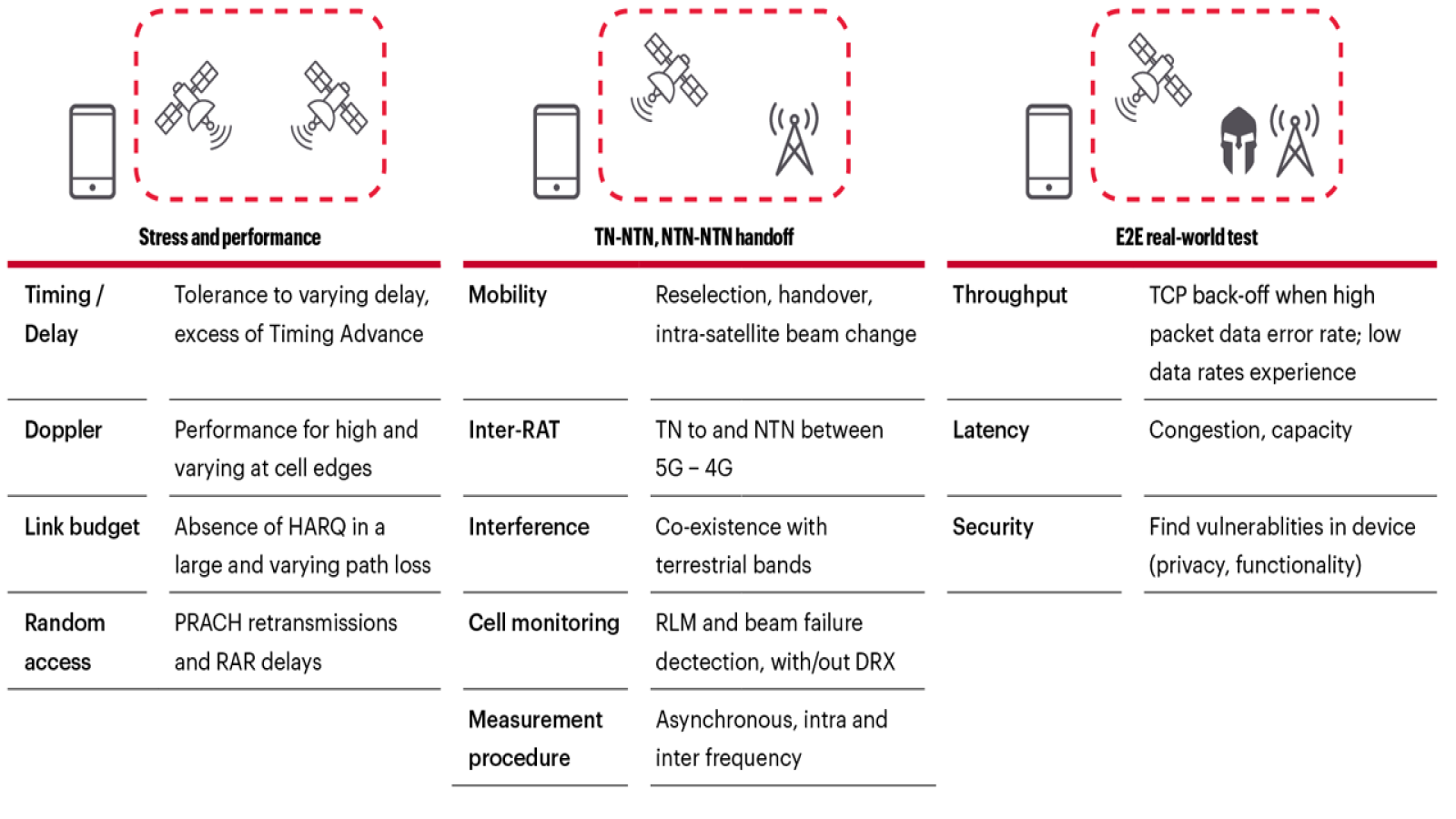
The term NTN usually includes fifth-generation (5G) cellular as an aspect of the network. 5G NTNs draw many features from 5G terrestrial networks and face many of the same challenges, adding higher reliability expectations for 5G NTN service compared to earlier SATCOM networks. Base stations, which are normally terrestrial networks consisting of towers on the ground, are moving from land to air and space. The 5G core network is referred to as the next generation core (NGC). A 5G NTN comprises UE, which consists of a mobile device like a cell phone or sensor. If needed, the UE communicates with base stations, each called a gNodeB.
This configuration is a typical 5G NTN setup. However, many variations exist. For example, not all NTN applications require the gNodeB. You might have a core network which is the internet directly connected to a gateway on a proprietary system. Another alternative approach is to use NTN for edge computing, putting the network edge in the satellite.
Various approaches to a 5G NTN architecture exist. For example, an aerial asset or satellite can operate as a bent pipe between UE and gNodeB. That device will receive signals on Frequency 1 and transmit them on Frequency 2 to facilitate non-terrestrial network communications over a wide geographical range. In this model, note that UEs need sufficient power and sensitivity to transmit and receive from the satellite bent pipe. The gNodeB can be ground-based as long as it can communicate to the NTN satellite bent pipe.
An alternative architecture has the gNodeB on the airborne or spaceborne asset itself. In this case, UE communicate to that aerial asset. The core network also is connected to that aerial or spaceborne asset. Additional examples introduce relay nodes to interface with either the standard UE with satellite bent pipe or with the UEs to an aerial or spaceborne gNodeB.
The introduction of 5G NTNs disrupts the traditional 5G terrestrial network architecture and opens a paradigm shift in connectivity. Many alternatives exist for satellites and HAPS participating in gNodeB and RAN domains, some with multiple satellites in the chain scattered across miles of sky. 5G NTNs draw many features from 5G terrestrial networks and face many of the same challenges, adding higher reliability expectations for 5G NTN service compared to earlier SATCOM networks.
What are the key differences between 5G and 6G NTN?
5G NTN is an add-on to terrestrial 5G, mainly providing satellite or aerial connectivity to expand coverage to remote or underserved areas and is based on enhancements defined in 3GPP Release 17 and 18. 6G NTN is still in the research and early standardization phases, with its full set of capabilities and differentiators under active discussion by 3GPP, ITU, and leading industry groups. The following summarizes the main directions and anticipated advancements, but it remains subject to change as technical exploration and global consensus evolve:
Native NTN-TN integration: Harmonizing non-terrestrial and terrestrial networks is a core proposal for 6G, with 3GPP and ITU research focusing on co-design to allow seamless transitions and unified architecture. This differs from 5G’s approach, where NTN is an add-on. The specifics of this integration are not finalized and are a subject of global study and collaboration.
Advanced positioning & sensing: Research initiatives are investigating cm-level positioning by integrating signals from various NTN layers, potentially addressing localization where GNSS is unavailable. Early 3GPP and EU studies indicate this as a possible differentiator, but the technology and standards are still evolving, with concrete approaches yet to emerge.
Low latency and massive connectivity: 6G NTN aims to far surpass 5G’s capacity and reliability, enabling new applications such as real-time IoT and robust mobile broadband everywhere. These goals have been set as study objectives by both ITU and 3GPP, but validation and feasibility testing are ongoing within research and pilot programs.
New waveforms and AI-native design: Several advanced waveforms and native integration of AI for dynamic resource allocation are being explored. Recent industry project reports have proposed AI-enabled RAN controllers and new waveform candidates, but these have not yet been fully standardized or commercially validated.
Sustainability and energy efficiency: Initiatives like 6G-NTN are actively defining sustainability metrics and exploring green design principles, as emphasized in early results. These concepts are expected to heavily influence eventual 6G standards as they mature.
Are NTNs and satellite communications the same thing?
Non-terrestrial networks herald the next wave of satellite communications (SATCOM), making SATCOM a part of cellular networks. Satellite communication technology covers difficult-to-reach areas with no infrastructure or isolated platforms to support cellular network deployments. The use of SATCOM also provides extra reliability for machine-to-machine (M2M) / IoT and connectivity for moving platforms, such as airplanes, trains, and cars.
To satisfy new performance demands for SATCOM, the satellite industry strives to reach higher throughput, wider bandwidths, and higher operating frequencies. Increasingly, networks also rely on optical photonics links. Non-terrestrial networks also need to deliver enough power to receivers despite free space, weather, clouds, and other ionospheric conditions. Given the increasing complexity of NTNs and SATCOM, you must test satellite communication systems with realistic environmental models, adding buffering for delayed signals and simulating sliding delay for creating realistic satellite kinematics. Keysight supports the development, manufacturing, deployment, and maintenance of non-terrestrial networks across the entire ground and air / space workflow, including the testing of 5G NR NTN satellite links.
What are the non-terrestrial network standards?

The role of 3GPP
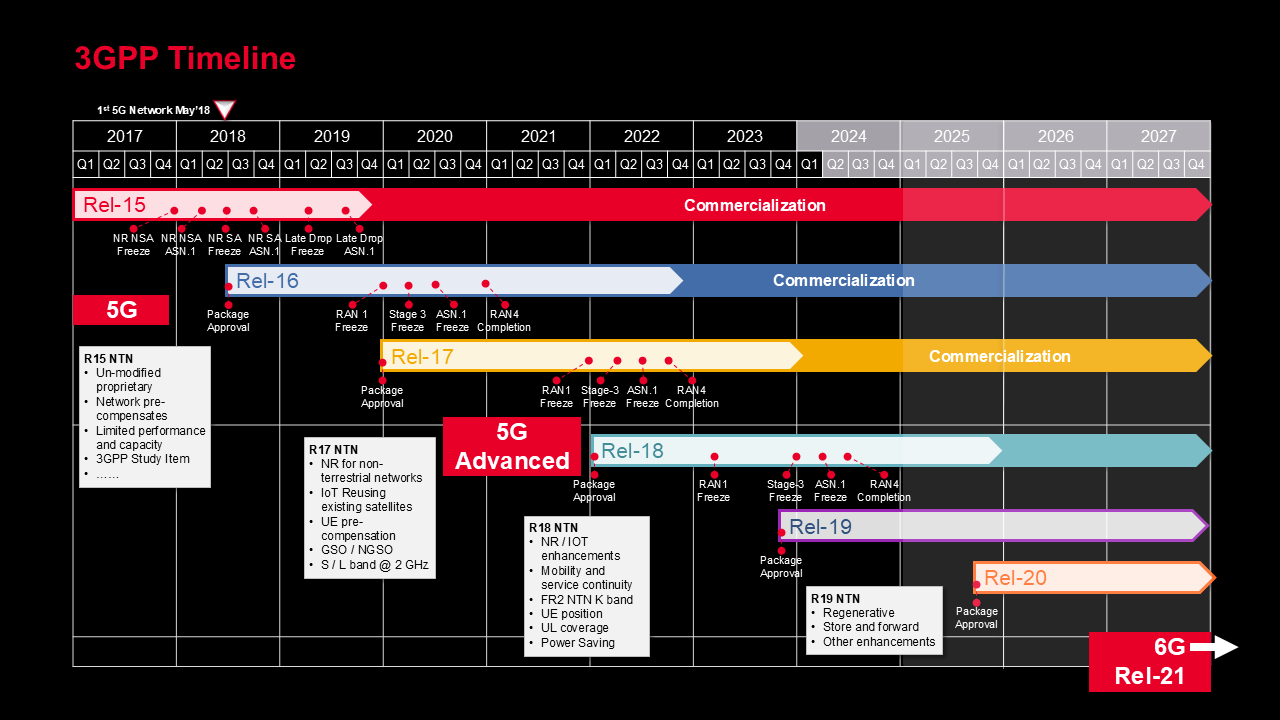
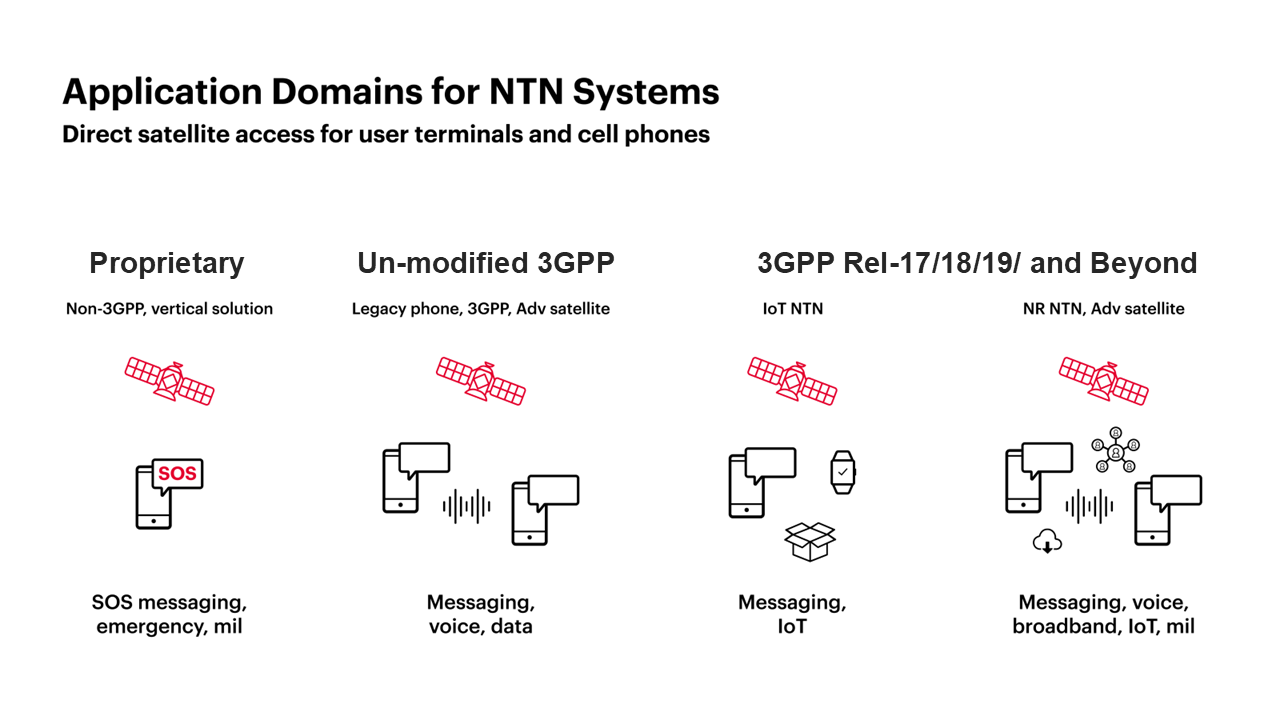
The introduction of non-terrestrial networks in 3GPP standards will revolutionize wireless communications by integrating terrestrial cellular networks with satellite communications. Every 3GPP standard includes many releases, which recently began including NTN. One of the primary advantages of NTN inclusion in 3GPP standards is the ability to access satellite networks with existing, unmodified 5G and long-term evolution (LTE) devices. Each 3GPP release typically takes two years. Companies develop components according to these standards, from RF to network based. Examples include interoperability, so that you can connect to the current 5G or proprietary network and test against compliance standards. Business cases lead to standardization across various scenarios.

3GPP Release 17: What are 5G NR and NB-IoT?
The 3GPP published Release 17 in 2022, making it the first 3GPP release to account for ground-based terrestrial networks and non-terrestrial network platforms. As defined in Release 17, these NTN platforms include multiple types of satellites, high-altitude platform stations (HAPS), and crewless aerial vehicles.
3GPP Release 17 introduced support for two types of non-terrestrial networks — 5G new radio (NR) and narrowband Internet of Things (IoT; NB-IoT). 5G NR NTN supports satellite network access to handsets in the Frequency Range 1 (FR1) band for use cases such as voice and data transmission in geographic areas not served by terrestrial networks. NB-IoT NTN supports access to IoT devices directly from satellites for agriculture, transportation, and other applications, enabling global sensing capabilities for numerous industries.
Release 17 enhancements address the technical hurdles inherent in communication between handsets, IoT devices, and satellites to enable NTN support. These challenges include propagation delay, Doppler shift, and the difficulties associated with communication between moving terminals (user equipment) and base station platforms such as satellites.

What is 3GPP Release 18?
Release 18 (5G Advanced) aims to enhance 5G, including its non-terrestrial network (NTN) capabilities. Key NTN-related improvements in Release 18 include:
NTN mobility enhancements: UEs can measure neighbor cells before radio link failure by using time-based and location-based measurement triggers, and networks can signal neighbor cell ephemeris data to support enhanced Machine Type Communication (eMTC) and NB-IoT for improved mobility.
NTN throughput performance: Release 18 proposes disabling HARQ feedback to reduce UE data rate stalls, and introduces operation improvements for GNSS that aim to lower power consumption and facilitate position fixes for pre-compensation during long connections.
GNSS power optimization: UEs gain improved, power-efficient GNSS operation, essential for IoT and NTN connections with prolonged activity.
Support for new scenarios and bands: Release 18 introduces new deployments above 10 GHz, including extended L-band and frequency division duplexing (FDD) LTE band operation, enabling IoT NTN for broader spectrum and more resilient global coverage.


What is 3GPP Release 19?
3GPP Release 19’s functional freeze was approved in September 2025, with the entire release expected to close by the end of 2025.
Release 19 formally introduces regenerative NTN architecture, placing full gNB functionality on satellites and enabling inter-satellite links (ISLs) via the Xn interface for enhanced mobility and resource coordination.
- Indoor NTN access is being enhanced through beam management and link budget optimization, supporting coverage in partially obstructed environments.
- Uplink enhancements include multi-TRP operation and non-coherent UL codebook design, improving throughput and reliability in NTN scenarios.
- Release 19 expands support for RedCap devices in NTN, and introduces multicast / broadcast over downlink-only NTN, with heterogeneous return path options.
- GNSS independence is enhanced via UE pre-compensation mechanisms and feeder link switchover support, improving synchronization in degraded GNSS conditions.
- Discontinuous coverage is supported through store-and-forward mechanisms and regenerative payloads, enabling delay-tolerant IoT services in sparse coverage areas.


What is 3GPP Release 20?
3GPP Release 20 focuses on advancing 5G-Advanced features while initiating foundational 6G studies. It represents an 18-month roadmap to refine 5G capabilities and prepare the technical groundwork for normative 6G specifications to follow in Release 21, which is aligned with ITU’s IMT-2030 submission timeline.
These freezes mark when key specification components become stable, enabling implementation and interoperability testing to proceed while allowing 3GPP to meet aggressive development milestones for the evolution of wireless technology. Here is a summary of key 3GPP Release 20 milestones and freeze dates:
- Stage 1 freeze (service requirements): June 2025
- Stage 2 freeze (system architecture aspects): Two-tier schedule with 80% completion around June 2026 and final freeze targeted by September 2026
- Stage 3 freeze (protocol details): March 2027
- ASN.1 / OpenAPI freeze: June 2027


What are DVB-S2 and DVB-S2X?
The Digital Video Broadcasting Project Second Generation Satellite Extension (DVB-S2X) is the European Telecommunications Standards Institute (ETSI) video broadcast standard.
It offers alternatives to wideband data transfer via NTNs. Its predecessor, the DVB-S2 standard, was optimized for broadband satellite applications including Broadcast Services (BS) Digital multi‑programme Television (TV) / High Definition Television (HDTV), Direct‑To‑Home (DTH) services, and interactive data services including Internet access. According to ETSI, DVB-S2X targets the core application areas of DVB-S2 and new application areas requiring very-low carrier-to-noise and carrier-to-interference operation (VL-SNR), such as mobile applications.


How Does Keysight Support NTN Use Cases?
Keysight supports the development and ongoing performance verification for NTN use cases such as the following:
- Coverage of unserved areas
- Service for aircrafts, ships, trains, buses, and more
- Man-to-machine and IoT
- Relaxed latency requirements
- Service availability
- 5G Advanced / 6G network scalability
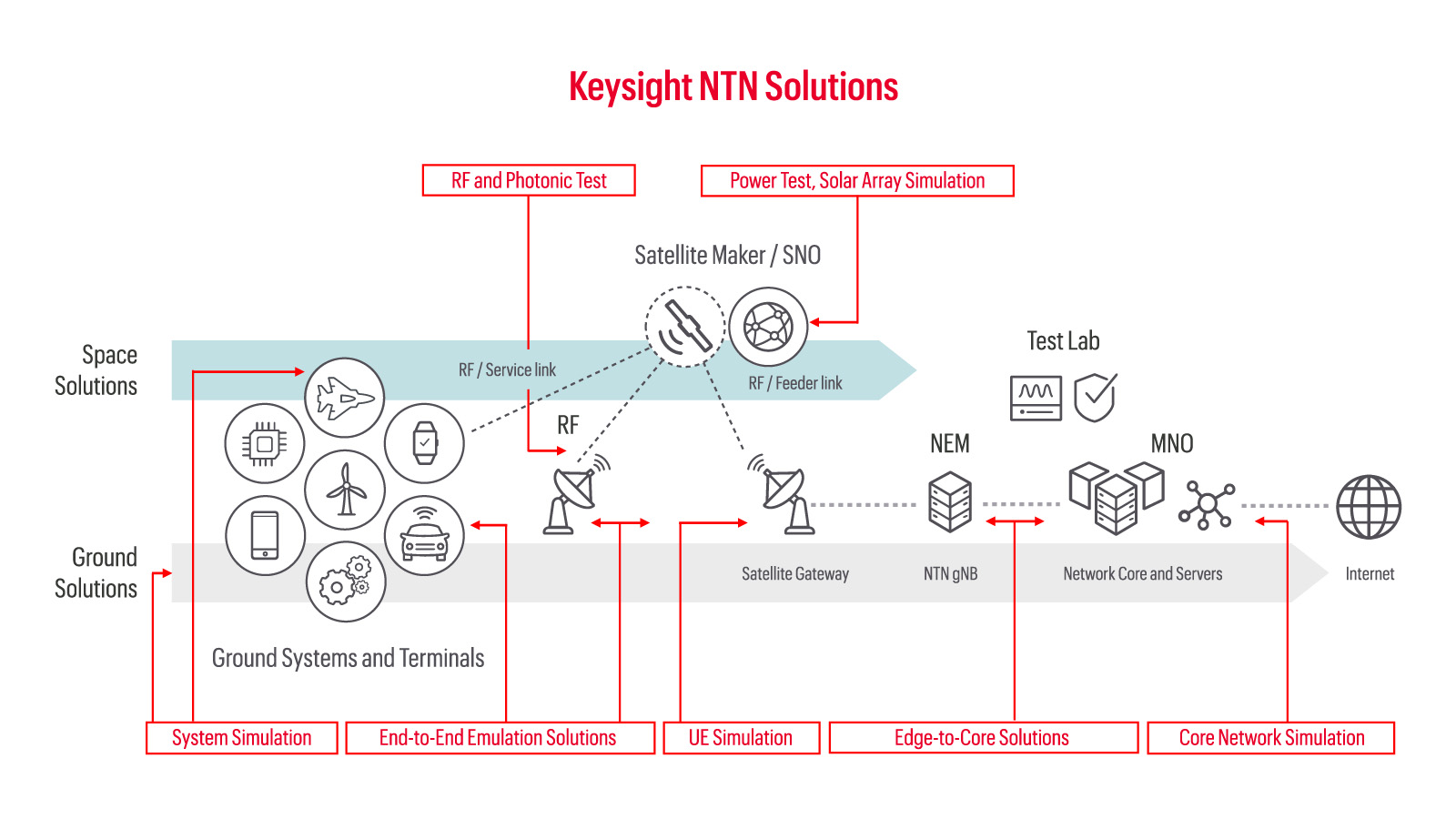
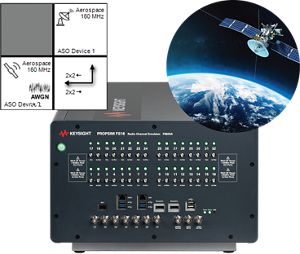
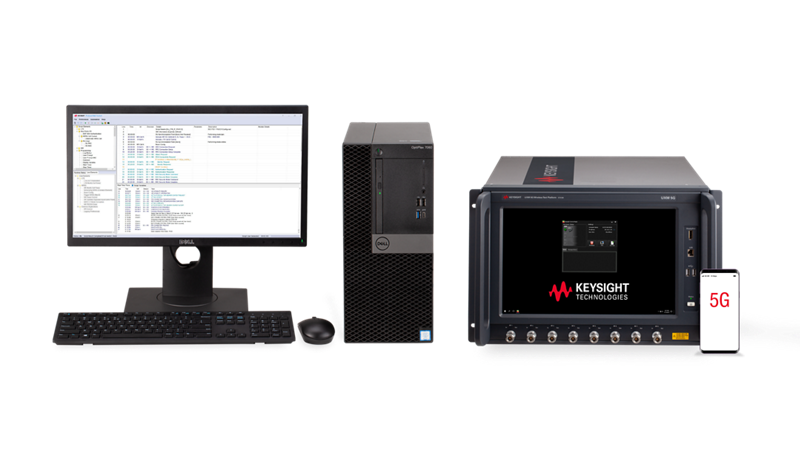
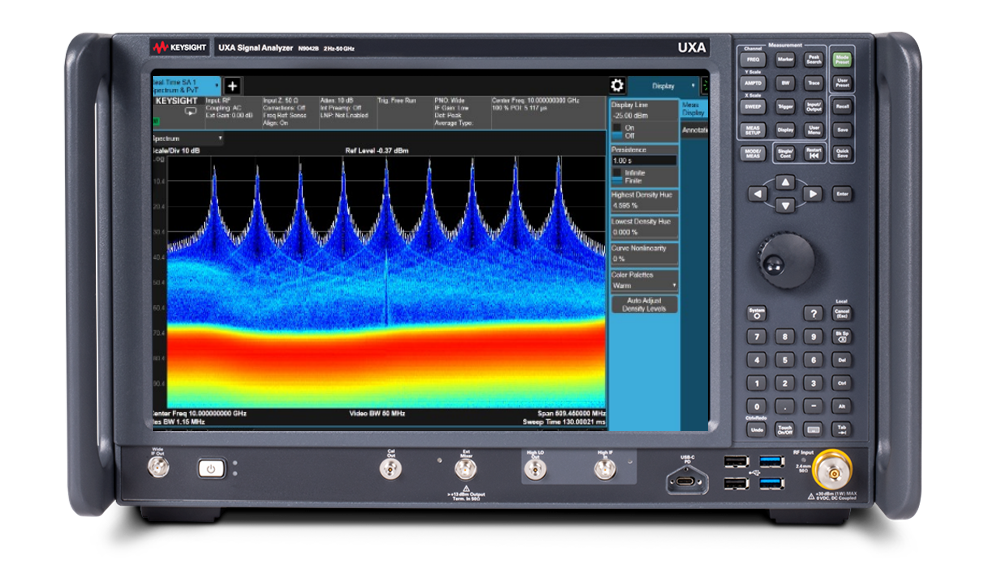
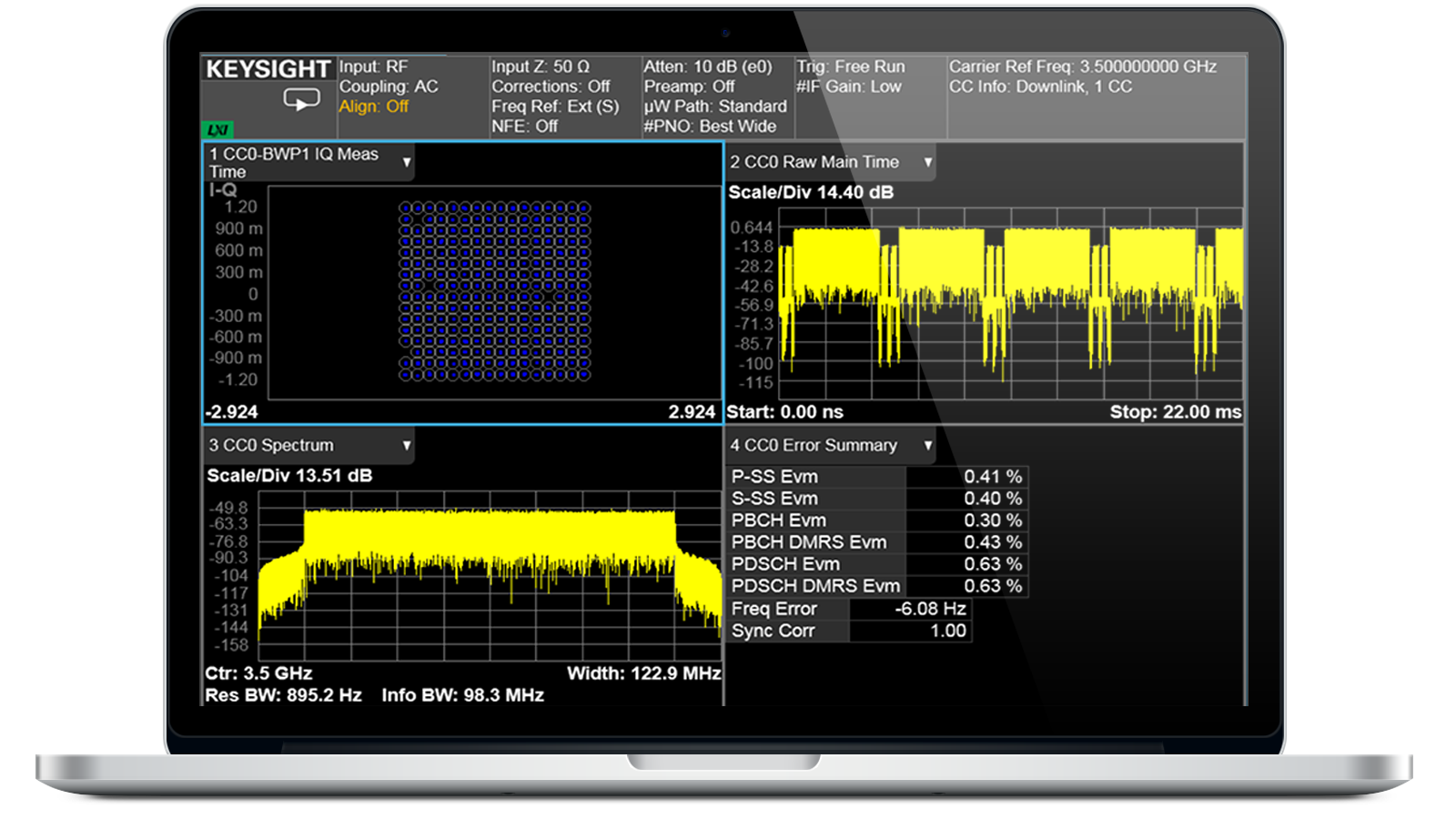
Keysight delivers end-to-end NTN testing environments that can virtualize network access and even the complete satellite constellation. Replace the NTN-capable radio network with Keysight UXM 5G, a fully capable NTN network emulation device. Re-create satellite links with the Keysight PROPSIM channel emulators, accompanied by the Keysight advanced VXG microwave signal generator and Keysight UXA signal analyzer. Gain full control over the system under test and complete visibility into the NTN nodes and links. You can easily add hardware to extend the frequency range to cover all main NTN bands, such as X-band and K-band.
With flexible Channel Studio scenario creation, you also can test real satellite radio hardware and the solution at both the node and network level. Troubleshoot performance problems using the Keysight WaveJudge wireless analyzer and Keysight PathWave Vector Signal Analysis (VSA) running on the UXA signal analyzers. To analyze IQ streams beyond WaveJudge, you can use the PROPSIM internal IQ capture and streaming functionality.
You also can generate realistic testing conditions in the lab combining the VXG microwave signal generator with PROPSIM and UeSIM realistic representation of user terminal behavior. Find out more about how Keysight supports the ongoing development of NTNs from ground to air across your entire workflow, helping to connect and secure future communications.
Discover your NTN Ground Solutions














Find your NTN Space Solutions

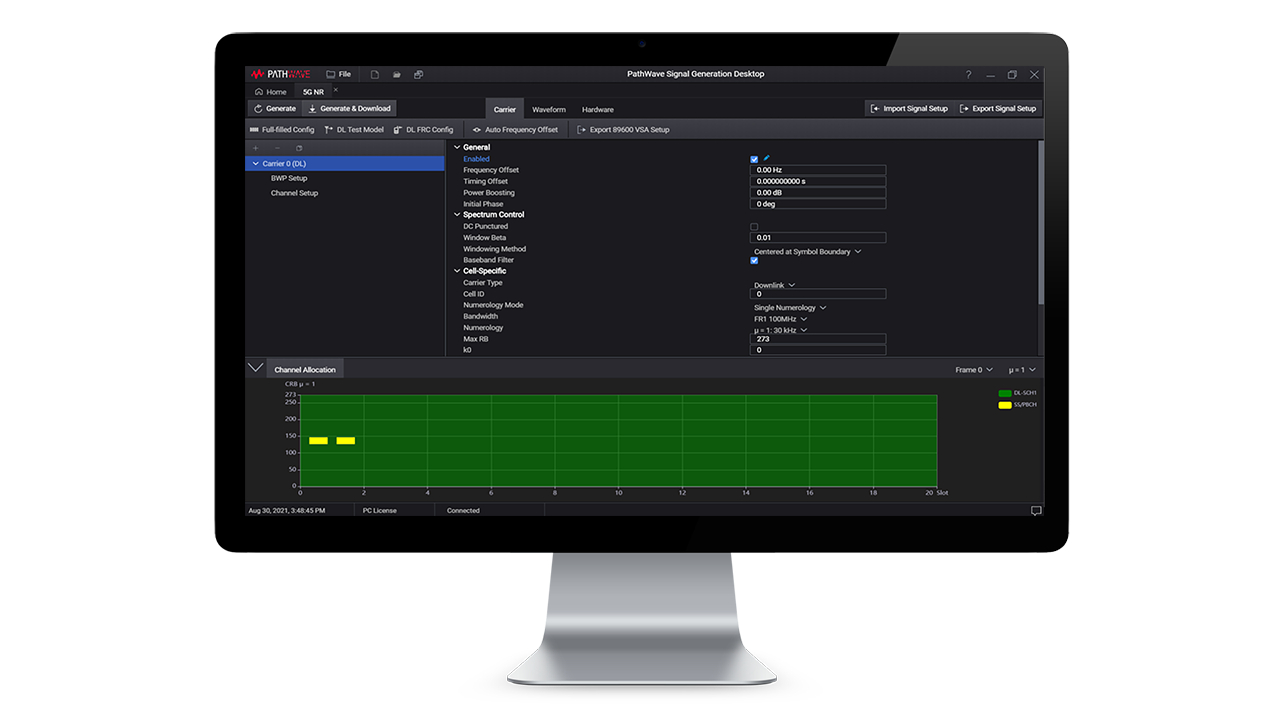
Software test and automation intelligence
Test software user interfaces to validate operation.













Solar array simulation
Test satellite power distribution, leveraging realistic solar power generation.





Antenna measurement
Measure antenna patterns and perform phased-array calibration.
Access More Insights and Resources














Want help or have questions?