How to Automate Resonant RLC Island Tuning

Automate Resonant RLC Tuning
Accurate resonant RLC tuning requires the resistive branch to absorb the inverter's real power while the inductive and capacitive branches balance reactive power and establish the required resonant behavior. During an anti-islanding test, active and reactive residual grid current are measured at the grid-isolation point while the inverter remains connected to the simulated utility. Resistance is adjusted to reduce active-current mismatch, and inductance and capacitance are calculated and refined to minimize the fundamental-frequency reactive component. Because these electrical parameters interact, changing one value can affect more than one measured quantity. Automated measurements and iterative calculations provide a repeatable way to converge on the required active-power balance, reactive-power balance, resonant frequency, and quality factor. The tuning process can therefore be applied consistently across phases instead of relying on repeated manual adjustment and interpretation by the test operator.
With PHIL grid emulation, the grid, switching function, measurement channels, and programmable RLC network can be represented within the test environment instead of using separate high-power passive components. Fundamental-frequency measurements can be filtered and averaged over multiple line cycles so harmonics, switching components, and measurement noise do not distort the tuning process. Once residual grid current reaches the defined target on each phase, the grid connection is opened and island stability is evaluated. The tuning sequence can then be repeated automatically for different IEEE 1547.1 operating conditions. This method maintains consistent tuning logic across test points while reducing repeated manual adjustment of resistance, inductance, and capacitance for each three-phase operating state. The resulting tuned values and measured residual currents also provide a repeatable starting point for later clearing-time sweeps and repeated anti-islanding runs.

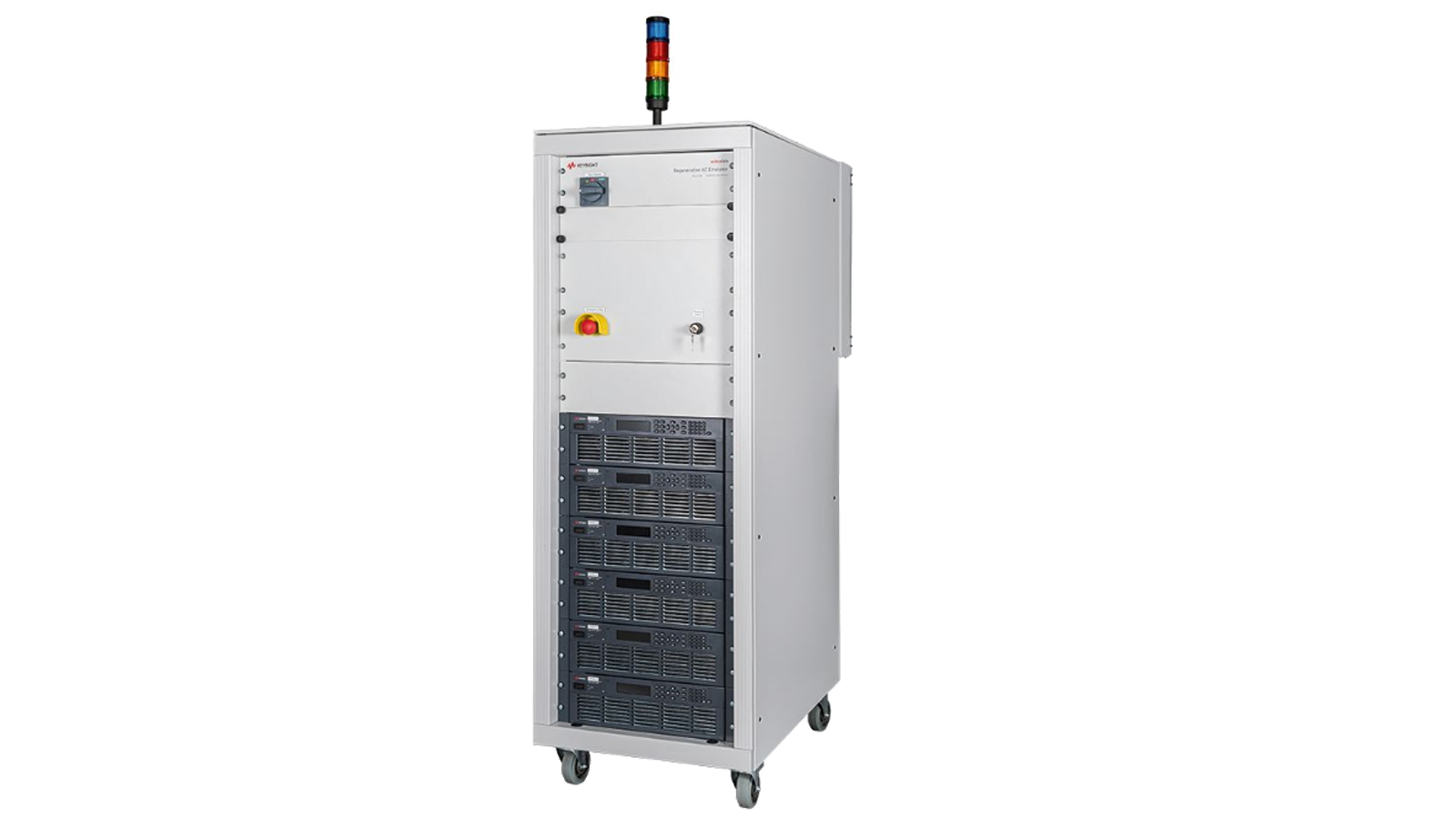
Resonant RLC Tuning Test Solution
See Block Diagram of Resonant RLC Tuning Test Solution

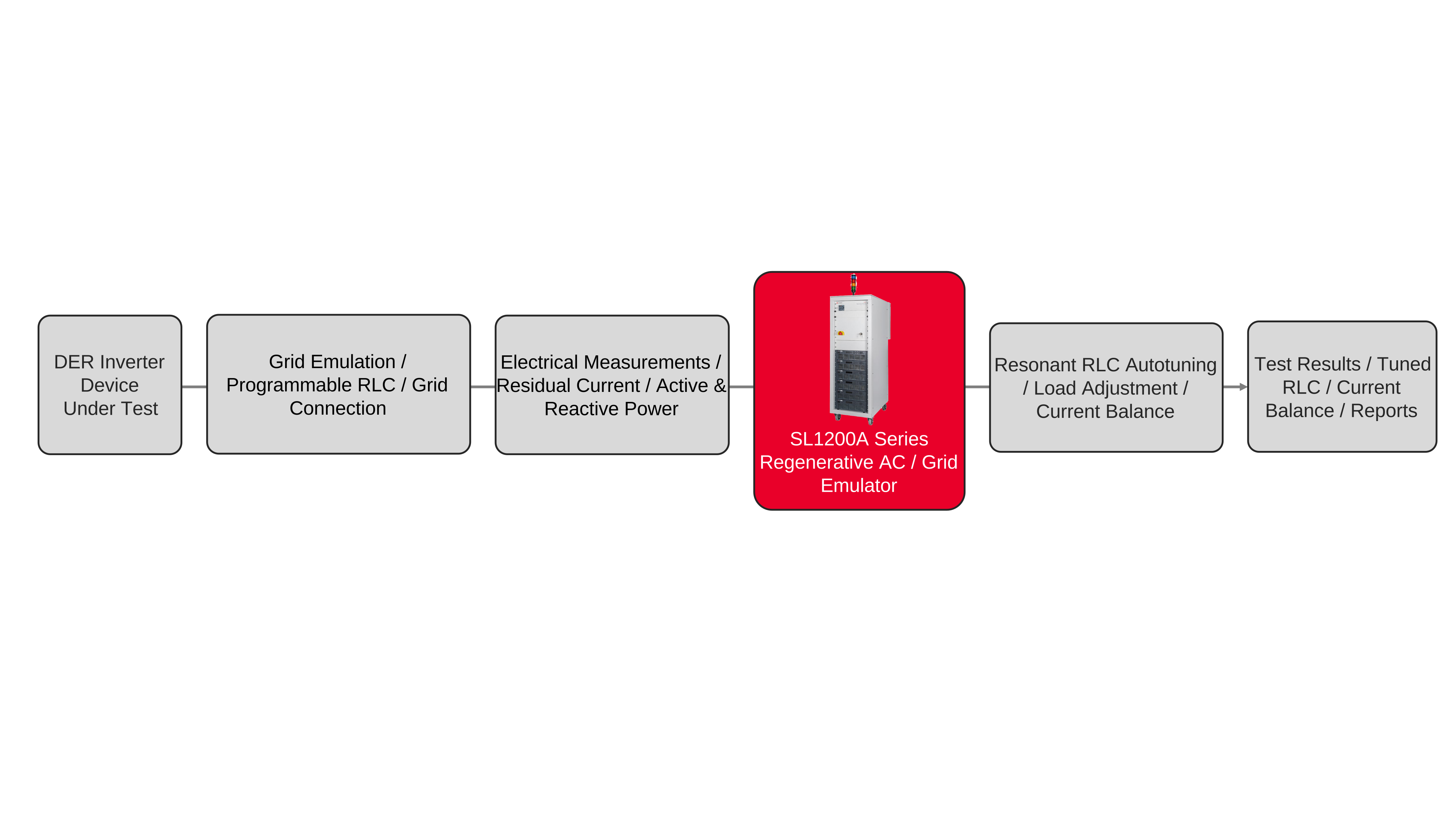
Explore Products for Our Resonant RLC Tuning Test Solution
-

![]()
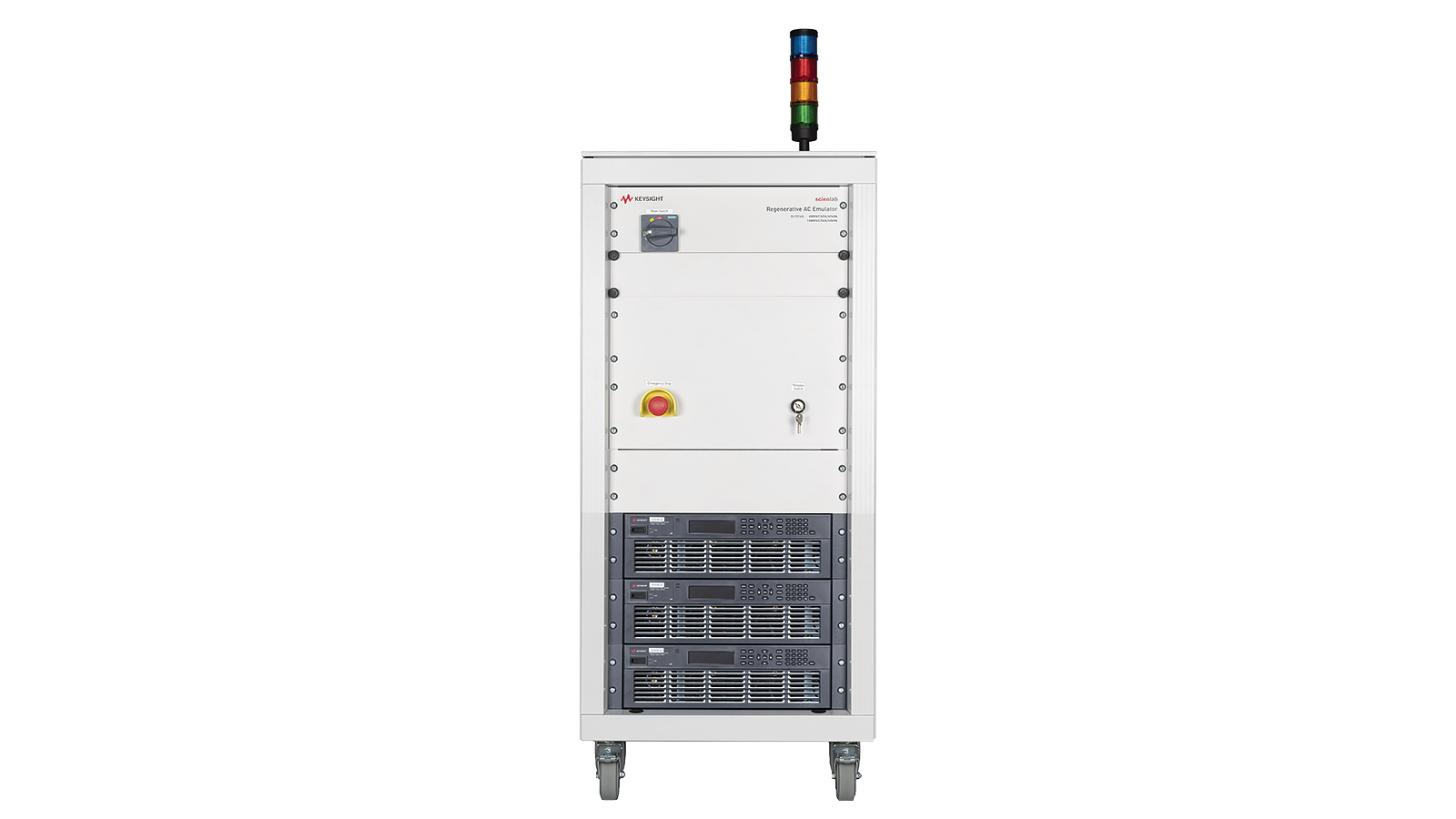
SL1202A Scienlab Regenerative AC Emulator, 600 VAC, 63 A, 66 kVA, 3‑Phase

Discover Resources and Insights
Additional Resources for Resonant RLC Tuning Test
Related Use Cases

-
![]()
Learn More
How to Find Worst-Case Island Clearing Time
Search for worst-case anti-islanding behavior by varying reactive impedance around a tuned resonant island operating point, measuring inverter shutdown time at each test condition, identifying the maximum clearing time, and repeating the longest-duration conditions to verify results.
Learn More

-
![]()
Learn More
How to Debug Inverter Anti-Islanding Detection Algorithms
Debug anti-islanding detection algorithms by reproducing controlled resonant island conditions, measuring inverter voltage and frequency response after grid isolation, and comparing shutdown behavior across changes in reactive loading and control settings.
Learn More
-
![]()
Learn More
How to Verify Stable Island Test Conditions
Verify stable island test conditions for grid-connected distributed energy resource inverters by balancing an emulated resonant RLC load, isolating the simulated grid, and monitoring voltage, frequency, and current over a controlled stability interval.
Learn More

Get in Touch with One of Our Experts
Need help finding the right solution for you?