How to Test Pouch Cell Batteries

Pouch Cell Battery Testing and Modeling
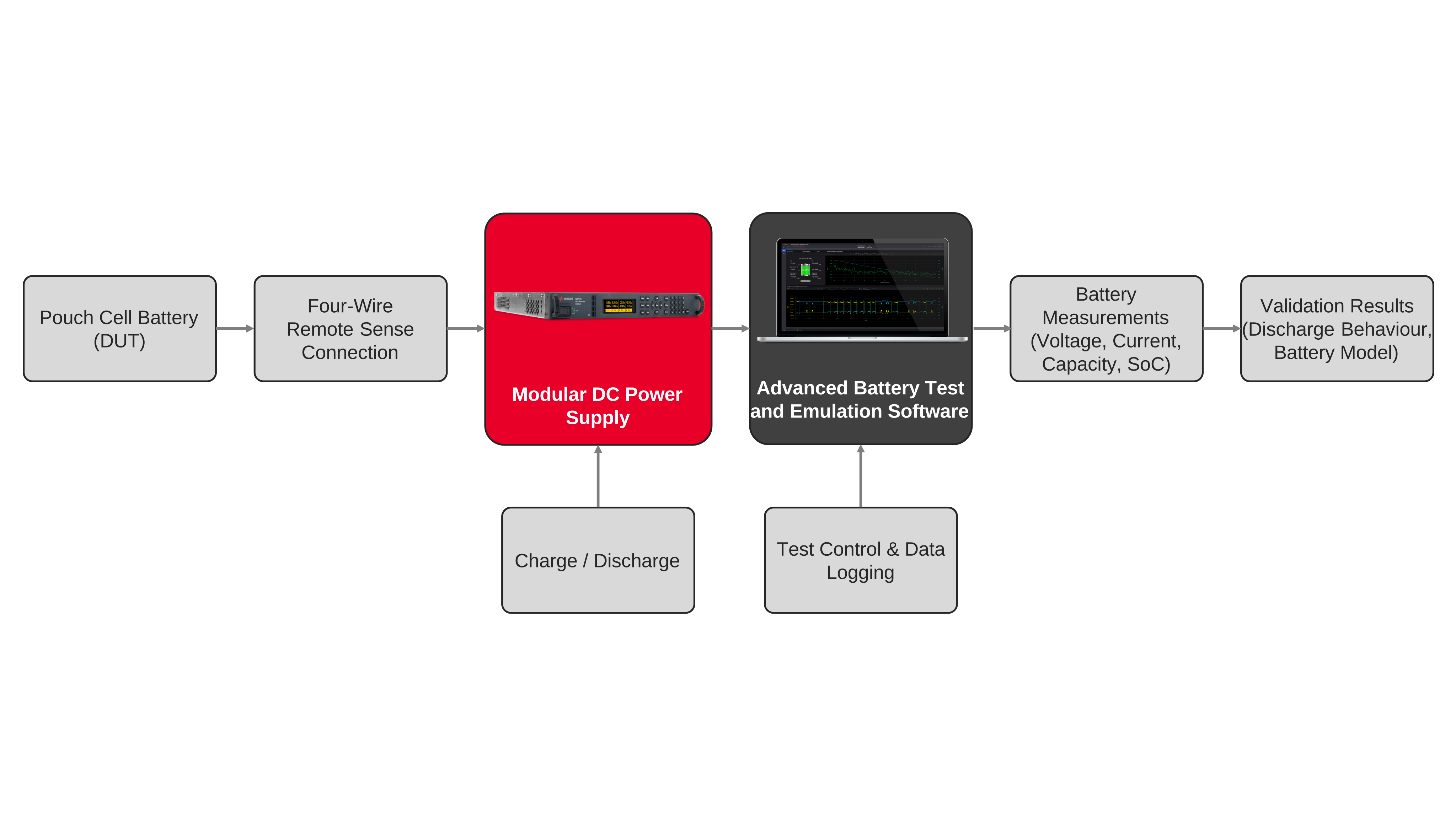
Pouch cell battery testing requires a controlled two-quadrant electrical connection capable of sourcing and sinking current while measuring the battery directly at its terminals. Use a four-wire connection to compensate for wiring voltage drop, then record open-circuit voltage before applying a defined current profile. Battery capacity validation is performed by discharging the cell toward a specified cut-off voltage while continuously measuring voltage, current, elapsed time, and extracted charge. For internal resistance measurement, apply short current pulses separated by controlled rest intervals and calculate resistance from the corresponding change in terminal voltage and current. These measurements establish the electrical response required for repeatable pouch cell battery testing under defined load and environmental conditions.
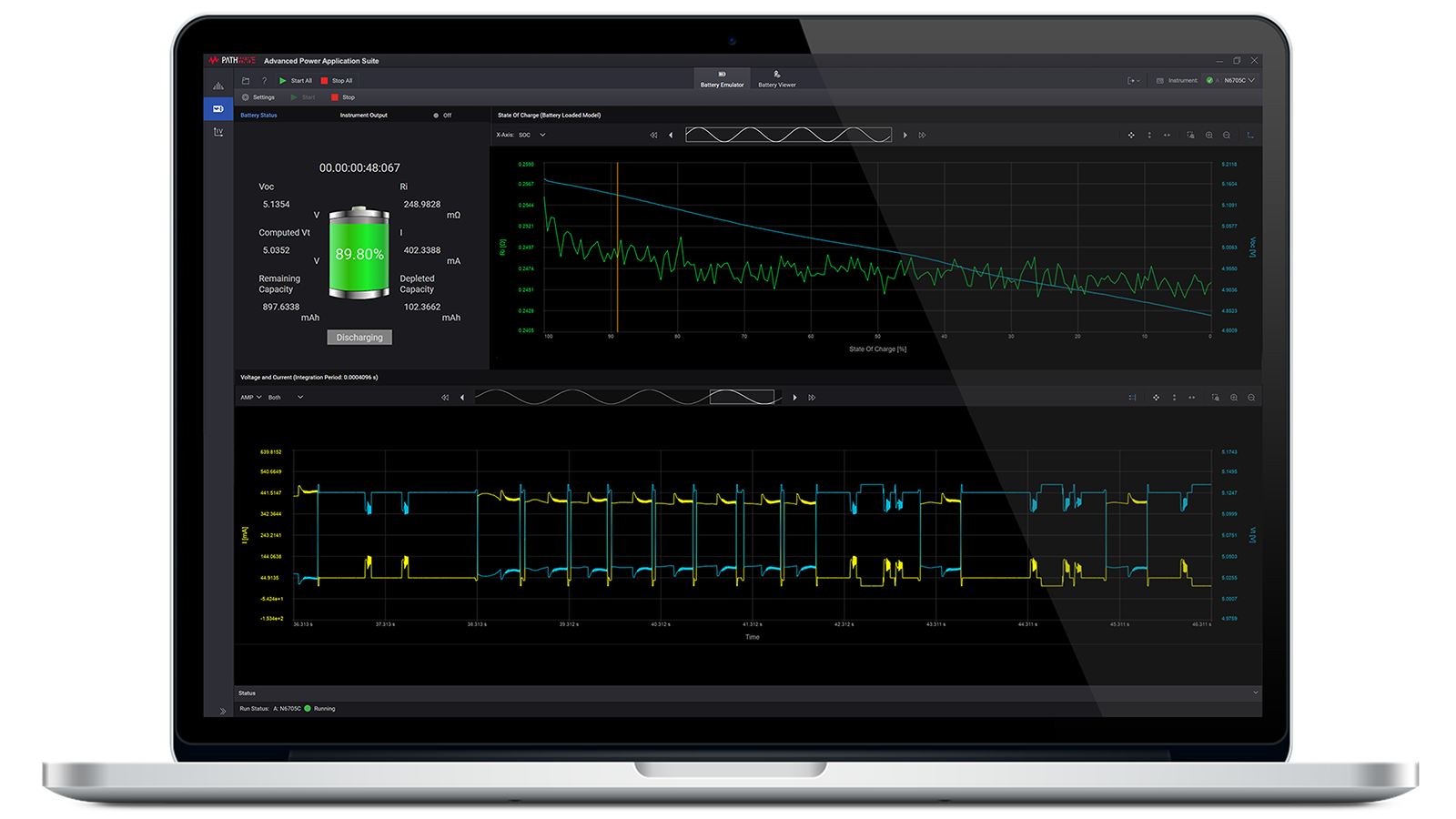
Battery modeling extends these measurements across state of charge (SoC) by periodically capturing open-circuit voltage and series internal resistance while the cell is discharged. Adjust current pulse width and rest time to represent the intended application's load behavior, then perform battery discharge testing with a constant current or imported dynamic load profile. Continue logging until the configured open-circuit voltage, load voltage, or consumed-capacity threshold is reached. The completed battery model associates voltage and resistance with state of charge at each measurement point. Engineers can review battery capacity validation results, compare extracted capacity with the expected value, analyze resistance variation, export measurement data, or reuse the resulting model for battery emulation. Temperature measurement can also be integrated when pouch cell battery testing requires controlled thermal conditions.

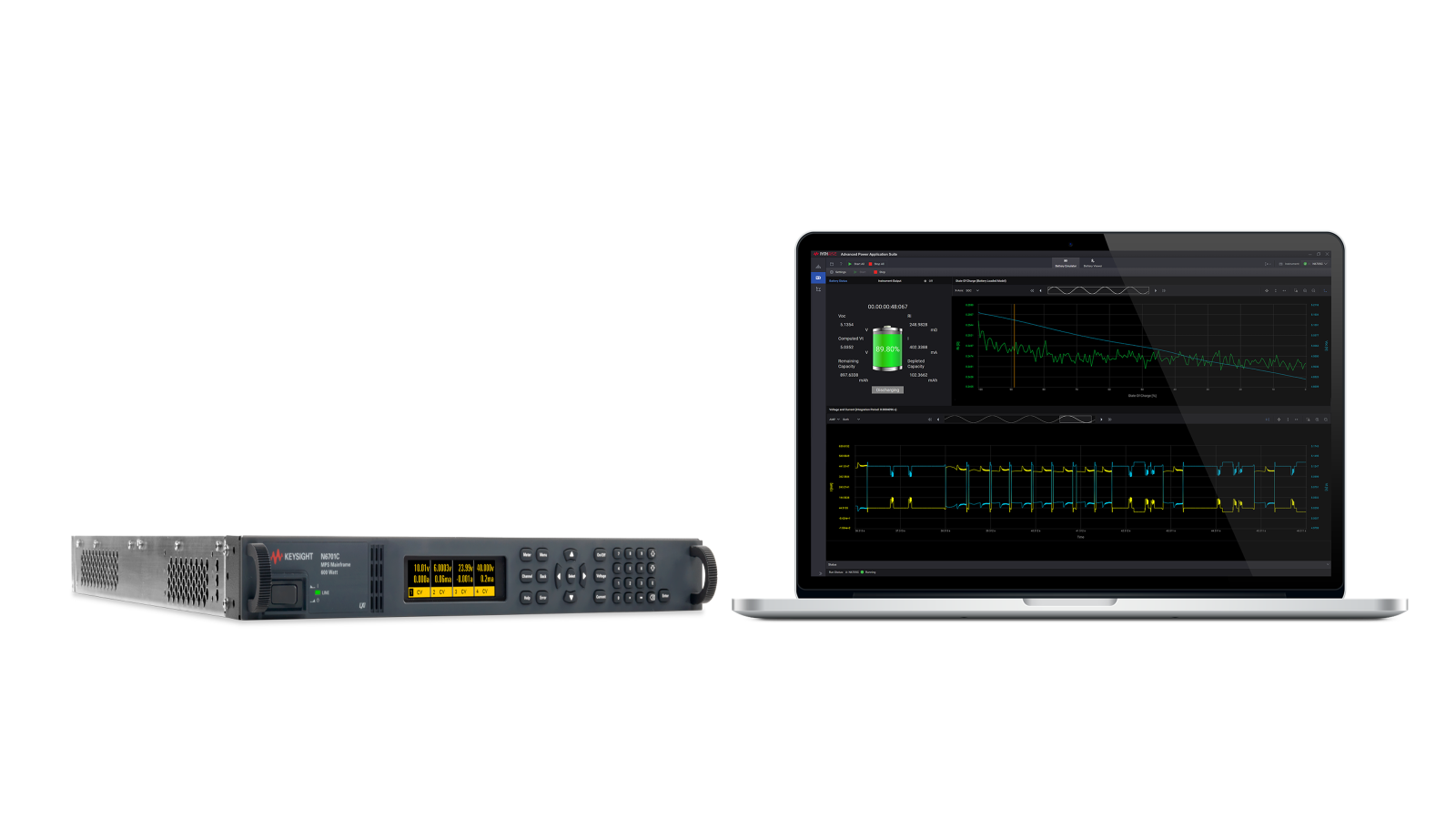
Pouch Cell Battery Test Solution
Block Diagram of Pouch Cell Battery Test Solution

Explore Products in Our Pouch Cell Battery Test Solution
-


![]()
N6700C Low-Profile Modular Power System Mainframe, 400W, 4 Slots
-

![]()
PW9253A PathWave Advanced Battery Test and Emulation


Discover Resources and Insights
Additional Resources for Pouch Cell Battery Test
Related Use Cases

-
![]()
Learn More
How to Validate Solar Inverter Maximum Power Point Tracking Efficiency
Validate solar inverter MPPT efficiency using solar array simulators to replicate real-world irradiance and optimize power tracking performance.
Learn More

-
![]()
Learn More
How to Analyze Grid-Tied Inverter Transient Response
Analyze inverter transient response under dynamic irradiance and grid conditions to ensure stability, performance, and compliance.
Learn More
-
![]()
Learn More
How to Test Solar Inverter Startup Behavior
Test inverter startup and shutdown behavior using solar array simulators to ensure reliable operation under varying irradiance and power conditions.
Learn More

Get in Touch with One of Our Experts
Need help finding the right solution for you?