











-
Modular Sampling Oscilloscopes
Explore DCA-X modular sampling oscilloscopes for high-precision periodic waveform analysis


-
Fixed Configuration Sampling Oscilloscopes
Explore DCA-M fixed configuration models enabling compact signal analysis for manufacturing validation
-
Clock Recovery
Explore DCA-M clock recovery units enabling reliable synchronization for high-speed digital analysis


Modular Sampling Oscilloscopes
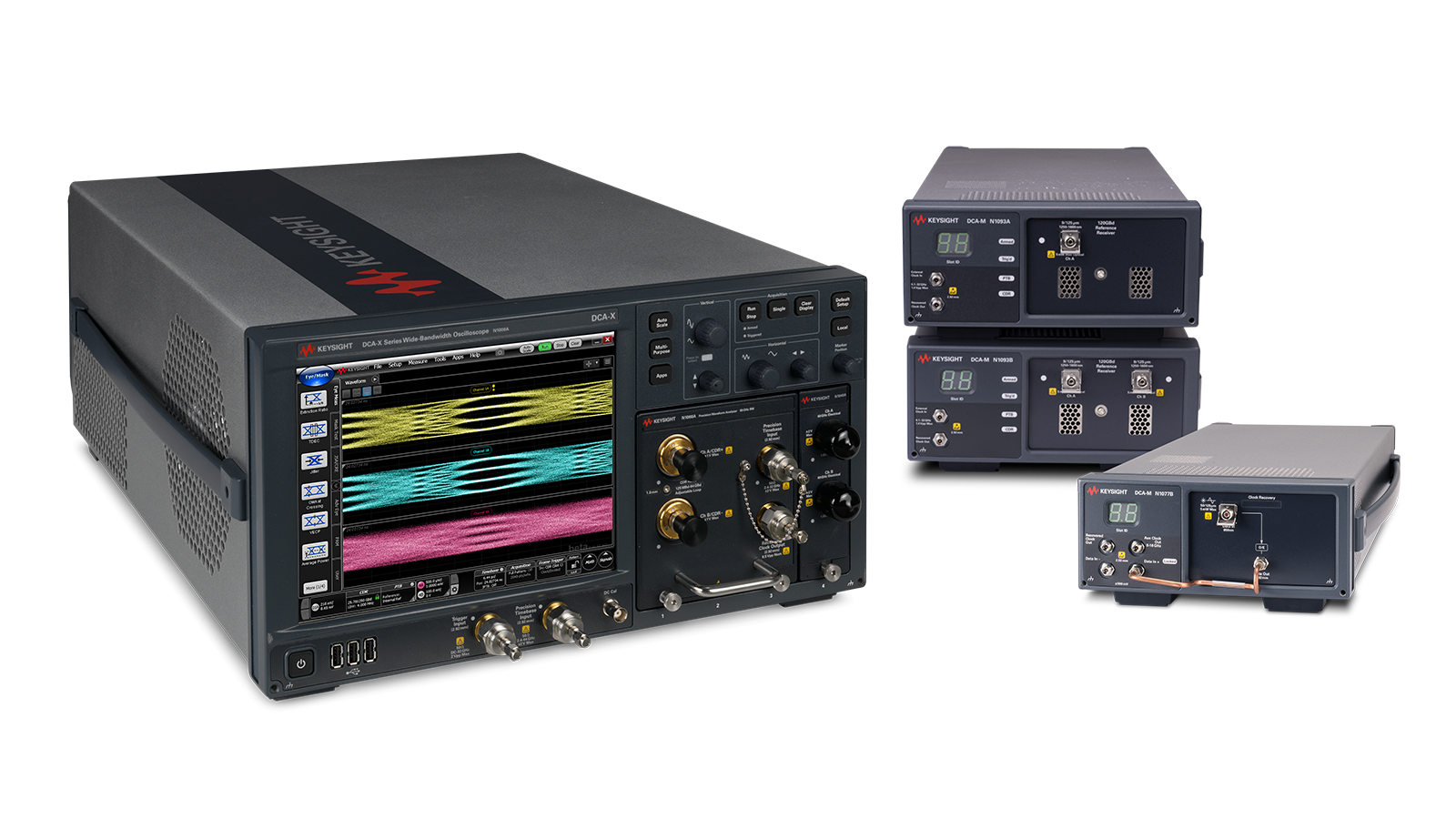
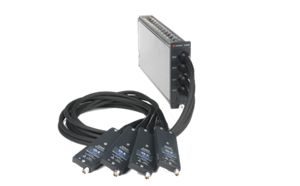
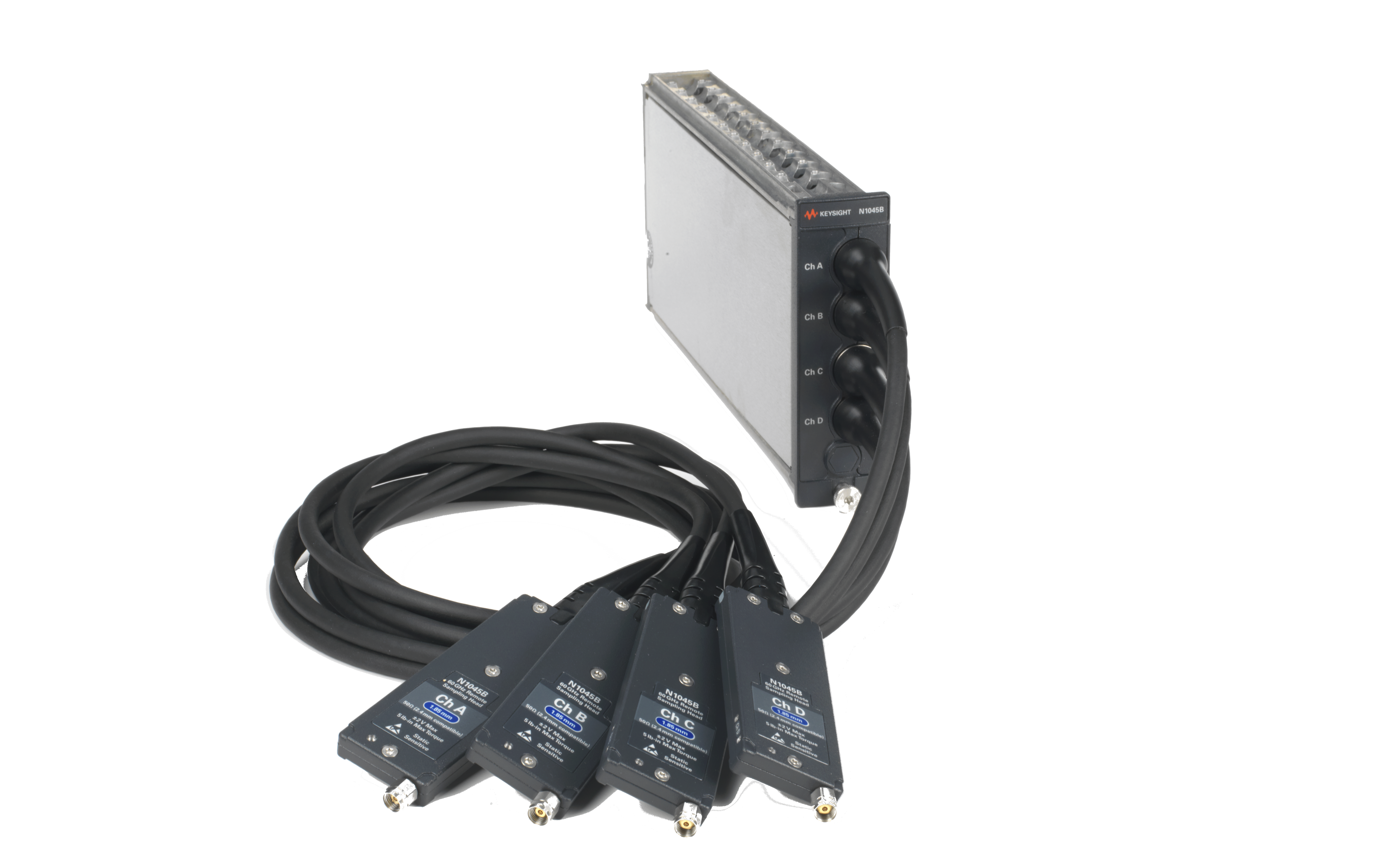
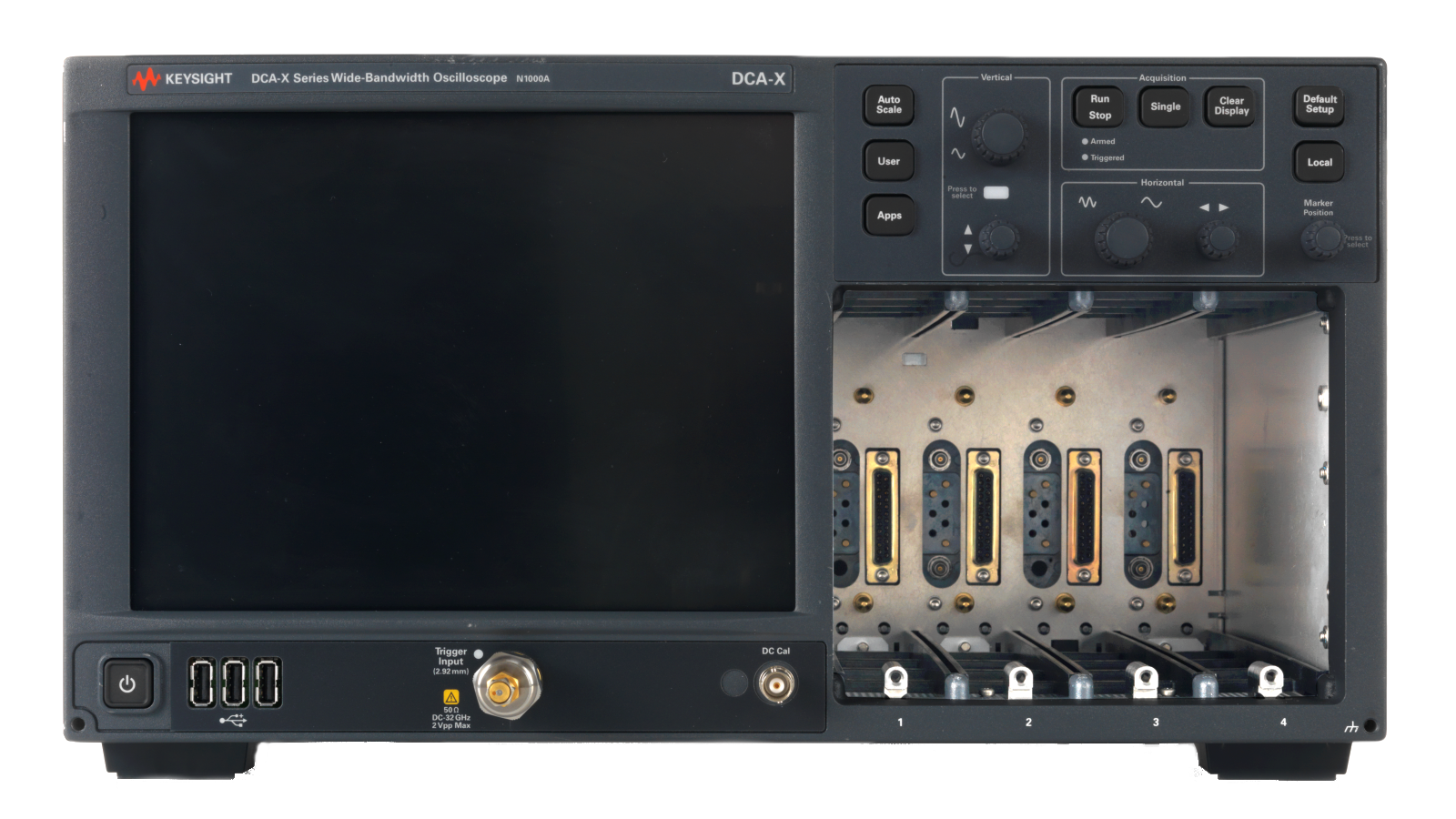
Keysight DCA-X Series modular sampling oscilloscopes provide a flexible platform for making precise, high-bandwidth optical and electrical measurements for eye diagram analysis. DCA-X sampling oscilloscopes are compatible with automated test software to ensure device compliance with standards like the Institute of Electrical and Electronics Engineers (IEEE) 802.3 Ethernet and Optical Internetworking Forum Common Electrical I/O (OIF-CEI). Our DCA-X modules let you build your sampling oscilloscope for today’s validation needs and upgrade modules to address tomorrow’s next innovation. Configure the mainframe with the modules you need — including a variety of plug-in modules spanning optical, electrical, and time-domain reflectometry (TDR) / time-domain transmission (TDT) measurements and analysis with multiple bandwidth, filtering, and channel options.
Ultra-high bandwidth
Capture and analyze high-speed digital communication signals with optical and electrical bandwidths ranging from 33 GHz to 120 GHz.
Scalable architecture
A fully modular benchtop platform lets you customize your scope to meet your needs and easily upgrade as new standards and technologies emerge, future-proofing your investment.
Automated test software
Decades of Keysight expertise turns complex standards into test plans so you can ensure that your devices meet standards and interoperability requirements.
Time-domain measurements
Characterize cables, optical fibers, traces, and components to identify and locate faults, impedance mismatches, and irregularities affecting signal integrity.

Fixed Configuration Sampling Oscilloscopes
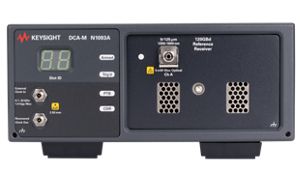
Keysight SX2-class fixed configuration sampling oscilloscopes include the DCA-M Series. Fixed configuration sampling oscilloscopes offer cost-optimized optical and electrical measurements in a compact form factor, ideally suited for manufacturing tests. They provide the same precision measurements as our modular sampling oscilloscopes with bandwidth up to 60 GHz optical and 50 GHz electrical. Fixed configuration sampling oscilloscopes form a complete manufacturing test solution when paired with automation software to optimize test throughput and ensure device interoperability and reliability. Keysight fixed configuration sampling oscilloscopes help you efficiently scale optical transceiver testing with a streamlined test setup for maximum efficiency.

Clock Recovery
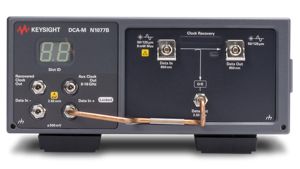
Keysight SX1-class clock recovery units include the DCA-M Electrical and Optical Clock Data Recovery (CDR) Series. Clock recovery units improve the accuracy of high-speed optical and electrical measurements by extracting timing from data signals. You need a precise clock signal to reduce jitter and improve the quality of high-speed signal integrity analysis of your devices. IEEE 802.3 Ethernet and OIF-CEI standards require external clock recovery during compliance testing to ensure accurate measurements. Select these clock recovery units when you plan to perform compliance tests on these classes of digital communications devices.

Find the Modular Sampling Oscilloscope for you in minutes
Find Compatible Software and Accessories for Your Sampling Oscilloscope
Choose from a wide variety of analysis and compliance software or accessories like connectors, cables, calibration kits, and more.
Explore Sampling Oscilloscope Use Cases
Sampling oscilloscopes support a wide range of measurements across various industries, discover them all.
Wired Communication
How to Test 1.6T Optical Transmitter Conformance
Test IEEE and OIF-CEI standards conformance for 1.6T optical transmitters with sampling oscilloscopes.

Wired Communication
How to Test 1.6T Optical Receiver Conformance
Test 1.6T optical receiver conformance with BERTs, sampling oscilloscopes, and photonic and optical instruments.
Wired Communication
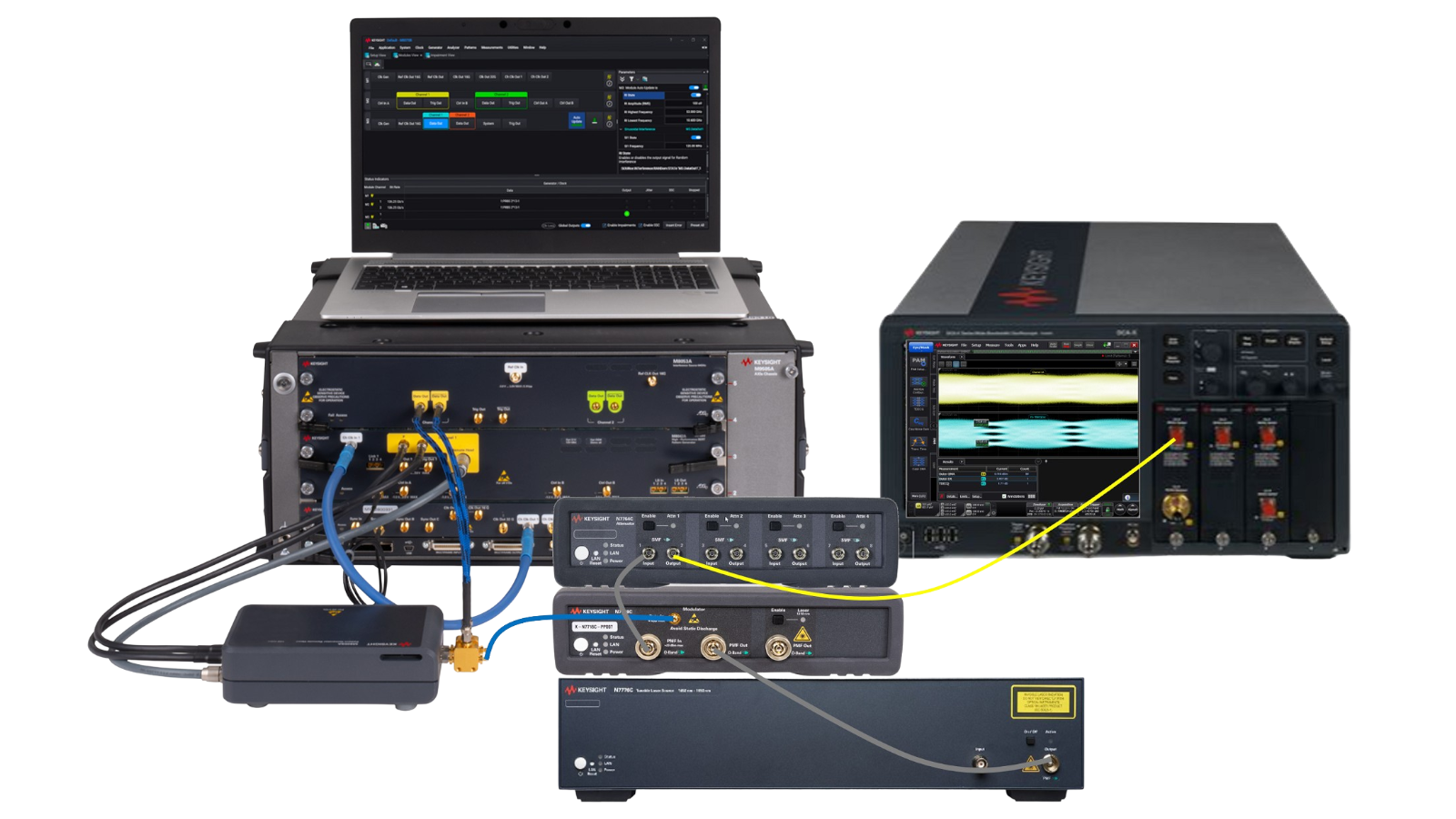
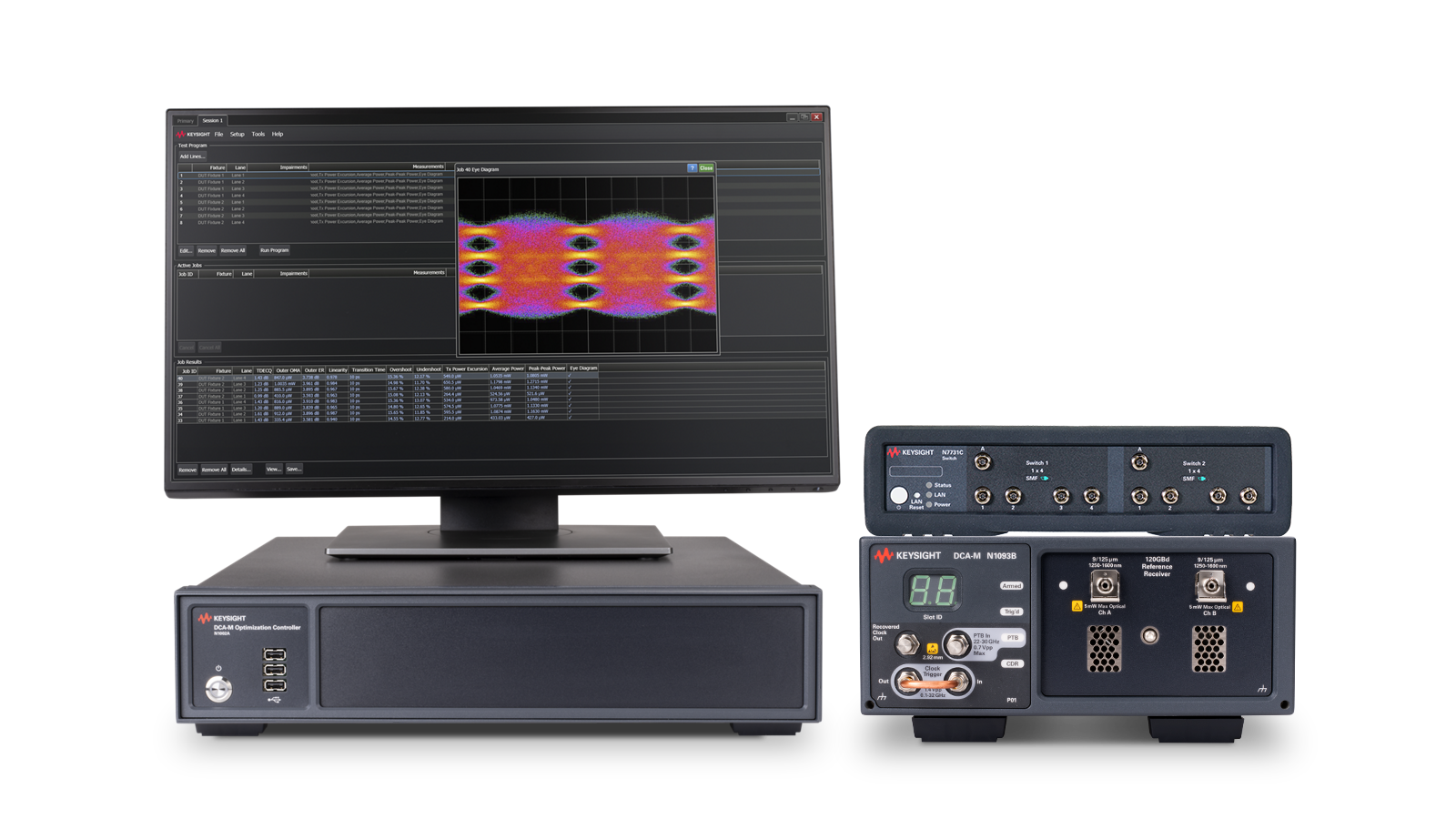
Test 1.6T optical transceivers at production scale with sampling oscilloscopes for efficient transmitter dispersion and eye closure quaternary (TDECQ) measurements.

Wired Communication
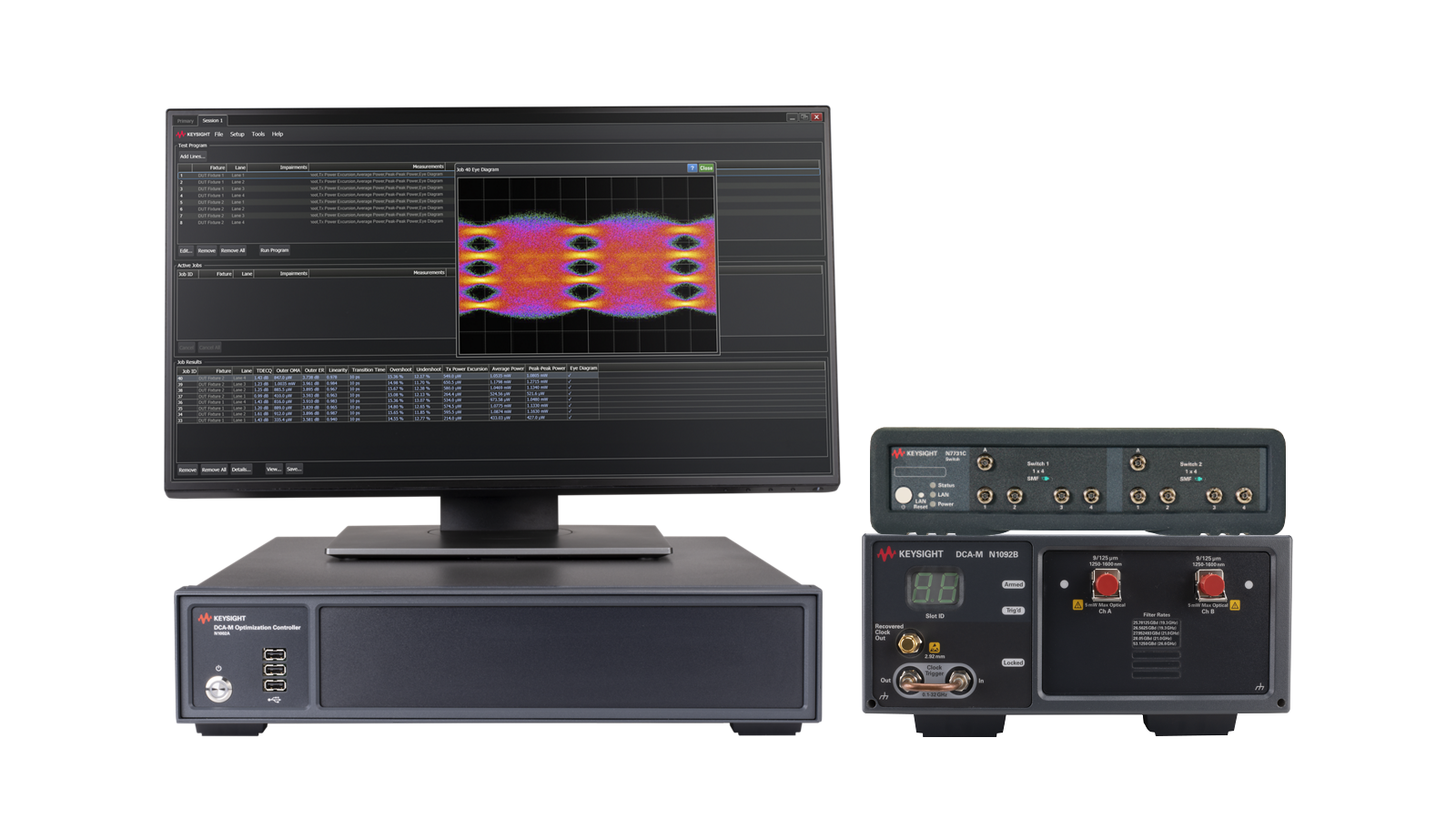
How to Optimize 800G Optical Transceiver Manufacturing Tests
Analyze TDECQ measurements and automate manufacturing tests for 800G optical transceivers.
Services and support
Innovate at speed with curated support plans and prioritized response and turn-around times.
Get predictable, lease-based subscriptions and full lifecycle management solutions—so you reach your business goals faster.
Experience elevated service as a KeysightCare subscriber to get committed technical response and more.
Ensure your test system performs to specification and meets local and global standards.
Make measurements quickly with in-house, instructor-led training, and eLearning.
Download Keysight software or update your software to the newest version.
Frequently Asked Questions
A sampling oscilloscope (equivalent-time oscilloscope) reconstructs repetitive high-speed signals by sampling them over multiple cycles, enabling ultra-high bandwidth, low intrinsic jitter, and precise signal integrity measurements.
It captures a small portion of the signal on each trigger event and combines these samples over many cycles to recreate the full waveform. This approach allows accurate analysis of high-speed electrical and optical signals without requiring ultra-fast real-time digitizers.
Sampling oscilloscopes are widely used to measure eye diagrams, jitter, noise, and transmitter quality metrics such as TDECQ in PAM4-based Ethernet and optical interconnect systems up to 224 Gb/s per lane and beyond.
Use a sampling oscilloscope when measuring repetitive high-speed signals that require maximum measurement accuracy, bandwidth, and low intrinsic jitter. They are best suited for physical layer validation, where engineers need to quantify jitter, optical TDECQ, OMA, eye closure, and signal-to-noise ratio in PAM4 optical and electrical interfaces.
Real-time oscilloscopes are better for capturing non-repetitive events, including glitches, burst errors, and protocol-level behavior as it occurs. Together, sampling and real-time oscilloscopes support complementary workflows: precision signal integrity characterization and real-time debug and fault isolation.
Sampling oscilloscopes measure high-speed, repetitive optical and electrical signals, but cannot capture non-repetitive or transient events.
They are commonly used to analyze:
- PAM4 and NRZ signals in Ethernet standards from 10G to 1.6T+
- Optical transceiver outputs (single-mode and multimode)
- High-speed serial interconnects in data center and telecom systems
Key measurements include:
- Eye diagram and mask compliance
- Jitter decomposition (random and deterministic jitter)
- Transmitter dispersion eye closure quaternary (TDECQ)
- Signal noise and amplitude integrity metrics
Because waveform reconstruction relies on repeated sampling, a separate real-time oscilloscope or protocol analyzer is required to observe one-time events or system-level behavior.
Sampling oscilloscopes achieve very high effective bandwidth and sub-picosecond timing accuracy, enabling precise measurement of jitter and signal distortion in high-speed links.
Their architecture provides:
- Very high bandwidth for analyzing 64–120+ Gbaud signals
- Low intrinsic jitter (tens of femtoseconds) for accurate jitter decomposition
- High vertical resolution for clear eye diagram analysis
This performance is critical when validating high-speed links, where small timing or amplitude errors can directly impact bit error rate (BER), forward error correction (FEC), and overall system margin.
Accurate measurements ensure compliance with standards such as IEEE 802.3 Ethernet and optical interface specifications.
Choose a sampling oscilloscope based on supported data rate, channel type, jitter performance, and application workflow requirements.
Key selection criteria include:
- Data rate (Gbaud support): ensures compatibility with standards like 224 Gb/s PAM4
- Channel type: electrical, optical, single-mode, or multimode inputs
- Intrinsic jitter and noise performance: determines measurement accuracy
- Form factor: modular systems for R&D and validation vs compact systems for manufacturing
Example use cases:
- Modular sampling oscilloscopes: flexible validation of multi-lane interconnects
- Compact fixed configurations: high-throughput automated manufacturing test
A well-matched sampling oscilloscope enables consistent, standards-aligned validation across design, compliance, and production workflows.