How to Improve RF Measurement Accuracy with Proper Diode Sensor Connections

Optimize Diode Sensor Connections
Accurate radio frequency (RF) power measurements depend on maintaining a high-quality electrical connection between the diode power sensor and the device under test. Connector condition, interface compatibility, cable handling, torque, and impedance matching all influence measurement uncertainty and repeatability. Engineers should inspect connectors before each measurement, avoid contamination or mechanical damage, and ensure that mating surfaces are properly aligned to minimize mismatch and unwanted reflections. Even minor connection issues can introduce measurement errors that make it difficult to compare results across repeated tests or different devices.
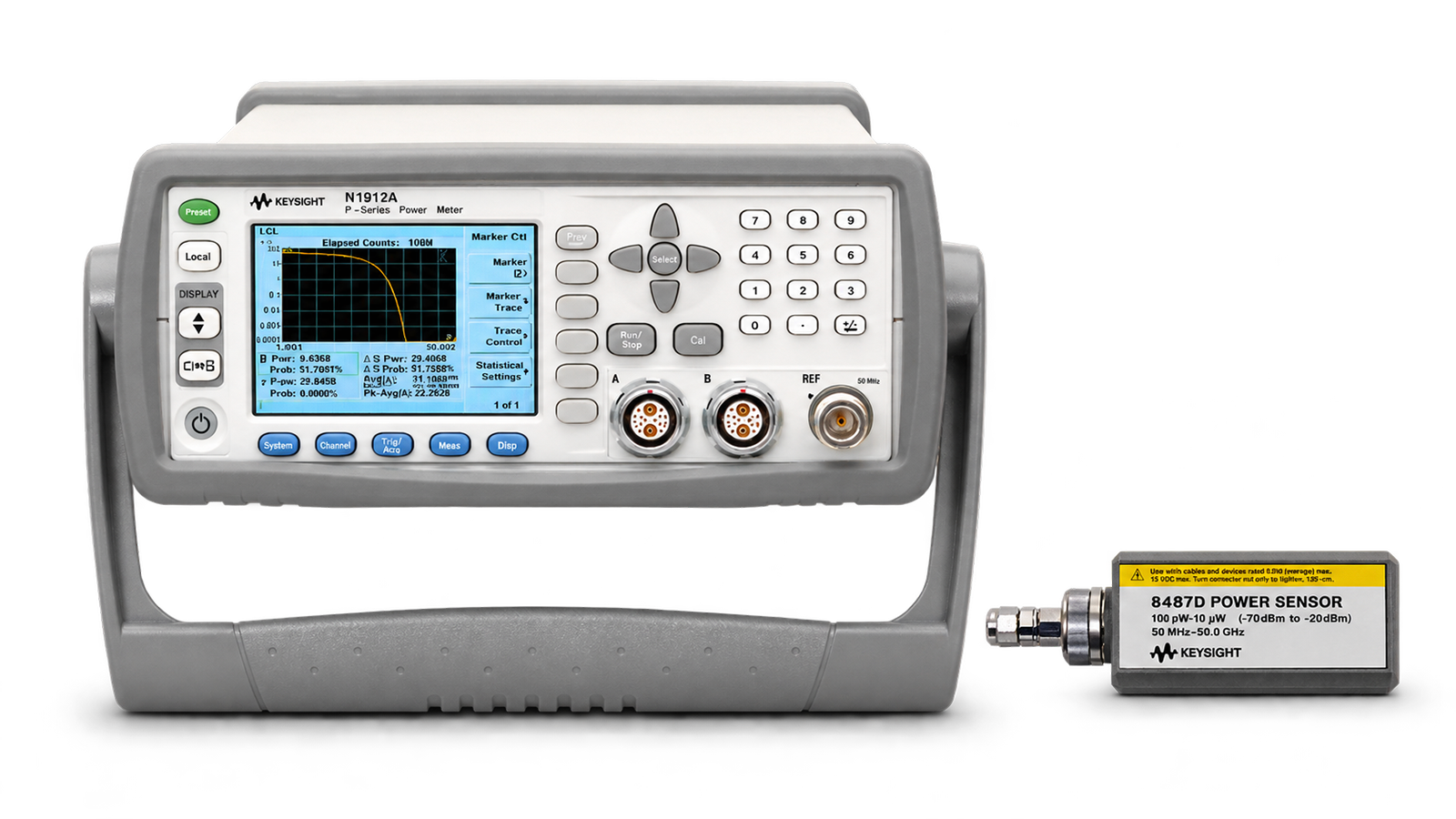
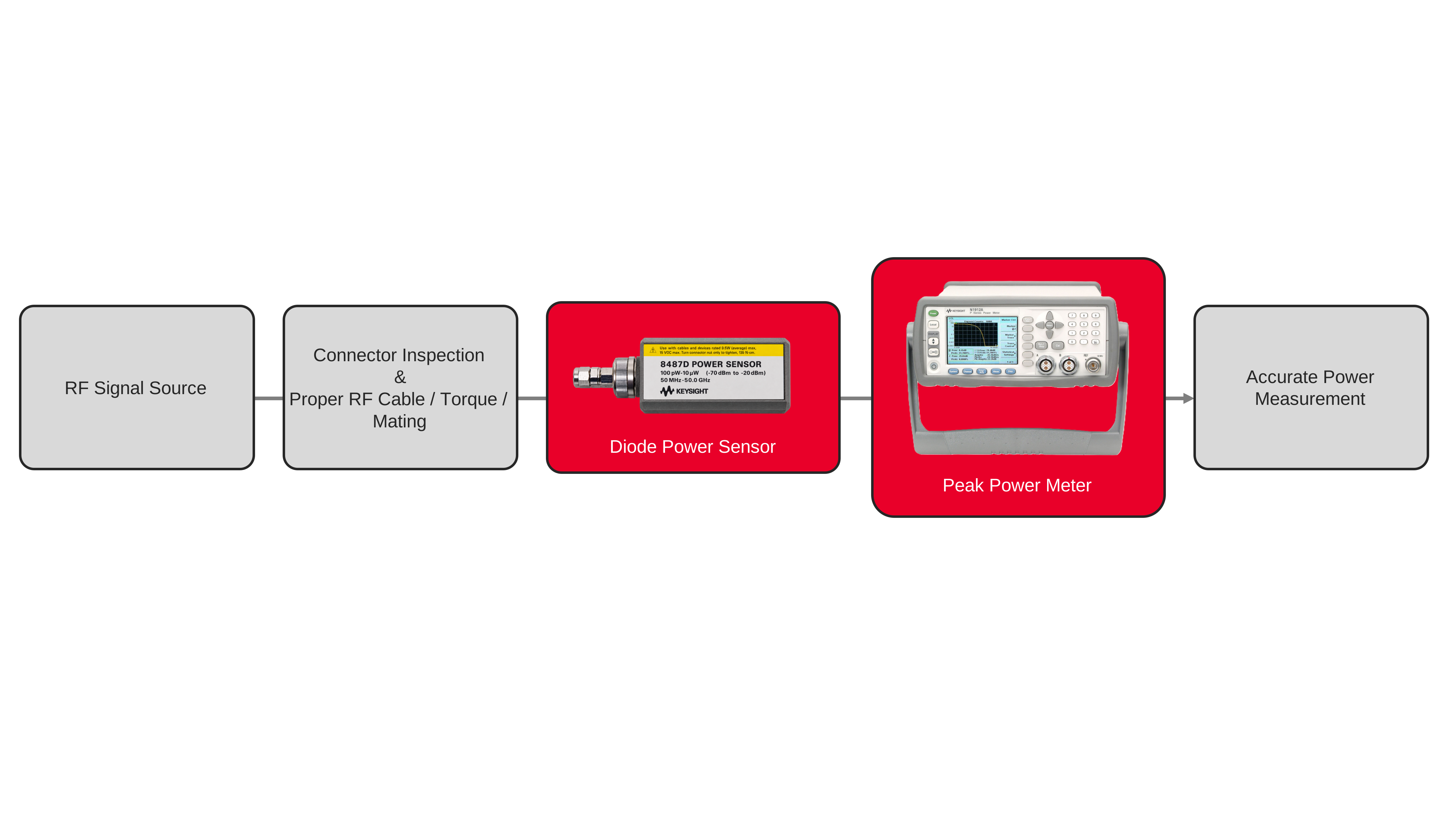
The measurement setup typically includes a diode power sensor, a compatible peak power meter, and appropriate RF interconnects selected for the application. Engineers establish consistent connection practices, verify connector integrity, and confirm proper mating before beginning the measurement sequence. Maintaining repeatable connection procedures throughout development, production, and calibration activities helps improve measurement consistency while reducing variability introduced by the measurement setup rather than the device under test.

Accurate RF Power Measurement Solution
See Block Diagram of RF Power Measurement Solution

Explore Products in Our RF Power Measurement Solution
-

![]()
N1912A P-Series Dual Channel Power Meter
-
![]()
8487D Diode Power Sensor


Discover Resources and Insights
Additional Resources for RF Power Measurements
Related Use Cases

-
![]()
Learn More
How to Perform Burst Power Measurement
Measure burst RF signal power using time-gated averaging with power meters, sensors, and automated control software for TDMA systems.
Learn More

-
![]()
Learn More
How to Measure RF Power During Rapid Amplitude Switching
Measure RF power during rapid amplitude transitions using a power meter, fast-response sensors, continuous acquisition, and automated measurement techniques.
Learn More
-
![]()
Learn More
How to Measure Average Power of Frequency-Hopping Signals
Measure average RF power of frequency-hopping signals using power meters, sensors, and time-aligned measurement techniques for accurate results.
Learn More

Get in Touch with One of Our Experts
Need help finding the right solution for you?