How to Validate Grid-Support Anti-Islanding Performance

Exercise Grid-Support Operating Modes
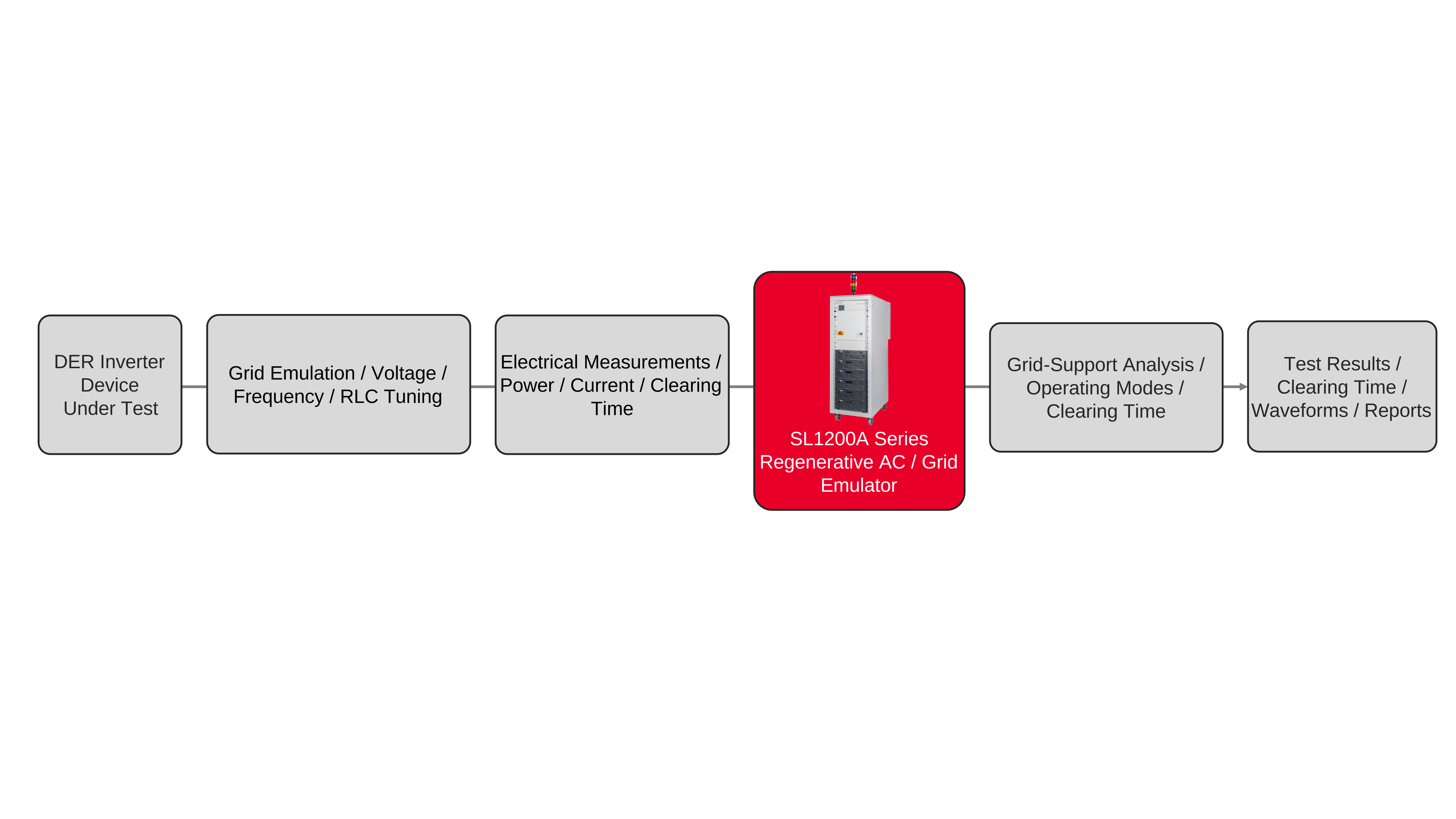
Modern distributed energy resource inverters can change active and reactive output in response to grid voltage and frequency. A grid-support anti-islanding test therefore establishes the specified operating state before the island is created rather than evaluating only a unity-power-factor condition. The grid emulator sets the required voltage and frequency while the inverter operates with the applicable reactive power control or active-power response. Real and reactive island-load values are then tuned around that operating point. Three-phase voltage, current, power, frequency, phase angle, and residual grid current are measured so the pre-island state can be reproduced consistently for DER inverter compliance testing across multiple grid-support configurations. Each operating state is established independently so the island response can be evaluated without combining changes in support mode, resonant loading, and measurement criteria.
After the operating point is established, the simulated grid connection is opened and the inverter response is recorded. The same sequence is repeated for each required voltage frequency support configuration, with island tuning updated to match changes in inverter behavior. Because grid-support functions alter active and reactive current, they can also change island voltage, resonance, equilibrium frequency, and clearing time. Automated IEEE 1547.1 sequencing maintains the required configuration, executes the grid transition, captures the shutdown waveform, and calculates the clearing-time result for every operating state. The resulting data set allows anti-islanding behavior to be compared across support modes using consistent electrical conditions, measurement methods, and test sequencing. Recording both the commanded support settings and the measured pre-island electrical quantities also provides context for interpreting clearing-time differences between operating conditions.


Grid-Support Anti-Islanding Test Solution
Block Diagram of Grid-Support Anti-Islanding Test Solution

Explore Products in Our Grid-Support Anti-Islanding Test Solution
-

![]()
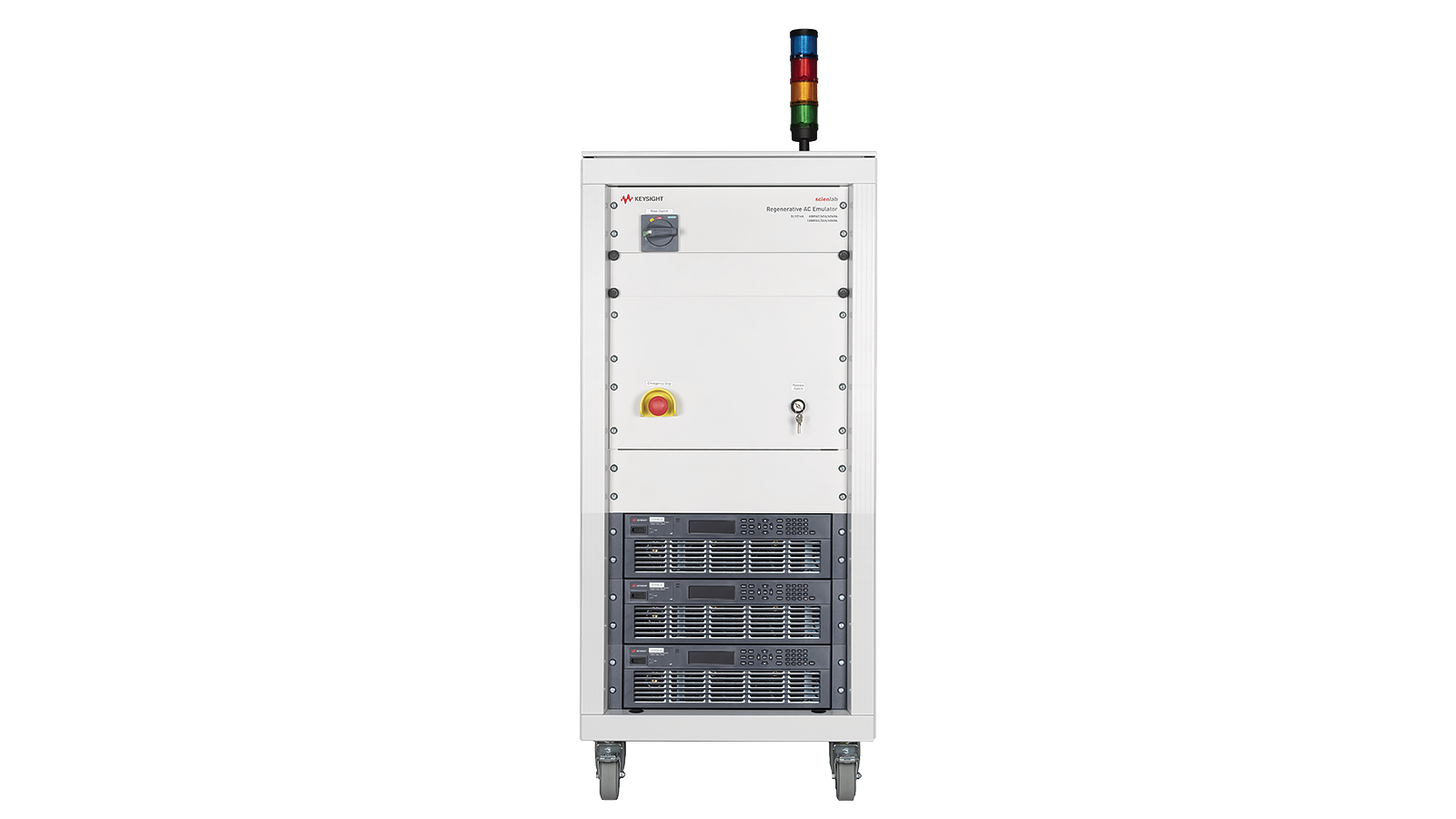
SL1214A Scienlab Dual-Range Regenerative AC / Grid Emulator, 600 / 1200 VAC, 63 / 32.5 A, 45 kW / 66 kVA

Discover Resources and Insights
Additional Resources for Grid-Support Anti-Islanding Test
Related Use Cases

-
![]()
Learn More
How to Find Worst-Case Island Clearing Time
Search for worst-case anti-islanding behavior by varying reactive impedance around a tuned resonant island operating point, measuring inverter shutdown time at each test condition, identifying the maximum clearing time, and repeating the longest-duration conditions to verify results.
Learn More

-
![]()
Learn More
How to Debug Inverter Anti-Islanding Detection Algorithms
Debug anti-islanding detection algorithms by reproducing controlled resonant island conditions, measuring inverter voltage and frequency response after grid isolation, and comparing shutdown behavior across changes in reactive loading and control settings.
Learn More
-
![]()
Learn More
How to Verify Stable Island Test Conditions
Verify stable island test conditions for grid-connected distributed energy resource inverters by balancing an emulated resonant RLC load, isolating the simulated grid, and monitoring voltage, frequency, and current over a controlled stability interval.
Learn More

Get in Touch with One of Our Experts
Need help finding the right solution for you?