How to Validate Embedded Power Rail Transients

Characterize Rails Under Changing Processor Loads
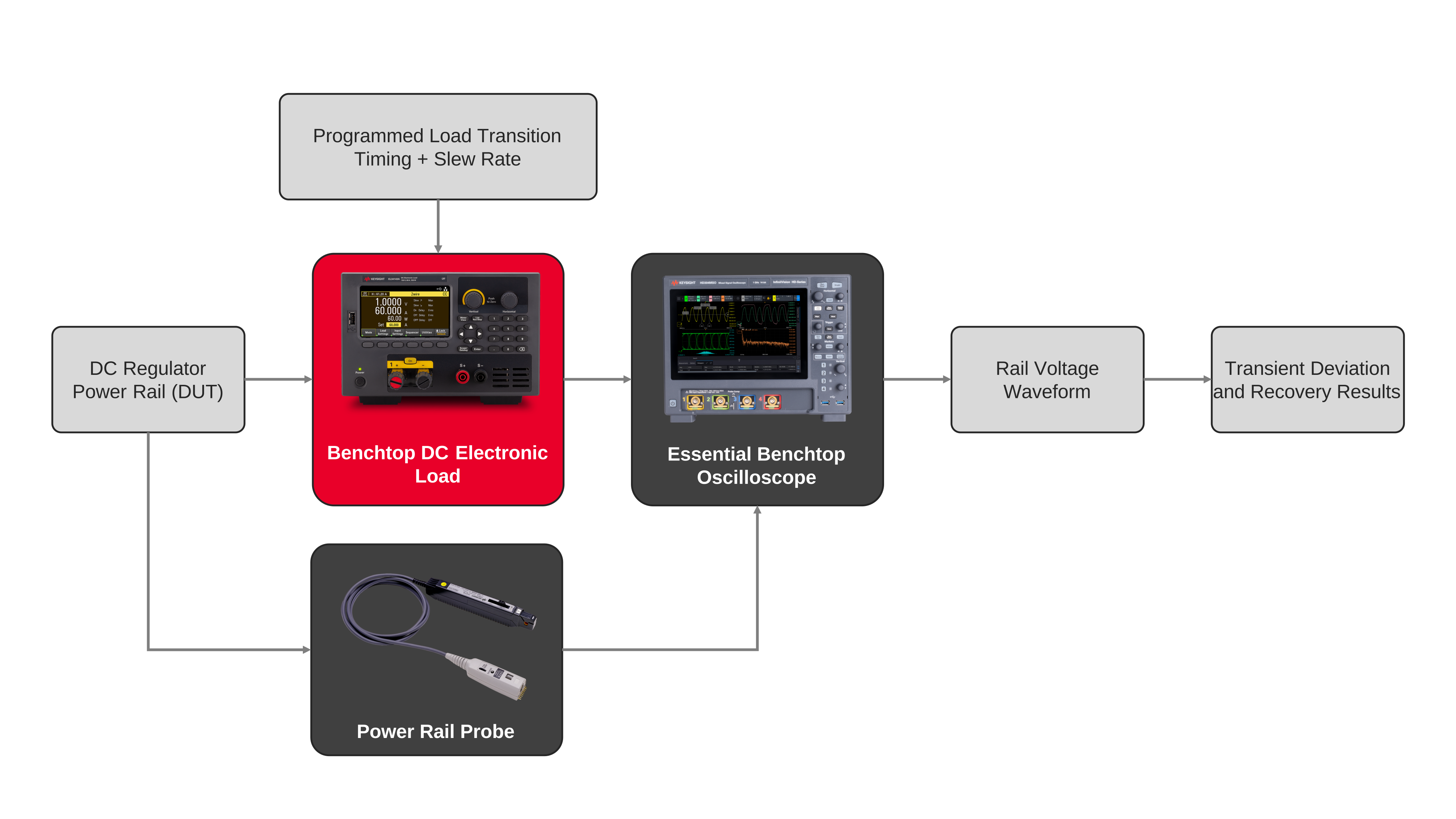
Embedded power rail transient testing requires reproducing the changes in current demand that occur as processors, memory, interfaces, and other digital subsystems move between operating states. Connect a programmable electronic load to the DC rail under test and establish current levels representing defined lower- and higher-power operating conditions. Program transitions between these levels while measuring voltage directly at the rail so each change in load current can be correlated with the resulting electrical response. The measurements characterize voltage deviation, recovery, and settling as the regulator responds to changing demand and provide consistent operating conditions for evaluating rail behavior without relying on processor software or system activity to reproduce the same load event for every test.
Dynamic load profiles extend the measurement by controlling the initial and final current levels, transition timing, repetition, and slew rate applied to the power rail. Configure sequences that represent changes such as idle-to-processing, processing-to-idle, or repeated bursts of subsystem activity, then capture voltage and current throughout the programmed profile. Repeat the same sequence at different rail voltages and load-current levels to compare transient behavior across the intended operating range and identify conditions that produce larger voltage excursions or longer recovery intervals. Using a programmable load to reproduce the electrical demand independently from the embedded system provides repeatable stimulus for characterizing the power-delivery network before integrating or exercising the complete processor workload.

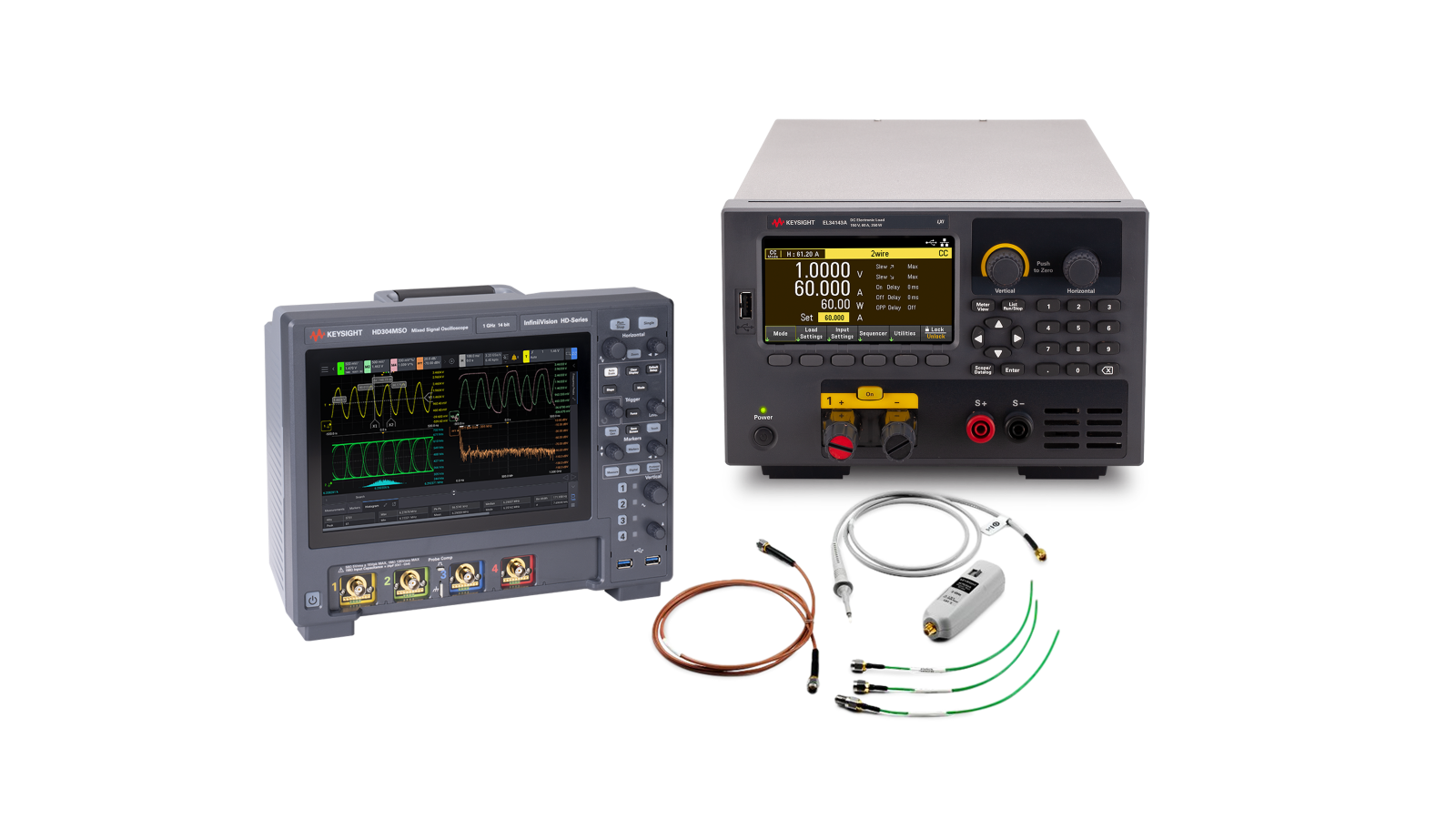
Embedded Power Rail Transient Validation Solution
See Block Diagram of Embedded Power Rail Transient Validation Solution

Explore Products for Our Embedded Power Rail Transient Validation Solution
-

![]()
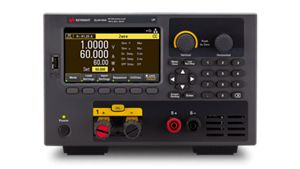
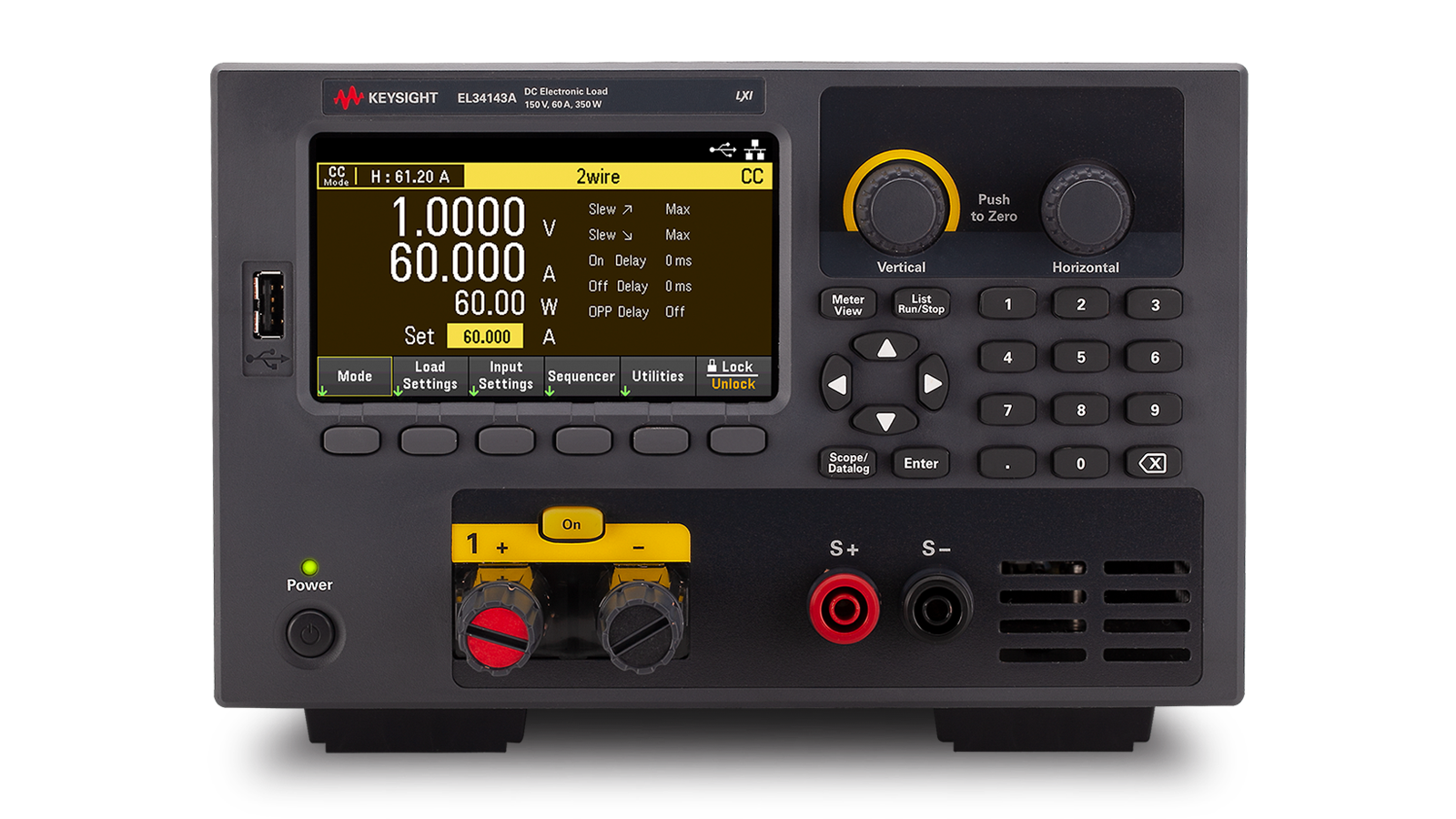
EL34143A 350W Bench Electronic Load, Single Input 150V, 60A, 350W
-
![]()
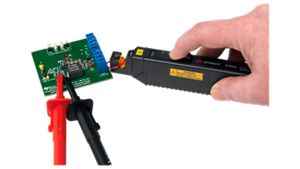
N7026A AC/DC High Sensitivity Clamp-On Current Probe
-
![]()
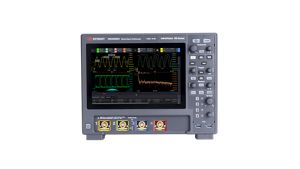
HD304MSO InfiniiVision Oscilloscope: 4 Analog Channels


Discover Resources and Insights
Additional Resources for Embedded Power Rail Transient Validation
Related Use Cases


-
![]()
Learn More
How to Validate PMIC Low-Voltage Output Regulation
Characterize PMIC low-voltage output regulation across programmed current levels and dynamic load conditions with synchronized measurements.
Learn More

-
![]()
Learn More
How to Characterize SiC and GaN Switching
Characterize switching behavior of SiC and GaN devices using double pulse testing and high-speed measurements.
Learn More
-
![]()
Learn More
How to Automate PCB Impedance Validation
Automate PCB impedance validation with the Keysight E5063A Essential Vector Network Analyzer, guided Test Wizard workflows, and PC-based remote control software.
Learn More

Get In Touch With One Of Our Experts
Need help finding the right solution for you?