










-
Power Meters
Ensure precise readings with versatile power meters

-
Power Sensors
Explore power sensors for precision, performance, and portability
-
Frequency Counters
High-resolution time and frequency analysis
-
Modular PXI Switches
Optimize test performance with high-density switching modules


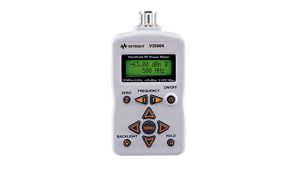
Power Meters
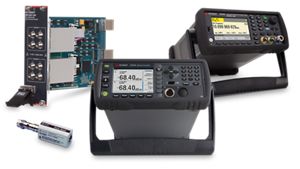
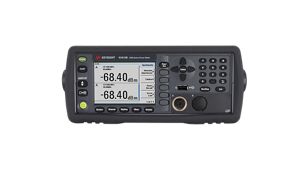
Keysight power meters are now offered in four capability classes across average power meters, handheld power meters, peak power meters, and thermistor power meters. Average power meters include the PM4-class, handheld power meters include the PM1-class, peak power meters include the PM2-class, and thermistor power meters include the PM3-class. Explore our extensive portfolio of RF power meters for testing and calibration, performance verification, and troubleshooting the power of RF signals across a wide range of industries including wireless communications, aerospace and defense, and electronics and semiconductor manufacturing.



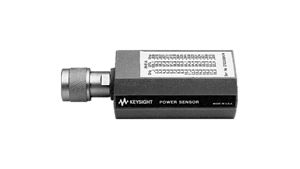
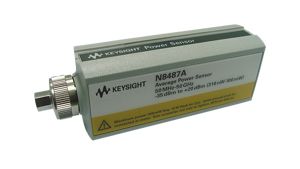
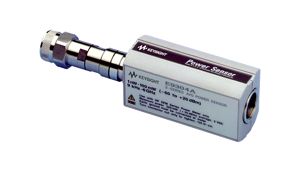
Power Sensors
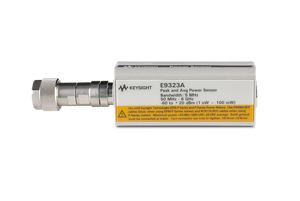
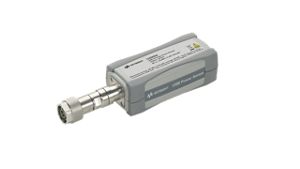
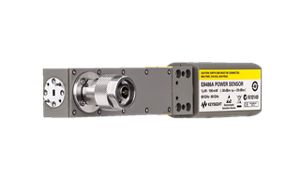
Keysight power sensors deliver precise, reliable measurements across a wide range of applications, from low-level RF signals to high-power transmissions. Featuring enhanced sensor technologies, diode sensors provide high sensitivity and precision, while thermocouple sensors offer robust, accurate measurements in demanding environments. Average power sensors ensure repeatable results, and peak sensors are ideal for capturing complex, time-varying signals. Available in both benchtop and standalone configurations, these sensors offer a wide dynamic range, broad video bandwidth, and high-frequency coverage, enabling efficient and comprehensive power analysis.







Frequency Counters
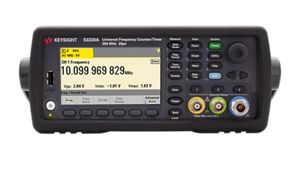
Keysight FC1-class frequency counters include the 53210A-53230A. They offer high-resolution capabilities, measurement accuracy, and robust connectivity options. Optional microwave channels extend the frequency range, while advanced math functions and versatile measurement capabilities support a variety of applications. Easy calibration processes and durable hardware ensure consistent performance.

Modular PXI Switches
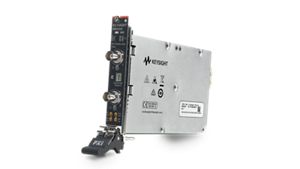
Keysight PXI switching modules offer high-speed, high-power, and high-density signal connections with low insertion loss and voltage standing wave ratio (VSWR), easy setup, and software support for common programming environments.

Find the RF Power Meter For Your Application in Minutes
Find Compatible Software and Accessories For Your Power Meter
Choose from analysis, control, or application-specific software or accessories like cables, probes, and rackmount kits.
Services and support
Innovate at speed with curated support plans and prioritized response and turn-around times.
Get predictable, lease-based subscriptions and full lifecycle management solutions—so you reach your business goals faster.
Experience elevated service as a KeysightCare subscriber to get committed technical response and more.
Ensure your test system performs to specification and meets local and global standards.
Make measurements quickly with in-house, instructor-led training, and eLearning.
Download Keysight software or update your software to the newest version.
Frequently asked questions
An RF power meter is used to accurately measure the power level of radio-frequency (RF) signals.
It is an essential tool for verifying transmitter output power and ensuring regulatory compliance, calibrating RF signal paths and test systems, and characterizing components such as amplifiers, filters, and antennas. Accurate RF power measurement supports overall system performance, helps minimize interference, and enables repeatable results across development, production, and automated test environments.
Solutions from Keysight, a category leader in RF measurement, support high accuracy, wide dynamic range, and automated workflows.
Choosing the right RF power meter and sensor depends on the characteristics of your signal, the level of accuracy required, and the intended test environment.
Signal type is a primary consideration, including whether the signal is continuous wave (CW), modulated, or pulsed. Measurement requirements also vary, such as the need to capture average, peak, or time-gated power. In addition, the application context, whether in research and development, manufacturing, or field testing, can influence the optimal solution.
For example, average power sensors are well suited for stable signals, while peak sensors are necessary for complex modulation formats such as those used in 5G and radar systems. Modern solutions from Keysight offer flexible sensor options and automation capabilities to ensure accurate and repeatable measurements.
Thermal and diode RF power sensors measure signal power using different principles, making each suitable for specific types of applications.
Thermal sensors determine true average power by converting RF energy into heat, providing high accuracy and traceability. They are commonly used in calibration and applications where measurement precision is critical.
Diode sensors, on the other hand, use semiconductor diodes to detect signal amplitude. They offer fast response times and high sensitivity, making them ideal for measuring low-level signals and complex or modulated waveforms.
While thermal sensors excel in accuracy, diode sensors provide speed and sensitivity. Many solutions from Keysight incorporate both technologies to support a wide range of RF measurement needs.
Key specifications play an important role in determining the accuracy and suitability of an RF power meter for a given application.
Important parameters include frequency range, which must fully cover the signals being measured, and dynamic range, which defines the span of measurable power levels. Measurement accuracy and uncertainty are critical for ensuring confidence in results, while sensor compatibility and interchangeability provide flexibility across different setups. Measurement speed and support for automation are also important, particularly in high-throughput environments.
Selecting the appropriate specifications ensures reliable measurements, supports compliance requirements, and improves efficiency in automated test systems.
Average power, peak power, and pulse power measurements describe different aspects of RF signal behavior and are used in different application contexts.
Average power represents the mean power over time and is commonly used for steady-state signals and compliance testing. Peak power refers to the maximum instantaneous power of a signal and is especially important for modulated signals with high crest factors. Pulse power measures the power within a defined pulse interval and is widely used in radar, pulsed communication systems, and aerospace applications.
Understanding these distinctions is essential for accurate signal characterization and for ensuring proper system performance in modern RF environments.
Accurate RF power measurement depends on proper setup and careful calibration of the instrument and sensor.
A typical setup involves connecting the appropriate RF power sensor, ensuring proper impedance matching, typically 50 ohms, and minimizing cable losses and reflections that could affect measurement accuracy.
Calibration involves performing zeroing and internal calibration routines, applying sensor-specific calibration factors, and using traceable standards when required. These steps help reduce measurement uncertainty and ensure consistent results.
Automated calibration features in solutions from Keysight further improve repeatability and efficiency in both manual and automated test environments.
Measurement errors can significantly impact RF power accuracy if not properly identified and managed.
Common sources of error include impedance mismatches and reflections, cable and connector losses, sensor calibration drift, temperature variations, and instrument noise or limited dynamic range. Each of these factors can introduce uncertainty into the measurement if left unaddressed.
To minimize errors, it is important to use high-quality, calibrated sensors and cables, perform regular calibration and zeroing, and maintain stable environmental conditions. Applying proper measurement techniques, including averaging where appropriate, can further improve accuracy and consistency.
Reducing these sources of error enhances measurement confidence, supports regulatory compliance, and ensures consistent results across test systems.
RF power meters and sensors can be easily integrated into automated test systems, making them well suited for modern measurement environments.
They support remote control through standard interfaces such as USB, LAN, and GPIB, enabling seamless communication with automated platforms. This capability allows for high-throughput testing in manufacturing environments, as well as automated calibration and validation workflows.
Automation improves measurement speed, repeatability, and scalability. Solutions from Keysight are designed for straightforward integration into automated test systems, enabling efficient and reliable RF testing.