Connected Workflows for Modern Semiconductor Validation
As semiconductor and photonic devices become more complex, engineers need a more reliable way to correlate simulation, measurement, and test results. Keysight offers end-to-end semiconductor design, test, and validation solutions organized by workflow stages to help engineers move from lab to fab with confidence. Choose a workflow below.
Evaluate power device performance across real operating conditions to optimize circuit designs and improve reliability.
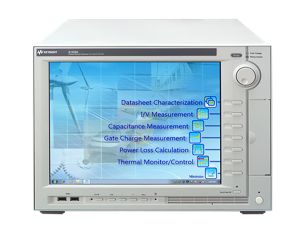

Advanced Low-Frequency Noise Analyzer
Enable fast, accurate low-frequency noise measurements with integrated DC, capacitance, and RF analysis for advanced device characterization workflows.

Universal Signal Processing Architecture
Accelerate silicon development with a modular real-time platform for rapid prototyping, validation, and algorithm testing.

Source Measure Units
Deliver precise voltage and current sourcing for accurate device characterization, validation, and measurement.
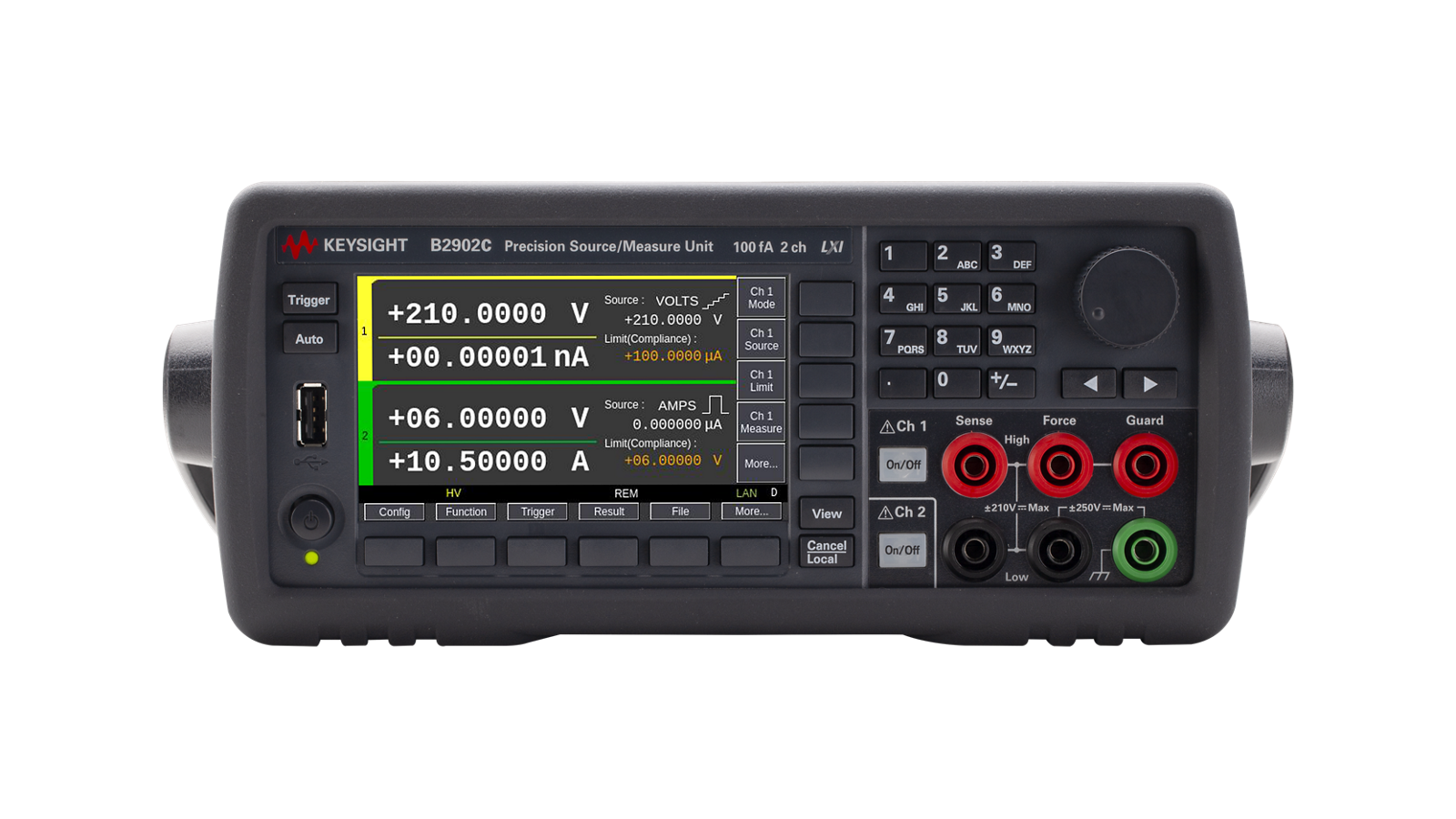
Femto / Picoammeter and Electrometers
Measure ultra-low currents down to 0.01 fA and resistances up to 10 PΩ with graphical analysis tools and an intuitive 4.3-inch LCD.

Photonic IC Design
Design, simulate, and validate photonic integrated circuits with a unified platform that streamlines workflows from concept through fabrication-ready layouts

RF and Microwave Circuit Design
Design and verify complex RF and microwave systems with integrated simulation tools that reduce risk across RFIC, MMIC, antenna, and PCB development.
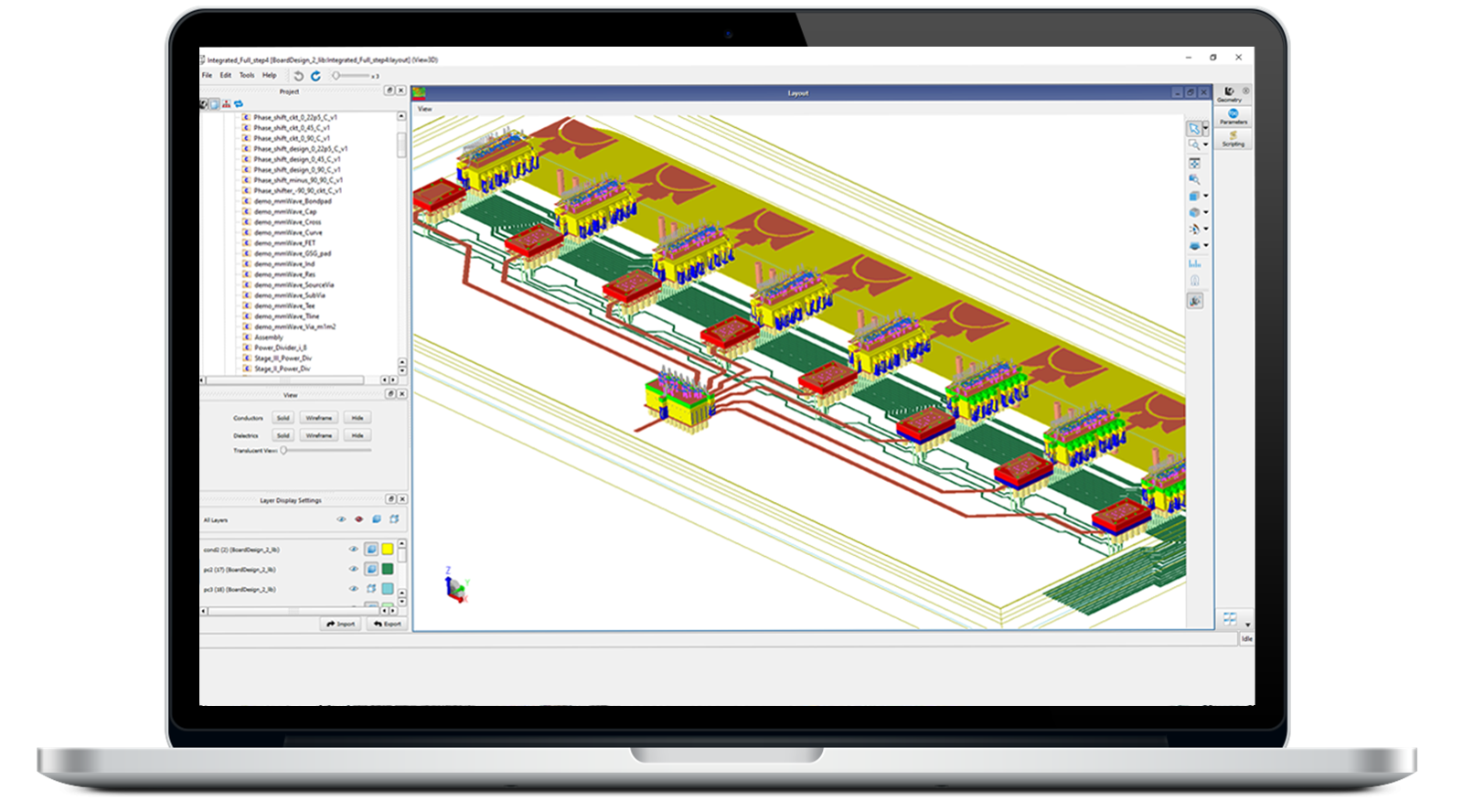
Optical Design
Accelerate photonic device development with advanced simulation tools that reduce physical prototyping and support integrated optical design workflows.
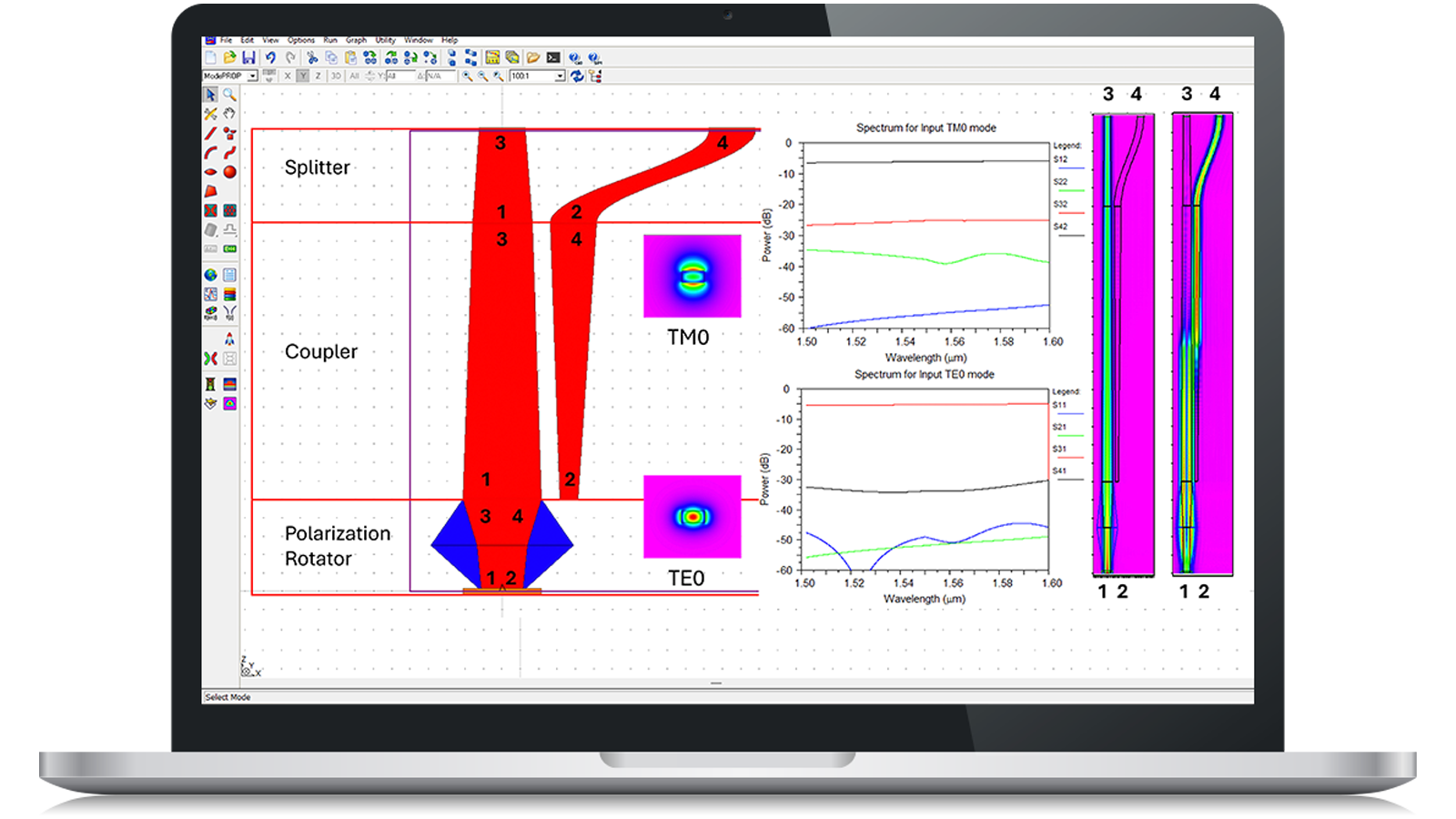
Quantum Electronics Design
Accelerate superconducting chip development with quantum design software that shortens design cycles and improves engineering productivity.
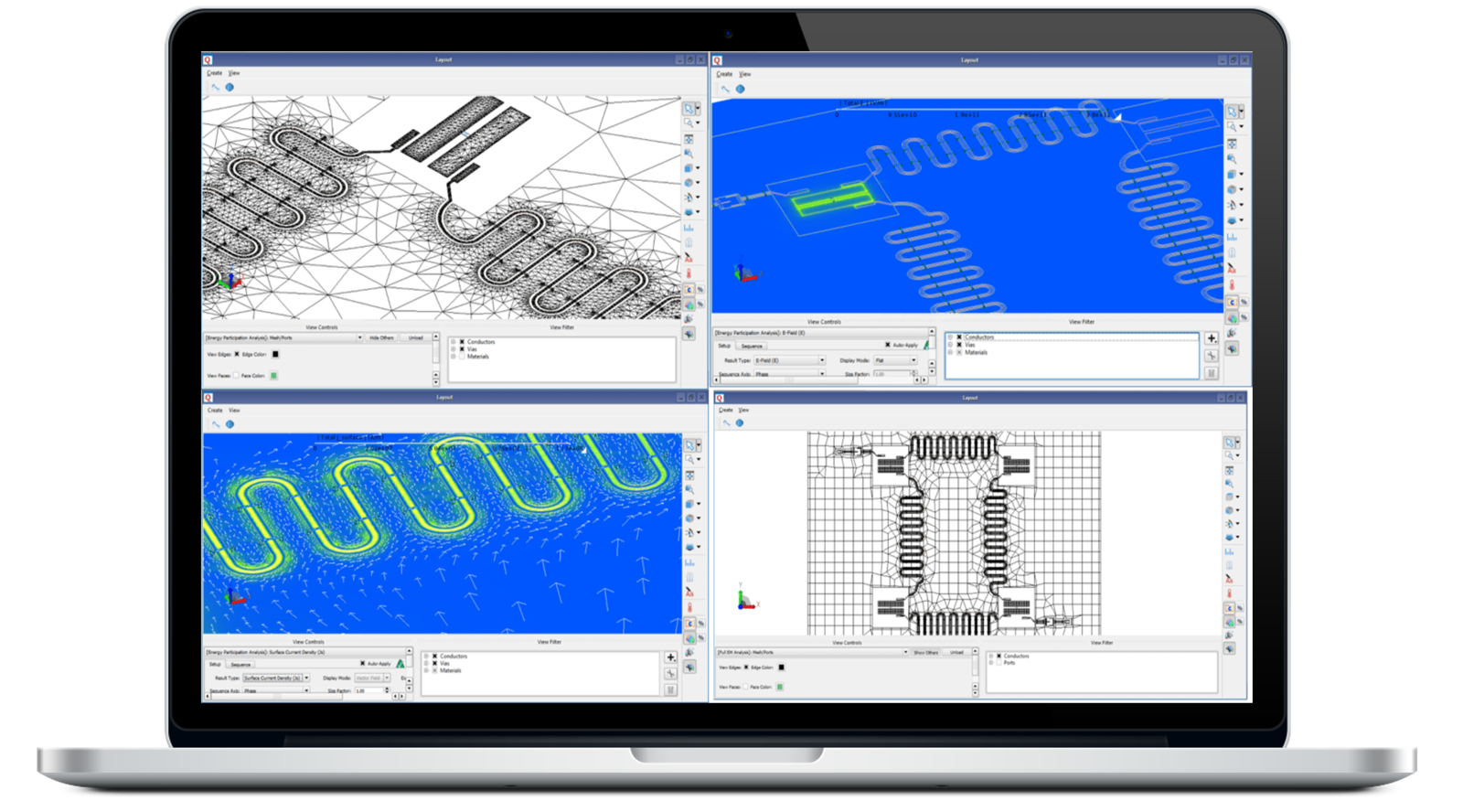
Power Electronics Design
Model, design, and optimize power electronics systems with advanced simulation tools that improve accuracy, efficiency, and development speed.

Parameter Analyzers
Analyze IV, CV, and pulsed measurements in one platform with a flexible semiconductor characterization system built for advanced device research.

Parametric Test Solutions
Accelerate wafer-level parametric validation with massively parallel testing that boosts throughput while maintaining trusted measurement correlation.

Low-Leakage Switch Matrix
Automate low-leakage IV and CV measurements across hundreds of devices with high-isolation switching designed for characterization and reliability testing.

Vector Network Analyzers
Characterize passive components, amplifiers, mixers, and frequency converters with a flexible vector network analyzer delivering R&D performance up to 53 GHz.

Power Device Analyzer / Curve Tracer
Characterize Si, SiC, and GaN power devices with high-voltage, high-current testing designed for accurate analysis, reliability, and faster development.

Photonic and Optical Test Solutions
Explore photonic and optical test solutions for validating photonic integrated circuits, optical components, and coherent communication systems.

Optical Power Meters
Perform accurate, high-speed optical power measurements with scalable multi-channel capability designed for photonic device development and production testing.

Optical Polarization and Dispersion
Control, stabilize, and analyze optical polarization with high-speed switching and feedback for advanced photonic device testing and characterization.

Tunable Lasers
Characterize photonic components with precise wavelength sweeps using a tunable laser source designed for stable, automated optical testing.

Lightwave Component Analyzers
Characterize photonic components with calibrated optical S-parameter measurements that deliver accurate, repeatable insights for high-speed device validation.

Photonic Application Suite (PAS)
Analyze polarization-dependent photonic performance in a single wavelength sweep to accelerate insertion loss, responsivity, and return loss measurements.

Precision DC Bias Sources
Deliver accurate voltage and current sourcing for device characterization, validation, and advanced semiconductor testing.

A Practical Guide to Semiconductor Validation Workflows
Improve correlation and build a more repeatable validation process across design, characterization, wafer-level test, and photonic IC workflows.
Inside the eBook, discover:
- Design validation, characterization, and test workflows across the semiconductor lifecycle
- Methods for improving simulation-to-measurement correlation
- Examples of how teams identify variation, trace failures, and validate devices with confidence

Learn how to:
- Connect IC design and modeling with real-world measurement
- Improve wafer-level characterization and parametric test workflows
- Validate photonic IC performance with precise optical and electrical measurements
Semiconductor Test Workflows FAQ
Choose your IC design workflow based on the type of device you are building, the physics you need to model, and the measurements you will need to correlate after silicon returns. The goal is to connect design intent, simulation results, layout-aware analysis, and eventual lab validation.
For radio frequency (RF), microwave, high-speed digital physical-layer, circuit, electromagnetic (EM), and multi-technology simulation, start with Advanced Design System (ADS).
For RF integrated circuit (RFIC), monolithic microwave integrated circuit (MMIC), RF module, microwave circuit, antenna, packaging, printed circuit board (PCB), EM-circuit, and electro-thermal co-simulation workflows, explore RF and Microwave Circuit Design.
For photonic integrated circuit (PIC) design, simulation, and validation, explore Photonic IC Design.
For imaging, illumination, automotive lighting, free-space photonics, and photonic device design, explore Optical Design.
For superconducting quantum chip design with circuit simulation, EM modeling, quantum parameter extraction, and layout-aware analysis, explore Quantum Electronics Design.
For power converter and inverter design with circuit, EM, electro-thermal, parasitic, and electromagnetic interference (EMI) aware simulation workflows, explore Power Electronics Design.
Wafer-level characterization typically requires a probe station or wafer prober, probe tips or probe cards, low-leakage cabling, precision source and measurement instruments, and software to automate measurements across multiple devices, sites, or wafers. A typical setup may include:
- A wafer prober or probe station to contact devices and test structures on the wafer
- Probe cards, probe tips, and guarded cabling for reliable low-level measurements
- A parameter analyzer or source measure units (SMUs) for current-voltage (IV) characterization
- Capacitance-voltage (CV) measurement capability for junctions, gate structures, varactors, and model extraction
- Pulsed IV capability to evaluate fast behavior while reducing self-heating or trapping effects
- Vector network analyzers (VNAs) for RF and microwave scattering parameter (S-parameter) measurements
- Software to automate wafer-level measurement plans, prober movement, instrument control, and data collection
For device characterization, explore the Semiconductor Device Parameter Analyzer, which supports IV, CV, and fast pulsed IV measurements.
For compact modeling and device model extraction, explore Device Modeling IC-CAP.
For automated wafer-level measurements, explore Device Modeling WaferPro and on-wafer measurements using IC-CAP WaferPro.
You should automate semiconductor parametric testing when manual probing, setup, data collection, and wafer-map review become too slow or inconsistent for the number of devices, wafer sites, temperatures, wafers, or lots you need to test. A strong automated parametric test workflow should support:
- Test plan creation and reuse
- Instrument setup and measurement sequencing
- Wafer prober control and site stepping
- IV, CV, pulsed, frequency, or RF measurements
- Wafer maps, distributions, and trend data
- Parametric limit checking and outlier identification
- Data export for modeling, process control, and yield analysis
For research and development (R&D), device characterization, and compact modeling, explore Device Modeling WaferPro, which performs automated wafer-level measurements and provides instrument and wafer prober drivers.
For wafer acceptance test (WAT), process control monitoring (PCM), and production-oriented parametric test, explore the Parallel Parametric Test System.
For silicon photonics wafer-level production test, explore the Silicon Photonics Wafer Test System, which supports WAT or PCM workflows with a fully automated wafer prober.
Leakage and low-current measurements are highly sensitive to the full measurement path. At femtoampere (fA), picoampere (pA), or low nanoampere (nA) levels, error can come from the device under test, probe card, fixture, cabling, switching matrix, grounding, humidity, contamination, settling time, or environmental noise. To improve leakage measurement confidence
- Use guarded triaxial cabling where appropriate
- Minimize leakage paths through fixtures, probe cards, connectors, and switch matrices
- Keep the measurement environment clean, dry, and stable
- Allow sufficient settling time after voltage steps
- Use shielding and proper grounding to reduce external noise pickup
- Use Kelvin connections for low-resistance measurements
- Use open, short, and known-reference checks to separate setup leakage from device leakage
- Avoid routing ultra-low current signals through unsuitable switches or cabling
For semiconductor device characterization, explore the Semiconductor Device Parameter Analyzer.
For ultra-low current and high-resistance measurements, explore Femto / Picoammeters and Electrometers.
For automated low-leakage switching in IV and CV measurement systems, explore the Low-Leakage Switch Mainframe.
PIC validation should be organized around the optical and electro-optical behavior you need to prove. A complete workflow may include passive optical measurements, direct current (DC) responsivity, wavelength sweeps, polarization-dependent behavior, RF bandwidth, electrical-to-optical (E/O) response, optical-to-electrical (O/E) response, and wafer-level production monitoring. Recommended PIC validation workflows include:
- Passive optical validation for insertion loss, wavelength response, return loss, and polarization-dependent loss
- DC electro-optical validation for modulators, photodetectors, heaters, tuning structures, and bias-dependent behavior
- High-speed E/O and O/E validation for bandwidth, S-parameters, and frequency response
- Wafer-level photonic test for WAT, PCM, and production monitoring
- Automated optical and electrical test that coordinates lasers, optical power meters, polarization control, SMUs, VNAs, and wafer probers
Yes, these workflows can support integration with existing lab instruments and software, depending on your instrument models, drivers, prober, software environment, and test architecture. Keysight photonic test workflows are built around coordinated instrument control, measurement automation, and repeatable data collection.
For silicon photonics wafer and RF test workflows, explore Integrated Photonics Test Products.
For optical measurement automation and wavelength or polarization dependence testing, explore Photonic Application Suite (PAS).
For silicon photonics WAT or PCM with a fully automated wafer prober, explore the Silicon Photonics Wafer Test System.
For calibrated O/E and E/O component characterization, explore Lightwave Component Analyzers (LCAs).
Teach the Future Semiconductor Workforce
See how universities are preparing future semiconductor engineers through hands-on learning in IC design, wafer-level testing, and photonic IC measurement.

Get in Touch with Keysight Semiconductor Experts
Need help finding the right solution?